The Ultimate Beginner's Guide to Styling a Luna Necklace
Discover everything about the luna necklace. Learn how to choose moon pendants, pick the right chain length, and style celestial jewelry for any outfit.

What Exactly is a Luna Necklace?
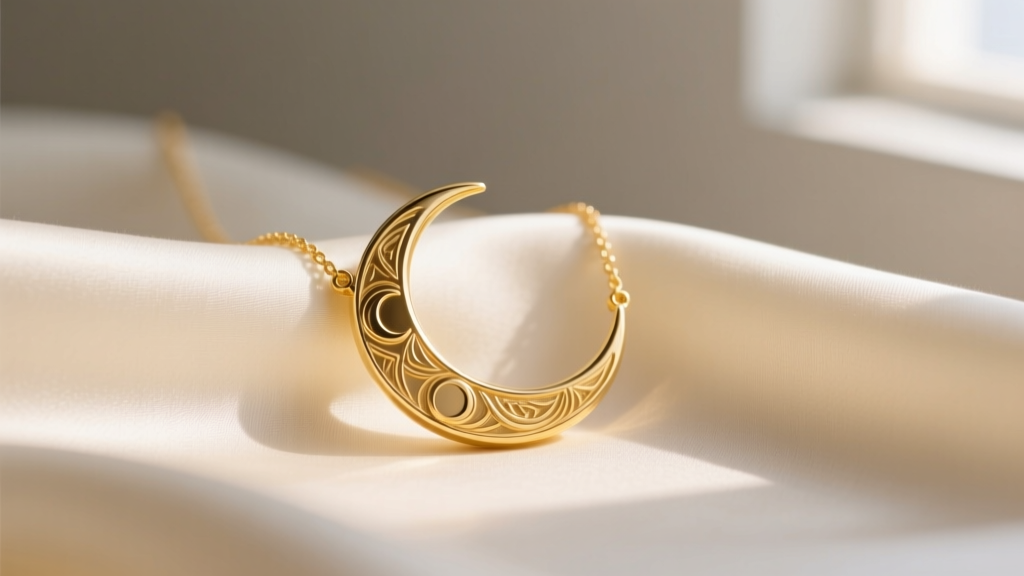
In the world of celestial jewelry, the luna necklace holds a special, enduring place. Unlike generic circle pendants, a true luna necklace features a crescent moon motif, often characterized by a tapered, curved silhouette that mimics the moon's phases. While the celestial trend has seen massive resurgences over the decades, the 2026 iteration of the luna necklace leans heavily into organic textures, mixed-metal stacking, and subtle diamond pavé accents. For beginners, navigating the sheer volume of moon-themed jewelry can be overwhelming. This guide breaks down the exact specifications, material grades, and styling frameworks you need to choose and wear a luna pendant with confidence.
Decoding Materials: Which Metal Grade is Right for You?
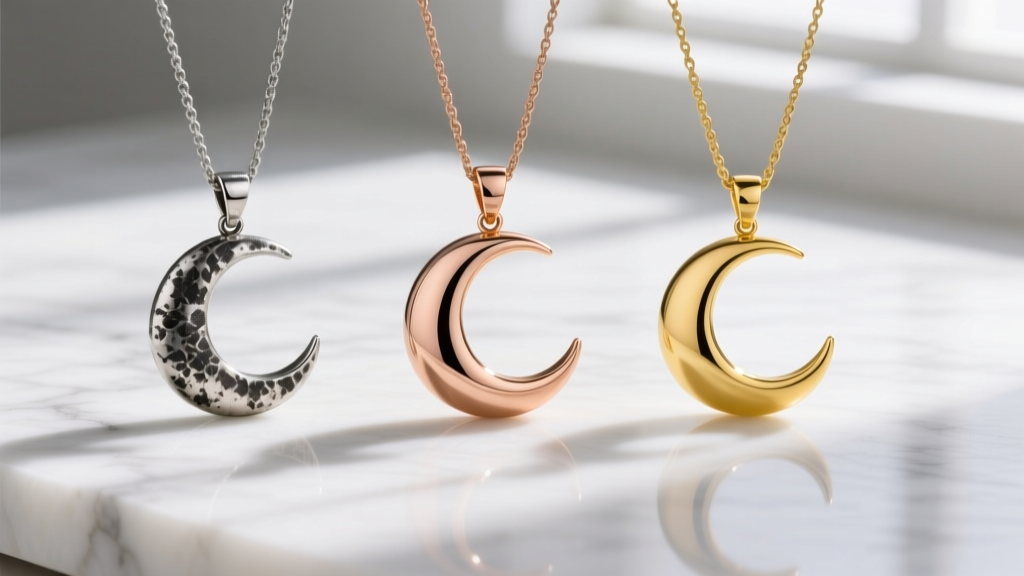
The longevity of your luna necklace depends entirely on its metallurgical composition. Many beginners make the mistake of buying "gold-plated" brass, only to find the pendant turning their skin green within weeks. When shopping for a quality luna pendant, you should focus on solid metals or high-grade vermeil. According to the Federal Trade Commission (FTC) Jewelry Guides, for a piece to be legally labeled as "vermeil," it must consist of a sterling silver base coated with at least 10-karat gold that is a minimum of 2.5 microns thick. Anything less is simply gold-plated and will wear off rapidly with daily friction.
Below is a practical comparison chart to help you decide which metal aligns with your budget and lifestyle:
| Metal Type | Durability & Maintenance | Average Price Range | Best Use Case |
|---|---|---|---|
| 925 Sterling Silver | Medium. Will oxidize and tarnish over time. Requires regular polishing. | $35 - $90 | Everyday casual wear, budget-friendly gifting. |
| 14k Solid Gold | High. Tarnish-resistant, hypoallergenic, and highly durable. | $180 - $400 | Lifetime daily wear, showering, and swimming. |
| Gold Vermeil | Low-Medium. The 2.5-micron gold layer will eventually wear down to silver. | $75 - $150 | Trend-focused styling, occasional evening wear. |
| Platinum | Very High. Extremely dense, naturally white, and will never fade. | $500+ | Heirloom pieces, high-end diamond pavé luna pendants. |
For a comprehensive understanding of how these precious metals are alloyed for jewelry, the Gemological Institute of America (GIA) provides excellent educational resources on metal purity and durability.
Chain Pairings: Matching the Perfect Cord to Your Moon Pendant
A luna pendant is only as good as the chain it hangs from. Most standard luna pendants weigh between 1.5 grams and 4 grams, and feature a bail (the loop at the top) measuring roughly 3mm by 4mm. This means you need a chain that is thin enough to slide through the bail, but thick enough to support the pendant's weight without snapping.
The Ideal Chain Gauges
- 0.8mm to 1.0mm Cable Chain: The gold standard for lightweight luna pendants (under 2g). It offers a delicate, classic look that doesn't distract from the crescent shape.
- 1.2mm to 1.5mm Box Chain: Best for heavier, solid 14k gold luna pendants or those featuring diamond accents. Box chains have a higher tensile strength and resist kinking better than cable chains.
- Avoid Rope Chains under 1.5mm: Thin rope chains are notorious for catching on hair and sweaters, and they are incredibly difficult to untangle once knotted.
Clasp Mechanics: Spring Ring vs. Lobster Claw
Always check the clasp type before purchasing. Spring ring clasps (the perfectly circular ones with a tiny trigger) are common on budget necklaces but are prone to failure because the internal microscopic spring easily breaks. For a secure hold, always opt for a lobster claw clasp, which features a more robust internal mechanism and a wider opening for easy on-and-off wear.
Sizing and Proportions: Finding the Right Drop Length
The visual impact of your luna necklace changes drastically depending on where it falls on your chest. Choosing the right length is crucial for balancing your proportions and the neckline of your clothing.
- 16 Inches (Choker/Collarbone): The pendant will sit right in the hollow of your throat or just above the collarbone. This is ideal for small, minimalist luna pendants (10mm - 15mm wide) and pairs beautifully with V-neck tops or off-the-shoulder dresses.
- 18 Inches (Princess Length): The most versatile and popular length. The moon pendant will rest just below the collarbone. This length works perfectly over crewneck t-shirts, turtlenecks, and button-down blouses.
- 20 to 22 Inches (Matinee Length): The pendant drops to the upper chest. This is the ideal choice for larger, statement-sized luna pendants (25mm+) or for layering over thick winter sweaters and blazers.
Common Beginner Mistakes and How to Avoid Them
Even with high-quality materials, improper care can ruin a beautiful piece of celestial jewelry. Avoid these three critical errors:
1. Using Ultrasonic Cleaners on Oxidized Silver
Many sterling silver luna necklaces feature intentional oxidation (a darkened patina in the crevices of the moon's craters to add depth). If you place an oxidized silver pendant in an ultrasonic cleaner or use harsh liquid silver dips, you will strip away this intentional detailing, leaving the piece looking flat and unnaturally bright. Instead, use a dry, treated jeweler's polishing cloth and gently buff only the raised, high-polish areas.
2. Sleeping in Delicate Chains
While 14k solid gold is durable, a 1.0mm cable chain is no match for the friction and pulling force of tossing and turning in your sleep. This is the number one cause of chain stretching and bail deformation. Always unclasp your luna necklace before bed.
3. Exposing Vermeil to Perfumes and Lotions
If you opted for gold vermeil, remember that the 2.5-micron gold layer is sensitive to chemicals. Applying perfume, hairspray, or heavy body lotions directly over the necklace will accelerate the breakdown of the gold layer, exposing the silver underneath much faster than normal wear and tear.
The 2026 Layering Framework: How to Stack Your Luna Necklace
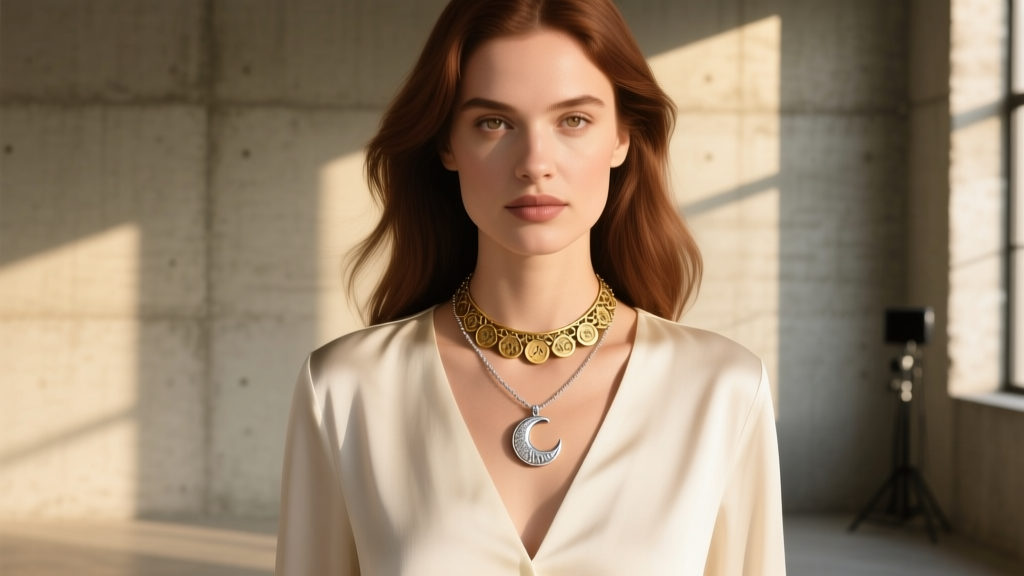
Layering is no longer just about throwing multiple chains together; it requires a structured approach to spacing and texture. The modern luna necklace acts as an excellent focal point in a layered stack. Here is a foolproof, three-piece framework for beginners:
- The Base (14-15 Inches): Start with a simple, unadorned 1.0mm gold or silver chain that sits snugly against the base of your neck. This frames the face and anchors the stack.
- The Focal Point (18 Inches): This is where your luna necklace lives. Ensure the pendant is roughly 15mm to 20mm in width. The 3-inch gap between the base chain and the luna chain prevents tangling and allows each piece to breathe.
- The Anchor (22-24 Inches): Finish with a heavier, textured chain—such as a 2.5mm paperclip link or a herringbone chain—featuring a simple geometric pendant or a solitary pearl. This draws the eye downward and balances the visual weight of the crescent moon above it.
By understanding the anatomy, material grades, and proper care of your luna necklace, you elevate it from a simple accessory to a versatile, lifelong staple in your jewelry collection. Whether you choose a rugged, hammered sterling silver crescent or a pristine, diamond-encrusted 14k gold moon, the key to mastering this style lies in the details.


