The Beginner's Guide to a Malachite Pendant Necklace
Discover how to choose, style, and care for a malachite pendant necklace. Learn to spot genuine stones, pair chains, and wear this copper-rich gem safely.

The Mineralogy Behind the Magic
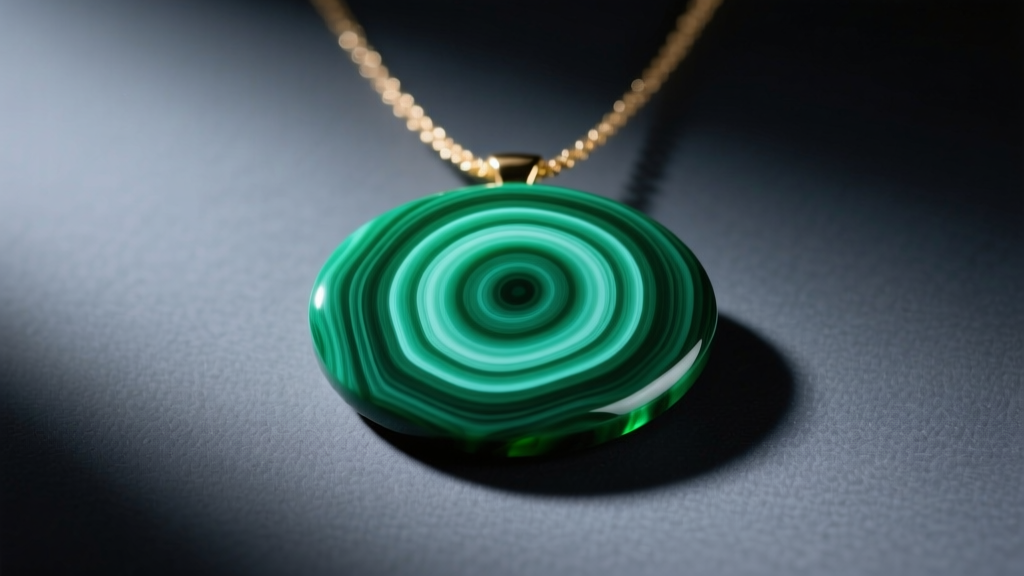
If you are entering the world of gemstone jewelry, a malachite pendant necklace is often one of the first pieces that catches the eye. Known for its hypnotic, concentric green banding, malachite is far more than just a pretty stone. Scientifically, it is a copper carbonate hydroxide mineral with the chemical formula Cu2CO3(OH)2. According to mineralogical data from Mindat.org, malachite forms in the oxidized zones of copper deposits, typically growing in botryoidal (grape-like) masses. It is this unique crystalline habit that creates the sharp, chaotic, and beautiful concentric rings you see in high-quality pendants.
On the Mohs scale of mineral hardness, malachite ranks between 3.5 and 4.0. This makes it relatively soft compared to quartz (7.0) or diamonds (10.0). For a beginner, this specific data point is crucial: it means your pendant can be easily scratched by a steel knife, a copper coin, or even rougher gemstones if stored improperly in a communal jewelry box. Understanding its physical properties is the first step in becoming a savvy malachite buyer.
Real vs. Fake: The Authenticity Test
Because genuine malachite is highly sought after, the market is unfortunately flooded with imitations. Fakes are typically made from glass, dyed resin, or reconstituted stone dust. Spotting the difference requires looking past the initial pop of green and examining the structural nuances of the stone.
Visual and Tactile Cues
Genuine malachite features sharp, distinct, and often asymmetrical banding. The lines may blur slightly into one another in rare cases, but they generally maintain a crisp, chaotic geometry. Fakes, particularly those made from poured resin or glass, exhibit uniform, perfectly parallel, or blurred lines that look almost painted on. Furthermore, real malachite is dense and heavy due to its high copper content. A genuine 25mm teardrop pendant will feel noticeably heavier in your palm than a glass or plastic replica of the exact same dimensions.
| Feature | Genuine Malachite | Fake (Glass/Resin) |
|---|---|---|
| Banding Pattern | Sharp, chaotic, concentric, asymmetrical | Uniform, perfectly parallel, blurred edges |
| Weight | Dense and heavy (high copper content) | Lightweight, feels hollow or plasticky |
| Temperature | Cool to the touch, warms slowly | Room temperature, warms instantly to skin |
| Hardness | Mohs 3.5 - 4.0 (scratches easily) | Glass (Mohs 5.5) or Resin (Mohs 2.0) |
The Toxicity Question: Is It Safe to Wear?
One of the most common questions beginners ask when researching a malachite pendant necklace is whether the stone is toxic to wear. The short answer is no, provided it is properly finished. The long answer requires understanding how copper interacts with the environment.
While raw malachite dust is a known respiratory hazard for lapidaries and miners, a fully polished, tumbled, and sealed malachite pendant is completely inert and safe for daily skin contact.
Raw, unsealed malachite can leach copper when exposed to acidic environments, including sweat or saltwater. However, reputable jewelers polish the stone and seal it with a micro-crystalline wax or clear resin coating. This sealant locks the copper inside the stone, making it 100% safe to wear against your chest. You should only avoid wearing malachite if the stone is raw, heavily fractured, or if you plan to swim in a highly chlorinated pool or the ocean, as prolonged exposure to harsh chemicals can degrade the protective sealant over time.
Chain Pairings and Lengths for Malachite Pendants
The vivid, saturated green of malachite demands the right metallic frame. Choosing the correct chain elevates the pendant from a simple trinket to a sophisticated statement piece.
Best Metal Pairings
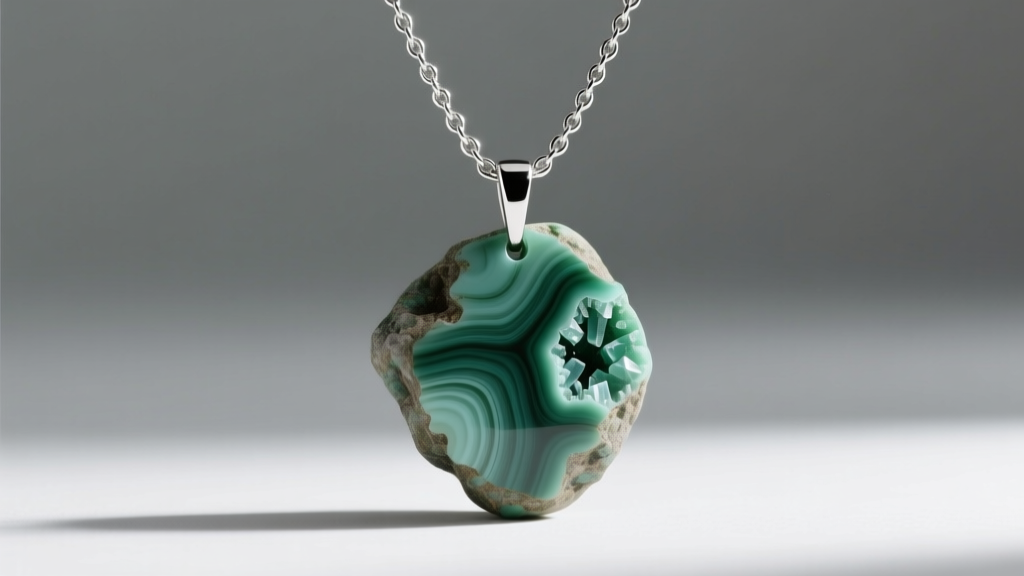
- Sterling Silver (925): The cool, bright tone of sterling silver provides a striking, high-contrast backdrop for the deep green stone. This is the most classic and popular pairing.
- 18k Gold Vermeil: Gold warms up the green tones, bringing out the subtle olive and emerald undertones in the banding. Ensure you buy vermeil (a thick layer of 18k gold over sterling silver) rather than cheap gold-plated brass, which can tarnish and react with your skin.
- Antiqued Bronze: For a bohemian or vintage aesthetic, oxidized bronze complements the earthy, natural origins of the copper-rich stone.
Ideal Lengths
For a standard 20mm to 30mm malachite pendant, an 18-inch princess chain is ideal for resting just below the collarbone, perfect for crew necks and V-necks. If you prefer a bohemian look or want to wear the necklace over a turtleneck or sweater, opt for a 22-inch or 24-inch matinee length to let the stone rest lower on the chest.
Mastering the Layering Technique
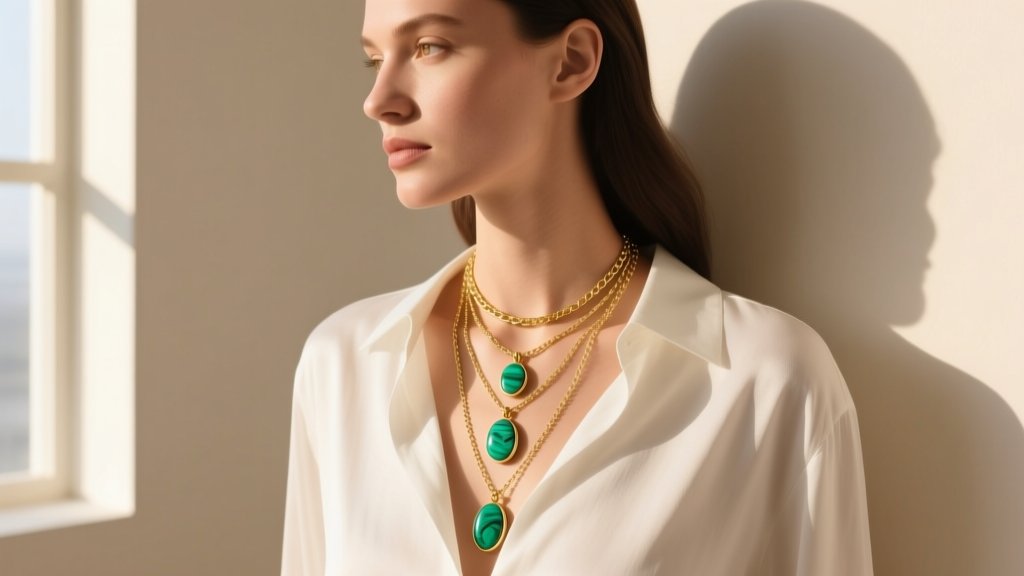
A malachite pendant necklace is an excellent anchor piece for a layered necklace stack. The key to successful layering is varying both the length and the texture of the chains to prevent tangling and visual clutter.
Start with a delicate 16-inch gold or silver choker chain as your base. Next, add your 20-inch malachite pendant necklace as the focal point. Finally, introduce a 24-inch chain featuring a simple metallic bar or a small, neutral gemstone like moonstone or lapis lazuli. This 'rule of three' creates a cascading effect that draws the eye downward and frames the neckline beautifully. Always ensure the bail (the loop connecting the pendant to the chain) is wide enough to slide over the clasp of your chain if you plan to swap pendants frequently.
Pricing: What Should You Actually Pay?
Understanding the market value prevents you from overpaying for fakes or underpaying for low-grade material. According to gem market valuations tracked by the Gemological Institute of America (GIA), malachite is not classified as a precious gemstone, meaning it remains highly accessible.
- Fake/Imitation Pendants: $5 to $15. Usually sold in bulk online or at tourist trap gift shops.
- Genuine Malachite in Base Metal: $20 to $40. Real stone, but set in copper, brass, or alloy chains.
- Genuine Malachite in Sterling Silver: $45 to $120. The sweet spot for high-quality, durable, everyday jewelry.
- Designer or 14k Solid Gold Settings: $250 to $600+. You are paying primarily for the precious metal weight and brand craftsmanship.
Strict Care and Maintenance Rules
Because of its low Mohs hardness and copper content, malachite requires a gentle touch. Never place your malachite pendant necklace in an ultrasonic cleaner. The high-frequency vibrations can easily fracture the stone along its natural banding lines, and the heat can melt the protective wax sealant. Similarly, avoid steam cleaners entirely.
To clean your pendant, simply wipe it with a soft, slightly damp microfiber cloth to remove skin oils and dust. Dry it immediately. Avoid spraying perfumes, hairsprays, or lotions directly onto the stone, as the chemicals can dull the polish over time. When storing, always keep your malachite pendant in a soft velvet pouch or a separate compartment in your jewelry box, far away from harder stones like diamonds, sapphires, or quartz that will easily scratch its surface.
Final Thoughts for the Beginner
Investing in a malachite pendant necklace is a fantastic entry point into the world of gemstone jewelry. By understanding its mineralogical roots, knowing how to spot a fake, and following proper care protocols, you can ensure your vibrant green pendant remains a staple in your wardrobe for years to come. Whether you are dressing up a simple linen shirt or adding a pop of color to a dark winter sweater, the timeless appeal of malachite never goes out of style.


