Male Silver Necklace Value Guide: What to Pay in 2026
Discover the true value of a male silver necklace in 2026. We break down pricing tiers, silver grades, chain weights, and how to spot overpriced pieces.

The Real Cost of Silver: Market Realities in 2026
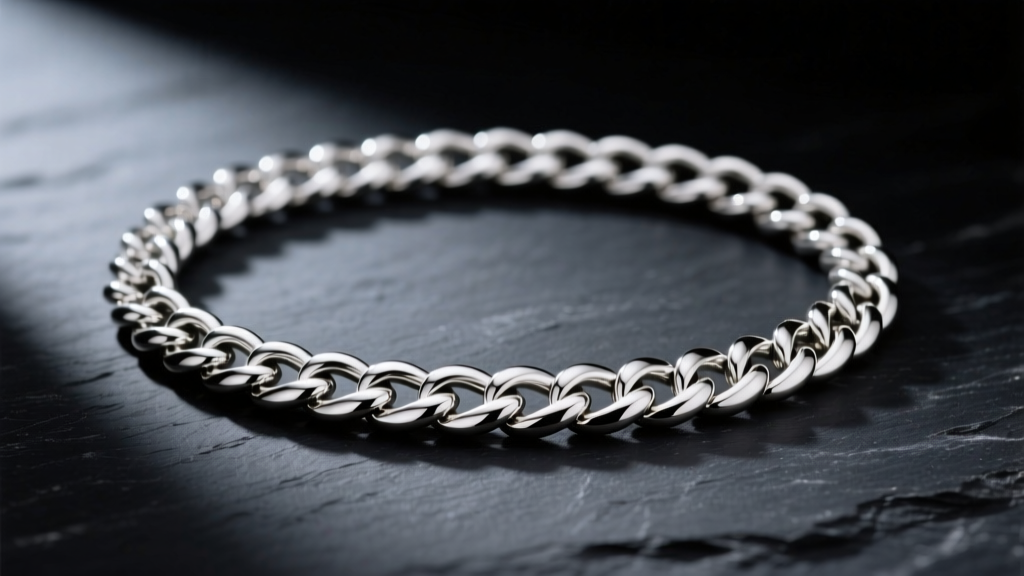
When evaluating a male silver necklace, the first step is divorcing the emotional appeal of the design from the intrinsic value of the metal. As of early 2026, the spot price of silver has stabilized in the $28 to $32 per troy ounce range, translating to roughly $0.90 to $1.03 per gram. This baseline is your anchor for value assessment. According to Kitco Silver Spot Prices, market fluctuations happen daily, but the fundamental math of jewelry pricing remains constant.
A common trap for buyers is paying luxury markups for basic sterling silver chains. If a brand charges $1,200 for a 100-gram plain sterling silver Cuban link, they are applying a 12x to 13x markup over the raw melt value. In the men's jewelry sector, a fair retail markup for solid, well-crafted chains ranges from 2.5x to 4x the melt value. This accounts for manufacturing, labor, soldering, and retail overhead. Anything beyond a 5x markup requires extraordinary artisanal craftsmanship, proprietary locking mechanisms, or brand heritage to justify the premium.
Decoding Silver Grades: What You Are Actually Buying
Not all silver is created equal, and the alloy composition directly impacts both the price and the longevity of the piece. Understanding these metallurgical differences is crucial for accurate budget assessment.
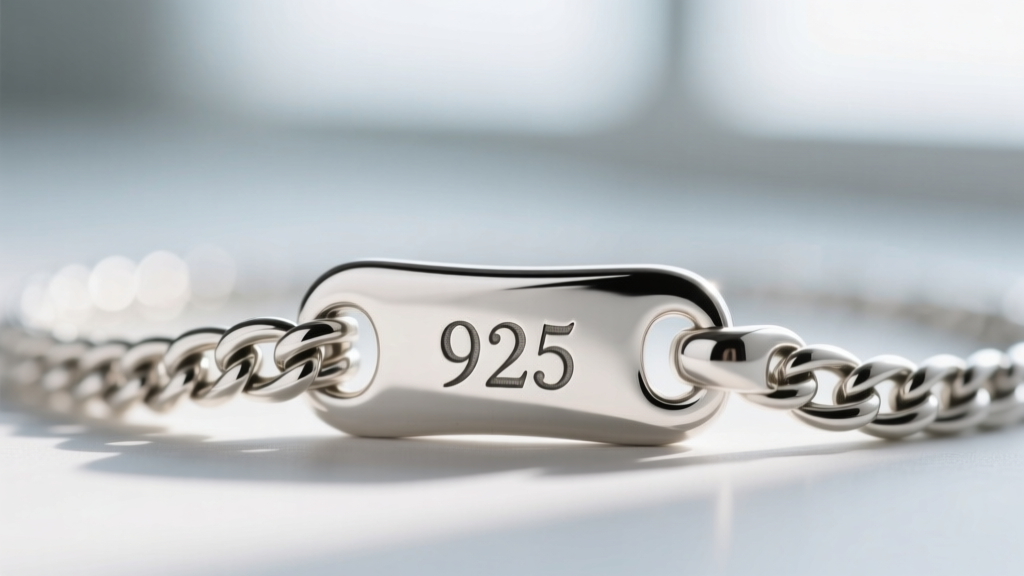
- 925 Sterling Silver: The industry standard. Composed of 92.5% pure silver and 7.5% copper. The copper adds necessary tensile strength (pure silver is too soft for heavy chains) but introduces a susceptibility to oxidation and tarnish. This is the baseline grade you should expect for any quality male silver necklace.
- Argentium 935/960 Silver: A modern alloy where some of the copper is replaced with germanium. This creates a highly tarnish-resistant surface and allows for laser welding without firescale. Expect to pay a 20% to 30% premium over standard 925, which is entirely justified for low-maintenance daily wear.
- 999 Fine Silver: Rarely used for heavy chains due to its extreme malleability. If a brand offers a thick 999 chain, it will dent and stretch under its own weight. Avoid for everyday men's jewelry.
- Silver-Plated or Silver-Filled: A brass or copper core with a microscopic silver coating. These have zero intrinsic melt value and will eventually wear through, exposing the base metal. Never pay more than $50 for these, regardless of the brand name.
Always verify the grade. According to The London Assay Office, a legitimate hallmark is a legal guarantee of purity. In the US, a simple "925" stamp is common, but a maker's mark alongside it provides an extra layer of accountability.
Weight, Width, and Style: The Pricing Matrix
The physical architecture of the chain dictates its durability and its fair market price. Hollow chains are a prevalent issue in the men's market; they offer the visual width of a 12mm chain with the weight of a 4mm chain. While budget-friendly upfront, hollow chains dent easily, kink permanently, and are virtually impossible for a jeweler to repair. Always demand solid links.
| Chain Style | Avg. Weight (22-inch, 8mm) | Structural Integrity | Fair 2026 Price Range |
|---|---|---|---|
| Cuban Link (Solid) | 90g - 115g | Exceptional (Flat lay, high tensile) | $250 - $450 |
| Figaro (Solid) | 60g - 80g | High (Patterned stress distribution) | $180 - $320 |
| Rope (Solid) | 85g - 105g | Moderate (Complex solder points) | $280 - $480 |
| Box (Solid) | 70g - 90g | High (Geometric rigidity) | $220 - $380 |
| Wheat (Solid) | 50g - 70g | Very High (Braided interlocking) | $160 - $290 |
Hardware and Finishes: Where Brands Hide Markups
When assessing the value of a male silver necklace, the chain links only tell half the story. The hardware and surface finishes are where corner-cutting occurs or where premium value is established.
The Clasp-to-Weight Ratio
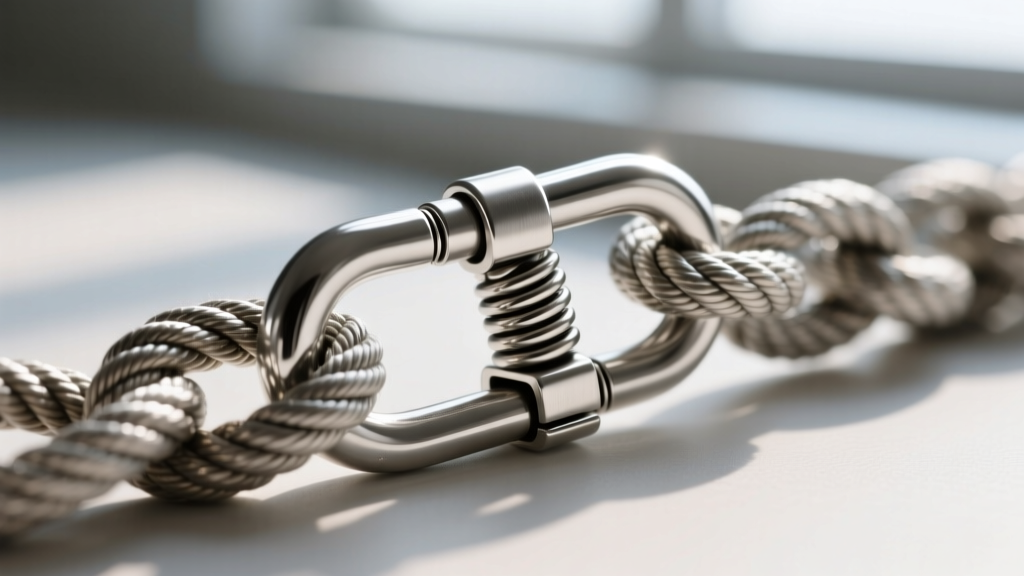
A heavy silver chain paired with a flimsy clasp is a catastrophic failure point. For chains weighing under 50 grams, a standard 12mm to 15mm lobster clasp is sufficient. However, once a chain exceeds 80 grams, the spring mechanism inside a standard lobster clasp will eventually fatigue and fail. For heavy chains, look for a box clasp with a secondary safety latch (often a figure-8 wire), or an oversized, heavy-duty lobster clasp with a reinforced bail. If a brand sells a 150-gram Cuban link with a tiny, lightweight clasp, deduct value from your assessment due to the high risk of loss.
Soldering vs. Laser Welding
Examine the individual links under a macro lens or jeweler's loupe. Traditional torch soldering leaves a visible seam and uses a lower-karat silver solder, which can oxidize differently than the chain. High-end manufacturers now use laser welding, which fuses the exact same 925 alloy without adding foreign metals, resulting in a cleaner, stronger link. Laser-welded chains command a justified 15% premium.
Rhodium Plating and Oxidation
Many premium silver chains are plated with a micro-layer of rhodium to prevent tarnish and provide a bright, white-gold-like finish. While this adds $30 to $50 to the manufacturing cost, it saves hours of polishing. Conversely, intentionally oxidized (blackened) silver highlights the texture of complex weaves like the Rope or Wheat chain. Ensure the oxidation is chemically set and sealed; cheap pieces will rub off on your skin within weeks.
The Value Assessment Checklist
Before finalizing a purchase, run the necklace through this practical decision framework to ensure you are paying a fair market price:
- Calculate the Melt Baseline: Weigh the chain (in grams) and multiply by the current spot price per gram (approx. $0.95). This is the absolute floor value.
- Verify Solid Construction: Check the end links. If they look seamlessly closed but feel suspiciously light for their width, it is likely a hollow electroformed chain. Pass on it.
- Inspect the Clasp Bail: The jump ring connecting the clasp to the chain must be soldered shut. If it is merely pinched closed, the heavy chain will pull it open over time.
- Assess the Finish: Run the chain through your fingers. It should feel fluid, like liquid fabric. Stiffness indicates poor link tolerances or excessive polishing compound left in the crevices.
Expert Insight: "The true test of a high-value men's silver chain isn't just its weight, but its drape. A well-engineered 8mm Cuban link will lay perfectly flat against the sternum without twisting, a result of precise link-milling and uniform tension distribution during assembly."
Final Verdict: Where to Spend and Where to Save
If your budget is under $200, focus on narrower, solid chains (4mm to 6mm) in durable weaves like the Wheat or solid Curb. You will get a high-quality, repairable piece that will last a lifetime. If your budget allows for $400 to $800, you enter the sweet spot for substantial 8mm to 12mm solid Cuban or Figaro chains with premium hardware. Avoid paying over $1,000 for standard sterling silver chains unless you are paying for a recognized luxury designer's specific aesthetic or bespoke, hand-forged link construction. By focusing on gram weight, alloy quality, and hardware integrity, you can confidently navigate the 2026 market and secure a male silver necklace that offers genuine, lasting value.


