Marie Antoinette Diamond Necklace Affair: Lessons In High Jewelry Care
Discover how the infamous Marie Antoinette diamond necklace affair informs modern high jewelry care, cleaning, and security protocols for precious gems.

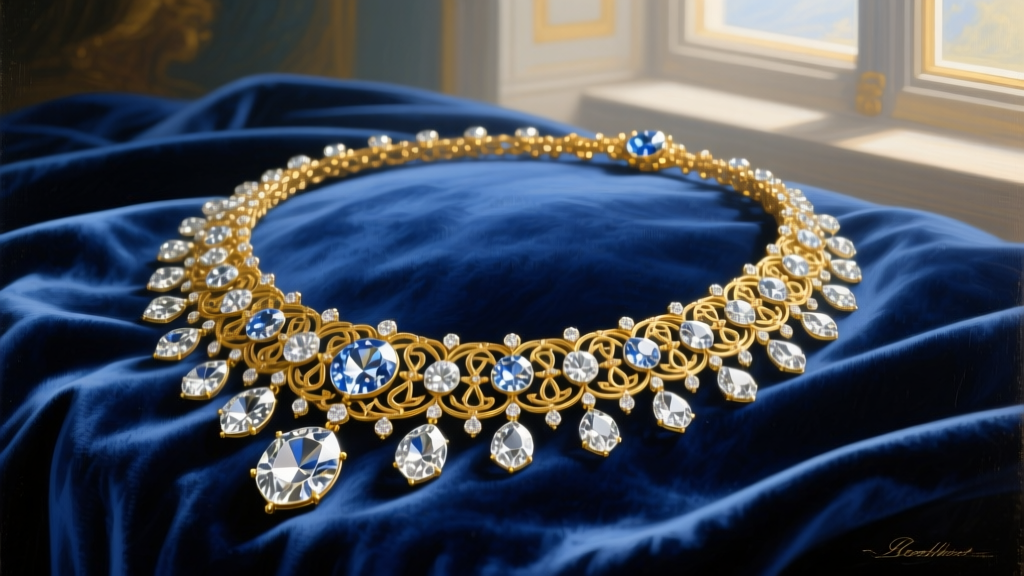
The Marie Antoinette diamond necklace affair of 1785 remains one of the most audacious scandals in the history of haute joaillerie. While historians focus on the political fallout that helped spark the French Revolution, gemologists and high jewelry curators view the event through a different lens: a catastrophic failure of jewelry security, provenance tracking, and structural maintenance. The piece at the center of the scandal, designed by court jewelers Charles Auguste Boehmer and Paul Bassange, was a staggering 2,800-carat festoon necklace featuring 647 diamonds. When the con artist Jeanne de Valois-Saint-Rémy stole it, she didn't just smuggle it away; she effortlessly dismantled it, selling the diamonds individually across Europe.
As we navigate the high jewelry market in 2026, the Boehmer necklace serves as the ultimate case study in what happens when structural integrity and security protocols fail. For modern collectors of multi-million-dollar diamond necklaces, understanding the historical vulnerabilities of this piece provides a masterclass in contemporary care, cleaning, and preservation.
The Metallurgical Challenge: Silver-Topped Gold
To understand how to care for historical and historically-inspired high jewelry, one must understand the materials used before the widespread adoption of platinum. The Boehmer necklace was crafted using silver-topped gold. Jewelers of the 18th century used gold for the structural base and prongs because it was malleable and didn't tarnish. However, they capped the visible silver-facing front with silver because its bright, white luster reflected light back through the diamonds far better than yellow gold, maximizing the stones' brilliance.
The maintenance challenge here is immense. Silver tarnishes rapidly when exposed to sulfur in the air and the natural oils of human skin. According to the Gemological Institute of America (GIA), cleaning silver-topped gold requires extreme caution. Modern ammonia-based silver dips are strictly forbidden; they can degrade the historical solder joints and strip the delicate patina that authenticates antique pieces. Instead, conservators use a localized application of a mild, phosphate-free enzymatic cleaner applied with a micro-swab, carefully avoiding the gold backing to prevent galvanic reactions between the two metals.
High-Stakes Cleaning: 647 Diamonds Without Damage
Cleaning a massive festoon necklace—whether an 18th-century original or a modern haute joaillerie homage featuring hundreds of pavé and bezel-set stones—requires abandoning standard consumer jewelry cleaning methods. The diamonds in the Boehmer necklace were primarily early mine cuts and rose cuts. Unlike modern brilliant cuts, these antique stones featured open culets (the bottom point of the diamond was flat or entirely open) and shallower pavilions.
The Danger of Ultrasonic Vibrations
Modern ultrasonic cleaners operate at frequencies between 20 and 40 kHz. While excellent for dislodging dirt from a simple solitaire ring, placing a complex, multi-strand diamond necklace with hundreds of settings into an ultrasonic bath is a recipe for disaster. The high-frequency vibrations can easily fracture included antique diamonds, loosen the friction-fit collets typical of the 1700s, and cause micro-abrasions where diamonds rest against one another in dense cluster settings.
The professional protocol for cleaning high-carat festoon necklaces involves a three-step manual process:
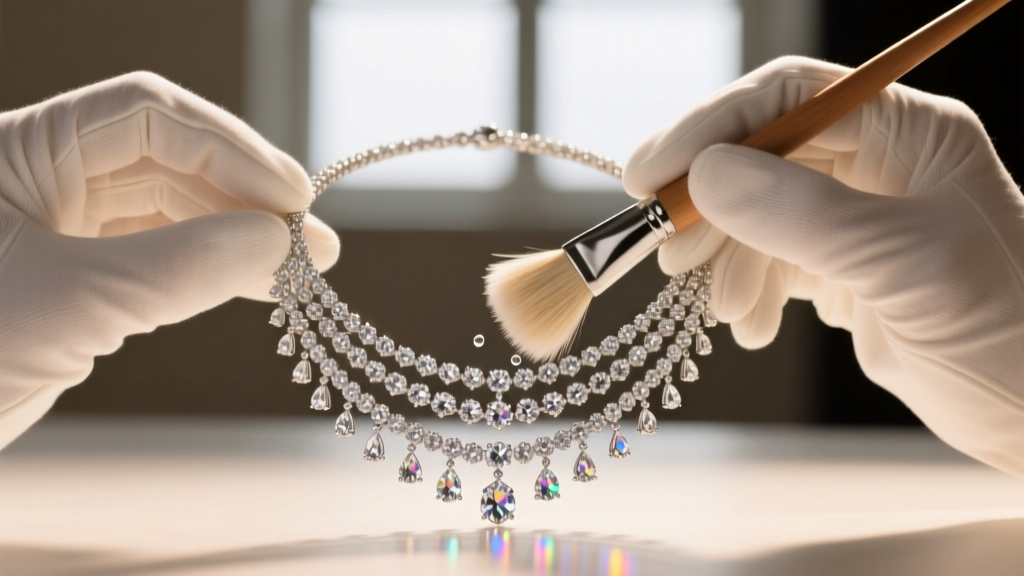
- Dry Dusting: Using a specialized, ultra-soft horsehair brush to remove loose particulate matter that could scratch the silver or gold settings during wet cleaning.
- Targeted Wet Cleaning: Applying a few drops of distilled water mixed with a neutral pH gemological surfactant. The piece is never submerged; instead, a soft brush is used to gently agitate the surfactant around the gallery wires and prongs.
- Controlled Drying: Using compressed, oil-free air to blow moisture out from beneath the closed-back settings, preventing trapped water from accelerating the oxidation of the silver tops.
Prong Integrity and the Ease of Dismantling
The most glaring lesson from the Marie Antoinette diamond necklace affair is how easily Jeanne de Valois-Saint-Rémy and her accomplices were able to pry the diamonds from their settings to fence them in London and Paris. 18th-century prong work, while substantial in appearance, lacked the precise metallurgical tension and laser-welding capabilities we have today.
For modern collectors, maintaining prong integrity on large, heavy necklaces is critical. The sheer weight of a 2,800-carat piece puts immense tensile stress on the connecting links and the individual stone settings whenever the necklace is worn or even draped over a display bust.
| Maintenance Feature | 18th-Century Boehmer Necklace | Modern Haute Joaillerie Equivalent |
|---|---|---|
| Metal Base | Silver-topped gold (tarnish-prone, soft) | Platinum or 18k white gold (rhodium plated) |
| Setting Style | Closed-back collets, thick hand-cut prongs | Open-back pavé, micro-prong, laser-welded |
| Cleaning Method | Dry brushing, chamois cloth polishing | Enzymatic soaks, targeted low-frequency sonic |
| Security / Provenance | Royal seal, paper ledger, physical wax seals | Blockchain provenance, laser girdle inscription |
Today, any high-value necklace requires a bi-annual inspection under 10x magnification. Gemologists look for 'prong lift'—where the metal begins to pull away from the diamond's girdle—and 'gallery fatigue,' where the metal connecting the settings develops microscopic stress fractures from the weight of the stones.
Security and Provenance: The Ultimate Care Protocol
The true tragedy of the Marie Antoinette diamond necklace affair, as detailed by Encyclopedia Britannica, was a failure of provenance. Because the diamonds lacked individual identification and the necklace's ownership was disputed through forged letters, the stones were easily absorbed into the European black market. In the modern era, jewelry care extends far beyond polishing; it encompasses rigorous digital and physical security.
'A necklace is only as secure as its provenance. Without verifiable tracking, a masterpiece is merely a collection of loose stones waiting to be dismantled.'
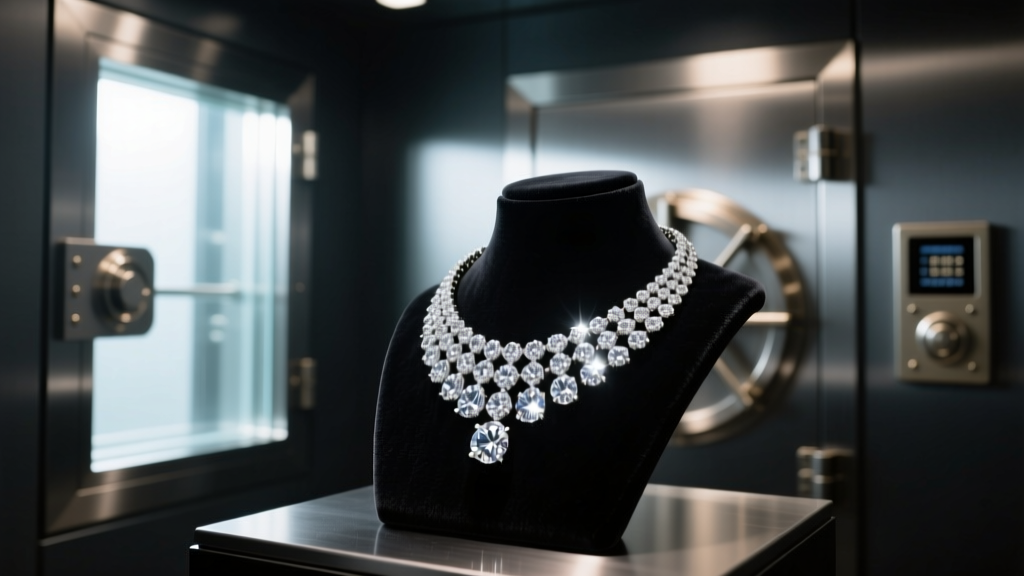
In 2026, high jewelry care mandates digital twinning. Every major diamond in a festoon necklace over 5 carats is laser-inscribed on its girdle with a unique identifier linked to a blockchain ledger. This ensures that even if a piece is stolen and dismantled, the individual stones cannot be legally sold or set into new pieces without triggering alerts in global gemological databases. Furthermore, physical storage requires climate-controlled vaults set to 45% relative humidity to prevent the oxidation of any historical silver components, alongside biometric access logs that track every time the piece is handled.
Actionable Care Guide for High-Carat Festoon Necklaces
Whether you own an antique piece with historical significance or a contemporary multi-strand diamond masterpiece, implementing a strict care regimen is non-negotiable. Follow this expert checklist to ensure your investment survives the centuries:
- Never Hang the Piece: The gravitational pull on a heavy diamond necklace will stretch the metal links and warp the settings over time. Always store the piece flat in a custom-molded, acid-free archival tray.
- Avoid Skin Contact with Silver-Topped Elements: If your piece features historical silver-topped gold, wear a silk barrier or limit wearing time. The sulfur and salts in human sweat will accelerate tarnishing and degrade the silver-gold solder joints.
- Use Archival Display Busts: When displaying the necklace, ensure the bust is covered in unbleached, undyed cotton or silk. Synthetic velvets can off-gas volatile organic compounds (VOCs) that cause irreversible chemical pitting on antique silver.
- Insure for Dismantling Value: Ensure your appraisal specifically covers the 'dismantled value' of the piece, acknowledging that the sum of the individual antique diamonds and the historical goldwork may exceed the value of the assembled necklace on the current market.
Conclusion
The Marie Antoinette diamond necklace affair is remembered as a political catalyst, but for the jewelry world, it is a timeless cautionary tale. The Boehmer necklace was lost not just to greed, but to the vulnerabilities of its physical construction and the lack of verifiable provenance. By applying modern gemological science to the cleaning of antique metals, respecting the structural limits of historical settings, and embracing digital security, today's collectors can ensure their masterpieces remain intact, brilliant, and undeniably theirs for generations to come.


