The Diamond Necklace of Marie Antoinette: Material & Gem Analysis
Explore the metallurgy and gemology of the diamond necklace of Marie Antoinette, comparing 18th-century silver-gold alloys and cuts to modern high jewelry.

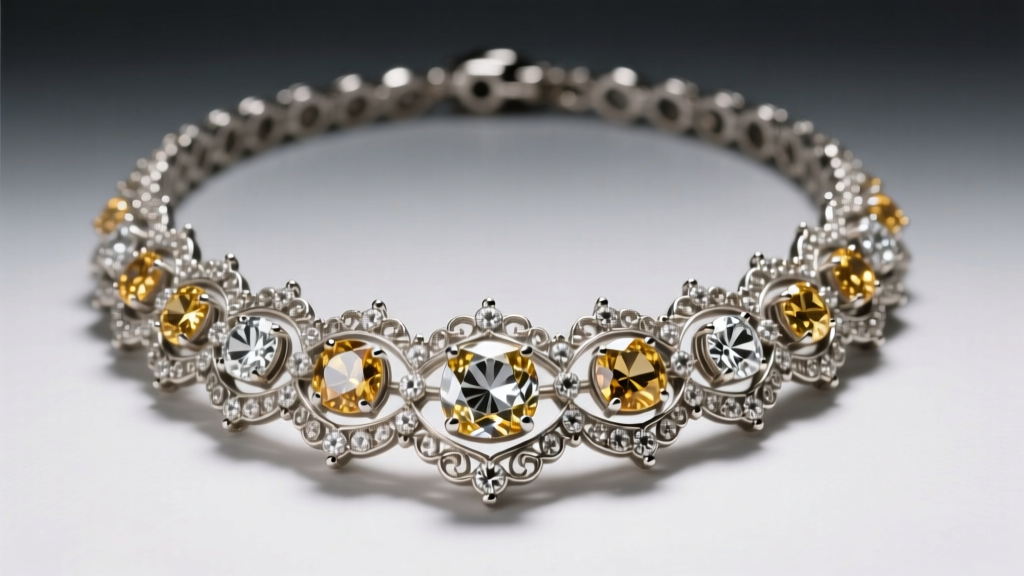
The Infamous Masterpiece: Beyond the Scandal
When historians and gemologists discuss the diamond necklace of marie antoinette, the conversation inevitably gravitates toward the political scandal that helped spark the French Revolution. However, from a materials science and high jewelry perspective, the piece created by court jewelers Charles Auguste Boehmer and Paul Bassange in the 1770s represents a pinnacle of 18th-century metallurgical and lapidary engineering. Commissioned originally by Louis XV for his mistress Madame du Barry, the necklace was a staggering 2,800-carat behemoth comprising 540 individual diamonds. Though Marie Antoinette famously refused the piece and it was subsequently dismantled and sold off in London, its material blueprint remains a masterclass in historical jewelry fabrication.
In 2026, as archival jewelry reproduction and historical metallurgy experience a renaissance among elite collectors, analyzing the physical properties of this legendary artifact offers profound insights. How did 18th-century artisans engineer a multi-tiered festoon necklace capable of supporting massive carat weights without the benefit of modern platinum alloys or laser welding? The answer lies in a sophisticated, albeit flawed, mastery of silver-gold composites and hand-forged structural armatures.
The Metallurgy of 18th-Century High Jewelry: Silver and Gold Alloys
To understand the material composition of the diamond necklace of Marie Antoinette, one must understand the optical limitations and metallurgical realities of the 1770s. Diamonds reflect and refract light; placing them against a yellow metal like gold absorbs blue and white light wavelengths, muting the stone's brilliance. Today, we solve this by using Platinum 950 or rhodium-plated 18k white gold. In the 18th century, neither metal was viable for jewelry fabrication. Platinum's melting point (1,768°C) was far beyond the capabilities of period torches, and white gold alloys had not yet been developed.
The solution employed by Boehmer and Bassange was silver collet settings backed with gold. The diamonds were set in silver, which provided the necessary white-metal optical backdrop to maximize brilliance. However, silver has a critical flaw: it readily reacts with sulfur in the atmosphere and human perspiration to form silver sulfide (Ag2S), a black tarnish that stains skin and clothing. To circumvent this, the artisans fused a layer of 18k or 22k yellow gold to the back of the silver collets.
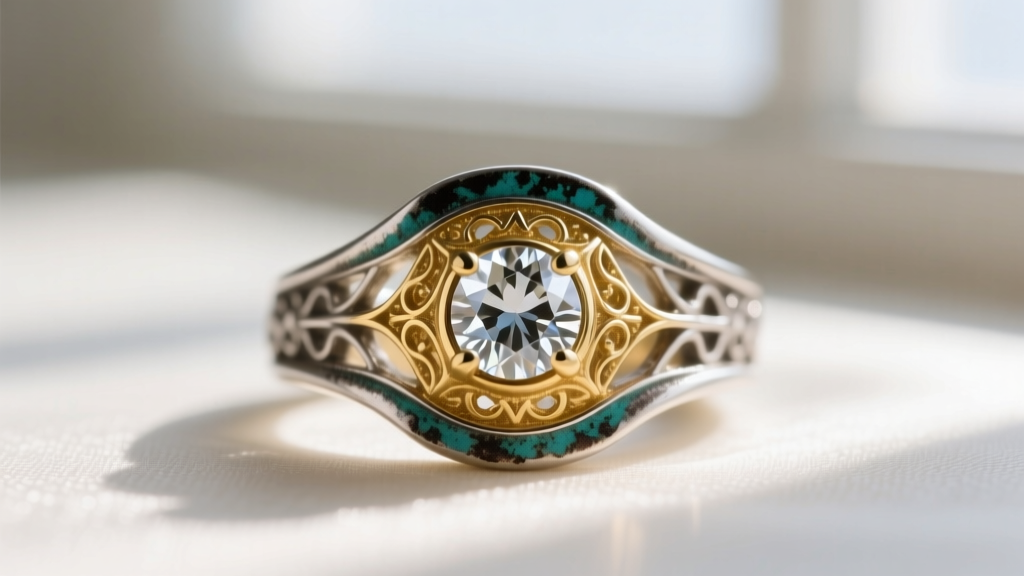
Material Comparison: 1770s vs. 2026 High Jewelry Alloys
| Property | 18th-Century Silver/Gold Composite | 2026 Platinum 950 (95% Pt, 5% Ru) | 2026 18k White Gold (Rhodium Plated) |
|---|---|---|---|
| Vickers Hardness (HV) | ~120 HV (Silver) / ~140 HV (18k Gold) | ~135 HV | ~125 HV (Core) / ~180 HV (Rhodium surface) |
| Tarnish Resistance | Poor (Silver face oxidizes rapidly) | Excellent (Inert to atmospheric sulfur) | Good (Until rhodium plating wears off) |
| Optical Backdrop | Bright white (when polished) | Natural grayish-white | Bright white (via plating) |
| Weight/Density | Moderate (Ag: 10.49 g/cm³) | Heavy (Pt: 21.45 g/cm³) | Moderate-Heavy (Au: 15.2 g/cm³) |
According to historical analyses by Christie's, the sheer weight of the Boehmer necklace required the gold backing not just for tarnish prevention, but for structural rigidity. Pure silver is too malleable to support heavy festoon draping without warping against the wearer's sternum.
Gemological Profile: Old Mine Cuts vs. Modern Brilliant Cuts
The 540 diamonds utilized in the necklace were predominantly Old Mine Cuts, with smaller accent stones featuring Rose Cuts. The Old Mine Cut is the direct ancestor of the modern cushion brilliant, characterized by a squarish-cushion outline, a high crown, a small table, and a distinctly large, open culet. In the candlelit salons of Versailles, these proportions were highly intentional. The high crown and large culet acted as light traps, creating a chunky, romantic scintillation that performed exceptionally well in low, warm light environments.
Modern gemological standards, as outlined by the Gemological Institute of America (GIA), prioritize the Modern Round Brilliant cut for its optimized light return (brightness and fire) under broad-spectrum lighting. However, attempting to recreate the diamond necklace of Marie Antoinette using modern ideal cuts fundamentally alters the historical aesthetic, resulting in a piece that looks overly sterile and "glassy" compared to the deep, watery scintillation of 18th-century stones.
Facet Architecture Breakdown
- Old Mine Cut (18th Century): 58 facets. Table size typically 38-45%. Pavilion depth often exceeds 43%, resulting in light leakage under the culet but high dispersion in candlelight.
- Rose Cut (Accent Stones): 24 facets (typically). Flat base with a domed crown. Used in the necklace's ribbon motifs to provide broad flashes of light without requiring deep pavilions, saving carat weight.
- Modern Ideal Cut (2026 Standard): 57/58 facets. Table size 53-58%. Pavilion depth tightly controlled at 43.1% for maximum internal reflection.
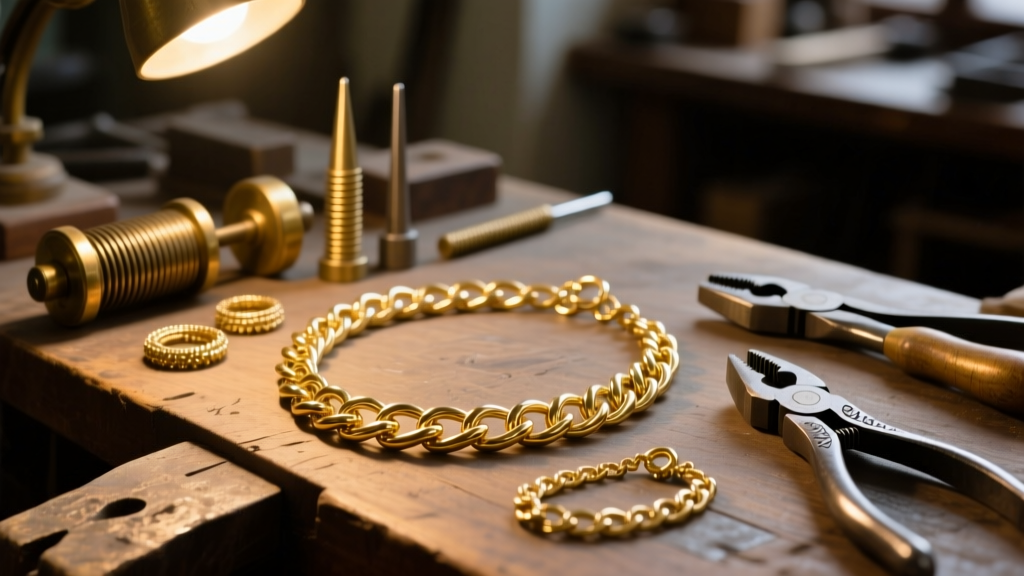
Structural Integrity: Wire Drawing and Link Forging
Supporting a 2,800-carat payload requires an armature of immense tensile strength. Without modern laser welding or CAD-cast micro-prongs, the structural links of the diamond necklace of Marie Antoinette were hand-forged. Artisans used draw plates to pull gold and silver billets through progressively smaller tungsten carbide or iron dies, creating wire that was then annealed, hammered, and riveted.
The Smithsonian Magazine notes that the sheer scale of the necklace required a modular construction approach. The piece was designed in three main tiers, allowing it to be broken down into a simpler choker or a pair of bracelets if desired. The connecting links relied on mechanical friction and hand-soldered joints using a lower-karat gold solder (typically 14k or 12k) to ensure the melting point of the solder was lower than the 18k structural wire. This technique, while labor-intensive, created a fluid, fabric-like drape that modern rigid castings often fail to replicate.
The 2026 Perspective: Recreating the Legend
In 2026, high jewelry maisons attempting to replicate historical artifacts face a unique material dilemma. Collectors demand the visual authenticity of the 18th century but expect the wearability and hypoallergenic properties of modern metallurgy. The compromise often involves utilizing a titanium or platinum armature for the hidden structural elements, while electroplating the visible silver collets with a microscopic layer of rhodium to prevent the silver sulfide tarnish that plagued the original Boehmer piece.
Furthermore, the sourcing of ethically mined diamonds that match the exact color and clarity distribution of 18th-century Golconda stones is nearly impossible. Modern lapidaries are now utilizing precision-cut synthetic diamonds, intentionally introducing the asymmetrical facet alignments and open culets of the Old Mine Cut to capture the historical soul of the diamond necklace of Marie Antoinette, proving that true luxury lies not just in the material, but in the mastery of its manipulation.
"The Boehmer necklace was not merely a collection of expensive stones; it was a triumph of structural engineering, pushing the absolute limits of silver-gold composites and hand-forged tensile strength in an era before modern metallurgy."
Conclusion
The diamond necklace of Marie Antoinette remains one of the most significant material artifacts in jewelry history. While its political legacy is defined by deception and revolution, its physical legacy is defined by the ingenious, if imperfect, material solutions of 18th-century artisans. By understanding the specific properties of silver-backed gold collets, the optical mechanics of Old Mine cuts, and the tensile realities of hand-drawn wire, modern collectors and jewelers can better appreciate the staggering technical achievement hidden beneath the scandal.


