Marie Antoinette Diamond Necklace: 2026 Rococo Trends
Discover how the infamous Marie Antoinette diamond necklace and Rococo aesthetics are shaping 2026's maximalist jewelry trends, from festoons to rose cuts.

The Historical Infamy vs. The 2026 Aesthetic Revival
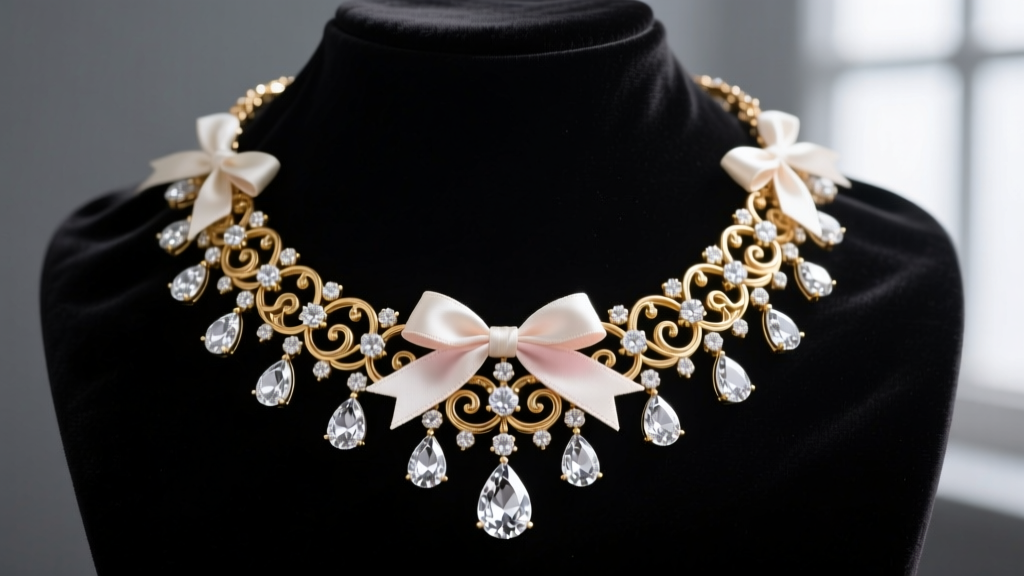
When jewelry historians and trend forecasters discuss the Marie Antoinette diamond necklace, they are usually referencing one of the most notorious political scandals of the 18th century, rather than a piece the Queen actually wore. The infamous "Affair of the Diamond Necklace" (1785) centered around a staggering 2,800-carat, 540-diamond festoon creation designed by jewelers Charles Auguste Böhmer and Paul Bassange. Though Marie Antoinette never possessed this specific collier, the scandal irrevocably cemented her legacy as a symbol of extreme sartorial excess and diamond maximalism.
Fast forward to 2026, and the "Rococo Revival" (often intersecting with the modern "Royalcore" and "Coquette" aesthetics) has brought the visual language of the French court back to the forefront of high and demi-fine jewelry. Today's collectors and fashion enthusiasts are not looking for the literal 2,800-carat scandal piece; instead, they are drawn to the actual silhouettes Marie Antoinette favored: the delicate Sévigné bow pendants, multi-strand pearl and diamond festoons, and graduated rivière chokers. This 2026 trend analysis deconstructs how 18th-century royal aesthetics are being re-engineered for modern necklines, complete with exact material grades, pricing tiers, and styling frameworks.
Deconstructing the "Marie Antoinette" Silhouette
To authentically capture the Rococo revival trend, one must understand the structural anatomy of 18th-century neckwear. Modern jewelers are adapting three primary historical silhouettes for the 2026 market:
The Festoon and The Rivière
The rivière (from the French word for "river") is a continuous, graduated strand of gemstones that flows around the neck without a central pendant. In 2026, the trend has evolved into the festoon—a necklace featuring draped, garland-like swags of chains or diamonds connecting the main collar. According to the Victoria and Albert Museum (V&A) Jewellery Collection, Georgian and Rococo festoons were designed to mimic the draped silk fabrics of the era's gowns. Modern iterations utilize articulated 18k white gold hinges to ensure the diamond swags lay flat against the clavicle, solving the rigid structural issues of antique pieces.
The Sévigné Bow Motif
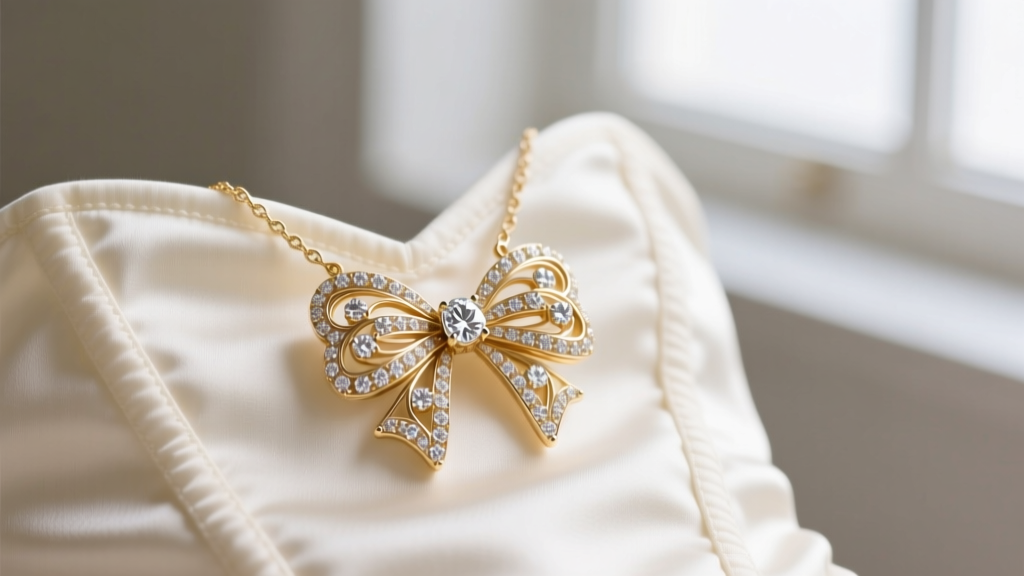
Named after the Marquise de Sévigné, this iconic bow-shaped pendant was a staple of Marie Antoinette's personal collection. In 2026, the Sévigné is experiencing a massive resurgence as a detachable pendant that can slide onto both velvet ribbon chokers and delicate cable chains. High-end manufacturers are casting these bows in 3D CAD to achieve the "crushed silk" texture of the original 18th-century goldsmithing, setting them with pavé diamonds weighing between 1.50 and 3.20 total carats.
Material Analysis: Rose Cuts, Old Mines, and Silver-Topped Gold
The brilliance of a modern round brilliant cut is entirely anachronistic to the Rococo aesthetic. To achieve the soft, glassy, and romantic lumen-scatter associated with the Marie Antoinette era, 2026 designers are heavily relying on antique and modified antique diamond cuts. The Gemological Institute of America (GIA) notes that these cuts prioritize carat weight retention and candlelight reflection over modern scintillation.
- Rose Cut Diamonds: Featuring a flat base and a domed, triangular-faceted crown (typically 24 facets), rose cuts offer a subtle, translucent glow. They are the premier choice for 2026 festoon swags because their low profile allows for comfortable layering.
- Old Mine Cuts: The precursor to the modern cushion cut, Old Mines feature a high crown, small table, and an open culet. They are primarily used as the central focal stones in Sévigné pendants or graduated rivière chokers.
- Metallurgy: Historically, diamonds were set in "silver-topped gold" because silversmiths could create finer, more delicate prongs than goldsmiths, and the white silver prevented yellow gold from tinting the diamonds. However, silver tarnishes against the skin. The 2026 solution? Platinum-topped 18k yellow gold, or heavily rhodium-plated 18k white gold, which provides the historical visual contrast of darkened or white settings without the oxidative degradation.
Historical vs. 2026 Modern Rococo Materials
| Feature | 18th Century Original | 2026 Rococo Revival |
|---|---|---|
| Diamond Cut | Irregular Rose & Early Old Mine | Precision-calibrated Lab-Grown Rose & Cushion |
| Metal Setting | Silver-topped Yellow Gold (tarnishes) | Platinum or Rhodium-plated 18k White Gold |
| Clasp Mechanism | Push-pin or ribbon-tie closures | Hidden micro-pave fold-over safety clasps |
| Accent Materials | Natural seed pearls, silk ribbons | Akoya pearls, grosgrain velvet, oxidized silver |
Styling the Rococo Revival: Necklines and Layering
The Marie Antoinette diamond necklace aesthetic requires strategic styling to avoid looking like a theatrical costume. The key to 2026's Royalcore trend is juxtaposing hyper-feminine, historical jewelry with modern, architectural silhouettes.
"The secret to wearing Rococo-inspired diamonds in 2026 is tension. You pair the extreme delicacy of a rose-cut diamond bow with the stark, severe lines of a modern square-neck blazer or a minimalist silk slip dress. The jewelry must be the sole romantic element in the ensemble." — Archival Jewelry Styling Framework, 2026
For optimal visual impact, adhere to these specific length and layering parameters:
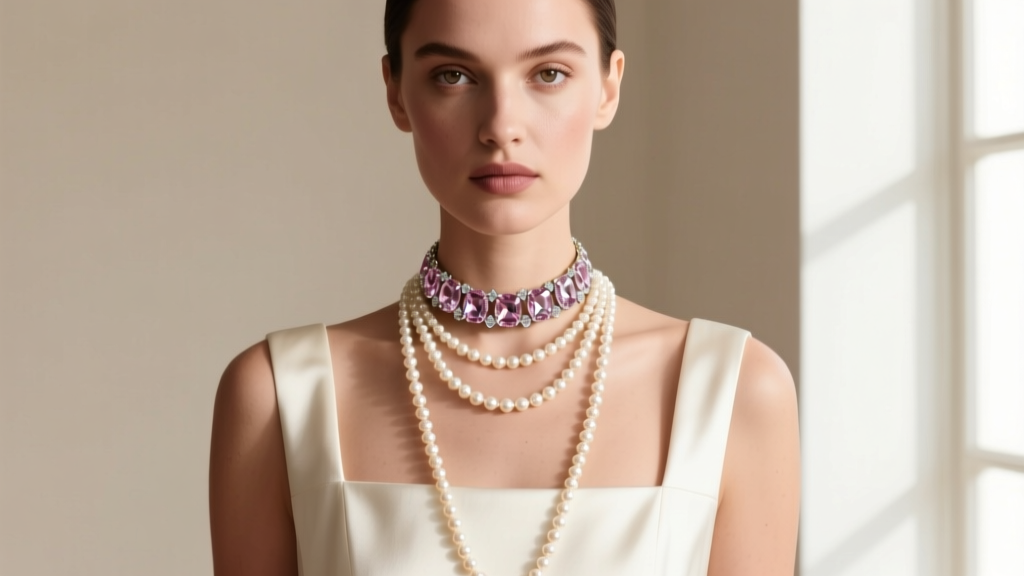
- The 14-Inch Choker Base: A 14-inch rivière or velvet ribbon choker sits precisely at the base of the throat. This frames the face and mimics the tight collars of 18th-century court dress.
- The 16-to-18 Inch Festoon Drop: Layering a draped festoon at 16 or 18 inches allows the diamond garlands to rest on the upper sternum. This length is specifically engineered to complement sweetheart and off-the-shoulder necklines, filling the negative space without competing with the garment's hemline.
- The Drop Pendant: A single pear-shaped diamond or cameo suspended on a 20-inch chain provides a vertical line that elongates the neck, ideal for high-collared Victorian-adjacent blouses that frequently cross over into Rococo styling.
Investment and Pricing Tiers for 2026
Acquiring a piece that channels the Marie Antoinette diamond necklace legacy requires navigating a highly stratified market. As documented in recent Sotheby's Royal Jewelry Archives, provenance and historical cut accuracy dictate premium valuations. For the modern consumer, the market is segmented into three distinct tiers:
1. True Antique (Georgian / Late 18th Century)
Authentic silver-topped gold pieces featuring unmodified Old Mine and rose-cut diamonds. Due to the fragility of 250-year-old foil-backed settings (which cannot be exposed to water), these are strictly collector-grade investments.
Price Range: $35,000 – $180,000+ depending on carat weight and provenance.
2. High Jewelry Modern Interpretations
Bespoke or limited-edition pieces from heritage houses utilizing natural, antique-cut diamonds (or custom-cut modern equivalents) set in platinum. These offer the historical silhouette with modern structural integrity and water resistance.
Price Range: $12,000 – $65,000.
3. Demi-Fine "Coquette" Rococo
The most accessible tier driving the 2026 trend, utilizing lab-grown rose-cut diamonds and recycled sterling silver or 14k gold vermeil. These pieces capture the aesthetic perfectly for daily wear, often incorporating synthetic silk ribbon sliders and freshwater pearl drops.
Price Range: $350 – $1,800.
Conclusion: The Enduring Allure of Maximalism
The legacy of the Marie Antoinette diamond necklace is no longer defined by the political ruin it caused, but by the enduring blueprint it provided for maximalist, romantic jewelry design. As 2026 embraces the Rococo revival, the integration of rose-cut diamonds, draped festoons, and Sévigné bows offers a masterclass in historical adaptation. By understanding the precise metallurgical shifts and styling tensions required to wear these pieces today, collectors can confidently invest in the Royalcore trend, wearing history not as a costume, but as a contemporary statement of power and elegance.


