Mary and Cross Necklace Buying Guide: What to Look For
Discover what to look for when buying a mary and cross necklace. Expert tips on metals, chain styles, pendant proportions, and daily wear durability.

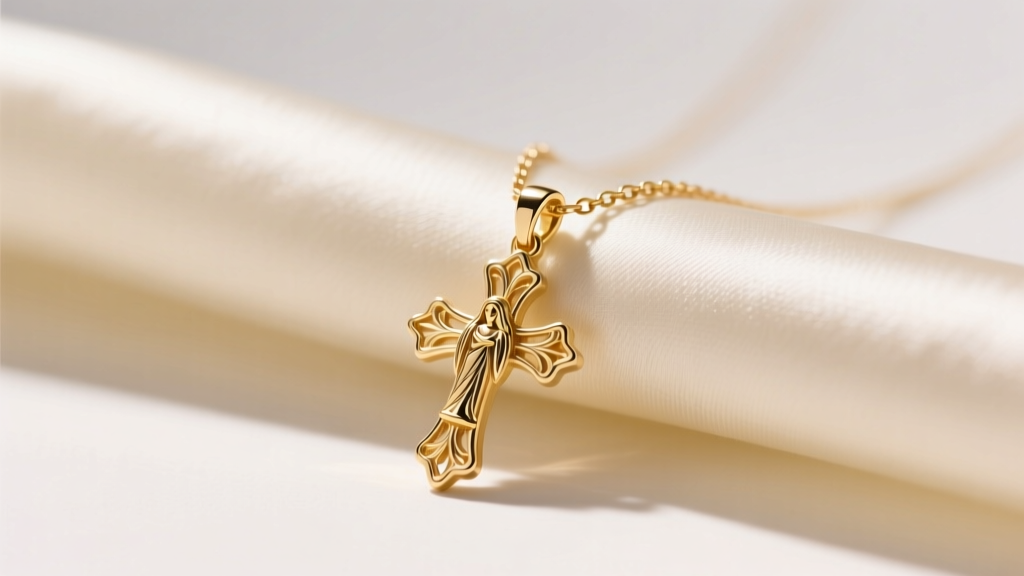
The Intersection of Faith and Fine Jewelry
For centuries, religious jewelry has served as both a personal talisman and a public declaration of faith. In recent years, the mary and cross necklace has emerged as a profound staple in fine jewelry, blending the maternal, protective symbolism of the Virgin Mary with the foundational Christian emblem of the cross. Whether you are purchasing this piece as a sacrament gift, a confirmation present, or a personal layering element, understanding the structural and material nuances is critical. As we navigate the jewelry landscape in 2026, consumers are increasingly prioritizing heirloom-quality craftsmanship over fast-fashion alternatives. This comprehensive buying guide will equip you with the technical knowledge required to select a piece that withstands daily devotion and wear.
Decoding Metal Choices: Durability Meets Devotion
The longevity of any dual-pendant necklace relies entirely on its metallurgical foundation. Because a mary and cross necklace is often worn daily—exposed to sweat, cosmetics, and friction—choosing the correct metal grade is non-negotiable.
Solid Gold vs. Gold Vermeil vs. Sterling Silver
When browsing, you will encounter three primary metal categories. According to the Federal Trade Commission (FTC) Jewelry Guides, the term 'vermeil' is strictly regulated. To be legally classified as gold vermeil, a piece must have a 925 sterling silver base and be plated with gold of at least 10k fineness, with a minimum thickness of 2.5 microns. Anything less is simply gold-plated and will quickly wear through to the base metal with daily friction.
- 14k or 18k Solid Gold: The ultimate choice for lifetime wear. 14k offers superior scratch resistance due to its higher alloy content, making it ideal for the delicate bails and jump rings connecting dual pendants. Expect to invest between $400 and $1,200 for a quality solid gold setup.
- Heavy Gold Vermeil (2.5+ microns): An excellent mid-tier option ($80–$250). Ensure the retailer specifies the micron thickness. Avoid 'gold dipped' pieces, which often feature less than 0.5 microns of gold.
- 925 Sterling Silver: A classic, affordable choice ($40–$120). However, silver is prone to sulfide tarnishing. Look for pieces that are rhodium-plated or e-coated to delay oxidation.
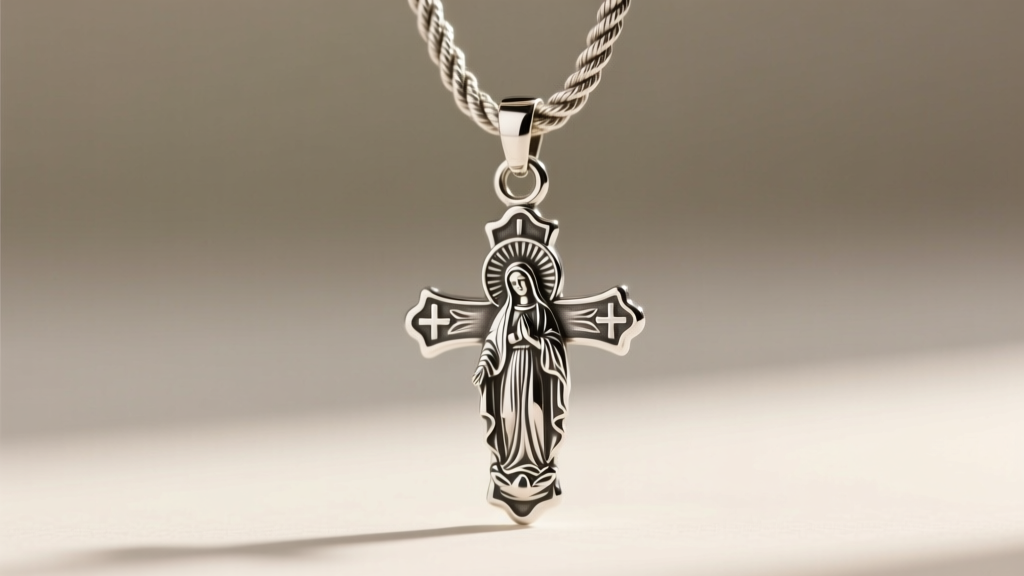
Pendant Proportions and Design Hierarchy
A common failure in poorly designed religious jewelry is the visual imbalance between the two elements. The Virgin Mary (often depicted as a Miraculous Medal or a cast portrait) and the cross must share a harmonious visual weight. If the Mary pendant is too large, it overpowers the cross; if too small, it resembles a mere charm rather than a co-equal symbol.
The Golden Ratio of Dual Pendants
Jewelers typically recommend that the Mary pendant be approximately 75% to 85% the size of the cross. This ensures the cross remains the primary structural anchor while the Mary medal provides complementary detail. Furthermore, pay close attention to the bail (the loop that connects the pendant to the chain). Dual pendants require a larger, reinforced bail or a specialized dual-jump-ring setup to prevent the pendants from constantly overlapping and scratching one another.
| Design Style | Cross Dimensions | Mary Dimensions | Best Use Case |
|---|---|---|---|
| Delicate Layering | 10mm x 6mm | 7mm (Medal) | Underneath shirts, subtle daily wear |
| Classic Devotional | 18mm x 12mm | 14mm (Medal) | Worn over clothing, confirmation gifts |
| Statement Cast | 25mm x 15mm | 20mm (Portrait) | Outerwear layering, bold fashion |
Chain Styles That Support Sacred Weight
The chain is the literal lifeline of your necklace. Dual pendants introduce concentrated weight and kinetic friction at the center of the neckline. According to the Gemological Institute of America (GIA), understanding chain link integrity is vital for preventing catastrophic breakage.
Evaluating Link Integrity
Avoid hollow chains at all costs. While they offer a thick look at a low price, they are impossible to repair if crushed or snapped. For a mary and cross necklace, you need solid, soldered links.
- Cable Chain (1.2mm - 1.5mm): The traditional choice. Its simple, uniform oval links distribute weight evenly. Ensure the wire gauge is at least 1.2mm to support the dual pendants without stretching.
- Rope Chain (1.5mm - 2.0mm): Highly durable due to its twisted, interlocking links. The faceted surface catches the light beautifully, elevating the importance of the pendants it carries.
- Box Chain: While visually sleek, box chains are notorious for kinking when bent at sharp angles. If you choose a box chain, opt for a wider gauge (1.8mm+) to maintain structural rigidity.
Expert Tip: Always inspect the clasp. A standard spring-ring clasp is often too weak and difficult to operate for heavier dual-pendant setups. Insist on a solid lobster clasp, which features a stronger internal spring and a wider gate for secure fastening.
Enamel, Gemstones, and Cast Details
The aesthetic finish of the Virgin Mary pendant drastically alters its care requirements and visual impact. Modern jewelers utilize two primary methods for adding color and detail to these pieces: cold enamel and vitreous enamel.
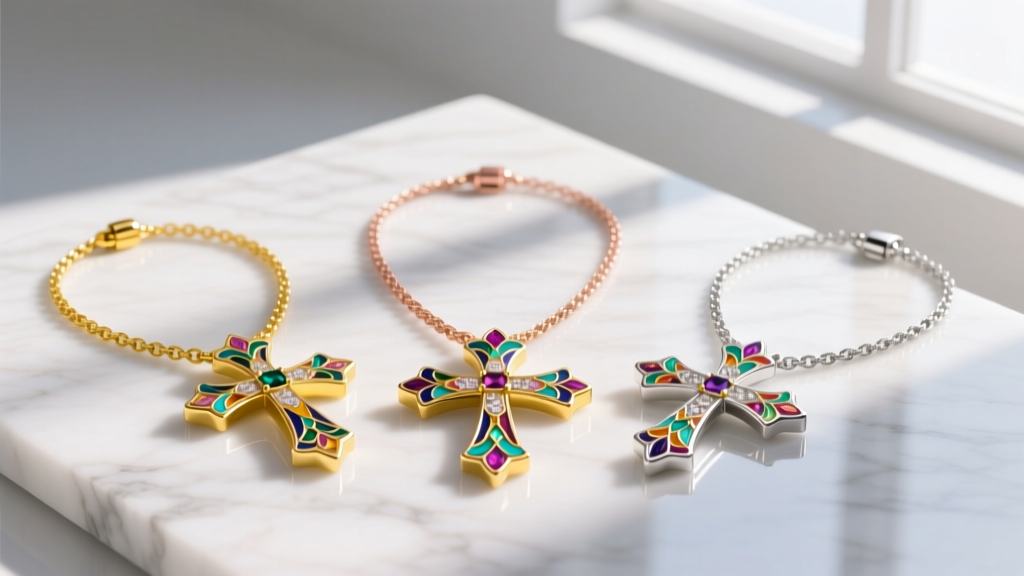
Cold Enamel (Epoxy Resin): Frequently used in mid-range jewelry, cold enamel is painted into cast recesses and cured. While it offers vibrant blues and whites, it is susceptible to chipping if dropped on a hard surface and can degrade when exposed to prolonged UV light or harsh chemicals.
Vitreous (Hot) Enamel: The hallmark of true luxury religious jewelry. This involves fusing powdered glass to the metal at temperatures exceeding 1,400°F. The result is a scratch-resistant, luminous finish that will not fade over time. When investing in a high-end mary and cross necklace, always inquire if the piece features vitreous enameling.
Alternatively, some designs eschew color entirely, relying on high-polish and matte-brushed contrasts to define the features of the Mary portrait. These 'two-tone' finishes are highly recommended for individuals who work with their hands, as they eliminate the risk of enamel chipping altogether.
Maintenance and Care for Daily Wear
Because religious jewelry is rarely removed, it accumulates skin oils, lotions, and environmental debris. Proper maintenance ensures the intricate details of the Mary medal and the sharp edges of the cross remain pristine.
- Ultrasonic Cleaners: Avoid. The high-frequency vibrations can easily shatter cold enamel and loosen any small accent gemstones (such as diamond chips or birthstones) set into the cross.
- Chemical Dips: Avoid. Silver dip solutions will strip the oxidized antiquing that gives cast Mary portraits their depth and readability.
- The Right Method: Use a soft-bristled baby toothbrush with a drop of mild dish soap and warm water. Gently agitate the crevices of the pendants, rinse thoroughly, and pat dry with a lint-free microfiber cloth.
Final Verdict: Investing in Quality
A mary and cross necklace is more than an accessory; it is a wearable testament to personal belief and heritage. When evaluating your purchase, look beyond the initial aesthetic. Verify the metal purity, measure the pendant proportions, and test the clasp mechanism. By prioritizing solid metals, soldered chain links, and balanced design hierarchies, you ensure that this deeply meaningful piece will endure not just as a trend of 2026, but as a lifelong companion and a future family heirloom.


