How to Measure Necklace Chain Length for Flawless Styling
Learn exactly how to measure necklace chain length for perfect layering. Discover styling trends, gauge impacts, and ideal neckline pairings.


The Anatomy of Chain Lengths: Why Measurement Matters
In the world of fine jewelry and contemporary styling, a mere half-inch can completely alter the silhouette of an outfit. Understanding how to measure necklace chain length is not just a matter of sizing; it is the foundational skill for mastering proportional styling and layered trends. As we navigate the styling landscape of 2026, the industry has shifted away from the overly rigid, tight chokers of the early 2020s, favoring dynamic, multi-layered 'floating' collars and elongated opera strands that interact fluidly with modern necklines.
Whether you are curating a permanent jewelry collection, sourcing vintage pieces, or designing custom pendants, precise measurement dictates the visual weight and drape of the chain. According to industry standards outlined by Jewelers of America, accurate chain measurement is critical for inventory categorization and ensuring the piece sits exactly on the intended anatomical landmark—be it the clavicle, the sternum, or the solar plexus.
Step-by-Step: How to Measure Necklace Chain Length Accurately
To achieve professional-grade accuracy, you must abandon rigid rulers and metal carpenter tapes, which cannot account for the micro-flexibility of interlocking metal links. Here is the definitive methodology for measuring any chain style, from delicate cable to heavy Cuban links.
1. Prepare the Chain and Tools
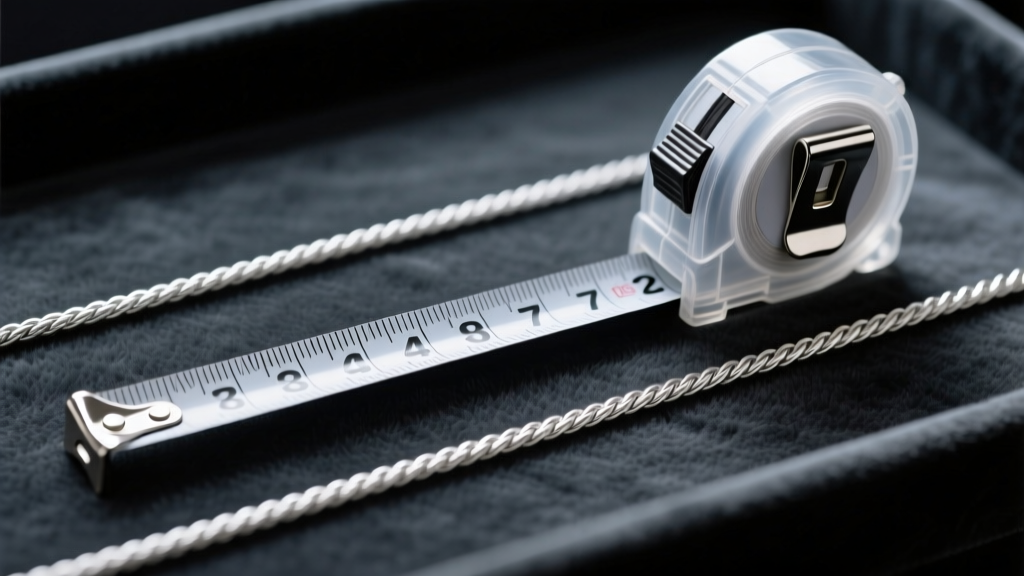
Lay the necklace completely flat on a non-slip surface, such as a velvet jewelry mat or a microfiber cloth. Use a flexible fiberglass tailor’s tape measure. Fiberglass prevents stretching over time and contours perfectly to the natural curves of the chain links without pulling them taut in a way that distorts the true wearable length.
2. The Clasp Rule: End-to-End Measurement
A common point of confusion is whether to include the clasp in the total measurement. The universal industry standard is to measure the chain end-to-end, including the clasp and any attached jump rings, but excluding any detachable pendants. Unclasp the necklace, lay it in a straight line, and place the zero-mark of your tape measure at the very outer edge of the jump ring on one side, extending to the outer edge of the clasp mechanism on the other.
3. Accounting for Link Rigidity
Not all chains drape equally. A 20-inch herringbone chain lies completely flat against the skin, meaning its measured length translates almost 1:1 to its worn circumference. Conversely, a 20-inch thick Figaro or rope chain has structural stiffness. When measuring these, ensure you do not pull the links into an unnaturally straight line; allow the natural 'give' of the metal to settle before reading the tape.
The Trend Matrix: Chain Lengths vs. Necklines
Mastering how to measure necklace chain length allows you to intentionally pair jewelry with garments. The table below maps standard industry lengths to their anatomical resting points and their current relevance in 2026 trend forecasting.
| Length (Inches) | Industry Name | Anatomical Resting Point | Ideal Neckline Pairing | 2026 Trend Status |
|---|---|---|---|---|
| 12 - 13" | Collar | Directly around the neck | Open V-necks, off-shoulder | Niche / Editorial |
| 14 - 15" | Choker | Base of the neck / Clavicle | Scoop necks, crew necks | High (Layering base) |
| 16 - 18" | Princess | Collarbone to upper bust | Any (Universal standard) | Dominant (Standalone) |
| 20 - 24" | Matinee | Center of the bust | High necks, turtlenecks, blazers | Rising (Office-core) |
| 28 - 36" | Opera | Sternum to waistline | Evening wear, deep plunges | Steady (Double-wrap) |
Proportional Styling: Factoring in Pendant Drop and Gauge
Measuring the chain is only half the equation. True style analysis requires factoring in the chain's gauge (thickness) and the pendant's drop length. The Gemological Institute of America (GIA) frequently notes that the visual weight of a piece is determined by the harmony between metal volume and gemstone scale.
The Gauge Illusion
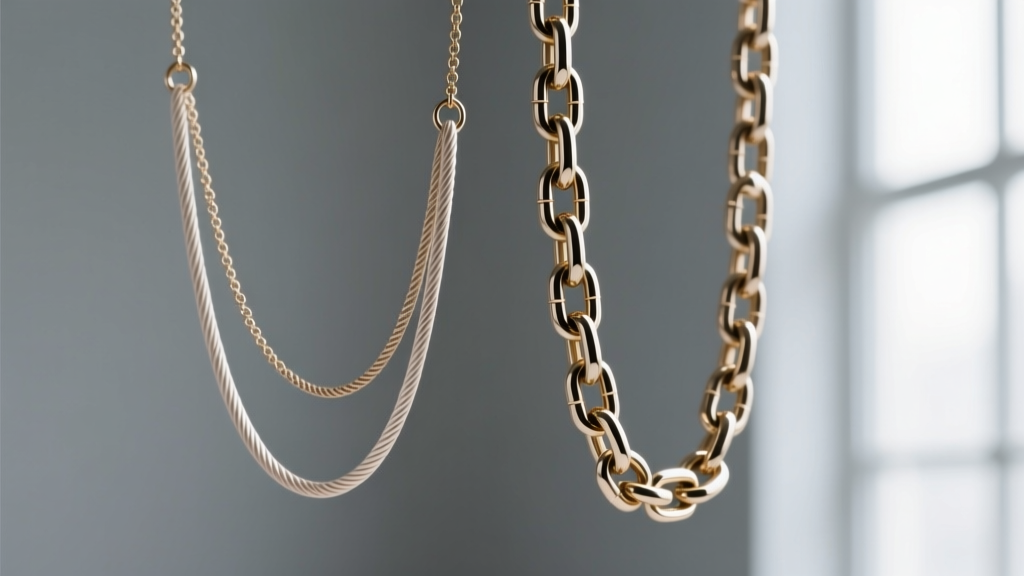
Gauge refers to the thickness of the wire used to make the links, typically measured in millimeters. A 16-inch chain in a 0.8mm delicate cable gauge will visually read as longer and more fragile, draping deeply into the hollow of the clavicle. A 16-inch chain in a 3.5mm chunky curb gauge will sit higher and stiffer due to the reduced flexibility of the thicker links. When layering, always maintain a minimum 0.5mm gauge difference and a 2-inch length gap between chains to prevent tangling and visual clutter.
The Pendant Drop Multiplier
If you are measuring a chain to accommodate a specific pendant, you must calculate the 'drop multiplier.' A standard 18-inch princess chain resting at the collarbone will drop an additional 1.5 to 3 inches depending on the bail size and pendant length. For example, pairing an 18-inch chain with a 2-inch teardrop pendant effectively pushes the visual focal point to 20 inches (the matinee zone). Always measure the pendant from the top of the bail to the bottom tip and add this to your chain length to predict the final resting point on the torso.
Common Measurement Pitfalls and How to Avoid Them
Even seasoned collectors make errors when evaluating vintage or bespoke pieces. Avoid these critical mistakes:
- The Stretch Error: Pulling a chain taut to get a 'clean' number on the tape measure. This artificially inflates the length by up to half an inch on loosely linked chains like rope or box styles.
- Ignoring Extenders: Many modern chains feature a 2-inch extender chain. Industry standard dictates that the stated length is the base chain length, excluding the extender. Always measure the primary chain and note the extender separately.
- Metric/Imperial Confusion: High-end European houses often manufacture in centimeters. A '45cm' chain is approximately 17.7 inches, which sits noticeably lower than a standard US 16-inch chain. Always convert and verify with a physical tape measure.
"Precision in jewelry measurement is the bridge between a piece that simply fits and a piece that flatters. The tape measure is your most vital styling tool."
Conclusion
Knowing how to measure necklace chain length accurately empowers you to shop confidently, layer intentionally, and curate a collection that complements your unique anatomy. By combining exact end-to-end measurements with an understanding of gauge stiffness, pendant drop, and contemporary neckline trends, you transform a simple accessory into a masterclass of personal style.


