Men Leather Necklace Trends 2026: Styles, Cords & Pendants
Discover 2026 men leather necklace trends. We break down cord thicknesses, full-grain vs. vegan leather, magnetic clasps, and pendant pairings.

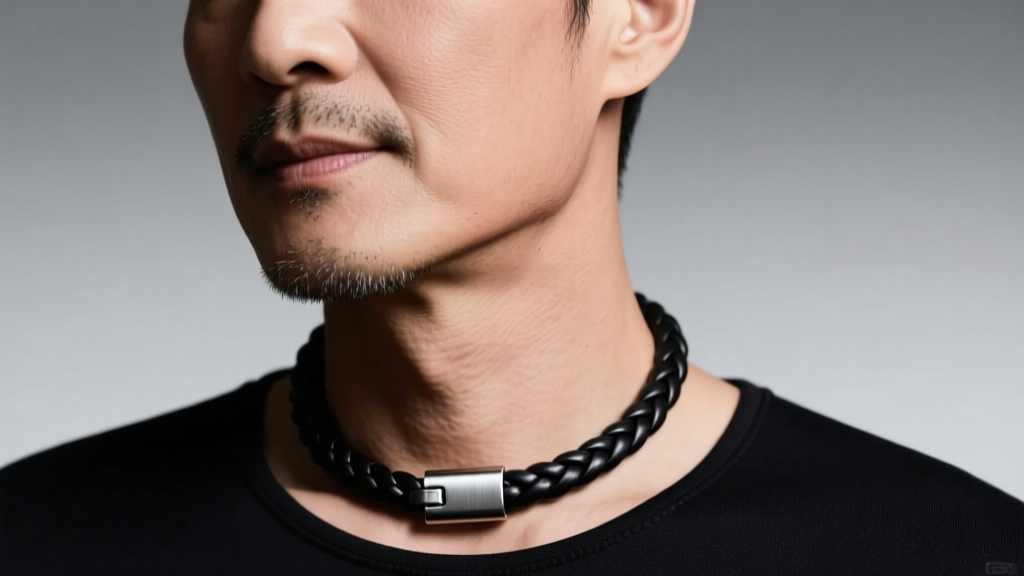
The landscape of men's jewelry has undergone a radical transformation over the last decade. As we move through 2026, the men leather necklace has evolved from a niche, rugged accessory into a cornerstone of refined, everyday menswear. The era of the excessively chunky, 10mm braided biker cord with a massive, heavy-metal clasp is officially over. Today's aesthetic demands precision engineering, sustainable material sourcing, and subtle integration with both casual and tailored wardrobes.
Whether you are layering over a heavyweight knit sweater or wearing a minimalist cord against a crisp linen shirt, understanding the nuances of leather grades, cord thicknesses, and hardware mechanics is essential. This guide breaks down the exact specifications, material grades, and styling frameworks defining the leather necklace market in 2026.
The 2026 Shift: Refined Minimalism Over Chunky Biker Styles
In the early 2010s, leather necklaces for men were defined by volume. Thick, multi-strand braided cowhide dominated the market, often terminating in oversized sterling silver or brass clasps that weighed as much as the cord itself. The 2026 trend cycle has inverted this philosophy. The focus is now on micro-braiding, ultra-thin profiles, and hidden hardware.
Modern style authorities, including the editorial teams at GQ Style, consistently highlight that contemporary men's jewelry should complement the wearer's silhouette rather than overpower it. A 2mm to 4mm cord offers the perfect visual weight—noticeable enough to add texture to an outfit, but slim enough to slide discreetly under an unbuttoned collar or layer seamlessly with oxidized metal chains.
Material Breakdown: Leather Grades & Cord Construction
Not all leather is created equal, and the tensile strength of the material dictates how thin the cord can be cut or braided without risking catastrophic failure. When investing in a premium piece, you must look beyond the generic 'genuine leather' label.
Kangaroo Leather: The High-Tensile Standard
For ultra-thin cords (1.5mm to 2.5mm), kangaroo leather is the undisputed king. According to material testing data, kangaroo hide boasts a tensile strength of up to 8,000 psi, compared to roughly 3,000 psi for standard cowhide. This unique fiber structure allows it to be sliced into razor-thin strips and tightly braided without fraying or snapping under the weight of a pendant. It is lightweight, highly resistant to moisture absorption, and develops a rich patina over time.
Full-Grain Cowhide & Suede
For standard 3mm to 5mm cords, full-grain cowhide remains the benchmark. It offers a rugged, organic texture that pairs beautifully with raw stone pendants. Suede and nubuck cords have also seen a resurgence in 2026, offering a matte, velvety finish that absorbs light and provides a stark, luxurious contrast against polished metal pendants. However, suede requires rigorous maintenance, as it is highly susceptible to water spotting and sebum degradation.
Sustainable & Vegan Alternatives
The push for sustainability has forced the industry to innovate. The Leather Working Group (LWG) has set strict environmental protocols for traditional tanneries, but bio-based alternatives are capturing significant market share. Materials like Piñatex (derived from pineapple leaf fibers) and Mylo (mycelium-based mushroom leather) are now being extruded into durable, water-resistant cords that mimic the drape and weight of traditional leather without the environmental footprint of animal agriculture.
Cord Thickness & Application Guide
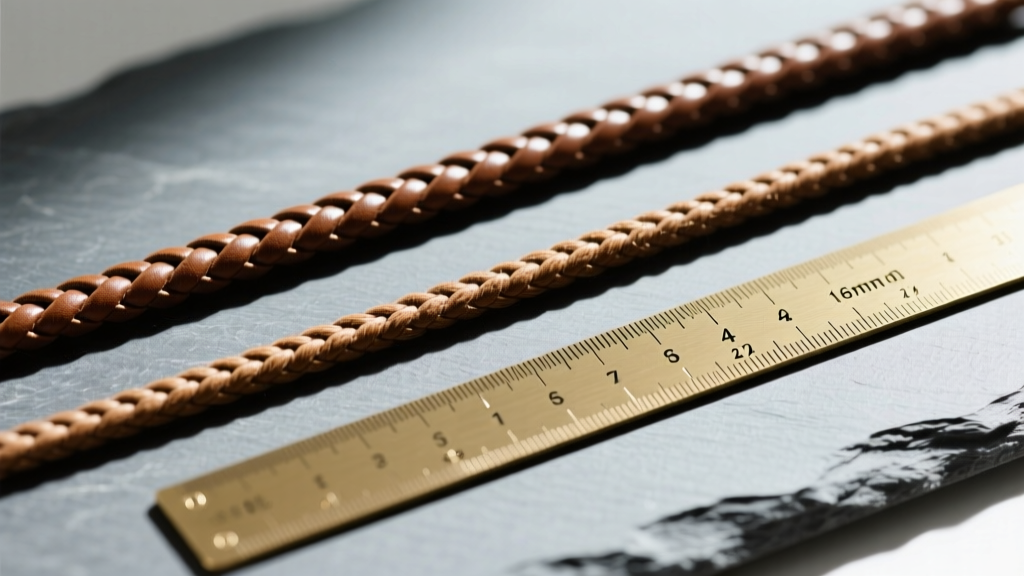
| Cord Thickness | Profile Classification | Ideal Pendant Weight | Best Use Case |
|---|---|---|---|
| 1.5mm - 2.0mm | Ultra-Thin | Under 10g | Minimalist layering, lightweight metallic charms |
| 3.0mm - 4.0mm | Standard | 10g - 25g | Daily standalone wear, medium raw stone pendants |
| 5.0mm - 8.0mm | Chunky / Statement | 25g+ | Heavy tungsten pendants, streetwear, outerwear |
Hardware Engineering: Clasps That Actually Work
The most common failure point of any leather necklace is not the cord itself, but the junction where the leather meets the clasp. Traditional end-caps, which rely on cyanoacrylate (super glue) or basic epoxy to secure the leather, inevitably fail. Human sweat, sebum, and the natural pH fluctuations of the skin degrade these adhesives over a 6-to-12-month period, resulting in a lost pendant and a broken cord.
In 2026, high-end manufacturers have abandoned glued end-caps in favor of mechanical and magnetic engineering:
- Neodymium Magnetic Clasps (N52 Grade): These feature powerful rare-earth magnets encased in 316L surgical stainless steel or Grade 5 titanium. They include a secondary mechanical safety catch (a twisting lock or a sliding sleeve) to prevent accidental unclasping if the necklace is snagged on clothing.
- Bayonet Clasps: A precision-machined push-and-twist mechanism that physically locks into place. This requires no glue; the leather is folded and compressed inside a threaded metal housing, creating a permanent, fail-safe bond.
- Sliding Square Knots: For a purely organic, hardware-free approach, macramé sliding knots allow for adjustable lengths (typically 18 to 26 inches) and eliminate metal entirely, making them ideal for those with severe contact dermatitis or nickel allergies.
For a deep dive into the metallurgy and mechanics of jewelry findings, resources like Rio Grande provide extensive technical documentation on why 316L stainless steel and titanium are vastly superior to base-metal alloys for clasp construction.
Pendant Pairings: Metals and Stones for Leather
Leather is an inherently warm, organic, and matte material. To create visual interest, your pendant must provide contrast in both texture and tone. Pairing a rustic leather cord with a high-polish, bright yellow gold pendant often results in a disjointed, aesthetically confused look. Instead, lean into materials that share leather's grounded, masculine energy.
The 2026 Pairing Matrix
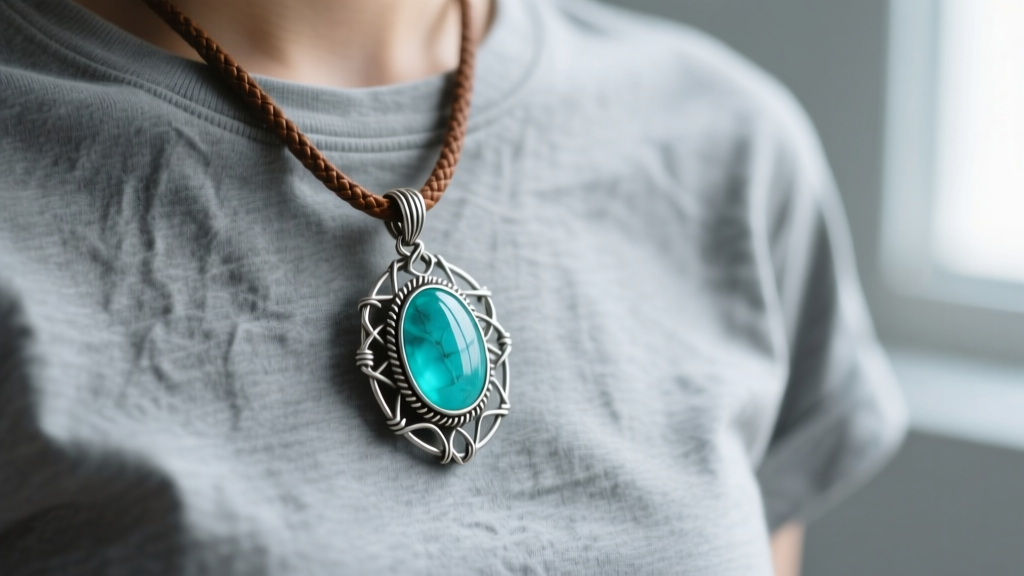
- Oxidized Sterling Silver & Raw Stones: Blackened silver wire wrapping around unpolished turquoise, matte onyx, or rough-cut lapis lazuli creates a cohesive, earthy aesthetic that perfectly complements dark brown or black leather.
- Tungsten Carbide: For a modern, industrial contrast, a brushed tungsten pendant on a sleek black kangaroo leather cord offers incredible durability. Tungsten is virtually scratch-proof and provides a satisfying, heavy drape that anchors the necklace.
- Damascus Steel: The wavy, water-like patterns of forged Damascus steel pendants pair exceptionally well with the natural grain of full-grain leather, creating a piece that looks both ancient and highly engineered.
The 2026 Layering Framework
Layering a leather cord with metal chains is a staple of contemporary styling, but it requires strict adherence to spatial and proportional rules to avoid looking cluttered.
- The Rule of Lengths: Maintain a minimum 2-inch to 4-inch gap between layers. A standard framework is a 16-inch oxidized silver cable chain, layered with a 20-inch leather cord, finished with a 24-inch leather cord holding a focal pendant.
- The Rule of Weights: The leather cord should generally act as the visual anchor. If you are mixing a 3mm leather cord with a metal chain, ensure the metal chain is significantly thinner (e.g., a 1.5mm rope or box chain) so the textures do not compete for dominance.
- Metal Consistency: Ensure the hardware on your leather necklace (the clasp and pendant bail) matches the metal of your accompanying chains. Mixing brushed titanium hardware with a bright sterling silver chain creates visual friction.
Care, Maintenance, and Sweat Damage
Leather is a porous, organic material that degrades when exposed to the acidic pH of human sweat, chlorine, and saltwater. A $150 full-grain leather necklace can become brittle, discolored, and prone to snapping within months if subjected to daily gym sessions or shower wear without intervention.
'Treat your leather jewelry exactly like a high-end pair of leather boots. Keep it dry, condition it seasonally, and never wear it in the ocean.' — Master Leather Artisan, Heritage Goods Co.
To maximize the lifespan of your necklace, wipe it down with a slightly damp microfiber cloth after heavy perspiration. Every three to four months, apply a minimal amount of a high-quality leather conditioner (such as Bick 4 or Lexol) to the cord. Avoid wax-heavy conditioners, as they can transfer onto your clothing and alter the drape of the leather, making it stiff and unnaturally glossy. Store the necklace flat or hung in a climate-controlled environment away from direct UV light, which will rapidly bleach and dry out the hide.
By understanding the precise mechanics of cord thickness, hardware engineering, and material sustainability, you can invest in a men leather necklace that is not just a fleeting trend, but a durable, evolving staple of your personal style arsenal for years to come.


