How to Choose Your First Mens Diamond Cross Necklace
Discover how to choose the perfect mens diamond cross necklace. Learn about diamond grades, chain lengths, metals, and pricing in this beginner guide.

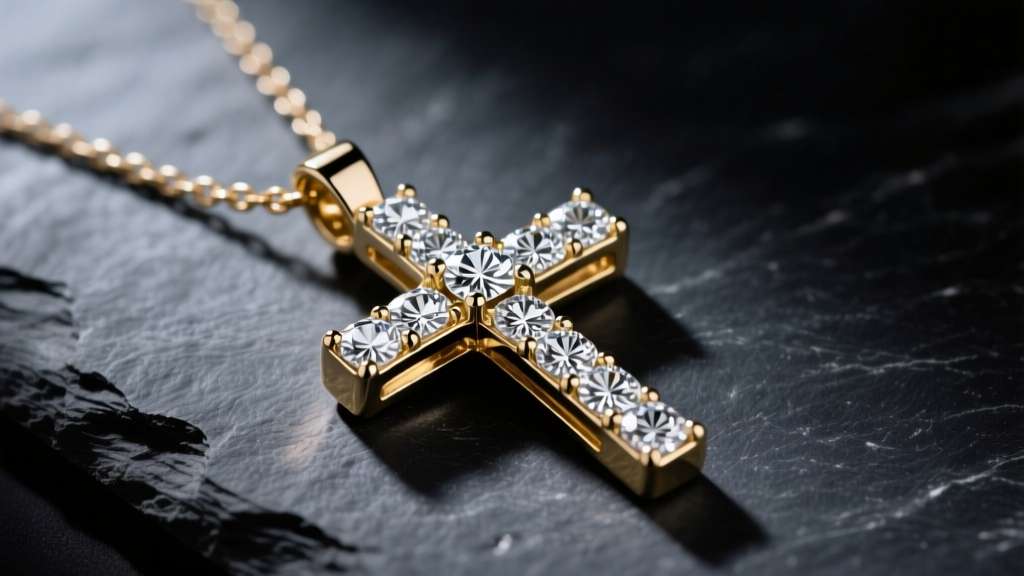
The Anatomy of a Staple: Why the Diamond Cross Endures
The mens diamond cross necklace is more than just a piece of jewelry; it is a cultural staple that bridges streetwear, high fashion, and personal faith. Whether you are buying your first piece to mark a milestone or upgrading from a plain metal pendant, navigating the jewelry market can feel overwhelming. Retailers often throw around terms like 'VVS,' 'TCW,' and 'rhodium-plated' without explaining what actually matters for a man's daily wear. This beginner-friendly explainer cuts through the marketing fluff, giving you the exact specifications, material grades, and structural details you need to make an informed purchase in 2026.
Decoding the Diamonds: What Quality Do You Actually Need?
The biggest mistake beginners make when buying a diamond cross is overpaying for clarity and color grades that are entirely unnecessary for this specific style of jewelry. Most diamond crosses utilize 'melee' diamonds—small stones typically weighing under 0.15 carats each. Because these stones are so small, they are sorted by mechanical sieves rather than individually graded by gemological labs. According to the Gemological Institute of America (GIA), melee diamonds are primarily used to accentuate a design, meaning the collective sparkle (scintillation) is far more important than the individual perfection of each stone.
The Smart Buyer's Matrix for Melee Diamonds
When evaluating a mens diamond cross necklace, you will see the term TCW (Total Carat Weight). A 2.00 CTW cross might feature 40 individual 0.05ct diamonds. Paying a premium for 'Flawless' or 'VVS' (Very Very Slightly Included) clarity on melee stones is a waste of capital, as inclusions are physically impossible to see with the naked eye at that scale. Instead, focus on the cut quality, which dictates how much light the pavé setting reflects.
| Quality Tier | Clarity Grade | Color Grade | Best For | Value Rating |
|---|---|---|---|---|
| Luxury / Collector | VS1 - VS2 | D - F (Colorless) | High-end platinum settings, investment pieces | Low (Diminishing returns) |
| Sweet Spot (Recommended) | SI1 - SI2 | G - H (Near Colorless) | Daily wear, 14k gold settings, maximum sparkle per dollar | Excellent |
| Budget / Fashion | I1 - I2 | J - M (Faint Yellow) | Yellow gold settings (which mask yellow tints), occasional wear | Good (If priced correctly) |
Lab-Grown vs. Natural Melee in 2026
The diamond market has shifted dramatically. Lab-grown melee diamonds now offer identical optical and chemical properties to mined stones but at a fraction of the cost. For a mens diamond cross necklace, where the stones are set tightly together in a pavé or channel setting, the origin is virtually indistinguishable without specialized spectroscopy equipment. Opting for lab-grown diamonds allows you to double the TCW or upgrade to a heavier platinum chain while staying within the same budget.
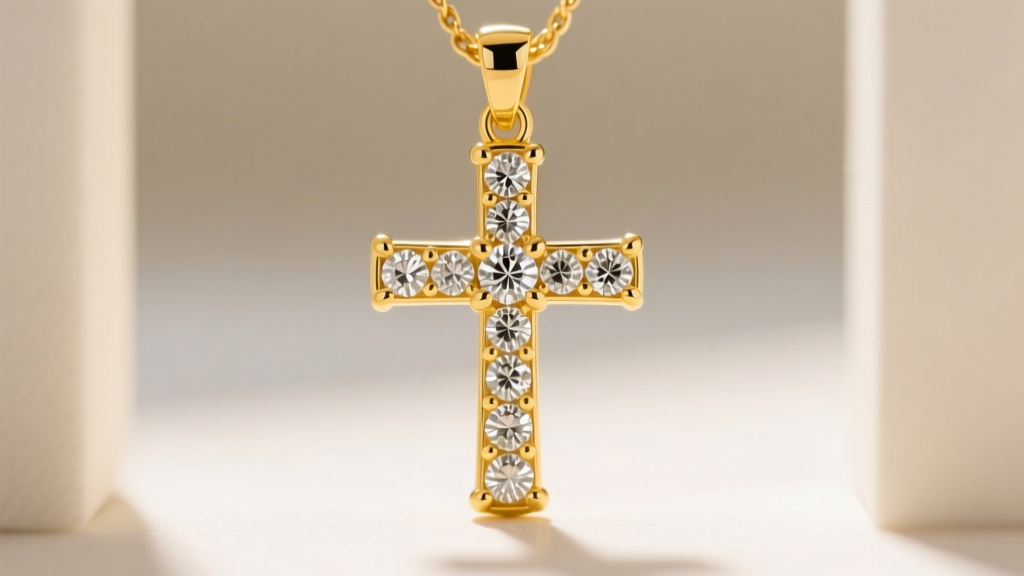
Choosing the Right Metal: Durability Meets Aesthetics
The metal you choose dictates the pendant's longevity, weight, and maintenance requirements. While Blue Nile Diamond Education often highlights platinum for engagement rings, men's necklaces face different environmental stressors, including sweat, friction, and accidental snags.
- 14k Gold (58.5% Pure): The undisputed champion for men's daily wear. It offers the perfect balance of rich color and structural rigidity. It will not easily bend or warp if the chain is pulled.
- 18k Gold (75% Pure): Richer and more hypoallergenic, but softer. Best reserved for pendants that sit securely under a shirt rather than those worn over heavy outerwear.
- Platinum (95% Pure): Extremely dense and heavy, giving the cross a premium, substantial feel. It develops a 'patina' (micro-scratches) over time, which many men prefer for a rugged, vintage look. It requires no rhodium plating.
- Sterling Silver (92.5% Pure): An excellent entry-level option, but it will oxidize and tarnish when exposed to sulfur and sweat. Requires regular polishing with a jeweler's cloth.
Pro Tip: If you choose white gold, remember that it is alloyed with metals like nickel or palladium and plated with rhodium to achieve its bright white finish. You will need to budget for a professional rhodium re-dipping every 12 to 18 months to prevent the pendant from looking dull or slightly yellow.
Chain Selection and the Critical Bail Mechanics
A common beginner error is purchasing a heavy, thick chain and a cross pendant, only to realize the pendant's loop (the bail) is too small to accommodate the chain. The bail is the unsung hero of necklace anatomy. When shopping, always check the inner bail diameter. A standard 5mm wide rope chain requires a bail with an inner opening of at least 7mm x 10mm to drape correctly without kinking the chain links.
Length and Drop Guide for Men
The length of your chain determines where the cross rests on your chest, which drastically changes the visual impact of the jewelry.
- 18 Inches (Collar): Sits tightly at the base of the neck. Best for very small, subtle crosses (under 1 inch in height). Not recommended for thick chains.
- 20 Inches (Collarbone): The most versatile and popular length for men. The cross rests just below the collarbone, visible with an unbuttoned shirt or over a plain t-shirt.
- 22 Inches (Upper Chest): Ideal for medium-to-large crosses (1.5 to 2.5 inches). Sits comfortably on the chest and is the standard length for streetwear styling.
- 24+ Inches (Lower Chest): Reserved for oversized, statement crosses. Often worn over hoodies or layered with shorter chains.

Chain Link Structural Integrity
For a diamond cross, you want a chain that complements the sparkle without competing with it. Rope chains twist the light beautifully, mimicking the scintillation of the diamonds. Cuban links offer a flat, bold, and masculine contrast to the intricate pavé of the cross. Avoid hollow chains at all costs; they are lightweight, dent easily, and are nearly impossible for a jeweler to repair if a link snaps. Always opt for solid or semi-solid links, and ensure the clasp is a sturdy lobster claw or a custom diamond-cut box clasp with a safety figure-eight latch.
Pricing Breakdown: What to Expect in the Current Market
Pricing for a mens diamond cross necklace varies wildly based on the TCW, the origin of the diamonds, and the precious metal weight. Below is a realistic pricing framework for the current market, assuming a standard 1.5-inch cross pendant on a 20-inch solid 14k gold chain.
- Entry-Level ($400 - $800): Sterling silver or 10k gold, 0.50 to 1.00 CTW lab-grown diamonds, SI-I1 clarity. Excellent for fashion-forward styling on a budget.
- Mid-Range / Everyday ($1,200 - $2,500): Solid 14k gold, 1.50 to 2.50 CTW lab-grown or 0.75 CTW natural diamonds, SI1 clarity, G-H color. This is the sweet spot for quality and longevity.
- Luxury / Heirloom ($4,000 - $10,000+): 18k gold or Platinum, 3.00+ CTW natural earth-mined diamonds, VS clarity, premium brand craftsmanship with custom hidden bails.
Care, Maintenance, and Troubleshooting
Dirt, body oils, and lotions will quickly build up behind the pavé settings of your cross, blocking light and making the diamonds look cloudy. Clean your necklace bi-weekly using a soft-bristled baby toothbrush, warm water, and a few drops of mild dish soap. Gently brush the underside of the cross where the gallery (the metal framework holding the stones) collects debris.
Warning: Avoid ultrasonic cleaners unless you are 100% certain your diamonds are natural and untreated. Some lower-tier natural diamonds undergo 'fracture filling' to improve their apparent clarity. The high-frequency vibrations and heat of an ultrasonic cleaner can melt or shatter these glass-like fillings, permanently ruining the stones. When in doubt, stick to manual cleaning or take the piece to a professional jeweler for a steam clean.
By understanding the mechanics of melee diamonds, the importance of bail sizing, and the realities of metal durability, you can confidently select a mens diamond cross necklace that offers exceptional value, structural integrity, and timeless style.


