Mens Gold Italian Horn Necklace: Technical Sizing Guide
Discover expert technical details on the mens gold Italian horn necklace, including karat grades, chain pairings, solid vs. hollow casting, and sizing.

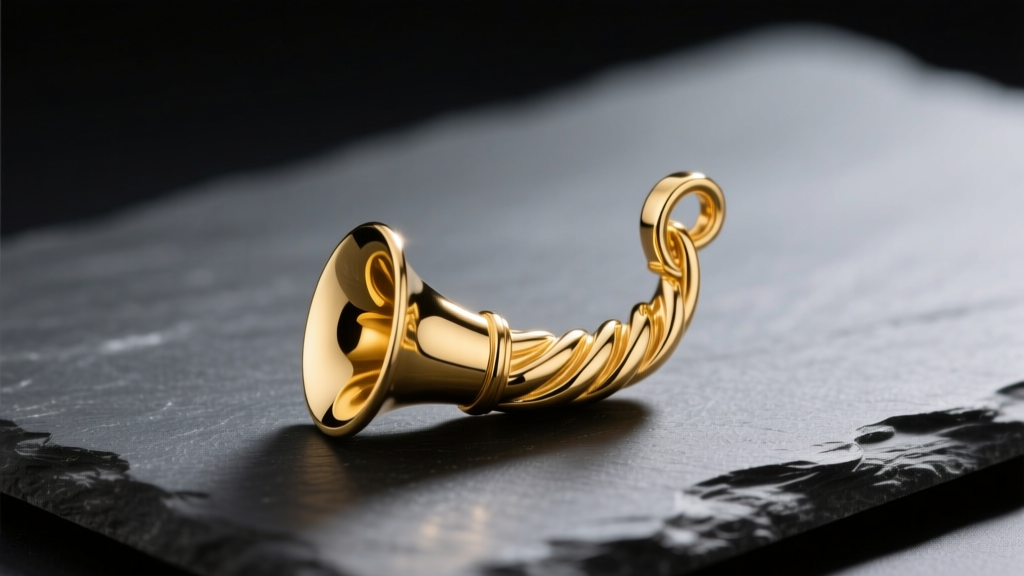
The cornicello, or Italian horn, is an ancient amulet historically designed to ward off the malocchio (evil eye). Today, the mens gold Italian horn necklace has transcended its superstitious roots to become a cornerstone of men's luxury jewelry. However, the modern market is saturated with poorly constructed, mass-produced pieces that lack structural integrity and metallurgical quality. As a jewelry technical specialist, I evaluate these pendants not just by their aesthetic appeal, but by their alloy composition, casting methodology, and mechanical durability. This guide provides an expert deep dive into the technical specifications you must consider before investing in a high-caliber horn pendant.
The Anatomy of the Cornicello: Dimensions and Proportions
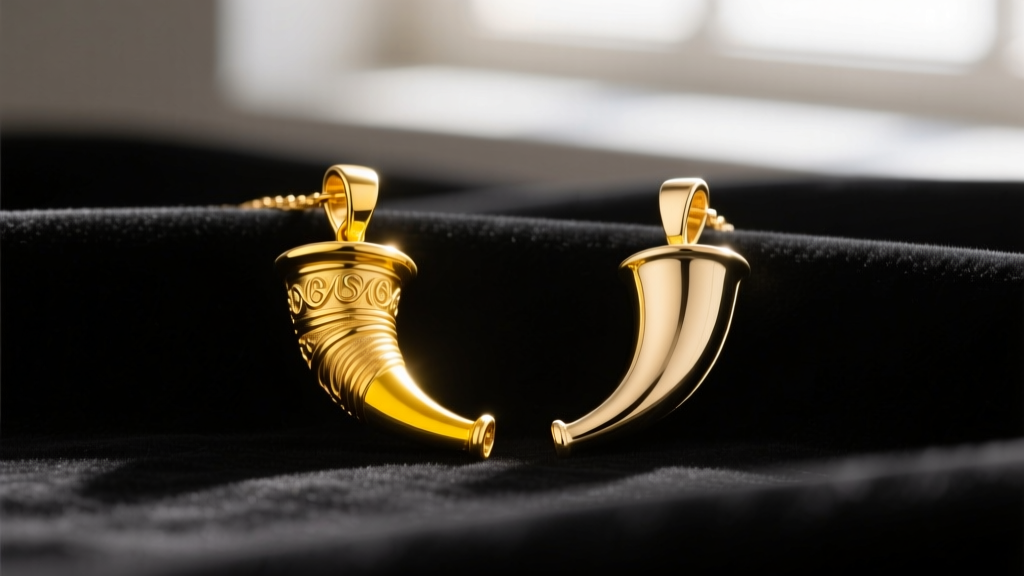
When selecting a horn pendant for men, scale and proportion are critical. A standard men's pendant typically ranges from 35mm to 55mm in length. The width at the base should be proportional, generally between 8mm and 14mm, tapering down to a fine point. The defining feature of the cornicello is the torsion—a distinct, spiraling twist at the tapered tip. In high-end manufacturing, this twist is hand-finished by a jeweler to ensure smooth, rounded transitions. Conversely, cheap castings often leave sharp burrs or mold lines along the twist that catch on clothing and irritate the skin.
The bail (the loop connecting the pendant to the chain) is the most common structural failure point on any necklace. For a mens gold Italian horn necklace, the bail must have an inner diameter of at least 4.5mm to 5.0mm. This ensures it can accommodate a substantial men's chain without causing excessive friction wear against the inner curve of the bail. A hidden bail (soldered seamlessly into the top of the horn) offers a cleaner profile than a standard loop bail, but requires precise laser welding during manufacturing to prevent snapping under tension.
Gold Purity and Alloy Composition for Men's Pendants
Pure 24K gold is far too malleable for daily wear, which is why it is alloyed with other metals to increase tensile strength. According to the Gemological Institute of America (GIA), the specific alloy mix dictates not only the color but the Vickers Hardness (HV) of the final piece.
14K vs. 18K: Durability vs. Color Depth
18K gold (75% pure gold) offers a rich, deep yellow hue that is highly prized in luxury jewelry. However, its Vickers Hardness typically sits around 120-140 HV, making it more susceptible to surface scratching and deformation if subjected to blunt impact. 14K gold (58.5% pure gold) is alloyed with a higher percentage of copper, silver, and zinc. This pushes its hardness to 160-180 HV. For a pendant that rests against the chest, swings during movement, and may experience accidental impacts, 14K yellow gold is often the superior technical choice for longevity. 18K is better reserved for heirloom pieces kept in careful rotation.
Expert Note: Be wary of 'gold-plated' or 'gold vermeil' horns if you are looking for a lifelong piece. The friction from a heavy metal chain will quickly wear through the microscopic layer of surface gold, exposing the base metal beneath.
Manufacturing Techniques: Solid Cast vs. Hollow Electroform
Understanding how the pendant was manufactured is crucial for assessing its value and durability. There are two primary methods used to create gold Italian horns: lost-wax casting (solid) and electroforming (hollow).
| Feature | Solid Lost-Wax Cast | Hollow Electroformed |
|---|---|---|
| Weight | Heavy, substantial (5g - 15g+) | Lightweight, airy (1g - 4g) |
| Durability | Highly durable, resists denting | Prone to crushing and denting |
| Repairability | Easily soldered or laser-welded | Nearly impossible to repair if crushed |
| Price Point | Higher (based on gold weight + labor) | Lower (less gold used) |
For a premium mens gold Italian horn necklace, solid lost-wax casting is the industry standard. Electroforming is a technique where gold is electrically deposited over a wax or resin core, which is later melted or dissolved away, leaving a hollow shell. While this allows for large, impressive-looking pendants at a lower price point, a hollow horn will easily dent if pressed against a hard surface (like a steering wheel or gym equipment) and cannot be easily hammered back into shape.
Chain Pairings: Gauge, Style, and Clasp Mechanics
The pendant is only half the equation. The chain you select must complement the horn's weight and aesthetic while providing adequate tensile strength.
Optimal Chain Styles for the Horn Pendant
- Cuban Link (4mm - 6mm): Features flat, interlocking links that lay flush against the chest. Cuban links offer high tensile strength and are relatively easy to repair via laser welding if a link fails. The flat surface also prevents the pendant bail from wearing down the chain prematurely.
- Figaro (3mm - 5mm): A classic Italian design featuring a pattern of three short links followed by one long link. It offers excellent flexibility and a vintage aesthetic that pairs perfectly with the traditional cornicello.
- Rope Chain (3mm - 5mm): Twisted links that mimic the spiral of the horn's tip. While visually striking, rope chains have a high surface area that traps oils and are notoriously difficult to repair if they snap due to their intertwined geometry.
Clasp Mechanics and Security
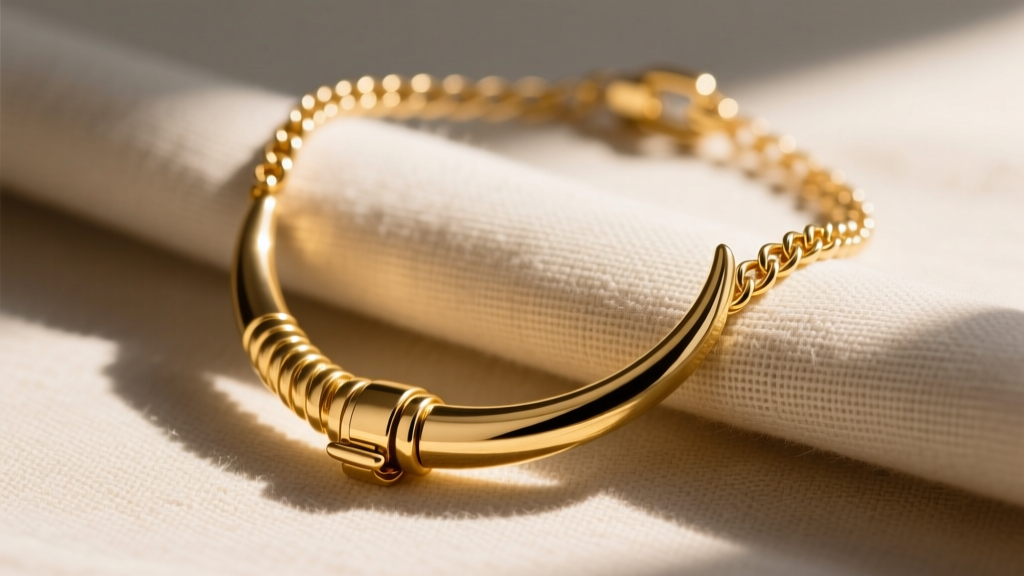
Never pair a heavy solid gold pendant with a spring-ring clasp. The internal spring mechanism in a spring ring is weak and prone to failure under the pendulum-like swinging motion of a heavy horn. Always opt for a lobster clasp or a tongue-in-groove box clasp. A high-quality lobster clasp features a solid internal spring and a wider lever, providing a secure lock that can support pendants weighing upwards of 20 grams without risking accidental detachment.
Maintenance and Structural Vulnerabilities
Even the most well-crafted mens gold Italian horn necklace requires specific maintenance to preserve its structural integrity and luster. The deep crevices of the twisted tip are natural traps for sebum, dead skin cells, and environmental dust. Over time, this buildup can dull the gold and, in rare cases, cause localized corrosion if the alloy contains high levels of copper.
To clean your pendant, avoid harsh chemical dips or ultrasonic cleaners, especially if you suspect the piece might be hollow or contains any soldered joints that could be weakened by high-frequency vibrations. Instead, use a soft-bristle brush (like a baby toothbrush) with a mild surfactant, such as diluted Dawn dish soap, and warm water. Gently agitate the bristles along the twisted grooves, rinse thoroughly, and pat dry with a microfiber cloth. For polishing, use a treated jeweler's cloth, but avoid aggressive buffing on the edges of the twist, as this can slowly wear away the sharp definition of the spiral over years of maintenance.
By prioritizing solid casting, appropriate karat alloys, and mechanically sound chain pairings, you ensure that your Italian horn necklace remains a durable, lifelong staple in your jewelry collection. For further reading on jewelry metallurgy and historical amulets, resources like Lang Antiques University offer excellent foundational knowledge on vintage and modern metalworking techniques.


