Men's Length Necklace Guide: Finding Value and the Perfect Fit
Discover how to choose the perfect men's length necklace on a budget. Compare materials, lengths, and cost-per-wear for maximum value.

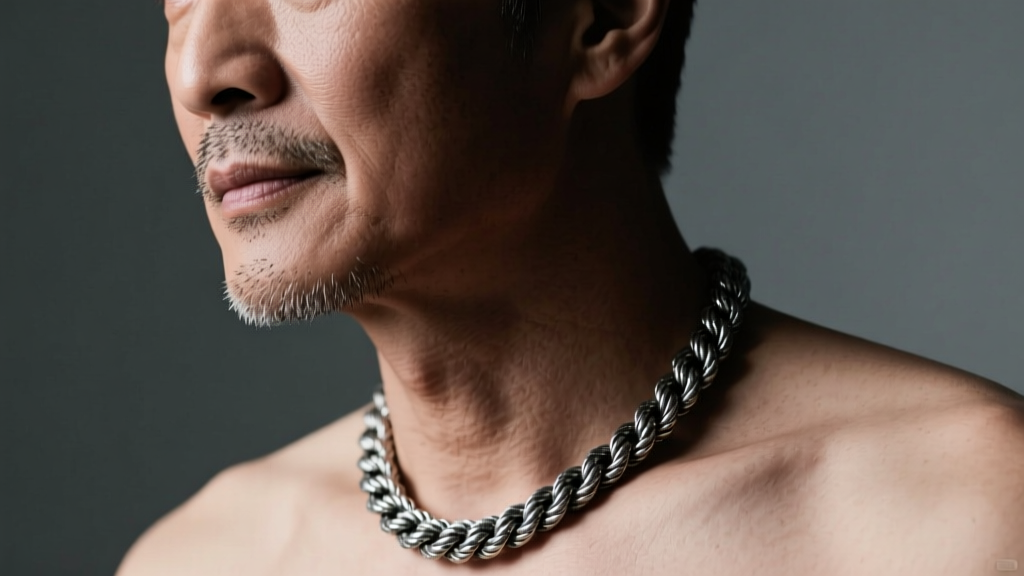
When evaluating a men's length necklace, the most critical mistake buyers make is ignoring their actual neck circumference in favor of arbitrary industry standards. A chain that looks perfectly proportioned on a model with a 15-inch neck will choke a man with an 18-inch neck, completely altering the drape, the pendant placement, and the overall aesthetic. Beyond fit, assessing the true value of men's jewelry requires looking past the initial price tag to evaluate material longevity, structural failure modes, and cost-per-wear. This guide breaks down exactly how to maximize your budget while securing a chain that fits flawlessly and lasts for years.
Decoding the Men's Length Necklace Spectrum
The term men's length necklace typically refers to chains ranging from 18 to 24 inches, though streetwear and hip-hop styles frequently push into the 30-inch territory. To find your ideal fit, measure your neck with a soft tape measure and add 2 to 4 inches depending on your desired drop. Here is the functional breakdown of standard lengths and their ideal use cases:
- 18-Inch (Choker Fit): Sits tightly at the base of the neck. Best suited for men with neck circumferences under 15 inches. This length is ideal for thin, minimalist chains (1mm-2mm) but feels restrictive on larger frames.
- 20-Inch (Collarbone Standard): The most versatile and common length. It rests right on the collarbone and accommodates neck sizes from 15 to 17 inches. This is the optimal length for a 3mm-5mm chain meant to be worn both inside and outside a t-shirt.
- 22-Inch (Sternum Drop): Falls a few inches below the collarbone, resting near the top of the sternum. Perfect for men with 17 to 19-inch necks or for showcasing medium-to-large pendants (e.g., 30mm+ medallions) without them getting lost in the collar.
- 24-Inch (Mid-Chest): A staple in streetwear. It rests mid-chest and is heavily utilized for layering or wearing over hoodies and crewnecks. Chains at this length should be thicker (5mm-8mm) to avoid looking disproportionately fragile against the broader canvas of the chest.
- 30-Inch and Beyond (Statement): Falls near the solar plexus or lower. Strictly reserved for bold, heavy pieces (like 10mm+ Cuban links or iced-out pendants) meant to be worn over outerwear.
Material Value Matrix: Where to Spend and Save
Not all metals age gracefully, and the upfront cost of a chain rarely reflects its long-term value. According to the Gemological Institute of America (GIA), understanding metal alloys and plating thicknesses is essential for avoiding buyer's remorse. Below is a value assessment of the most common materials used in men's chains.
| Material Grade | Avg. Price Range (20", 4mm) | Lifespan & Durability | Value Verdict |
|---|---|---|---|
| 316L Surgical Steel | $30 - $70 | Indefinite. Tarnish-proof, but heavy and can cause nickel reactions if poorly passivated. | Best Budget Pick. Unbeatable for daily abuse and water exposure. |
| 925 Sterling Silver | $80 - $180 | Decades, but requires polishing. Prone to sulfur-induced tarnish. | Best Mid-Tier. Look for rhodium-plated options to delay tarnishing. |
| 1/20 14k Gold-Filled | $120 - $250 | 5-10 years. The gold layer is mechanically bonded and 100x thicker than standard plating. | Best Gold Alternative. Far superior to gold vermeil, which flakes in months. |
| Solid 10k / 14k Gold | $600 - $1,500+ | Generational. Will never flake or wear through. Can be polished indefinitely. | Best Investment. High entry cost, but retains intrinsic scrap value. |
Hidden Costs and Structural Failure Modes
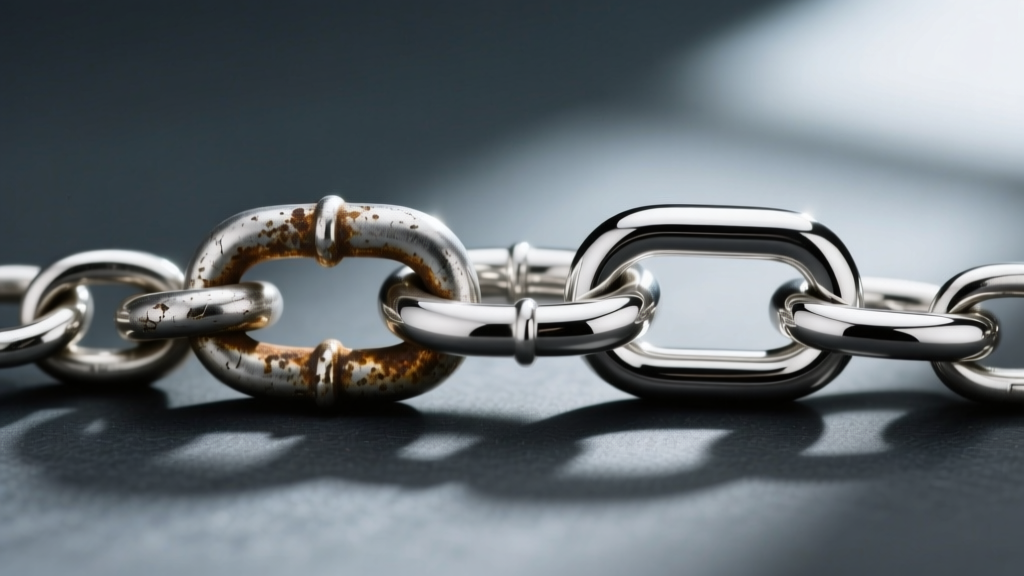
A common trap when buying a men's length necklace on a budget is focusing entirely on the chain links while ignoring the hardware. The structural integrity of a necklace is only as strong as its weakest connection point. The Jewelers of America notes that clasp and jump ring failures account for the vast majority of lost jewelry.
The Clasp Conundrum
If you are purchasing a heavy chain (over 50 grams), a standard spring-ring clasp is a massive liability. The internal spring mechanism in cheap clasps frequently fails under the kinetic stress of a heavy chain swinging against the chest. For chains weighing 50g to 150g, demand a heavy-duty lobster claw clasp with a reinforced trigger. For chains exceeding 150g (like thick Cuban links), you must upgrade to a box clasp with a dual safety latch, or risk the chain snapping open and sliding off your neck.
Jump Ring Soldering
The jump ring is the small circular loop connecting the chain to the clasp. On budget chains, these are simply bent into a circle with a tiny gap. Over time, the tension of the chain pulls this gap apart, resulting in loss. Always inspect the jump ring or ask the jeweler if it is soldered (fused shut with a torch). A $150 chain with an unsoldered jump ring is a $150 risk; spending an extra $10 at a local bench jeweler to have it soldered is non-negotiable for value preservation.
The Cost-Per-Wear (CPW) Framework
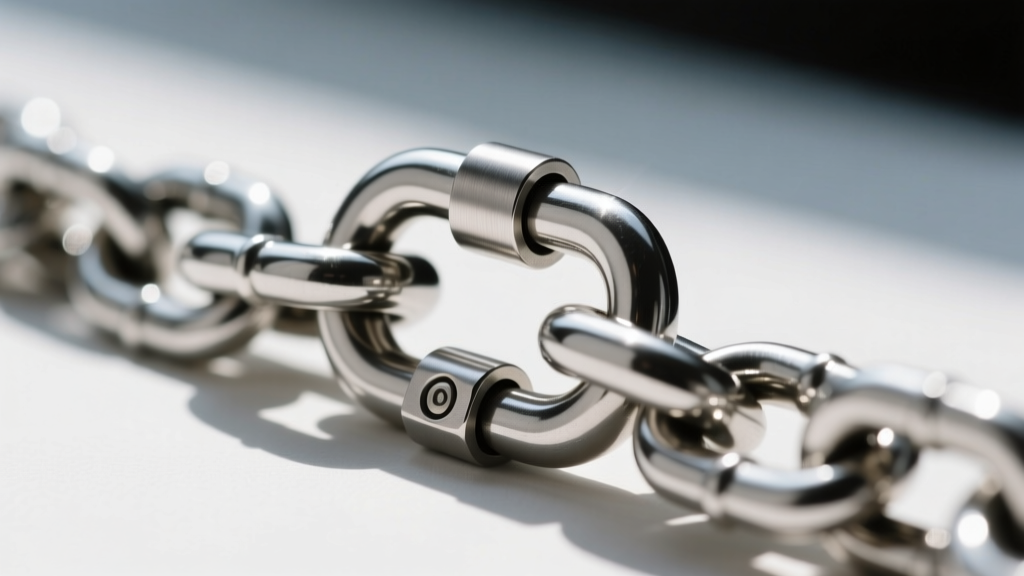
To truly assess the budget and value of a men's chain, you must calculate the Cost-Per-Wear (CPW). This framework shifts the focus from the initial receipt total to the actual utility you extract from the piece.
The CPW Formula: Total Cost of Chain + Estimated Maintenance (Polishing/Repairs) ÷ Estimated Number of Wears over 3 Years.
Consider two scenarios for a daily-wear 22-inch chain:
- Scenario A (Fast Fashion Gold Vermeil): Costs $65. The gold plating wears off the high-friction areas (like the clasp and back of the neck) within 4 months of daily sweat exposure. You wear it 120 times before it looks brassy and gets relegated to a drawer. CPW = $0.54 per wear.
- Scenario B (Solid 10k Gold Rope Chain): Costs $550. It requires zero maintenance, survives the shower, and is worn 300 days a year for 3 years (900 wears). CPW = $0.61 per wear.
While the solid gold chain costs nearly ten times more upfront, its cost-per-wear is remarkably similar to the disposable vermeil option, with the added benefit of looking pristine on day 900 and retaining scrap gold value. When budget allows, stretching your capital toward solid 10k or 14k gold, or at minimum high-quality 316L steel, yields the highest long-term value.
Final Verdict: Maximizing Your Jewelry Budget
Finding the perfect men's length necklace is an exercise in balancing proportions, metallurgy, and hardware engineering. Start by measuring your neck to lock in the correct length—never guess. If your budget is under $100, commit to high-grade 316L stainless steel or rhodium-plated sterling silver, and ensure the jump rings are soldered. If you can push your budget past the $400 threshold, bypass gold-plated and gold-filled options entirely, and invest in a minimalist solid 10k or 14k chain. By prioritizing structural integrity and calculating the true cost-per-wear, you transform a simple accessory into a reliable, long-term asset in your wardrobe.


