The Practical Necklace Length Guide Men Need for Perfect Fit
Master your style with our step-by-step necklace length guide men use to find the perfect fit. Learn chain sizes, layering, and neckline pairings.


Why Most Men Wear the Wrong Chain Length
A poorly fitted chain can ruin an otherwise sharp outfit. Too short, and it looks like a choker meant for someone else; too long, and your pendant disappears beneath your shirt or swings awkwardly against your sternum. Finding the right proportion isn't about guessing—it is about understanding anatomy, garment pairings, and metallurgy. This comprehensive necklace length guide men rely on will walk you through the exact steps to measure, select, and style your necklaces with precision. Whether you are investing in a solid 14k gold rope chain or a minimalist 316L surgical steel pendant, the rules of proportion remain the same.
Step 1: Measure Your Neck and Chest Accurately
Before buying, you need your exact baseline measurements. Do not rely on your t-shirt size, as neck thickness varies wildly among men with the same chest circumference.
The Measurement Protocol
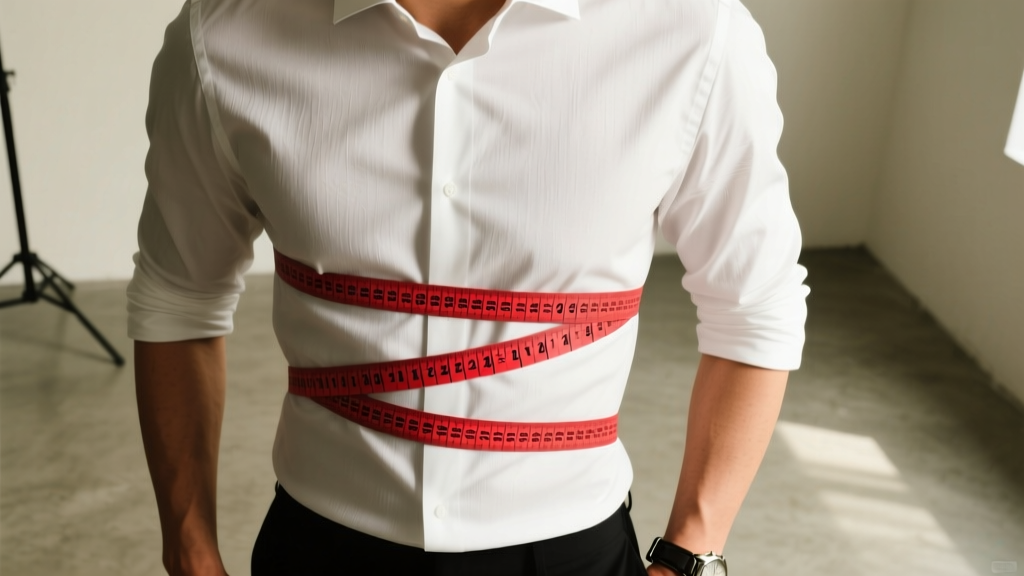
- Use the Right Tool: Use a flexible tailor's measuring tape. If you don't have one, use a non-stretchy string and measure it against a rigid ruler afterward.
- The Base Neck Measure: Wrap the tape around your neck just below the Adam's apple. This is where a collar sits. Note this number.
- The Drop Measure: Drape the tape down your chest to where you want the pendant or chain's lowest point to rest.
Pro Tip: If you have a prominent Adam's apple, always measure below it. A chain that sits directly on the Adam's apple will cause constant irritation and eventually stretch or break the links due to friction and pulling.
Step 2: Choose the Right Base Length (The Core Chart)
Men's chains generally fall into five standard categories. According to Jewelry Notes, understanding where these lengths land on the male physique is critical for achieving the desired aesthetic. Use this chart as your primary reference:
| Length | Placement on Body | Best For | Ideal Chain Style |
|---|---|---|---|
| 18" (45cm) | Tight on the neck / collarbone | Slim builds, minimalist looks | Thin Box or Cable chains (1.5mm - 2mm) |
| 20" (50cm) | Base of the neck / collarbone | Everyday wear, standard pendants | Figaro, Rope, or Curb (3mm - 5mm) |
| 22" (55cm) | Mid-chest / upper sternum | Visible over t-shirts, heavy pendants | Cuban Link or Wheat (4mm - 6mm) |
| 24" (60cm) | Lower chest / mid-sternum | Streetwear, layered looks | Thick Cuban or Franco (6mm - 10mm) |
| 30"+ (75cm+) | Solar plexus / abdomen | Over hoodies, statement hip-hop styles | Heavy Miami Cuban (10mm+) |
Step 3: Factor in Pendant Weight and Chain Gauge
The length on the box is not always the length on your body. When you add a pendant, the chain forms a 'V' shape, effectively dropping the visual length by 1 to 2 inches. If you want a pendant to rest at the 22-inch mark, a 20-inch chain might actually be the correct purchase, depending on the pendant's bail (the loop that connects the pendant to the chain).
Gauge and Thickness Considerations
The thickness of the chain (gauge) dictates its drape. A 20-inch chain that is 8mm thick will sit much stiffer and higher on the chest than a 20-inch chain that is 2mm thick.
- Under 3mm: Flexible, delicate. Best for lightweight pendants (under 10 grams). Prone to kinking if slept in.
- 3mm to 6mm: The sweet spot for men's jewelry. Offers enough structural integrity to hold medium-weight pendants (10-25 grams) while maintaining a fluid drape.
- Over 6mm: Statement pieces. Usually worn standalone without pendants. Heavy chains like a 10mm solid 14k gold Cuban link can weigh over 150 grams, requiring a robust clasp.
Step 4: Match the Length to Your Neckline and Build
Your wardrobe dictates your chain length. A necklace that looks perfect with a crewneck might look entirely out of place with a button-down. GQ's style experts emphasize that the relationship between the collar and the chain is paramount.
The Neckline Matrix
- Crew Neck T-Shirts: Opt for 20" to 22". The chain should rest just below the collar seam. Avoid 18" as it will compete with the shirt's hem.
- V-Necks and Henleys: 22" to 24" is ideal. The chain should follow the 'V' geometry of the shirt, pointing down toward the sternum without extending past the fabric's opening.
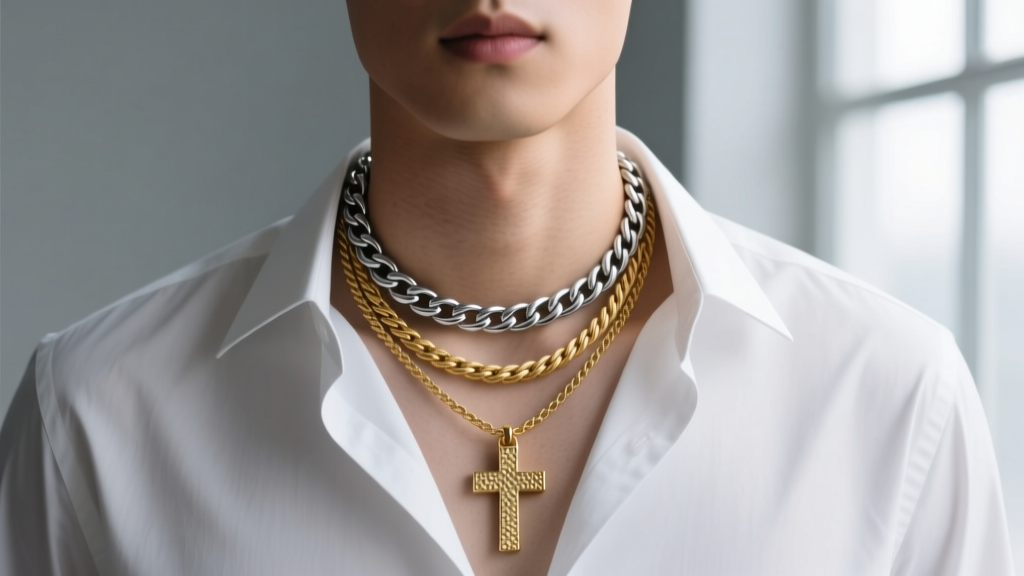
- Button-Down Shirts (Unbuttoned): 24" to 30". A longer chain adds a vertical line that complements the open placket of the shirt. Layering works exceptionally well here.
- Hoodies and Sweatshirts: 24" or longer. Anything shorter will get swallowed by the thick fleece collar and hood bunching.
Body Type Adjustments: If you have a broader neck or a larger chest circumference (e.g., over 44 inches), you must size up. A standard 20-inch chain might fit like an 18-inch chain on a bodybuilder. Always add 2 inches to standard recommendations if you have a heavily muscular neck and traps.
Step 5: Master the Layering Technique
Layering is no longer just a trend; it is a staple of modern men's styling. However, haphazard layering leads to tangled chains and damaged links. To execute a proper layered look, follow the 'Rule of Two'.
The Rule of Two
Always maintain a minimum of a 2-inch difference between layered chains. For example, pair a 20-inch chain with a 22-inch or 24-inch chain. If the lengths are too close (e.g., 20" and 21"), the chains will constantly rub against each other. This friction causes premature wear, especially when mixing different metal hardness levels.
Mixing Textures and Metals
Never layer two identical chain styles. If your base layer is a 20" smooth Box chain, your second layer should be a textured 22" Rope or Figaro chain. Mixing textures prevents tangling because the links do not interlock as easily. Furthermore, do not be afraid to mix metals. A 14k yellow gold rope chain layered with a rhodium-plated sterling silver curb chain creates a high-contrast, deliberate aesthetic that elevates the entire outfit.
Troubleshooting Common Fit and Wear Issues
Even with the right length, mechanical and metallurgical failures can ruin your experience. Here is how to troubleshoot the most common issues men face with their necklaces.
Hair Pulling and Snagging
If your chain pulls your chest or neck hair, you are likely wearing a Cable or Herringbone chain. These styles have microscopic gaps between the links that act like tweezers. The Fix: Switch to a Rope, Wheat, or Box chain. These styles feature interlocking or smooth-faced links that glide over hair without catching.
Clasp Slippage and Breakage
A heavy chain on a weak clasp is a disaster waiting to happen. Spring-ring clasps are standard on cheap jewelry but fail under the tension of chains over 5mm thick. The Fix: Upgrade to a Lobster clasp for chains up to 8mm, and a Box clasp with a safety latch for heavy Cuban links over 10mm. According to the Gemological Institute of America (GIA), ensuring your clasp's metal alloy matches the chain's karat weight is also vital to prevent galvanic corrosion where the two metals meet.
The 'Green Neck' and Tarnishing
If your chain leaves a green or black mark on your skin, it is likely made of brass or copper with a thin gold or silver plating that has worn off. The Fix: Invest in solid metals. 316L surgical stainless steel is highly resistant to tarnish and costs between $40 and $100. For precious metals, opt for solid 14k gold or rhodium-plated 925 sterling silver. Avoid gold-plated brass if you plan to wear the necklace daily or expose it to sweat and water.
Final Thoughts on Proportion
Mastering your necklace length is a matter of geometry, anatomy, and intent. By accurately measuring your neck, accounting for pendant drop, and respecting the relationship between chain gauge and garment necklines, you will never buy an ill-fitting piece again. Use this guide as your blueprint, and your jewelry will transition from a mere accessory to a foundational pillar of your personal style.


