Mastering the Mens Necklace Stack: A Beginner Guide
Learn how to build the perfect mens necklace stack with our beginner guide. Discover chain lengths, metal grades, and anti-tangle layering techniques.

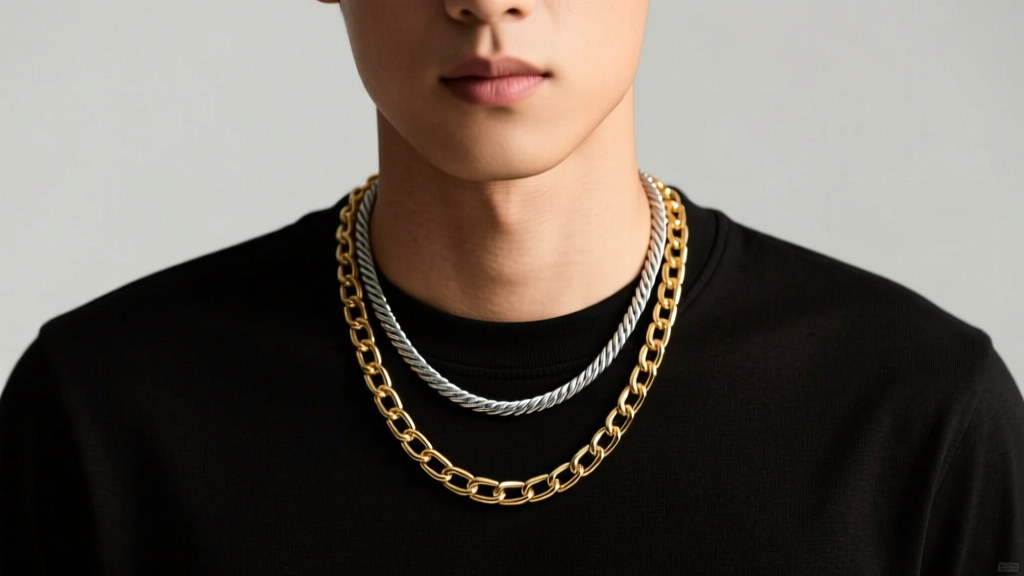
The Art of the Mens Necklace Stack
Layering jewelry is no longer reserved for runway models or rock stars. The modern mens necklace stack is a staple of contemporary menswear, offering a subtle yet powerful way to express personal style. However, throwing on three random chains and hoping for the best usually results in a tangled, unbalanced mess. Building a cohesive stack is an exercise in proportion, metallurgy, and spatial awareness. Whether you are aiming for a minimalist two-piece layer or a bold, chest-grazing three-chain statement, understanding the foundational rules of stacking will elevate your look from cluttered to curated.
According to the GQ Men's Jewelry Guide, the secret to successful layering lies in varying textures and maintaining distinct length gaps. This guide will break down the exact measurements, metal grades, and chain profiles you need to build a stack that looks intentional and wears comfortably all day.
The Anatomy of a Stack: Lengths and Widths
The most common mistake beginners make is stacking chains that are too similar in length. When two necklaces sit within a half-inch of each other, they compete for visual space and are practically guaranteed to tangle. To create depth, you must adhere to the Two-Inch Rule.
The Base Layer (18 to 20 Inches)
Your first chain should sit high on the chest or right at the collarbone. An 18-inch chain acts as a choker-style base, while a 20-inch chain rests comfortably just below the collar. This layer should be the thinnest in your stack, typically ranging from 2mm to 3mm in width. A delicate cable or box chain works perfectly here, providing a subtle glint without overpowering the rest of the stack.
The Mid Layer (22 to 24 Inches)
The middle chain is the bridge of your stack. Falling to the mid-to-lower sternum, a 22-inch or 24-inch chain provides the necessary visual separation. This is where you can introduce a slightly heavier profile, aiming for 4mm to 5mm in width. This layer is also the ideal candidate for a small, meaningful pendant, such as a minimalist signet or a gemstone drop.
The Statement Layer (26+ Inches)
If you opt for a three-piece stack, your outermost chain should hang low, often disappearing into the neckline of a t-shirt or resting boldly over an unbuttoned shirt. At 26 to 30 inches, this chain can handle serious weight and width—think 6mm to 8mm Cuban links or heavy rope chains.
Metallurgy 101: Choosing Your Metals
A great stack isn't just about how it looks; it's about how it wears against your skin and reacts to the elements. Mixing metals (like silver and gold) is highly encouraged in 2026, but you must ensure the underlying quality of the metals is compatible with your lifestyle.
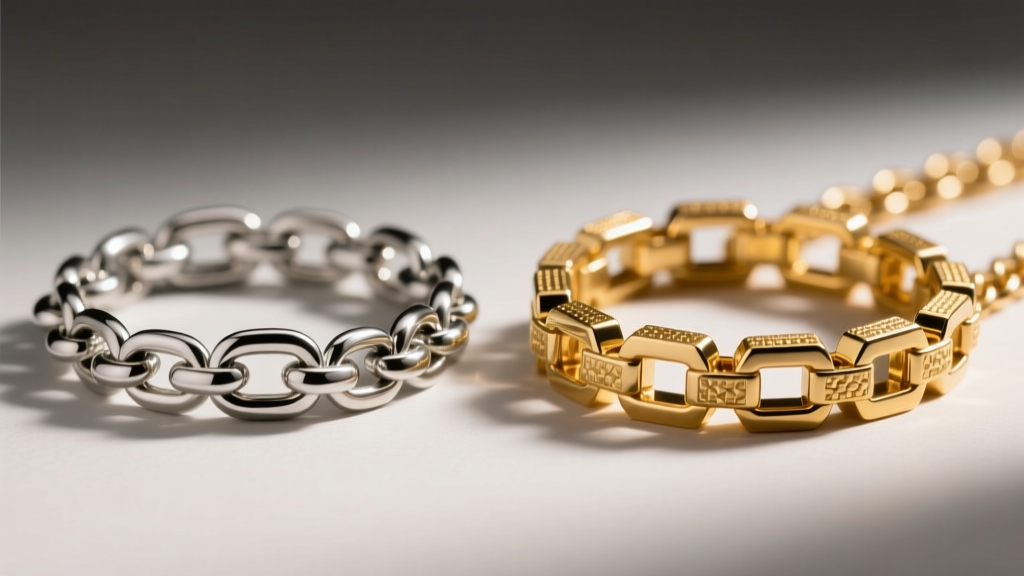
316L Surgical Stainless Steel
For budget-conscious beginners or those who spend a lot of time in the water, 316L stainless steel is a powerhouse. The addition of molybdenum in the 316L alloy makes it highly resistant to corrosion and tarnishing. It is hypoallergenic and incredibly durable. However, steel is heavier than silver and lacks the deep, warm luster of precious metals. Expect to pay between $20 and $60 for high-quality steel chains.
925 Sterling Silver
The undisputed king of everyday menswear jewelry. Sterling silver is an alloy containing 92.5% pure silver and 7.5% copper. The copper adds necessary tensile strength, but it also means the metal will oxidize and tarnish over time, requiring occasional polishing with a jeweler's cloth. Many premium brands apply a thin layer of rhodium plating to delay tarnishing. According to the Gemological Institute of America (GIA), proper storage in anti-tarnish bags is crucial for maintaining 925 silver. Prices typically range from $60 to $200 depending on the weight and link complexity.
Solid 14K and 18K Gold
If you are building an investment stack that you never want to take off, solid gold is the answer. 14K gold (58.5% pure gold) offers a beautiful balance of rich color and scratch resistance, making it ideal for heavy chains that will endure daily friction. 18K gold (75% pure gold) provides a deeper, more saturated yellow hue but is softer and more prone to denting. Avoid gold-plated or vermeil chains for a daily-wear stack, as the friction between layered chains will quickly wear away the thin gold coating, revealing the base metal beneath.
The Texture Rule: Mixing Chain Profiles
Visual interest in a mens necklace stack comes from contrasting textures. If you stack three identical cable chains, they will look like a single, messy, thick chain from a distance. You need to mix the geometry of the links.
| Chain Style | Link Profile | Best Stack Position | Tangle Risk |
|---|---|---|---|
| Cable | Uniform oval/round links | Base Layer (18"-20") | High (if paired with similar) |
| Box | Square, geometric links | Base or Mid Layer | Low (smooth surface) |
| Figaro | Alternating long/short links | Mid Layer (22"-24") | Medium |
| Rope | Twisted, helical pattern | Mid or Statement Layer | Low (high friction grip) |
| Cuban | Thick, interlocking flat links | Statement Layer (26"+) | Very Low (heavy, flat) |
A classic, foolproof three-chain combination involves a 20-inch Box chain (smooth, geometric), a 22-inch Figaro chain (textured, patterned), and a 24-inch Rope chain (twisted, reflective). This ensures that light catches each chain differently, creating a multi-dimensional aesthetic.
Anchoring the Stack: Incorporating Pendants
Pendants give your stack a focal point and a sense of narrative. However, adding a pendant changes the physics of the chain. A heavy pendant will pull a lightweight chain downward, causing it to stretch or snap over time.

The golden rule of pendant pairing is weight proportionality. A general guideline is that the pendant should weigh no more than 30% to 40% of the chain's total weight. If you are hanging a solid 15-gram bronze medallion, you need a robust 5mm+ Cuban or Rope chain to support it. Conversely, a delicate 2mm cable chain should only hold lightweight gemstone drops or thin enamel tags weighing under 3 grams.
When layering a pendant chain with bare chains, always ensure the pendant hangs at least two inches below the bare chain above it. This prevents the pendant's bail (the loop it hangs from) from catching on the links of the upper chain, which is a primary cause of severe tangling.
Troubleshooting: How to Stop Necklaces from Tangling
Nothing ruins the appeal of a curated stack faster than spending ten minutes untangling a knot of metal. Tangling is caused by two factors: friction and static electricity. Here is how to engineer a tangle-free stack:
- Mix the Profiles: As mentioned, never stack two chains with the exact same link type. A cable chain will easily slip inside the links of another cable chain, zipping them together. A rope chain and a box chain cannot interlock.
- Mind the Clasps: Large, bulky lobster clasps can catch on the links of adjacent chains. Opt for chains with small, streamlined spring-ring clasps or, better yet, seamless soldered rings for the base layers.
- Use a Necklace Spacer: If you want the look of a stack but hate the maintenance, invest in a leather or metal clasp spacer. This single device holds multiple chains at fixed intervals, completely eliminating the possibility of tangling while maintaining the layered aesthetic.
- Weight Distribution: Ensure your outermost chain is the heaviest. A heavy chain will naturally lay flat against the chest, acting as a stabilizing anchor for the lighter, more mobile chains sitting above it.
Summary Checklist for Your First Stack
Before you make your next jewelry purchase, run through this quick checklist to ensure your pieces will work together harmoniously:
- Are there at least two inches of length difference between each chain?
- Am I mixing at least two different link profiles (e.g., Box and Rope)?
- Is the width of the chains graduating from thinnest (top) to thickest (bottom)?
- Is the metal grade suitable for my daily activities (e.g., avoiding silver if I swim in the ocean daily)?
Building the perfect mens necklace stack takes a bit of trial and error, but by respecting the rules of proportion, texture, and metallurgy, you will craft a signature look that feels both effortless and highly intentional. Start with two chains, master the balance, and gradually introduce pendants and heavier metals as your confidence grows.


