Red Necklace for Men: 2026 Budget & Value Assessment
Discover the true value of a red necklace for men in 2026. We compare materials, price tiers, and longevity to help you find the best budget option.

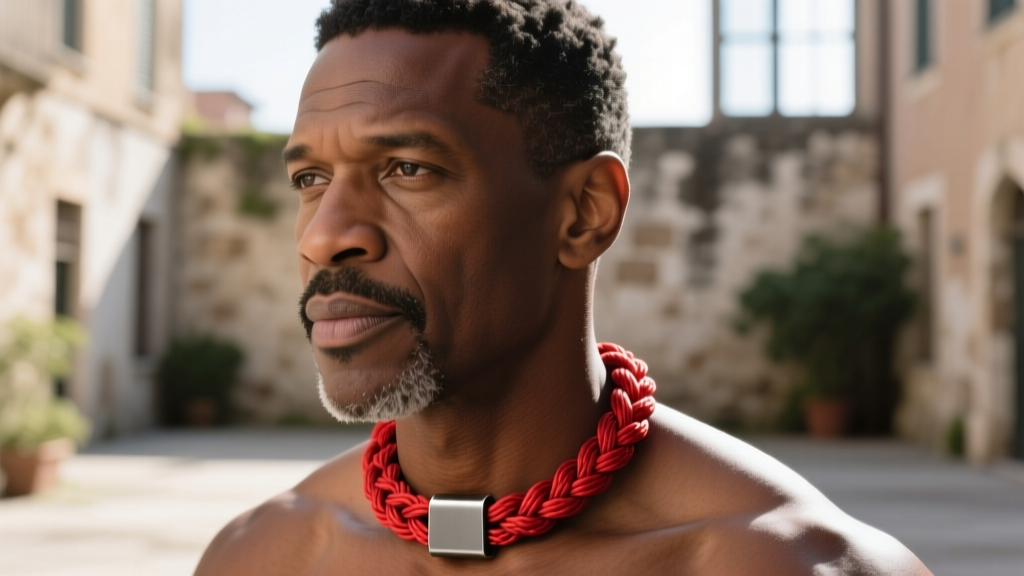
The True Cost of Crimson: Assessing Value in Men's Neckwear
The market for men's jewelry has expanded exponentially, and the red necklace for men has emerged as a versatile staple that bridges casual streetwear and refined minimalist aesthetics. However, as demand surges in 2026, the market has become saturated with options ranging from $15 fast-fashion cords to $800 luxury designer pieces. For the discerning buyer, the challenge is no longer finding a red necklace; it is determining which pieces offer genuine material value, structural longevity, and a justifiable cost-per-wear. This comprehensive assessment breaks down the material science, hardware integrity, and pricing tiers of men's red necklaces to help you allocate your budget wisely.
Material Science: What Dictates the Price Tag?
The base material of any necklace accounts for roughly 60% to 80% of its intrinsic value. When shopping for a red necklace for men, you will typically encounter four primary material categories, each with distinct durability profiles and price points.
1. Marine-Grade Nylon vs. Traditional Silk Cords
Entry-level red necklaces often utilize silk or cheap cotton. While silk offers a beautiful initial luster, it is highly susceptible to hydrolysis—degradation caused by moisture and sweat. A silk cord worn daily will typically fray and snap within 6 to 9 months. In contrast, marine-grade braided nylon (such as C-LON or PowerPro) offers immense tensile strength, UV resistance, and zero water degradation. A high-quality 2mm to 4mm braided nylon red cord should cost between $20 and $45. Anything priced above $80 for a simple nylon cord is heavily inflated by brand markup rather than material cost.
2. Carnelian and Red Agate Gemstones
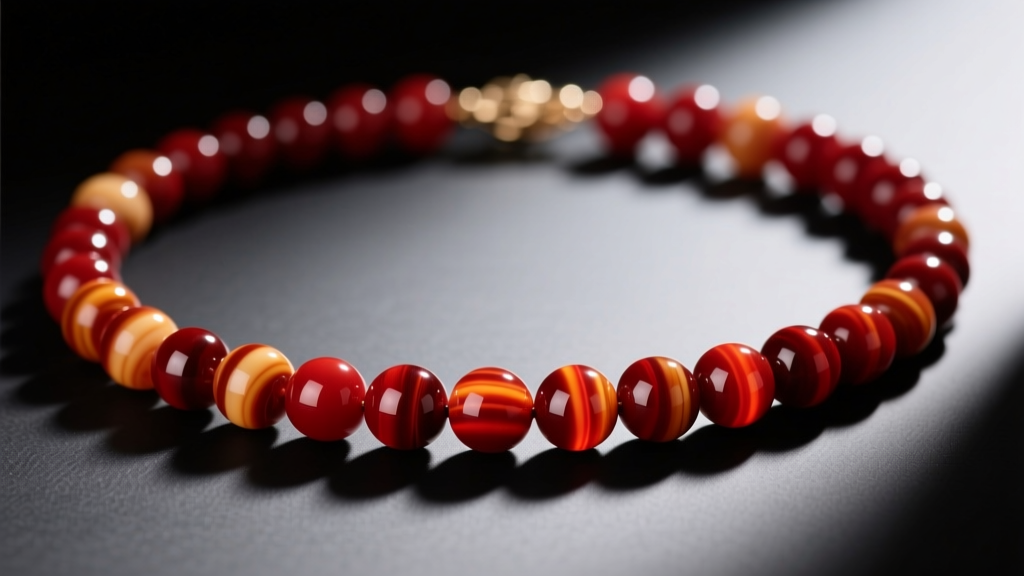
For those seeking a beaded red necklace for men, carnelian and red agate are the industry standards. According to the Gemological Institute of America (GIA), carnelian ranks between 6.5 and 7 on the Mohs hardness scale, making it highly resistant to everyday scratching. However, value assessment here requires a keen eye. Dyed agate is frequently passed off as premium carnelian. True value lies in untreated, naturally banded stones with a high-quality polish. Expect to pay $60 to $150 for a genuine, well-strung 8mm carnelian necklace.
3. High-Tech Red Ceramic
Red ceramic (often zirconium dioxide-based) is a premium material favored in luxury men's jewelry. It boasts a Mohs hardness of 8.5, making it virtually scratch-proof, and it will never fade or tarnish. The trade-off is impact resistance; ceramic can shatter if dropped onto a hard tile floor. Due to the complex sintering and polishing processes required to manufacture ceramic beads or pendants, a genuine red ceramic necklace typically starts at $150 and can exceed $400.
The 2026 Budget Tiers: What Your Money Actually Buys
To contextualize your purchasing decision, we have segmented the market into three distinct budget tiers. This framework helps identify the 'sweet spot' where material quality meets reasonable pricing.
| Tier | Price Range | Typical Materials | Hardware / Clasp | Expected Lifespan | Value Rating |
|---|---|---|---|---|---|
| Entry | $15 - $40 | Cotton, basic nylon, dyed glass beads | Zinc alloy, spring ring, basic macrame knots | 6 - 14 months | Poor to Fair |
| Mid-Tier | $50 - $150 | Braided marine nylon, natural carnelian, enamel | 316L Stainless steel, PVD coated lobster clasps | 3 - 5+ years | Excellent |
| Luxury | $200 - $800+ | High-tech ceramic, precious stones, vulcanized rubber | 18k Gold, Titanium magnetic deployments | 10+ years (with care) | Diminishing Returns |
As highlighted by industry analysts at JCK Online, the mid-tier category currently offers the highest return on investment for men's jewelry. You secure surgical-grade hardware and authentic materials without subsidizing the massive marketing overhead of heritage fashion houses.
Hidden Costs and Failure Modes: The Hardware Trap
When evaluating the budget and value of a red necklace for men, amateurs look at the cord or beads; experts look at the clasp. The clasp is the primary failure point in 90% of necklace breakages.
Galvanic Corrosion and Cheap Alloys
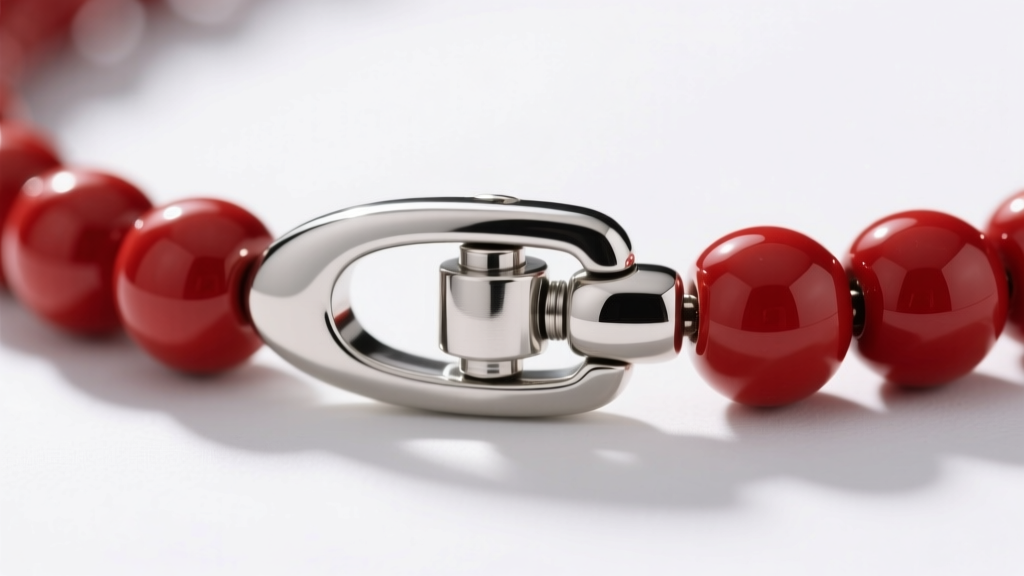
Many necklaces in the $20 to $50 range feature clasps made from brass or zinc alloy, often thinly plated. Human sweat is mildly acidic and highly saline. Over a few months of daily wear, this plating wears off, exposing the base metal to rapid galvanic corrosion. The clasp will seize, turn your skin green, and eventually snap. Always verify that the hardware is crafted from 316L surgical stainless steel or Grade 23 titanium. These metals are impervious to sweat and saltwater, ensuring the hardware outlastes the cord itself.
Clasp Mechanics: Magnetic vs. Lobster
For thicker red cords (3mm and above) or heavy beaded necklaces, standard spring-ring clasps are mechanically inadequate. The internal spring mechanism will fail under the dynamic load of a heavy pendant or thick bead strand. Neodymium magnetic clasps with a secondary safety catch, or heavy-duty forged lobster clasps, are mandatory for long-term structural integrity. If a brand is charging you over $100 and still using a hollow spring-ring clasp, walk away.
The Luxury Markup Trap: Assessing Designer Red Cords
In 2026, several high-end fashion houses are selling braided red nylon or silk cord necklaces with small enamel or silver pendants for upwards of $600. From a strict value-assessment perspective, this represents a severe misallocation of funds. The cost of goods sold (COGS) for a braided nylon cord and a cast sterling silver pendant rarely exceeds $45. You are paying a 1,200% premium for the logo engraved on the back of the clasp.
If your goal is brand signaling, the luxury tier serves its purpose. However, if your goal is aesthetic excellence, material durability, and financial prudence, you are vastly better off purchasing a premium mid-tier necklace from a specialized jewelry artisan and allocating the remaining $500 toward a high-quality timepiece or wardrobe staple.
Final Verdict: Maximizing Your ROI
Finding the right red necklace for men is an exercise in ignoring superficial branding and focusing on material reality. To maximize your budget, target the $60 to $120 price range. In this bracket, you should demand marine-grade braided nylon or genuine, untreated carnelian beads, paired exclusively with 316L stainless steel hardware. By prioritizing tensile strength, Mohs hardness, and corrosion-resistant clasps over designer logos, you secure a versatile, striking piece of neckwear that will maintain its structural integrity and aesthetic appeal for years to come.


