Moissanite Cross Necklace Buying Guide: What to Look For
Discover expert tips for buying a moissanite cross necklace. Learn about color grades, metal choices, chain lengths, and pricing in our guide.

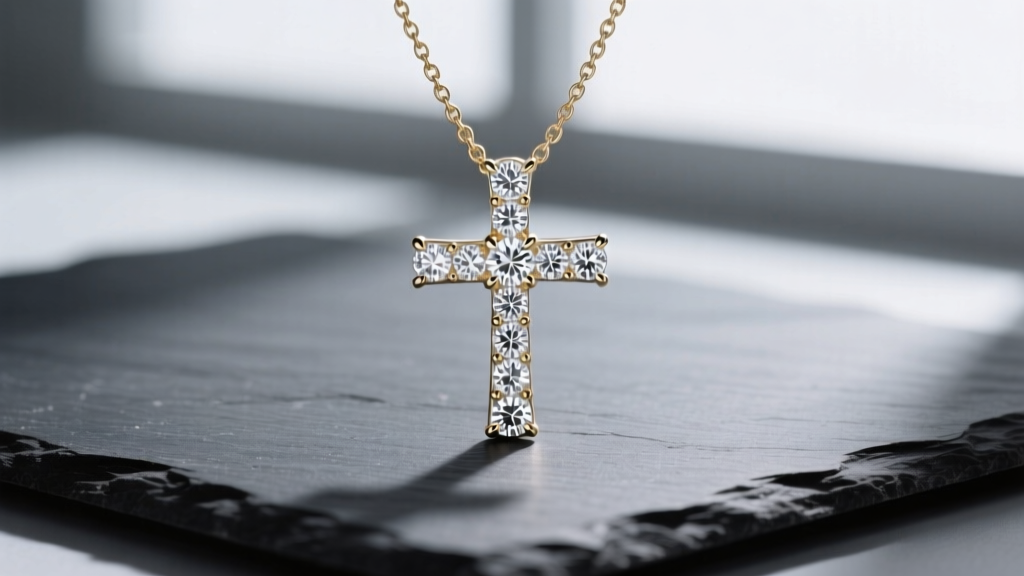
A moissanite cross necklace is more than just a symbol of faith or a classic fashion staple; it is a masterclass in modern gemology. For buyers seeking the brilliance of a diamond without the exorbitant price tag or ethical concerns, moissanite offers an unparalleled alternative. However, not all moissanite jewelry is created equal. From understanding refractive indices to selecting the proper chain gauge, purchasing a high-quality pendant requires a discerning eye.
In this comprehensive buying guide, we break down the exact specifications, material grades, and design nuances you need to know before investing in a moissanite cross necklace.
Understanding Moissanite: Fire, Brilliance, and Durability
Moissanite (silicon carbide) was originally discovered in a meteor crater by Henri Moissan in 1893. Today, it is lab-created to ensure flawless consistency and ethical sourcing. According to the Gemological Institute of America (GIA), moissanite possesses a refractive index of 2.65 to 2.69, which is notably higher than a diamond’s 2.42. This means moissanite exhibits more "fire"—the dispersion of light into spectral colors.
The "Disco Ball" Effect and Cut Selection
Because of its high dispersion, some buyers feel that standard brilliant-cut moissanite can look overly flashy or "disco-ball-like" in direct sunlight. If you prefer a more subdued, diamond-like appearance, look for pendants featuring crushed ice or step-cut (emerald cut) moissanite stones. These faceting patterns scatter light differently, reducing rainbow flashes and offering a more sophisticated, glassy luster that pairs beautifully with minimalist cross designs.
Durability for Everyday Wear
Ranking at 9.25 on the Mohs scale of hardness, moissanite is the second hardest gemstone used in jewelry, trailing only diamonds (10). This exceptional hardness ensures that the facets of your cross pendant will not scratch, abrade, or become cloudy from daily wear, making it an ideal heirloom piece.
Decoding Moissanite Quality: Color and Clarity Grades
When shopping for a moissanite cross necklace, retailers will typically grade the stones using a diamond-equivalent scale. Understanding these grades is critical to avoiding a pendant that looks yellow or cloudy.
- Colorless (D-E-F): These stones exhibit absolutely no body color. They are the most expensive and are strictly required if you are setting the cross in white gold or platinum. Any hint of warmth in the metal will reflect into a lower-grade stone, but D-F stones will remain icy white.
- Near Colorless (G-H-I): These stones have a very faint warmth that is virtually undetectable to the untrained eye, especially when mounted. They are an excellent, budget-friendly choice for yellow gold or rose gold cross pendants, as the metal's hue masks any subtle stone warmth.
- Faint Color (J-K): Avoid these for cross pendants. In larger carat weights, J-K moissanite can display a noticeable yellowish-green tint in certain lighting conditions, which detracts from the piece's elegance.
Regarding clarity, because moissanite is grown in controlled lab environments, inclusions are incredibly rare. Most premium pendants feature VVS (Very Very Slightly Included) or VS (Very Slightly Included) stones, meaning they are completely eye-clean.
Choosing the Right Metal for Your Cross Pendant
The metal used for the cross setting and the chain dictates both the longevity and the aesthetic of the necklace. Here is what you need to look for:
Precious Metal Breakdown
- 14k Solid Gold: The industry standard for fine jewelry. It contains 58.5% pure gold, offering an ideal balance of rich color and structural durability. The prongs holding the moissanite stones in a 14k setting will resist bending and snagging.
- 18k Solid Gold: Contains 75% pure gold. It has a deeper, richer yellow hue but is slightly softer than 14k. Best for bezel-set crosses where prong strength is less of a concern.
- Platinum: The ultimate choice for white metal settings. It is naturally white (unlike white gold, which requires rhodium plating) and hypoallergenic. Platinum prongs are incredibly secure, making it perfect for heavy, multi-stone pave crosses.
- Sterling Silver (925): While highly affordable, silver is soft and prone to tarnishing. If you buy a silver moissanite cross, ensure it is heavily rhodium-plated and reserve it for occasional wear rather than daily use.
Cross Styles, Settings, and Carat Weights
The silhouette of the cross and the way the stones are set dramatically alter the necklace's visual weight and price point.
Popular Setting Styles
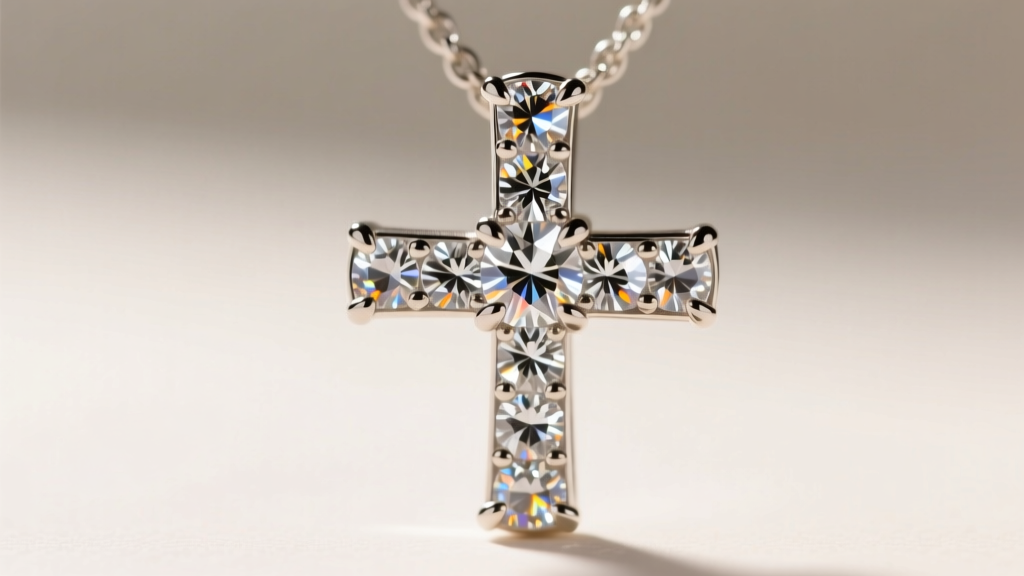
Prong Set: Uses small metal claws to hold each stone. This allows maximum light to enter the moissanite from all angles, resulting in peak brilliance. A classic Latin cross with prong-set stones is timeless and eye-catching.
Pave Set: Features dozens of tiny moissanite stones (usually 1.5mm to 2.0mm) set closely together, creating a surface that appears entirely paved with light. Pave crosses offer immense sparkle but require more maintenance to ensure the micro-prongs remain secure.
Bezel Set: A thin rim of metal surrounds the gemstone. Bezel settings offer a sleek, modern look and provide the highest level of protection for the stones, making them ideal for active individuals.
Carat Weight Equivalents
Moissanite is often sold by millimeter size rather than carat weight, but retailers provide "Carat Total Weight" (CTW) equivalents. For a standard cross pendant:
- 0.50 CTW - 1.00 CTW: Delicate, subtle, and perfect for layering or for younger wearers.
- 1.50 CTW - 2.50 CTW: The sweet spot for a standalone statement piece. It offers substantial presence without looking gaudy.
- 3.00 CTW and above: Bold, luxurious, and highly visible. Often reserved for special occasions or milestone gifts.
Chain Types and Length Proportions
A stunning moissanite pendant can be ruined if hung on a flimsy or inappropriate chain. The chain must support the weight of the pendant while complementing its style.
"The most common mistake buyers make is pairing a heavy, multi-carat moissanite cross with a thin, hollow rope chain. Always match the chain's structural integrity to the pendant's weight."
Best Chain Styles for Pendants
- Box Chain: Composed of square links connected in a smooth, continuous pattern. It is highly durable, resists kinking, and allows the cross pendant to slide freely.
- Cable Chain: The classic oval-link chain. It is versatile and traditional, though slightly more prone to tangling than a box chain.
- Wheat (Spiga) Chain: Features woven, directional links that resemble stalks of wheat. It is incredibly strong and adds a premium, textured look to the necklace.
Length Guide
- 16 Inches (Choker): Sits tightly at the base of the neck. Best for small, delicate crosses (under 1.00 CTW).
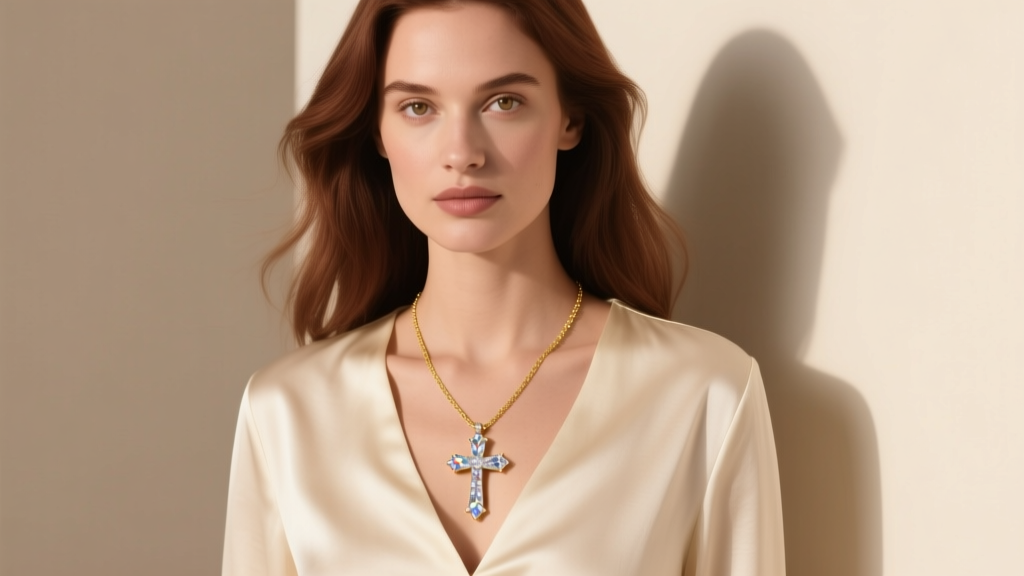
- 18 Inches (Collarbone): The most popular and versatile length. The cross will rest just below the collarbones, making it visible with most necklines.
- 20-22 Inches (Chest): Rests on the upper chest. Ideal for larger, heavier crosses or for wearing over clothing like sweaters and button-downs.
Moissanite Cross Necklace Pricing Guide
Pricing for moissanite jewelry varies based on the metal purity, the total carat weight, and the brand's craftsmanship. Below is a general market pricing table to help you gauge fair value and avoid overpaying.
| Metal Type | Total Carat Weight (CTW) | Estimated Price Range | Best For |
|---|---|---|---|
| 925 Sterling Silver (Rhodium Plated) | 1.00 - 2.00 CTW | $150 - $350 | Budget buyers, occasional wear |
| 10k Solid Gold | 1.50 - 3.00 CTW | $400 - $700 | Everyday durability on a budget |
| 14k Solid Gold (White, Yellow, Rose) | 1.50 - 3.00 CTW | $650 - $1,200 | Standard fine jewelry, heirloom quality |
| 18k Solid Gold | 2.00 - 4.00 CTW | $1,100 - $2,200 | Rich color, luxury feel |
| Platinum (950) | 2.00 - 5.00 CTW | $1,500 - $3,500+ | Hypoallergenic needs, maximum security |
Authentication, Warranties, and Red Flags
As the demand for moissanite grows, so does the market for misleading simulants like cubic zirconia (CZ). CZ is significantly softer (8.5 on the Mohs scale) and will scratch and cloud within a year of daily wear. To ensure you are purchasing genuine moissanite, look for the following:
Certifications and Inscriptions
Reputable jewelers will provide a certificate of authenticity from recognized gemological labs such as GRA (Global Gemological Research Association) or IGI (International Gemological Institute). Furthermore, premium moissanite stones over 0.50 carats often feature a microscopic laser inscription on the girdle that can be verified with a jeweler's loupe.
FTC Compliance and Transparency
According to the Federal Trade Commission (FTC) Jewelry Guides, sellers must clearly disclose when a stone is lab-created or a simulant. Be highly suspicious of listings that use vague terms like "diamond simulants" without explicitly stating "moissanite," or those that use deceptive lighting and filters to mask poor stone color.
Warranty Coverage
A high-quality moissanite cross necklace should come with a warranty that covers structural defects, such as a stone falling out due to poor prong casting. Brands that stand behind their craftsmanship will offer a limited lifetime warranty on the setting and a guarantee against stone discoloration.
Final Thoughts on Your Purchase
Investing in a moissanite cross necklace is a brilliant way to own a piece of fine jewelry that delivers unmatched sparkle and lifelong durability. By prioritizing D-F colorless stones for white metals, selecting a robust chain like a box or wheat link, and verifying the seller's certifications, you can secure a stunning pendant that will retain its beauty for generations. Whether you choose a minimalist bezel-set design or a dazzling pave Latin cross, moissanite ensures your faith and style will shine without compromise.


