A Beginner's Guide to Choosing a Mens Turquoise Necklace
Discover how to choose, authenticate, and style a mens turquoise necklace. Learn about stone grades, matrix patterns, and metal pairings in this guide.

Why Turquoise is a Menswear Staple
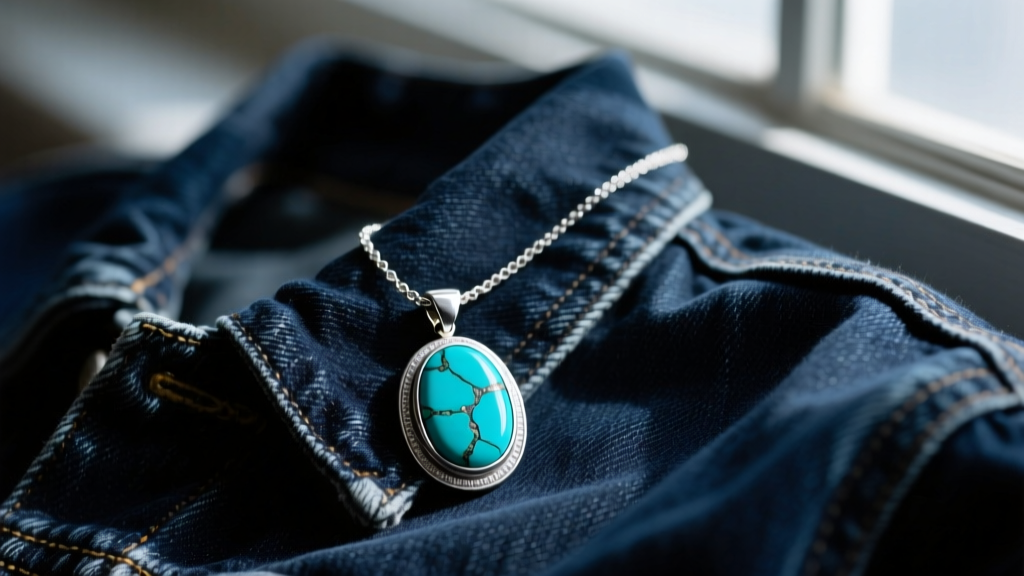
Turquoise has long transcended its stereotypical associations with vintage Southwestern jewelry and bohemian festival wear. In contemporary menswear, a well-chosen mens turquoise necklace serves as a versatile anchor piece, bridging the gap between rugged workwear aesthetics and refined minimalist styling. Whether you are drawn to the striking, unblemished sky-blue of Sleeping Beauty stones or the intricate, earthy webbing of a Royston cabochon, understanding the nuances of this ancient gemstone is critical before making a purchase. This guide will walk you through the essential metrics of turquoise grading, how to avoid synthetic imitations, and the precise chain lengths and metal pairings that elevate a mens turquoise necklace from a costume piece to a permanent wardrobe staple.
Decoding Turquoise: Mines, Grades, and Matrix
Not all turquoise is created equal. The value, durability, and visual appeal of the stone depend heavily on its origin and its geological formation. Turquoise ranks between 5 and 6 on the Mohs hardness scale, making it relatively soft and porous compared to diamonds or sapphires. Because of this, understanding the mine source gives you immediate insight into the stone's characteristics.
The Big Three: Sleeping Beauty, Kingman, and Royston
- Sleeping Beauty (Arizona): Famous for its pure, robin's-egg blue color with little to no matrix (the host rock webbing). Because the mine closed in 2012, genuine, untreated Sleeping Beauty turquoise commands a premium price, often exceeding $20 to $50 per carat for high-grade stones.
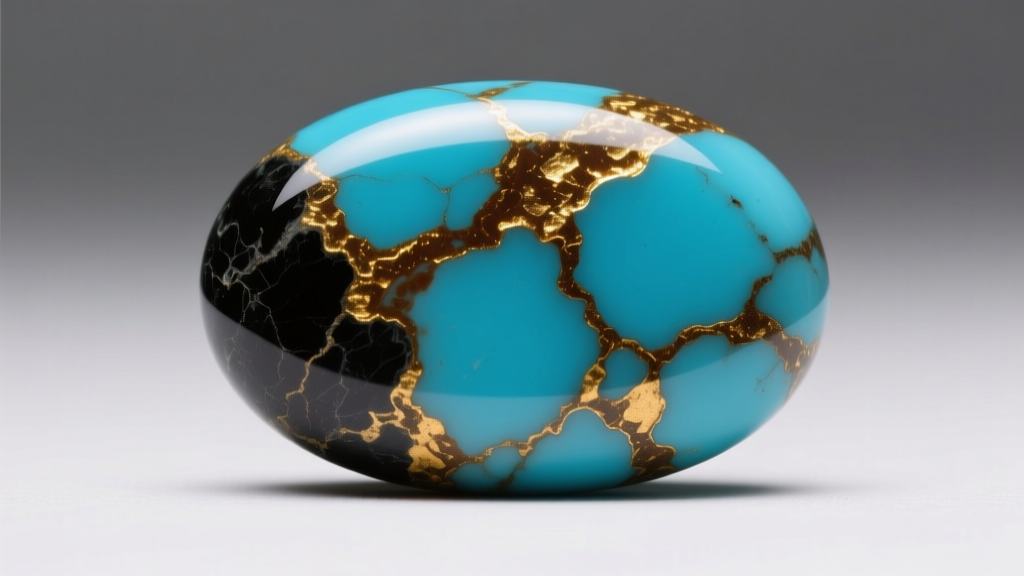
- Kingman (Arizona): Known for its deep, rich blue colors and striking matrix that often includes pyrite (fool's gold) or copper inclusions. Kingman stones offer a more rugged, masculine aesthetic that pairs exceptionally well with oxidized metals.
- Royston (Nevada): Highly prized for its two-tone color shifts, ranging from deep emerald greens to bright blues, heavily accented by thick, golden-brown limonite matrix. Royston cabochons are statement pieces that require minimal metalwork to stand out.
Natural vs. Stabilized Turquoise
Beginners often mistakenly believe that 'stabilized' means 'fake.' In reality, stabilization is a widely accepted industry practice. According to the Gemological Institute of America (GIA), only about 10% of mined turquoise is hard enough to be cut and polished without treatment. The remaining 90% is too chalky and porous. Stabilization involves infusing the stone with a clear epoxy or resin under pressure, which hardens the stone, enhances its color, and prevents it from absorbing oils and lotions that could turn it green or gray over time. Stabilized turquoise is durable and authentic, whereas dyed or block turquoise should be avoided entirely.
How to Spot Fake Turquoise
The market is flooded with turquoise imitations, primarily dyed howlite, dyed magnesite, and 'block' turquoise (a mixture of plastic resins and stone dust). When shopping for a mens turquoise necklace, use this framework to verify authenticity.
| Type | Composition | Visual Clues | Price Indicator |
|---|---|---|---|
| Natural | 100% untreated stone | Subtle color variations, natural matrix, cool to the touch | High ($15 - $50+ per carat) |
| Stabilized | Real stone + clear resin | Vibrant, uniform color, hard polish, real matrix | Moderate ($3 - $15 per carat) |
| Dyed Howlite | White stone + blue dye | Dye pools in crevices, grayish webbing, unnatural blue | Low ($5 - $20 flat per bead) |
| Block Turquoise | Plastic/Resin + stone dust | Perfectly uniform, plastic-like luster, smells when heated | Extremely Low (Under $10) |
The Acetone Test: If you are buying vintage or from an unverified seller, lightly dab a cotton swab in nail polish remover (acetone) and rub an inconspicuous area of the stone. If the cotton turns blue, you are holding dyed howlite or magnesite. Genuine turquoise, even stabilized, will not bleed dye. For a deeper dive into gemstone treatments, the American Gem Society provides excellent resources on identifying synthetic enhancements.
Selecting the Right Metal and Chain Style
The metalwork framing your turquoise pendant or the findings used in a beaded necklace drastically alter the formality and longevity of the piece.
Silver vs. Gold Pairings
Sterling Silver (.925): The undisputed king of turquoise pairings. The cool, bright tones of polished silver amplify the blue hues of the stone. For a more rugged, vintage look, seek out oxidized sterling silver, where the crevices of the metal are intentionally darkened to highlight the silver's texture and the stone's matrix.
Yellow Gold (14k or 18k): Yellow gold creates a luxurious, high-contrast framing that works exceptionally well with greener turquoise varieties, like those from the Royston or Carico Lake mines. Gold elevates the stone from casual workwear to evening-appropriate sophistication.
Brass and Copper: While aesthetically pleasing for rustic designs, bare copper and brass react with the acidity in human sweat and the porosity of the turquoise. This can lead to skin discoloration and permanent staining of the stone's underside. If choosing these metals, ensure the stone bezel has a protective backing.
Chain Lengths and Profiles
The length of your chain dictates where the necklace sits on your body, which in turn determines how it interacts with your clothing.
- 20 Inches (Collarbone): Sits high on the chest. Ideal for smaller pendants (under 1 inch) or choker-style beaded turquoise necklaces. Best worn with crewneck t-shirts or open-collar button-downs.
- 22 Inches (Upper Chest): The most versatile length for men. It rests just below the collarbone, allowing a medium-sized turquoise pendant to frame the face perfectly without getting lost in facial hair or jacket lapels.
- 24 to 30 Inches (Sternum to Chest): Reserved for large, heavy statement pendants or layered, multi-strand bead necklaces. This length is designed to be worn over clothing, such as heavy flannels, denim jackets, or plain sweaters.
Chain Types to Consider
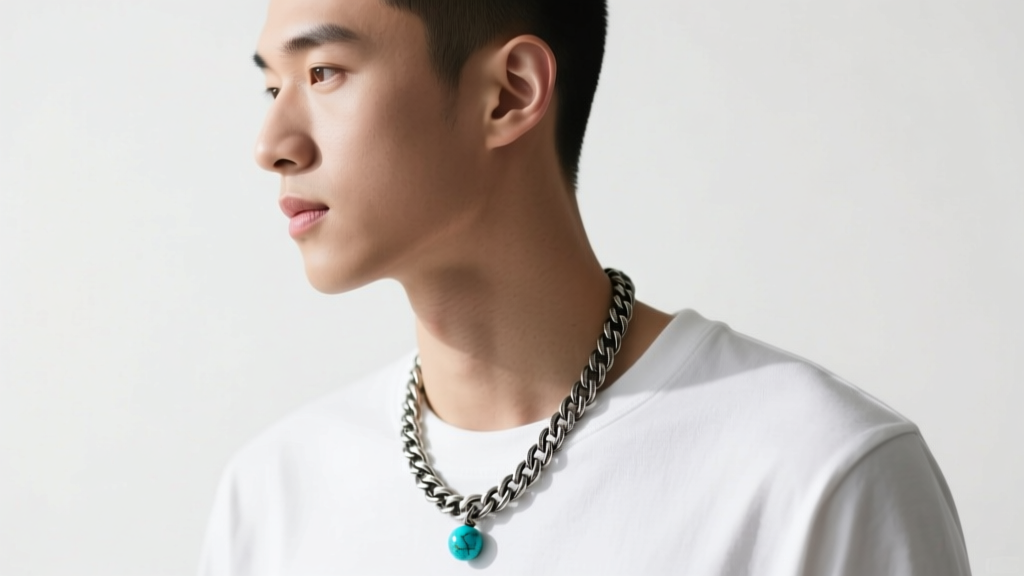
Avoid flimsy cable chains that will snap under the weight of a solid stone pendant. Opt for a Box Chain or a Wheat (Spiga) Chain in 1.5mm to 2.5mm thicknesses. These offer structural integrity, resist kinking, and provide a masculine, geometric texture that complements the organic shape of the turquoise.
Styling Your Mens Turquoise Necklace
Styling turquoise requires a 'less is more' approach to avoid looking like you are wearing a costume. If you are wearing a bold, heavy silver-and-turquoise squash blossom or a large geometric pendant, let it be the sole focal point. Pair it with monochromatic, earth-toned clothing—think charcoal greys, navy blues, olive greens, and faded denim.
If you prefer a subtle approach, a single, small turquoise bead (4mm to 6mm) on a delicate 22-inch silver chain offers a brilliant pop of color that peeks out from under a t-shirt or rests just above the collar of a sweater. For advanced layering, combine a 20-inch oxidized silver chain with a 24-inch leather cord holding a turquoise pendant. Ensure there is at least a 3-inch difference in length between layered necklaces to prevent tangling and visual clutter.
Care and Maintenance for Longevity
Because turquoise is porous, it is highly susceptible to chemical damage. Never clean your turquoise necklace in an ultrasonic jewelry cleaner; the high-frequency vibrations can fracture the stone, and the cleaning solutions will strip its polish. Similarly, avoid exposing the stone to household cleaners, chlorine, or heavy perfumes.
To clean your necklace, simply use a soft, lint-free microfiber cloth slightly dampened with warm water. Gently wipe the stone and the metal setting, then dry immediately. Always put your turquoise necklace on after applying cologne, hairspray, or lotions, and take it off before swimming or showering. With proper care, a high-quality mens turquoise necklace will develop a rich, personalized patina over the years, aging beautifully alongside your wardrobe.


