Mens White Necklace Metals: Platinum vs White Gold vs Silver Compared
Compare platinum, white gold, palladium, and silver for your next mens white necklace. Expert analysis on hardness, pricing, and long-term wear.

The Metallurgy of Men's White Jewelry
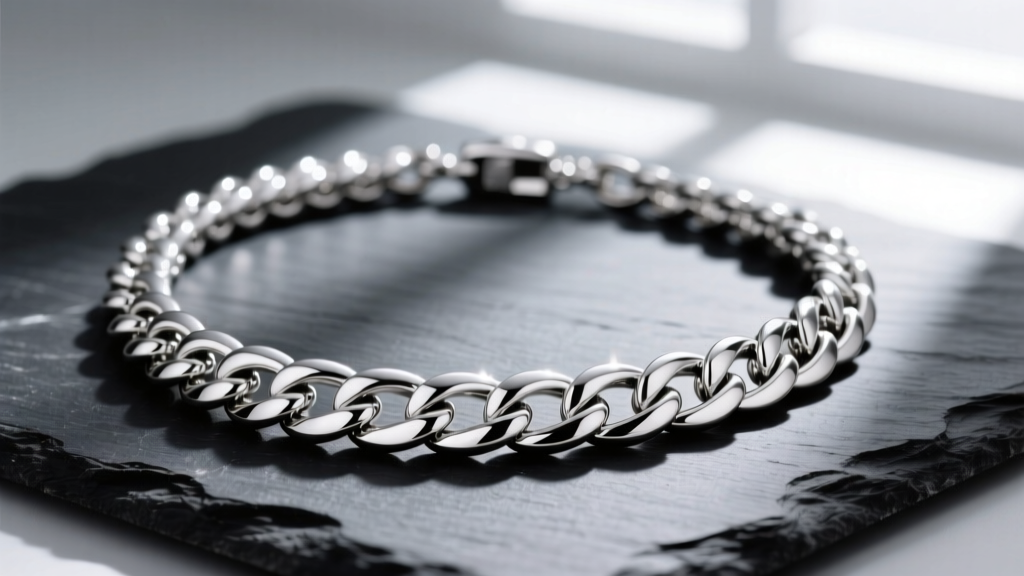
When evaluating a mens white necklace, the untrained eye sees only a sleek, monochromatic aesthetic. The jeweler and metallurgist, however, see crystal structures, alloy compositions, and inevitable failure modes. The modern men's jewelry market in 2026 has moved far beyond simple silver chains, embracing advanced alloys and industrial metals that offer vastly different performance profiles. Whether you are looking for a heavy 6mm Cuban link or a minimalist 2mm rope chain, understanding the material science behind white metals is critical to making an investment that survives daily wear.
The term "white metal" is an umbrella category encompassing naturally white elements, alloyed golds, and reactive base metals. Below, we deconstruct the exact properties, pricing, and long-term wear characteristics of the five dominant materials used in men's necklaces today.
Decoding the White Metals: A Technical Breakdown
1. Platinum (Pt950): The Heavyweight Champion
Platinum is the undisputed king of white metals. In fine jewelry, it is almost exclusively used as Pt950 (95% pure platinum, 5% alloy metals like ruthenium or iridium). Unlike other metals, platinum boasts a remarkable density of 21.45 g/cm³. This means a 5mm platinum curb chain will feel substantially heavier and drape with a luxurious, fluid weight that lighter metals cannot replicate.
- Vickers Hardness (HV): ~120-130 HV (relatively soft, but highly malleable).
- Failure Mode: Platinum does not lose metal when scratched; it displaces. Over years of wear, it develops a soft, matte "patina" rather than thinning out.
- Pricing Range: $1,200 – $4,500+ for a solid chain, heavily dependent on gram weight.
2. White Gold (14K & 18K): The Rhodium-Plated Standard
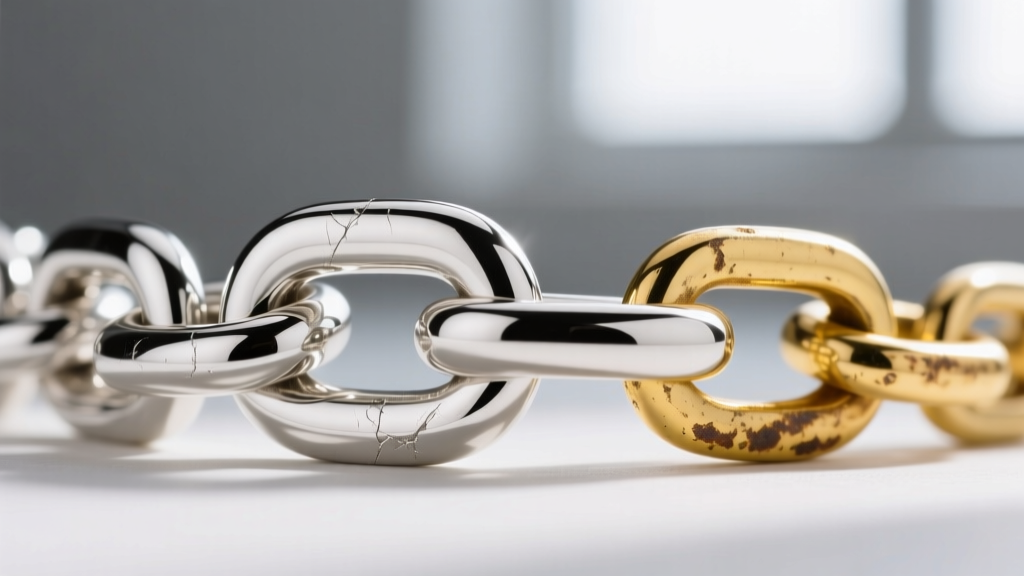
White gold is not naturally white; it is yellow gold alloyed with white metals like nickel, palladium, or silver to mute the yellow hue. However, to achieve the bright, reflective "chrome" finish consumers expect, white gold must be plated with rhodium (a platinum group metal). According to the Gemological Institute of America (GIA), this plating is superficial and will inevitably wear away, revealing the slightly yellowish or grayish underlying alloy.
- Vickers Hardness (HV): 14K (~135 HV) is harder and more durable than 18K (~125 HV).
- Failure Mode: Rhodium depletion. A necklace worn daily will require re-plating every 12 to 18 months to maintain its bright white appearance.
- Pricing Range: $400 – $2,000 depending on karat and weight.
3. Palladium (950Pd): The Lightweight Alternative
Palladium is a platinum group metal that is naturally white, meaning it requires zero rhodium plating. With a density of 12.02 g/cm³, it is nearly half the weight of platinum. This makes it an exceptional choice for thicker, bolder chain styles (like 8mm Figaros) where a platinum equivalent would be too heavy or prohibitively expensive for the neck.
- Vickers Hardness (HV): ~120 HV (similar to platinum, develops a patina).
- Failure Mode: Sizing and repair difficulties. Palladium requires specialized casting equipment and lasers for welding, making chain repairs challenging.
- Pricing Range: $600 – $1,800.
4. Sterling & Argentium Silver: The Reactive Classics
Standard 925 Sterling Silver is an alloy of 92.5% silver and 7.5% copper. The copper provides necessary tensile strength but introduces a major vulnerability: tarnish. When copper reacts with hydrogen sulfide in the air or sweat, it forms silver sulfide (black tarnish). For a low-maintenance mens white necklace, modern jewelers are turning to Argentium Silver (935 or 960 grade), which replaces some copper with germanium. The Silver Institute notes that germanium creates a transparent, self-healing oxide layer that drastically slows tarnishing and eliminates firescale during manufacturing.
- Vickers Hardness (HV): ~65-75 HV (very soft, prone to deep scratching and denting).
- Failure Mode: Surface oxidation (tarnish) and structural stretching in thin chain links.
- Pricing Range: $60 – $350.
5. Titanium & Surgical Steel: The Industrial Modernists
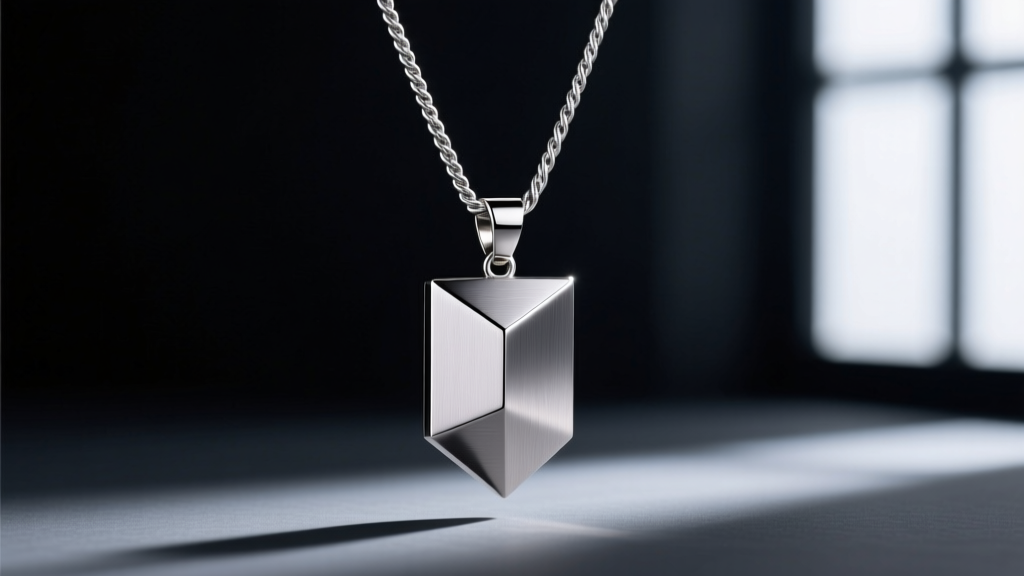
For men seeking extreme durability without the precious metal price tag, Grade 5 Titanium (Ti-6Al-4V) and 316L Surgical Steel dominate. Titanium boasts an incredible strength-to-weight ratio and is entirely hypoallergenic. It is frequently used for dog tags, geometric pendants, and modern matte-finish chains.
- Vickers Hardness (HV): Grade 5 Titanium (~340 HV); 316L Steel (~150 HV).
- Failure Mode: Unrepairable. If a titanium chain snaps or a clasp fails, traditional jewelers cannot solder it; it must be laser-welded or replaced.
- Pricing Range: $40 – $250.
Material Properties & Wear Matrix
When selecting your chain, you must balance initial cost against long-term maintenance and physical durability. The matrix below synthesizes the critical data points for 2026 buyers.
| Metal / Alloy | Density (g/cm³) | Hardness (HV) | Maintenance Level | Avg. Price (5mm 20" Chain) |
|---|---|---|---|---|
| Platinum (Pt950) | 21.45 | 125 | Low (Polishing optional) | $2,800 - $4,500 |
| 14K White Gold | 13.50 | 135 | High (Re-plate yearly) | $900 - $1,400 |
| Palladium (950Pd) | 12.02 | 120 | Low (Naturally white) | $1,100 - $1,600 |
| Argentium Silver | 10.36 | 75 | Medium (Occasional wipe) | $120 - $250 |
| Grade 5 Titanium | 4.43 | 340 | Zero (Indestructible) | $60 - $150 |
Matching Metal Density to Chain Architecture
The physical density of your chosen metal directly dictates how a chain drapes, moves, and feels against the skin. A structural mismatch between metal and chain style is a common error in men's jewelry design.
Heavy & Fluid: Curb and Cuban Links
Thick, interlocking chains like the Cuban link rely on gravity to lay flat against the chest. Platinum and 18K White Gold are ideal here. The high density of platinum ensures the links sit perfectly without twisting. Using titanium for a thick Cuban link results in a necklace that feels unnervingly light and lacks the premium "swing" expected of luxury streetwear jewelry.
Delicate & Tensile: Rope and Box Chains
Rope chains feature complex, twisted links that catch the light from multiple angles. Because these links are small and tightly wound, they are highly susceptible to stretching if the metal is too soft. 14K White Gold and Palladium offer the perfect balance of tensile strength and malleability required to manufacture and wear fine rope chains without the links pulling apart under the weight of a pendant.
Troubleshooting Common White Metal Failures
Expert Insight: The most common complaint we see with men's white gold chains is "color shifting" at the nape of the neck. This is not a defect; it is the rhodium plating wearing away due to friction against the skin and hair oils. If you want a bright white chain with zero color-shifting, you must upgrade to Platinum, Palladium, or Argentium Silver.
Clasp Mechanics: The clasp is the weakest point of any mens white necklace. For heavy platinum or gold chains, standard spring-ring clasps are a liability. Always insist on a solid lobster clasp with a hardened steel internal spring. For titanium chains, ensure the clasp is also titanium or surgical steel; mixing titanium with standard brass or silver clasps leads to galvanic corrosion when exposed to sweat.
The Final Verdict: Which Metal is Right for You?
Choosing the right material requires an honest assessment of your lifestyle and budget:
- Choose Platinum if: You have a high budget, desire a heavy, luxurious drape, and want a heirloom piece that requires zero chemical maintenance.
- Choose 14K White Gold if: You prefer the absolute brightest, most reflective "mirror" finish and do not mind taking the chain to a jeweler for a quick rhodium dip once a year.
- Choose Palladium if: You want the hypoallergenic, naturally white properties of platinum but prefer a lighter weight on your neck and a slightly lower price point.
- Choose Argentium Silver if: You are on a budget but demand a premium white metal that won't turn your neck green or require constant polishing like traditional sterling.
- Choose Titanium if: You work with your hands, work in industrial environments, or want a modern, matte-finish piece that is virtually indestructible.
By prioritizing metallurgical reality over fleeting trends, you ensure that your white metal necklace remains a cornerstone of your wardrobe for decades, not just seasons.


