Expert Care and Cleaning Tips for a Mermaid's Necklace
Learn expert cleaning and maintenance tips for your mermaid's necklace. Protect sea glass, pearls, and shells with our safe, step-by-step care guide.

The mermaid's necklace has captured the imagination of jewelry lovers worldwide, blending coastal aesthetics with organic, oceanic treasures. As we navigate the jewelry trends of 2026, the siren and coastal grandmother aesthetics continue to dominate, making these intricate pieces more popular than ever. A true mermaid's necklace is rarely made of a single material; it is a carefully curated assemblage of frosted sea glass, irregular freshwater pearls, iridescent abalone shell, and delicate sterling silver or gold vermeil chains. While visually stunning, this combination of organic and inorganic materials presents a unique challenge for jewelry maintenance.

Unlike a solid diamond or sapphire pendant, the components of a mermaid's necklace react differently to water, chemicals, and friction. What cleans a silver chain might permanently dull a pearl, and what polishes sea glass could strip the delicate nacre off an abalone shell. This comprehensive guide will walk you through the exact, scientifically backed methods for cleaning, maintaining, and storing your mermaid's necklace to ensure it retains its oceanic magic for generations.
Understanding the Anatomy and Mohs Hardness
To properly care for your jewelry, you must first understand the physical properties of its components. The Mohs scale of mineral hardness dictates how easily materials scratch one another. A standard mermaid's necklace features materials with wildly varying hardness ratings:
- Freshwater Pearls (2.5 - 4.5): Extremely soft and porous. The nacre (calcium carbonate) is highly susceptible to acidic substances and micro-scratches.
- Abalone Shell (3.5): Similarly soft, with a delicate outer layer that provides its signature iridescence. Harsh abrasives will strip this layer permanently.
- Sterling Silver (2.5 - 3.0): A relatively soft metal that tarnishes when exposed to sulfur and moisture.
- Sea Glass (5.5 - 6.5): The hardest component in the necklace. If stored loosely, the sea glass will act like sandpaper against the pearls, silver, and abalone.
Because of this disparity in hardness, the golden rule of mermaid's necklace care is isolation. The components must be protected from rubbing against one another during both wear and storage.
The Golden Rules of Organic Jewelry Care
Before reaching for any cleaning solution, internalize these three foundational rules recommended by gemological experts. According to the Gemological Institute of America (GIA), organic gems require a drastically different approach than crystalline stones.
- Last On, First Off: Your mermaid's necklace should be the very last thing you put on after applying cosmetics, perfumes, hairsprays, and sunscreens. It should be the first thing you take off when returning home.
- Never Use Ultrasonic Cleaners: The high-frequency sound waves and heat generated by ultrasonic jewelry cleaners will shatter freshwater pearls and crack abalone shells instantly.
- Avoid Commercial Silver Dips: Liquid silver cleaners contain harsh acids (often thiourea-based) that will eat away the calcium carbonate in pearls and shells upon contact.
Step-by-Step Cleaning Guide for Oceanic Elements
When your necklace accumulates body oils, sweat, or environmental dust, it requires a gentle, targeted cleaning process. Do not submerge the entire necklace in water, especially if it is strung on silk thread, as wet silk stretches and weakens.
1. Cleaning the Sea Glass and Abalone
Mix a solution of one cup distilled water (never tap water, as chlorine and fluoride can damage organic finishes) and a single drop of pH-neutral, unscented castile soap. Dip a cotton swab or an extra-soft baby toothbrush into the solution. Gently brush the sea glass to remove trapped oils from its frosted crevices. For the abalone shell, use a damp microfiber cloth to wipe the surface lightly. Rinse the cloth with pure distilled water and wipe away any soap residue. Dry immediately with a lint-free cotton towel.
2. Wiping Down Freshwater Pearls
Pearls require the most delicate touch. They thrive on natural moisture but are easily damaged by acids. After every wear, wipe the pearls with a dry, untreated microfiber cloth to remove acidic sweat. If they require a deeper clean, use a cloth barely dampened with distilled water. Never soak pearls, as water can seep into the drill holes, causing the internal nucleus to rot or the silk thread to mildew.
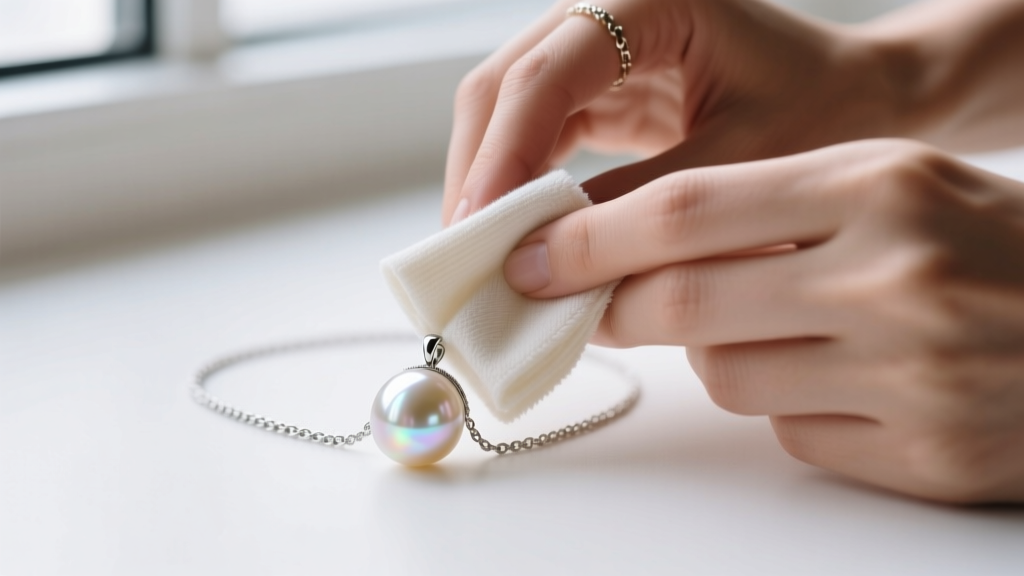
3. Polishing the Metal Chain
Sterling silver chains will inevitably tarnish due to oxidation and sulfur exposure. To polish the chain without damaging the organic pendants, use a treated silver polishing cloth (such as a Sunshine cloth). Carefully thread the cloth between the links of the chain, ensuring you do not drag the chemically treated fabric over the pearls or abalone. For gold vermeil chains, use only a standard, untreated microfiber cloth, as silver polishing cloths will strip the thin layer of gold plating.
Chemicals to Avoid: A Hazard Matrix
Everyday products can cause irreversible damage to the organic elements of your mermaid's necklace. Below is a hazard matrix detailing how common substances interact with the necklace's components.
| Common Substance | Effect on Pearls & Abalone | Effect on Silver Chain | Severity Level |
|---|---|---|---|
| Chlorine (Pools/Spas) | Dissolves nacre, causes permanent pitting and chalkiness. | Causes rapid, severe pitting and structural weakening. | Critical |
| Perfume & Alcohol | Dries out organic moisture, leading to cracking and peeling. | Accelerates oxidation and tarnishing. | High |
| Sunscreen (Chemical) | Leaves a cloudy, opaque film that is difficult to remove from pores. | Traps moisture against the skin, causing green skin/tarnish. | Moderate |
| Vinegar / Citrus Acids | Chemically reacts with calcium carbonate, dissolving the gem. | Strips patinas and can corrode delicate links. | Critical |
Proper Storage to Prevent Micro-Scratches and Dehydration
How you store your mermaid's necklace is just as critical as how you clean it. The American Gem Trade Association (AGTA) emphasizes that organic gems require specific environmental conditions to maintain their structural integrity.

Humidity Control: Pearls and abalone shells contain trace amounts of water. If stored in an overly dry environment—such as an airtight plastic bag or a safety deposit box with desiccant packets—the organic materials will dehydrate, leading to microscopic crazing (cracking). Maintain a relative humidity of around 40% to 50% in your jewelry storage area. If you must store them in a dry climate, place a slightly damp (not wet) cotton ball in the corner of the jewelry box, ensuring it does not physically touch the metal or gems.
Physical Isolation: Because the sea glass is significantly harder than the pearls and silver, the necklace must be stored flat or hung in a way that prevents the components from tangling and rubbing together. We recommend storing the piece in a soft, untreated flannel or velvet pouch with individual compartments for the pendants and the chain. Never toss a mermaid's necklace into a communal jewelry box.
Maintenance: When to Seek Professional Restringing
Many high-end mermaid's necklaces feature heavy sea glass and pearl pendants suspended on silk or nylon cord, or integrated into complex wire-wrapped designs. If your piece utilizes silk thread to secure any organic beads, you must monitor the thread's condition. Silk degrades over time, stretching under the weight of the glass and weakening when exposed to natural skin oils.
Inspect the drill holes of the pearls and beads. If you can see more than a millimeter of thread between the beads, or if the thread appears frayed, discolored, or stiff, it is time for professional restringing. A master jeweler will typically use Size E or F silk thread with French wire (gimp) at the clasp to prevent the metal from cutting the silk. For heavy sea glass pendants, jewelers may recommend upgrading to a synthetic, waterproof cord like PowerPro braided line, which offers superior tensile strength without sacrificing flexibility. Plan to have your necklace professionally inspected and potentially restrung every 2 to 3 years if worn on a weekly basis.
Conclusion
Owning a mermaid's necklace is like possessing a small piece of the ocean. It requires a mindful, gentle approach to maintenance that respects the delicate balance of its organic and metallic elements. By avoiding harsh chemicals, utilizing distilled water and pH-neutral soaps, and storing the piece in a humidity-controlled, isolated environment, you ensure that the iridescent flash of the abalone and the soft luster of the pearls remain as captivating as the day you first wore them. Treat your coastal treasures with the expertise they demand, and they will continue to tell their oceanic story for a lifetime.


