Mickey Minnie Necklace Materials: 2026 Durability Guide
Compare metals for your Mickey Minnie necklace. We analyze 925 silver, 316L steel, and gold vermeil for tarnish resistance, allergies, and daily wear.

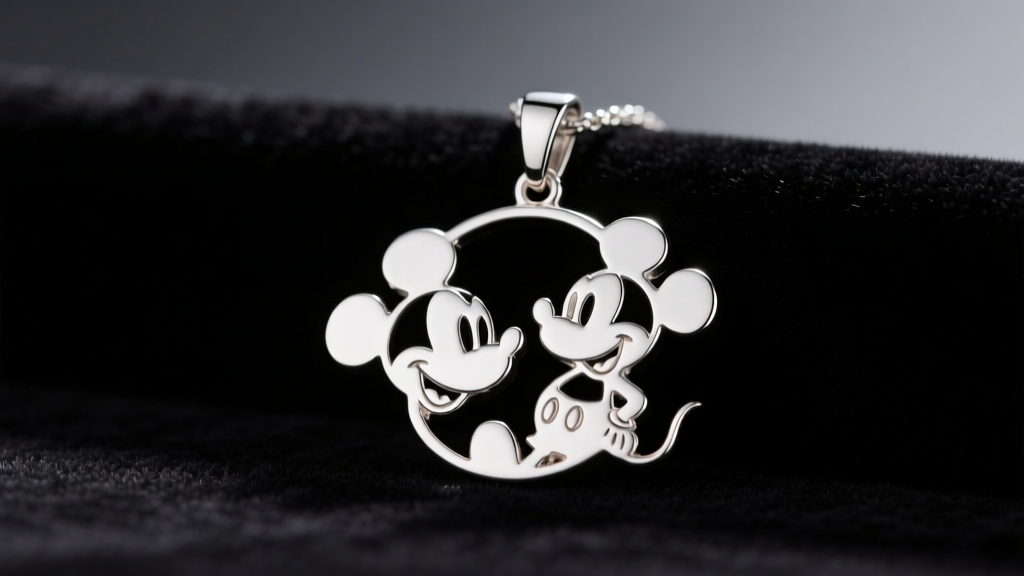
The Magic Meets Metallurgy: Beyond the Silhouette
When shopping for a beloved character pendant, most buyers focus entirely on the design—the iconic interlocking ears, the signature bow, or the intricate cutout details. However, the longevity, comfort, and ultimate value of your mickey minnie necklace are dictated entirely by its metallurgy. In 2026, the market is flooded with everything from solid precious metals to cheap, mystery-alloy castings that turn skin green within a week. As jewelry experts, we look past the intellectual property and examine the atomic structure. Whether you are buying a subtle everyday piece or a statement silhouette, understanding the material properties of your necklace is the difference between a lifelong heirloom and a disposable accessory.
Core Material Breakdown: Silver vs. Steel vs. Vermeil
The base metal of your pendant determines its weight, tarnish resistance, and structural integrity. Character silhouettes often feature sharp edges and deep cutouts, making the choice of alloy critical for preventing breakage and wear.
925 Sterling Silver: The Classic Standard
Sterling silver is an alloy consisting of 92.5% pure silver and 7.5% copper. According to the Silver Institute, the addition of copper is necessary because pure silver is too soft to hold the intricate details of a Minnie Mouse bow or the sharp outer curves of Mickey's ears. However, that same copper is responsible for oxidation. When exposed to sulfur in the air and the natural acidity of human sweat, the copper reacts, creating a dark layer of silver sulfide (tarnish). High-quality sterling pieces are often flash-plated with rhodium—a platinum-group metal—to create a bright, tarnish-resistant barrier. Failure Mode: Rhodium plating is incredibly thin (usually 0.1 to 0.5 microns). On a necklace pendant, the high-friction points where the bail rubs against the chain will wear through the rhodium within 6 to 12 months, requiring professional re-plating.
316L Surgical Stainless Steel: The Indestructible Option
If you want a mickey minnie necklace that you can wear in the shower, the ocean, and the gym without a second thought, 316L stainless steel is the undisputed champion. Unlike standard 304 steel, 316L contains 2-3% molybdenum, which drastically increases its resistance to chlorides and industrial solvents. It is virtually impervious to tarnish and will not react with your skin's pH. The Trade-off: Steel is dense and heavy. A large, solid steel silhouette pendant can easily exceed 15 grams, which requires a heavier chain to prevent neck strain and clasp failure. Furthermore, steel cannot be easily resized or repaired by a traditional jeweler if the bail snaps.
Gold Vermeil vs. Gold-Plated Brass: The Budget Trap
The term 'gold' is heavily misused in character jewelry. True Gold Vermeil requires a base of 925 sterling silver plated with at least 2.5 microns of 10k, 14k, or 18k gold, as outlined by jewelry industry standards referenced by the Gemological Institute of America (GIA). This provides a durable, hypoallergenic gold finish. Conversely, 'gold-plated' or 'gold-toned' necklaces usually feature a brass (copper and zinc) base with a microscopic 0.1-micron gold wash. Failure Mode: Once the thin gold wash wears off the brass base, the copper reacts with sweat acids to create copper chloride, resulting in the dreaded green stain on your chest and a metallic smell.
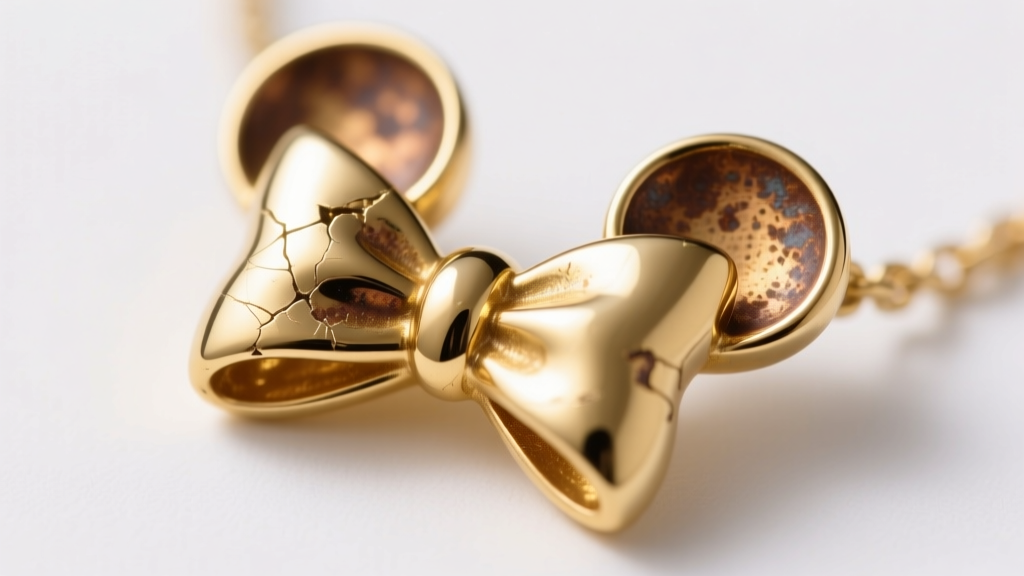
The Enamel Factor: Cold Resin vs. Vitreous Glass
Many mickey minnie necklace designs incorporate color, most notably Minnie's polka-dot bow or Mickey's red shorts. This color is achieved through enameling, but not all enamel is created equal.
- Cold Enamel (Epoxy Resin): This is a two-part liquid resin poured into the metal recesses and left to cure at room temperature. It is inexpensive and vibrant but has a low Mohs hardness. It will scratch easily, and prolonged exposure to UV light (sunlight) will cause the resin to yellow and become brittle over 3 to 5 years.
- Vitreous Enamel (Kiln-Fired Glass): This involves fusing powdered glass to the metal at temperatures exceeding 1400°F. The result is a gemstone-like finish that will never fade, yellow, or scratch. However, because it is essentially glass, a vitreous enamel pendant will shatter or chip if dropped onto a hard tile floor.
Material Comparison Matrix
Use this data table to match the material to your specific lifestyle and wearing habits.
| Material | Base Alloy | Tarnish Risk | Allergy Risk | Avg. Price Range | Best For |
|---|---|---|---|---|---|
| 925 Sterling Silver | 92.5% Ag, 7.5% Cu | Moderate | Low | $60 - $150 | Heirloom quality, occasional wear |
| 316L Stainless Steel | Fe, Cr, Ni, Mo | None | Very Low | $25 - $80 | Active lifestyles, daily waterproof wear |
| Gold Vermeil | 925 Silver + 2.5μ Au | Low | Low | $90 - $200 | Luxury aesthetic without solid gold pricing |
| Gold-Plated Brass | Cu, Zn + 0.1μ Au | High | Moderate | $15 - $45 | Costume wear, short-term trends |
Skin Chemistry & Allergic Contact Dermatitis
A mickey minnie necklace rests directly against the sternum, an area prone to sweating and friction. If you suffer from jewelry allergies, the culprit is almost always nickel, which is commonly used as a hardening agent in white gold and cheap brass alloys. The European Union's Nickel Directive restricts nickel release to 0.5 micrograms per square centimeter per week. 316L stainless steel contains nickel, but it is tightly bound within the crystalline structure of the alloy, meaning it rarely leaches enough to trigger a reaction. However, if you have a severe, clinically diagnosed nickel allergy, you must avoid steel and plated brass entirely, opting strictly for solid 14k/18k gold, platinum, or pure titanium.
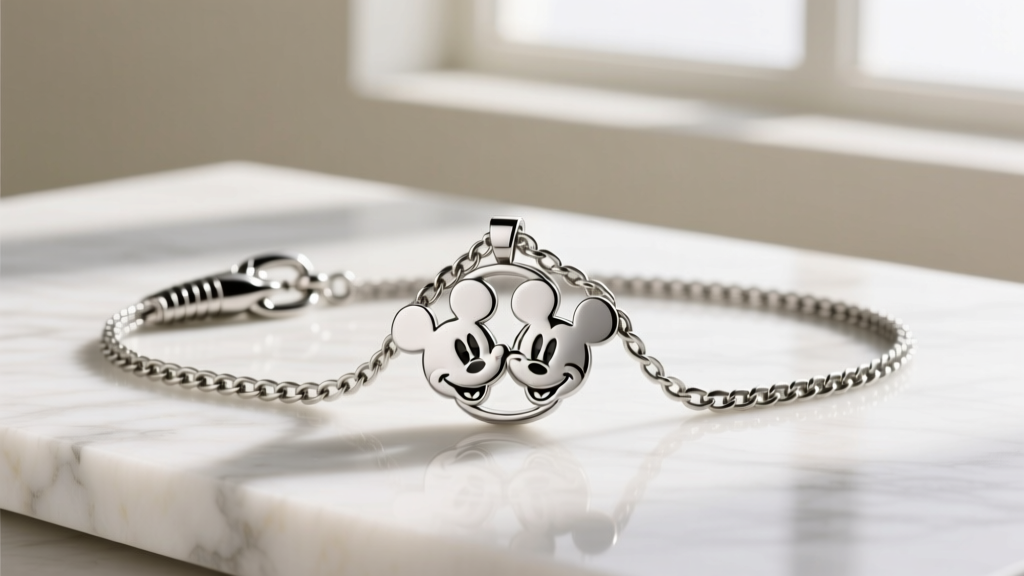
Chain Mechanics: What Holds the Silhouette?
The pendant is only half the equation; the chain dictates the necklace's survival. Character silhouettes are often top-heavy. A delicate 0.8mm cable chain will easily snap under the dynamic stress of a heavy silver pendant swinging during a hug or a sudden movement.
- Box Chains (1.2mm - 1.5mm): Composed of square links interlocked in a continuous, geometric pattern. Box chains distribute weight evenly and are highly resistant to kinking. They are the optimal choice for heavy steel or solid silver character pendants.
- Rope Chains: Offer excellent tensile strength and a brilliant sparkle due to their twisted facets, but their intricate grooves can trap lotion and dead skin cells, requiring frequent ultrasonic cleaning.
- The Clasp: Always upgrade from a standard spring-ring clasp to a lobster clasp. Spring rings have weak internal tension springs that fail rapidly when subjected to the lateral pull of a heavy pendant.
Care & Maintenance for Character Pendants
Proper maintenance depends entirely on the materials identified above. For sterling silver pieces, store them in an anti-tarnish cloth pouch with a silica gel packet to absorb ambient moisture. Never use silver dip chemicals on a necklace that features cold enamel or oxidized (blackened) detailing in the crevices, as the harsh acids will strip the intentional antiquing and cloud the resin. For 316L stainless steel, a simple wipe-down with a microfiber cloth and a drop of mild dish soap is all that is required to remove sebum and environmental pollutants. Avoid wearing any plated jewelry in chlorinated pools, as chlorine aggressively attacks the base metals once the microscopic plating barrier is compromised.
Final Verdict: Which Metal Should You Choose?
If you are purchasing a mickey minnie necklace as a permanent staple in your daily wardrobe, 316L stainless steel offers the best return on investment for its sheer indestructibility and zero-maintenance profile. If you are seeking a luxury gift with traditional intrinsic value, invest in a solid 14k gold or heavy gold vermeil piece over a 925 sterling base. Avoid gold-plated brass at all costs unless it is intended as a temporary, seasonal fashion accessory. By prioritizing metallurgical integrity over immediate visual appeal, you ensure that your favorite character silhouettes remain as timeless as the animations that inspired them.


