Milor 925 Italy Necklace: Troubleshooting Tarnish & Clasps
Learn how to authenticate, clean, and repair your Milor 925 Italy necklace. Expert troubleshooting for tarnish, stiff clasps, and kinked chains.

The Legacy and Vulnerability of Italian Sterling Silver
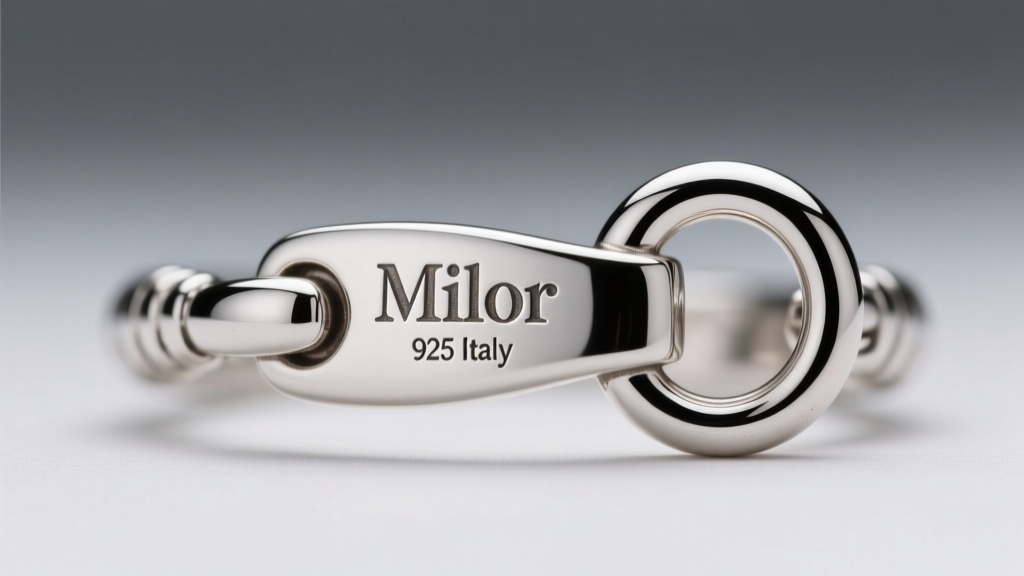
Milor Italy has built a formidable reputation in the global jewelry market, celebrated for its intricate metalwork, elegant designs, and high-quality sterling silver pieces. When you purchase a Milor 925 Italy necklace, you are investing in a specific metallurgical standard: 92.5% pure silver alloyed with 7.5% copper or other base metals to provide structural integrity. However, this exact alloy composition is also the root of the most common complaints we see from owners. The copper content, while necessary for durability, makes the metal highly susceptible to oxidation and sulfur-induced tarnishing. Furthermore, the mechanical components—specifically the Italian-made lobster clasps and delicate chain weaves like the Omega or Snake chains—require specialized troubleshooting when they malfunction. In this comprehensive guide, we will move beyond generic jewelry care and provide a master-level troubleshooting framework for maintaining, repairing, and authenticating your Milor sterling silver necklaces.
Step 1: Verifying Authenticity Beyond the "925 Italy" Stamp
Because the Milor 925 Italy necklace is a highly sought-after piece, the market is unfortunately saturated with counterfeit items bearing forged "925 Italy" hallmarks. Authenticating your piece requires looking past the stamp and testing the physical properties of the metal. According to the Gemological Institute of America (GIA), sterling silver must meet strict fineness standards, which can be verified through a few non-destructive at-home tests.
- The Neodymium Magnet Test: Pure silver and standard copper alloys are paramagnetic, meaning they will not attract a magnet. If your necklace clings to a strong neodymium magnet, the core is likely brass or steel with a thin silver electroplate.
- The Thermal Conductivity Test: Silver has the highest thermal conductivity of any common metal. If you place an ice cube on the chain or pendant, it should melt almost instantly, significantly faster than it would on stainless steel or platinum.
- The Olfactory Test: Rub the chain vigorously between your fingers until it is warm. Pure sterling silver is odorless. If you detect a sharp, metallic, or "penny-like" smell, the 7.5% alloy contains too much copper or zinc, indicating a lower-grade silver or a plated base metal.
Step 2: The Tarnish Troubleshooting Matrix
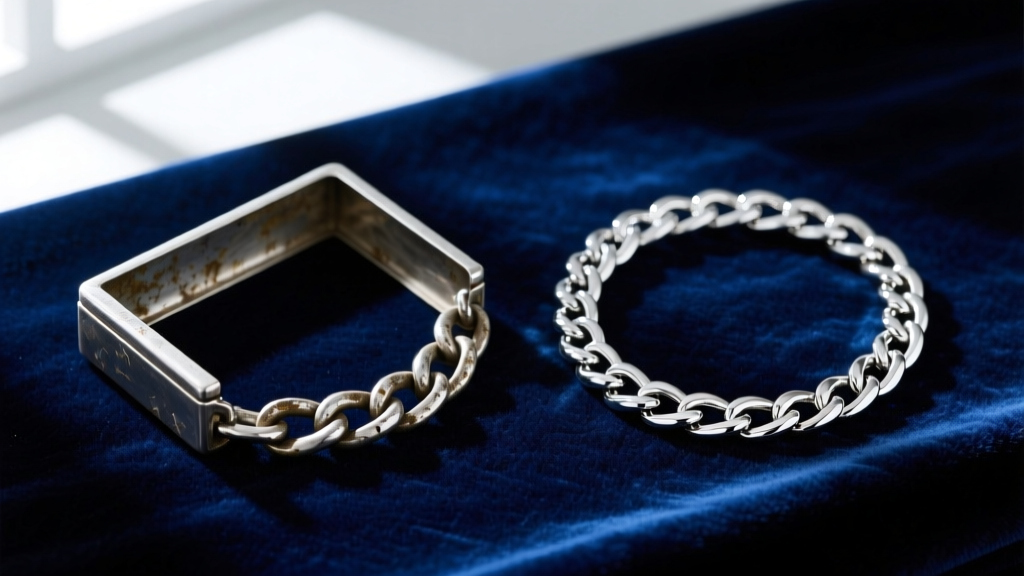
Tarnish is not a defect; it is a chemical certainty. When the silver in your Milor necklace reacts with hydrogen sulfide in the atmosphere, it forms silver sulfide (Ag2S), manifesting as a yellow, brown, or black film. Many Milor pieces are finished with a micro-thin layer of rhodium plating (usually 0.1 to 0.3 microns) to delay this process. Once this plating wears off at high-friction areas—like the clasp or the back of the pendant—tarnish will accelerate. Below is a targeted troubleshooting matrix based on the severity of the oxidation.
| Tarnish Level | Visual Indicator | Chemical State | Recommended Troubleshooting Method |
|---|---|---|---|
| Level 1 (Mild) | Faint yellowish or golden tint | Early-stage silver sulfide formation | Use a high-quality microfiber polishing cloth impregnated with mild jeweler's rouge. Avoid liquid dips. |
| Level 2 (Moderate) | Brown or dark gray patches | Thickening sulfide layer, often trapped in chain crevices | Electrochemical reduction bath: Line a glass bowl with aluminum foil (shiny side up), add boiling water, 1 tbsp baking soda, and 1 tbsp sea salt. Soak for 3-5 minutes. |
| Level 3 (Severe) | Solid black, chalky texture | Deep oxidation, potential copper corrosion | Professional ultrasonic cleaning followed by a light mechanical polish. Do not use commercial thiourea-based dips, as they can pit the metal. |
For ongoing care and deeper insights into alloy reactions, the The Silver Institute provides excellent metallurgical data on how environmental factors like humidity and urban pollution accelerate the tarnishing process in 925 silver.
Step 3: Rescuing Stiff or Broken Italian Clasps
The clasps on a Milor 925 Italy necklace are typically precision-cast or stamped lobster clasps. A common failure mode is a stiff or unresponsive lever. This is rarely a structural failure of the silver itself; rather, it is usually caused by the accumulation of skin oils, lotions, and microscopic debris caking the 0.2mm gap around the lever arm, or moisture causing the tiny internal steel spring to rust.
The Isopropyl Flush: Before attempting any physical repairs, submerge the clasp in a small cup of 99% isopropyl alcohol for ten minutes. Use a soft-bristled detailing brush or a clean toothbrush to gently agitate the lever mechanism. In 80% of cases, this will dissolve the lipid buildup and free the spring. If the lever remains stuck after the alcohol flush, the internal steel spring has likely corroded or snapped. Because Italian lobster clasps are often soldered shut or cast as a single unit, you cannot easily open them to replace the spring. The clasp must be replaced.
Sizing and Replacing the Jump Ring
If you must replace the clasp, pay close attention to the jump ring connecting it to the chain. A standard Milor box or snake chain requires a 4mm or 5mm jump ring. Crucially, you must use a soldered jump ring or a heavy-gauge split ring (minimum 20-gauge wire thickness). Using a standard open jump ring for a heavy Italian silver pendant is a primary failure point; the ring will slowly pull apart under the pendulum motion of daily wear, resulting in a lost necklace. If you are not equipped with a micro-torch for soldering, take the piece to a jeweler to have a laser-welded jump ring installed.
Step 4: Untangling and Straightening Kinked Chains
Milor produces stunning Omega, Snake, and Box chains, but their structural geometry makes them highly vulnerable to kinking. An Omega chain, for instance, consists of interlocking metal plates laid over a flexible mesh core. If bent sharply, the plates crimp, and the mesh core fractures. Never pull or tug at a kinked Omega or Snake chain. Tension will only tighten the crimp and snap the internal wires.
Follow this precise un-kinking protocol recommended by Jewelers of America for structured silver chains:
- Preparation: Lay the necklace completely flat on a smooth, hard surface like a glass table or a ceramic tile. Do not use a soft pad, as you need zero surface friction.
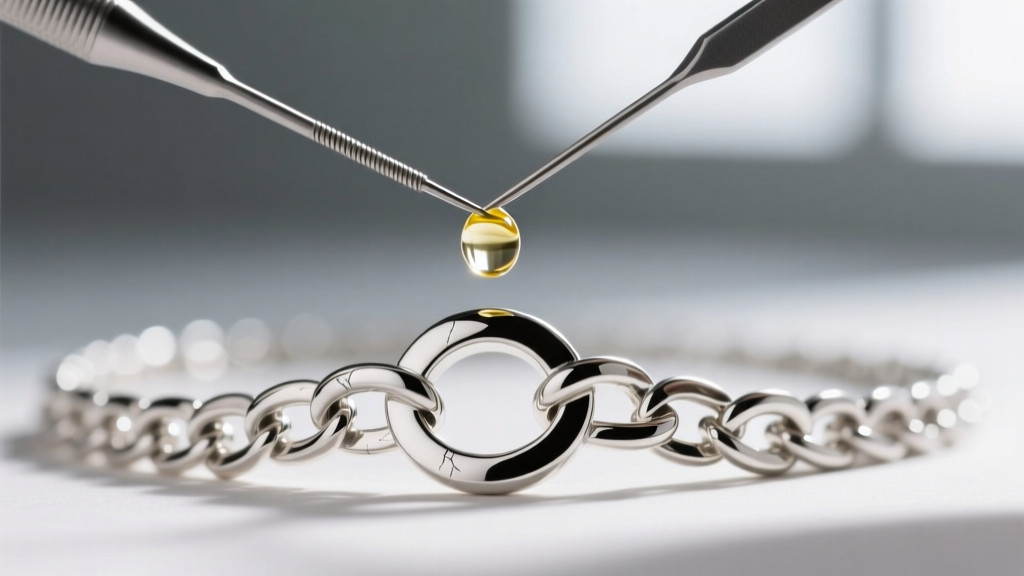
- Lubrication: Apply a single, microscopic drop of mineral oil or baby oil directly to the apex of the kink. This reduces friction between the silver plates.
- Needle Manipulation: Take a fine-gauge sewing needle and gently insert the tip into the seam of the kinked link. Apply upward, lateral pressure to slowly coax the metal plates back into alignment. Do not pry forcefully.
- The Rolling Technique: Once the kink is loosened, place a smooth, cylindrical object (like a clean glass test tube or a polished metal rod) over the affected area. Roll the cylinder back and forth over the kink with light, even pressure. This forces the mesh core to realign without stretching the outer silver links.
Preventative Maintenance Framework
Troubleshooting is only half the battle; proactive maintenance is what preserves the value and beauty of your Milor 925 Italy necklace. To prevent the need for the interventions listed above, implement the following storage and wearing protocols:
- Anti-Tarnish Storage: Never store your necklace in a standard cardboard jewelry box or a plastic bag. Cardboard off-gasses sulfur compounds, and plastic traps humidity. Store the piece in a treated Pacific Silvercloth pouch or an airtight ziplock bag alongside a 3M anti-tarnish strip.
- The "Last On, First Off" Rule: Sterling silver is highly reactive to the chemicals found in perfumes, hairsprays, and cosmetics. Always put your Milor necklace on after your beauty routine has dried, and remove it first when you begin your evening skincare regimen.
- Environmental Hazards: Remove your necklace before entering chlorinated swimming pools or natural hot springs. Chlorine reacts with the copper alloy to form copper chloride, which causes irreversible structural embrittlement and a permanent greenish-black stain. Similarly, the high sulfur content in hot springs will turn a rhodium-plated Milor necklace pitch black in a matter of seconds.
Conclusion
Owning a Milor 925 Italy necklace is a joy, provided you understand the metallurgical realities of sterling silver. By accurately authenticating your piece, utilizing the electrochemical reduction method for tarnish, properly maintaining the mechanical integrity of the clasps, and carefully un-kinking structured chains, you can ensure your Italian jewelry remains flawless for decades. Treat your silver with the technical respect it demands, and it will reward you with a lifetime of brilliant wear.


