Minion Necklace Deep Dive: Enamel Types & Chain Gauges
Explore the technical details of a premium minion necklace, from hard enamel techniques and base metals to chain gauges and skin safety.

The Evolution of Character Jewelry: Beyond Theme Park Merch
When most consumers think of a minion necklace, they picture stamped tin or cheap plastic pendants sold in theme park gift shops. However, as of 2026, the landscape of character and pop-culture jewelry has shifted dramatically. Collectors, enthusiasts, and high-end artisans are now producing licensed and custom character pendants using fine jewelry manufacturing techniques. Understanding the metallurgy, enamel chemistry, and structural engineering behind a premium character necklace is essential for anyone looking to invest in a piece that will last decades rather than months. This guide deconstructs the technical specifications that separate novelty toys from heirloom-quality enamel pendants.
Base Metal Metallurgy: Zamak vs. Brass vs. Sterling Silver
The foundation of any enameled pendant is its base metal, which dictates the casting method, weight, and compatibility with high-temperature glass enamels. Mass-market character jewelry typically relies on Zamak (a zinc alloy containing aluminum, magnesium, and copper). While Zamak is inexpensive and excellent for high-pressure die-casting intricate 3D shapes, it has a low melting point (around 385°C) and a porous surface that makes it incompatible with traditional vitreous enamel. Instead, Zamak pendants are limited to cold enamel (epoxy resin) applications and require heavy electroplating to prevent oxidation.
For premium pieces, lead-free brass and 925 sterling silver are the industry standards. Brass provides a dense, non-porous canvas that holds soft enamel beautifully and can be heavily gold- or rhodium-plated. Sterling silver, however, presents unique engineering challenges. Because vitreous enamel fuses at temperatures between 750°C and 850°C, and sterling silver begins to soften and develop fire-scale (copper oxidation) near 893°C, silversmiths must use precise kiln controls and specialized fluxes to prevent the pendant from warping or blistering during the firing process.
The Science of Color: Vitreous Enamel vs. Cold Resin
Achieving the iconic, vibrant "Minion Yellow" requires specific material choices. The technique used to apply this color drastically affects the pendant's longevity, scratch resistance, and UV stability.
Hard Enamel (Cloisonné)
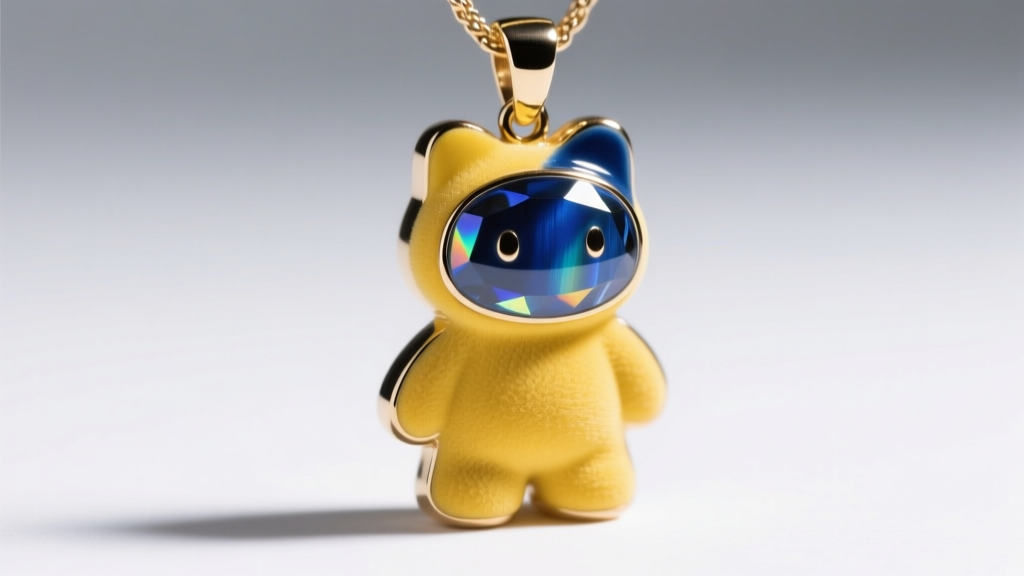
Hard enamel involves packing finely ground glass powder into recessed metal channels and firing it in a kiln. Once cooled, the surface is ground flat and polished flush with the metal wire separations. This results in a highly durable, scratch-resistant surface that will never yellow or fade. A high-end minion necklace utilizing hard enamel will maintain its glossy, glass-like finish indefinitely, though the color palette is slightly more limited by the chemistry of heat-stable glass pigments.
Soft Enamel (Champlevé)
Soft enamel is fired at lower temperatures and left unfilled, creating a textured surface where the metal lines sit higher than the colored enamel pools. While this technique allows for a broader spectrum of vibrant, neon, and pastel colors, the recessed enamel is more susceptible to impact damage and chemical degradation from perfumes or lotions.
Cold Enamel (Epoxy Resin)
Often used on Zamak or 3D-printed metal bases, two-part epoxy resins are poured into molds and cured at room temperature. While modern UV-inhibitor resins have improved significantly by 2026, they still lack the Mohs hardness of vitreous glass (resin sits around a 2-3, while glass enamel is a 5-6) and will eventually show micro-scratches and slight ambering over years of sun exposure.
Chain Architecture and Gauge Tolerances
A 3D cast brass character pendant can easily weigh between 12 and 22 grams. Suspending this weight requires a chain with adequate tensile strength and properly soldered links. Pairing a heavy pendant with a delicate 0.8mm cable chain is a structural failure waiting to happen. Below is a technical breakdown of chain specifications recommended for heavy enamel pendants.
| Chain Style | Recommended Gauge | Avg. Tensile Strength | Best Application |
|---|---|---|---|
| Standard Cable | 1.0mm - 1.2mm | 3 - 5 lbs | Lightweight flat pendants (<8g) |
| Rolo (Belcher) | 1.5mm - 1.8mm | 8 - 12 lbs | Heavy 3D character pendants (10-20g) |
| Wheat (Spiga) | 1.2mm - 1.5mm | 10 - 15 lbs | High-stress daily wear, excellent drape |
| Figaro | 2.0mm+ | 15+ lbs | Statement pieces, oversized pendants |
Furthermore, the bail (the loop connecting the chain to the pendant) must be engineered to handle dynamic shear stress. A standard soldered jump ring is preferable to an open, unsoldered ring, which can easily pull apart under the pendulum motion of a heavy pendant swinging against the chest.
Skin Safety, Nickel Leaching, and Plating Standards
Character jewelry is frequently worn by younger demographics and individuals with sensitive skin, making heavy metal compliance a critical factor. According to the European Chemicals Agency (ECHA) under the REACH Annex XVII regulations, jewelry that comes into direct and prolonged contact with the skin must not release nickel at a rate greater than 0.5 µg/cm²/week. Cheap, unregulated novelty necklaces often utilize nickel-heavy white metal alloys beneath thin flash plating, leading to severe contact dermatitis once the plating wears through.
To ensure safety and longevity, premium manufacturers utilize heavy gold plating (minimum 2.5 microns of 18k or 24k gold over a nickel-free brass or silver base) or rhodium plating over sterling silver. Additionally, many high-end artisan pieces now feature an e-coating (electrophoretic deposition) layer—a microscopic, invisible polymer shield that prevents the underlying silver from tarnishing and acts as a secondary barrier against metal ion leaching. For a comprehensive look at jewelry manufacturing standards and material safety, resources like the Gemological Institute of America (GIA) provide extensive documentation on metal allergies and plating degradation.
Sourcing: Licensed Merch vs. Artisan Custom Work
When acquiring a high-quality minion necklace, buyers generally face two distinct markets. Officially licensed merchandise (produced by companies holding Universal Studios partnerships) guarantees accurate character proportions and trademark compliance, though these pieces are often mass-produced using Zamak and cold enamel to keep retail prices between $40 and $80. Conversely, independent artisans and enamelists on platforms like Etsy often create "inspired-by" or stylized character silhouettes using lost-wax casting and vitreous hard enamel. While these custom pieces may cost upwards of $150 to $300, they offer superior metallurgical integrity, hypoallergenic guarantees, and the structural chain pairings necessary for a lifetime of wear.
Final Technical Checklist for Buyers
- Verify the Base Metal: Look for "925 Sterling Silver" or "Nickel-Free Brass." Avoid unspecified "alloy" or "metal mix."
- Inspect the Bail: Ensure the connection loop is fully soldered closed, not merely bent shut with pliers.
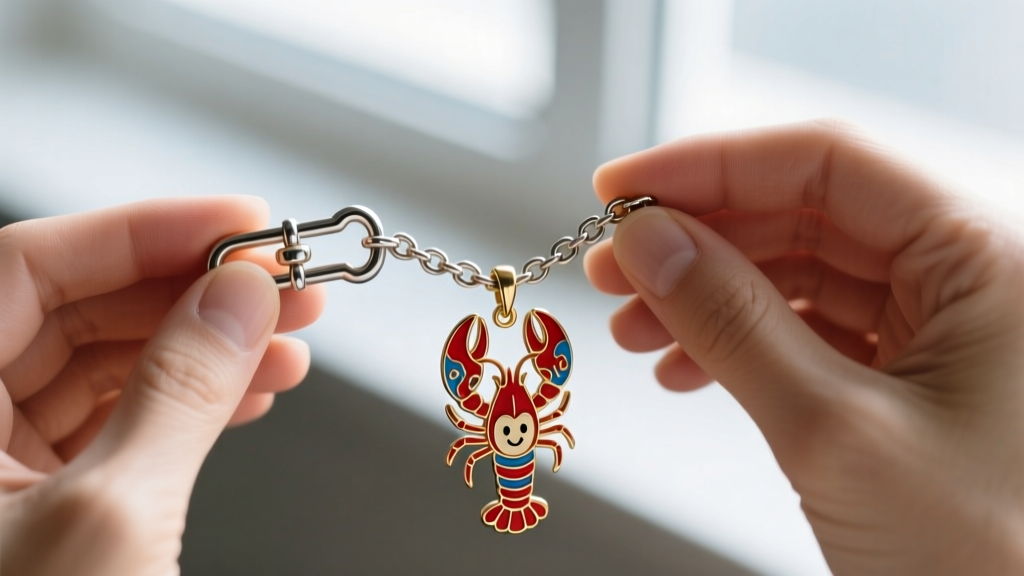
- Check the Clasp: A heavy pendant requires a sturdy lobster clasp with a strong internal spring, not a fragile spring-ring clasp.
- Assess the Enamel: If the yellow color is perfectly flush with the metal lines and feels like glass, it is high-grade hard enamel.
By prioritizing material science and structural engineering over mere novelty, collectors can secure character jewelry that stands the test of time, transforming a simple pop-culture reference into a masterclass of modern enameling and metallurgy.


