On a Mood Necklace What Do the Colors Mean? The Science & Chart
Wondering on a mood necklace what do the colors mean? Discover the science of thermochromic crystals, a complete color chart, and care tips.

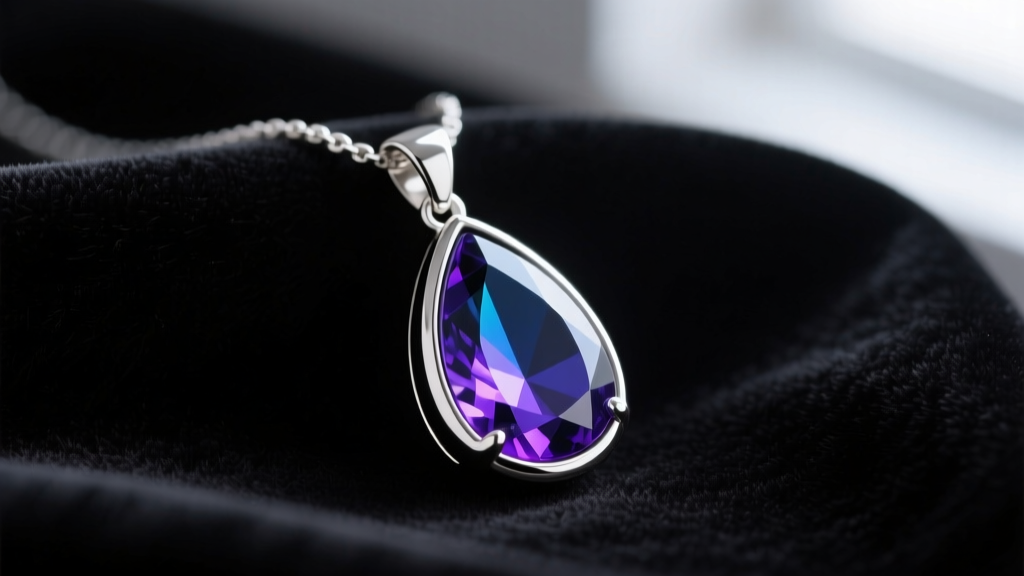
Since their explosion in popularity in the 1970s, mood necklaces have captivated jewelry lovers with their seemingly magical ability to shift hues. But as you watch the pendant transition from deep blue to bright green against your skin, you might find yourself asking: on a mood necklace what do the colors mean? While the original marketing claimed these pendants could read your emotional state, the reality is rooted in fascinating materials science rather than mysticism.
In this beginner-friendly explainer, we will decode the exact science behind thermochromic jewelry, provide a comprehensive color chart, and explain why your pendant might sometimes turn stubbornly black. Whether you are wearing a vintage 1975 piece or a modern 2026 polymer-encapsulated design, understanding the mechanics will help you get the most out of your color-changing accessory.
The Magic Behind the Pendant: How Mood Necklaces Actually Work
To understand the color shifts, we first need to look inside the glass or quartz cabochon of the pendant. The "magic" is actually a layer of thermochromic liquid crystals, specifically a type known as cholesteric liquid crystals. According to chemistry experts at Compound Interest, these molecules are arranged in a helical (spiral) structure.
When the temperature of the pendant changes, the molecular structure expands or contracts. This alters the "pitch" (the distance between the layers of the spiral). As the pitch changes, the crystals reflect different wavelengths of light. Cooler temperatures cause the molecules to contract, reflecting shorter wavelengths like yellows and greens. Warmer temperatures cause them to expand, reflecting longer wavelengths like blues and violets. The black backing you see beneath the crystal layer is essential—it absorbs any light that isn't reflected, ensuring the colors appear vivid and saturated.
On a Mood Necklace What Do the Colors Mean? The Ultimate Chart
While the original 1970s marketing tied colors to specific emotions (e.g., blue for "happy," black for "stressed"), the colors actually correspond to surface skin temperature. Your skin temperature fluctuates based on blood flow, which is indirectly influenced by your body's physiological response to stress, excitement, or relaxation. Below is the standard thermochromic temperature chart used by most jewelry manufacturers.
| Color Displayed | Approximate Temperature | Marketed "Mood" | Physiological Reality |
|---|---|---|---|
| Black / Gray | Below 22°C (72°F) | Stressed, Anxious, Cold | Poor circulation, cold environment, or the pendant is not touching the skin. |
| Yellow / Amber | 22°C - 25°C (72°F - 77°F) | Nervous, Restless | Baseline cool skin temperature; capillaries are slightly constricted. |
| Green | 26°C - 29°C (79°F - 84°F) | Calm, Average, Relaxed | Normal resting skin temperature with steady, healthy blood flow. |
| Blue / Teal | 30°C - 32°C (86°F - 90°F) | Happy, Romantic, Energetic | Increased blood flow to the skin's surface due to warmth or mild excitement. |
| Violet / Purple | Above 33°C (91°F+) | Passionate, Very Excited | Peak skin temperature; blood vessels are fully dilated (flushed skin). |
Decoding the Colors: A Deep Dive into Specific Shades
Black and Gray: The Baseline and Error States
If your necklace is black or gray, it simply means the liquid crystals are below their active temperature threshold (usually around 22°C/72°F). If the pendant is resting on your skin and remains black, it indicates that your peripheral circulation is currently low, which happens when you are cold or experiencing a "fight or flight" stress response that pulls blood away from the skin to protect vital organs. However, if the necklace stays black even when warmed in your hands, it has likely suffered moisture damage (more on this below).
Greens and Blues: The Warmth Spectrum
Green is the most common "resting" color for a mood necklace worn against the chest. Because the skin over the sternum is generally warm and well-insulated, a high-quality pendant will naturally settle into a vibrant emerald or teal green. When the color shifts to a deep ocean blue, it means the local skin temperature has risen by roughly 2 to 4 degrees. This often happens when you are physically active, sitting in a warm room, or experiencing a rush of adrenaline that causes vasodilation (widening of the blood vessels).
Violets and Pinks: Peak Heat Indicators
Seeing a deep violet or rare pink hue means the pendant is registering significant heat. While vintage 1970s necklaces rarely reached the pink stage, modern 2026 thermochromic formulations are calibrated to be more sensitive, allowing for a broader spectrum of colors. A violet pendant indicates that your skin is flushed and exceptionally warm.
Why Your Mood Necklace Might Be "Stuck" or Broken
A common frustration among beginners is a pendant that refuses to change color. According to historical archives from Smithsonian Magazine, early mood jewelry was notoriously fragile. Today, while manufacturing has improved, the underlying chemistry remains sensitive. Here are the primary failure modes:
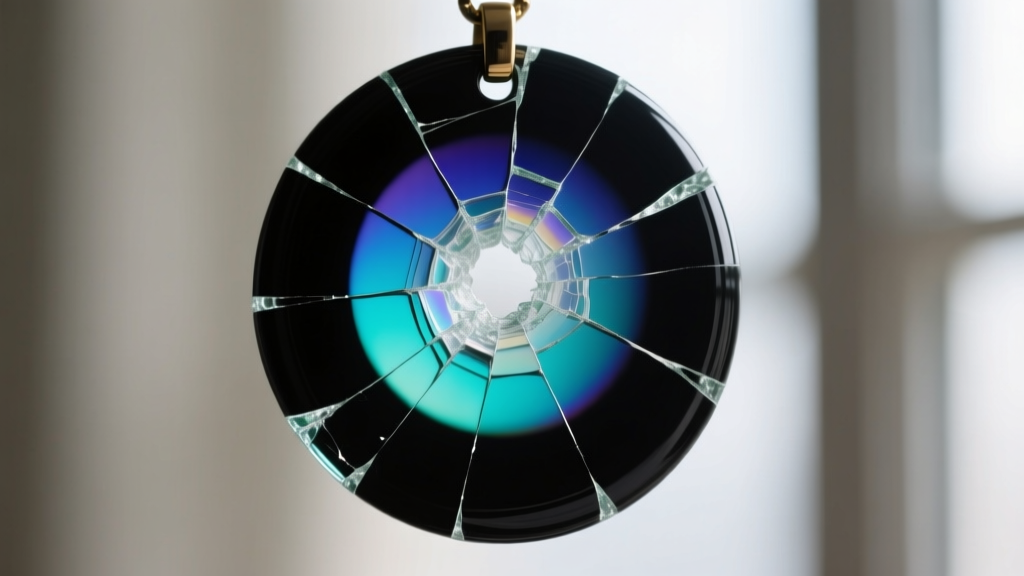
- Water Ingress (The Black Death): If the glass cabochon or plastic blister seal is compromised, moisture seeps in via capillary action. Water disrupts the alignment of the liquid crystals, permanently turning the pendant black. Once waterlogged, the necklace cannot be repaired.
- UV Degradation: The organic ester compounds (like cholesteryl oleyl carbonate) used in the crystals are highly susceptible to photodegradation. Prolonged exposure to direct sunlight breaks down the molecular bonds, causing the pendant to lose its color-shifting ability and remain stuck on a cloudy yellow or clear state.
- Extreme Heat Shock: Leaving your necklace on the dashboard of a hot car in the middle of summer can exceed the thermal limits of the liquid crystals, effectively "cooking" them and destroying their helical structure.
How to Care for and Prolong the Life of Thermochromic Jewelry
Because the color-changing element is essentially a delicate chemical sandwich, treating your mood necklace with care is essential for longevity. Follow these actionable maintenance rules:
- Never wear it in water: Remove your necklace before showering, swimming, or washing dishes. Even modern UV-resistant polymer coatings cannot fully protect against prolonged submersion.
- Store away from sunlight: When not wearing the piece, keep it in a closed jewelry box or a dark drawer. Do not leave it resting on a sunny windowsill.
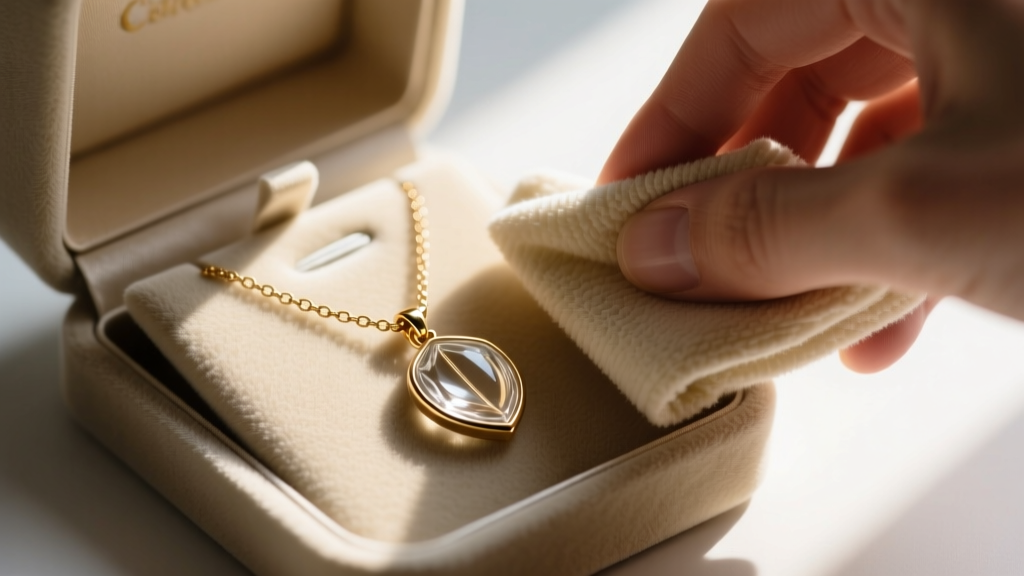
- Clean the metal, not the glass: Use a soft, dry microfiber cloth to polish the brass or silver-plated chain. Avoid liquid jewelry cleaners, ultrasonic cleaners, or harsh chemicals, as these can degrade the adhesive holding the glass cabochon in place.
- Apply cosmetics first: Put on your perfume, hairspray, and lotions before fastening your necklace. Alcohol and oils can slowly eat away at the protective resin seals over time.
Expert Styling Tip: To ensure your mood necklace displays its most vibrant colors, wear it directly against your skin rather than over a thick sweater. The highest density of thermochromic crystals is usually located at the very bottom tip of a teardrop pendant, so ensure that specific point is making direct contact with your sternum for the most accurate temperature readings.
Ultimately, while a mood necklace might not be a psychological diagnostic tool, it is a brilliant, wearable piece of chemistry. Understanding the thermal dynamics behind the colors transforms this nostalgic accessory from a simple novelty into a fascinating conversation starter about materials science and human physiology.


