Moonstone Necklace Meaning: Gemological Traits & Symbolic Lore
Discover the true moonstone necklace meaning, blending gemological facts like adularescence and Mohs hardness with historical lore and setting advice.

The Gemological Root of Moonstone Meaning
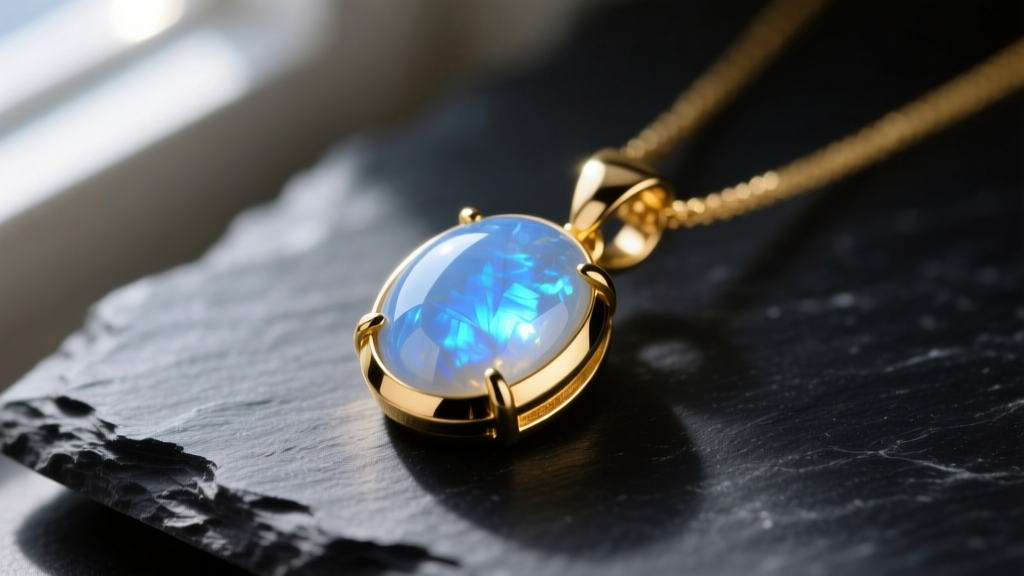
When enthusiasts and collectors search for the moonstone necklace meaning, they are frequently met with poetic tales of lunar goddesses, emotional balance, and divine feminine energy. However, as gemologists and jewelry technicians, we understand that the true 'magic' of moonstone is deeply rooted in complex mineralogy and optical physics. The metaphysical meanings attributed to this gemstone are not arbitrary; they are direct cultural responses to its unique physical properties.
Moonstone is a variety of the feldspar-group mineral orthoclase. Its signature glow, known as adularescence, is caused by the intergrowth of two different types of feldspar: orthoclase and albite. As the molten rock cools, these minerals separate into alternating, microscopic layers. When light strikes these layers, it scatters, producing the billowy, floating light effect that ancient cultures associated with captured moonlight. According to the Gemological Institute of America (GIA), the most prized moonstones possess a colorless body with strong blue adularescence, a phenomenon that occurs only when the exsolution lamellae (the alternating layers) are precisely between 200 and 300 nanometers thick.
Varieties of Moonstone and Their Specific Symbolism
Not all moonstones are created equal, and the specific 'meaning' often shifts depending on the gemological variety. The market is saturated with mislabeled stones, so understanding the technical distinctions is crucial for both jewelers and buyers.
| Variety | Base Mineral | Layer Thickness | Optical Effect | Metaphysical Meaning |
|---|---|---|---|---|
| Blue Moonstone | Orthoclase | 200-300 nm | Strong blue Schiller | Clarity, psychic vision, emotional depth |
| Rainbow Moonstone | Labradorite | Variable | Multicolor labradorescence | Creativity, aura protection, joy |
| Peach Moonstone | Orthoclase | Thicker layers | Soft white/peach glow | Nurturing energy, stress relief, empathy |
| White Moonstone | Orthoclase | Variable | Silvery-white sheen | New beginnings, intuition, lunar cycles |
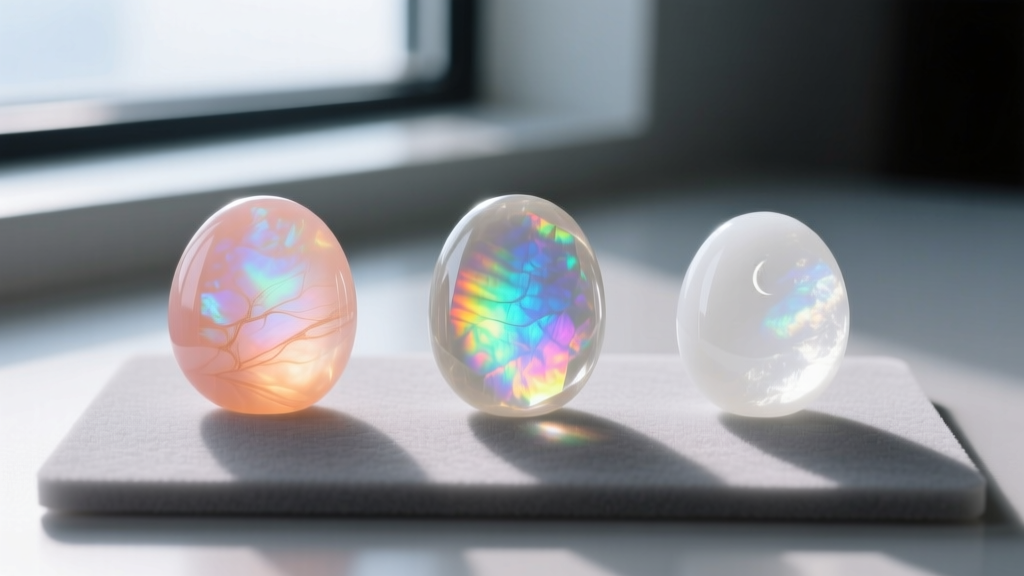
It is vital to note that 'Rainbow Moonstone' is technically a transparent variety of labradorite, not orthoclase. While the jewelry trade accepts the name, the Mindat.org mineral database classifies them distinctly based on their chemical composition. This distinction matters for durability and care, as labradorite and orthoclase react differently to certain chemical cleaners.
Technical Durability: Why the Meaning Requires Care
The lore surrounding moonstone often positions it as a protective talisman. Ironically, from a materials science perspective, moonstone is highly vulnerable and requires rigorous protection itself. Moonstone registers a 6 to 6.5 on the Mohs scale of hardness, making it susceptible to scratching from everyday dust (which contains quartz, Mohs 7). More critically, moonstone possesses perfect cleavage in two directions.
The Danger of Prong Settings
Cleavage refers to the tendency of a crystal to break along flat, structural planes of weakness. A single, sharp impact against a marble countertop can cause a prong-set moonstone to cleave cleanly in half. Therefore, the 'meaning' of preservation and longevity in a moonstone necklace is entirely dependent on the jeweler's setting technique.
- Bezel Settings: The gold or platinum rim completely encircles the girdle, absorbing lateral impacts and preventing the stone from shifting.
- Halo Settings: A perimeter of smaller, harder gemstones (like sapphires or diamonds) acts as a physical bumper shield.
- Prong Settings: Highly discouraged for daily-wear moonstone pendants. If prongs must be used, a V-prong at the point of a pear or marquise cut is mandatory to protect the most vulnerable cleavage intersections.
Evaluating Quality: The Geometry of the Cabochon
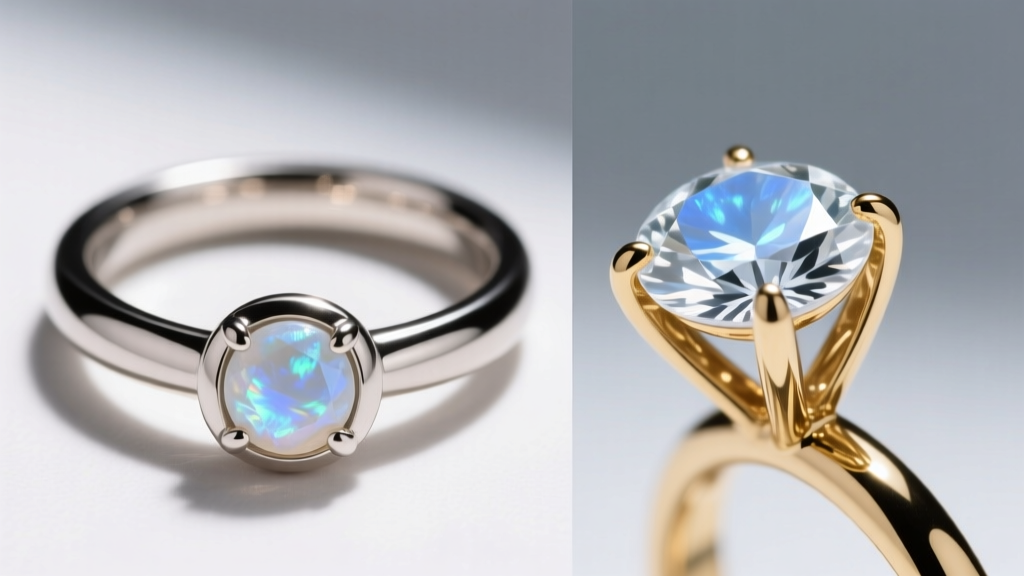
To maximize the adularescence—the very trait that gives the moonstone necklace its meaning—the stone must be cut as a cabochon (a smooth, unfaceted dome). The precision of this cut is a highly technical endeavor. If the dome is too flat, the light will not scatter properly, resulting in a dead, opaque appearance. If the dome is too high, the stone becomes overly bulky and difficult to set securely.
The ideal height-to-width ratio for a moonstone cabochon is between 1:3 and 1:2. The base must be cut perfectly parallel to the exsolution layers to ensure the billowy light effect rolls across the center of the dome when the pendant moves.
Furthermore, buyers should inspect the base of the cabochon. While a slightly uneven base is sometimes left to retain carat weight, a heavily hollowed base (a 'scooped' back) is a red flag. Scooping is often done to lighten a dark, overly thick stone, but it creates a structural void that makes the gemstone highly prone to cracking under the pressure of a bezel pusher during the setting process.
Sourcing, Treatments, and Ethical Considerations
The geographic origin of a moonstone heavily influences its optical quality and market value. Historically, the finest blue moonstones were sourced from Myanmar (Burma) and Sri Lanka (Ceylon). Today, due to depleted mines, high-quality blue material is exceptionally rare and commands premium pricing, often exceeding $1,000 per carat for clean, top-color specimens.
Conversely, the market is flooded with lower-grade, heavily included material from India and Madagascar. To improve the appearance of these stones, some manufacturers employ surface coatings or mild irradiation. While irradiation is generally stable, surface coatings can wear off over time, especially on a necklace pendant that experiences friction against clothing and skin. Always request a gemological report for high-value moonstone jewelry to ensure the adularescence is a natural structural phenomenon rather than an artificial surface treatment.
Chain Pairings for Impact Prevention
The chain you select for a moonstone pendant is not merely an aesthetic choice; it is a functional component of the gemstone's survival. Because moonstone is vulnerable to cleavage fractures, the chain must minimize the pendulum effect that causes the stone to swing and strike hard surfaces.
- Box Chains (1.2mm - 1.5mm): Their rigid, interlocking square links provide excellent weight distribution and restrict wild swinging, keeping the pendant centered on the sternum.
- Rope Chains: The twisted helical structure offers high tensile strength and a heavy drape, which anchors the pendant securely.
- Length Considerations: A 16-inch choker length keeps the stone high on the clavicle, away from desks and tables. An 18-inch princess length allows the stone to rest on the chest, but increases the risk of the pendant flipping upside down or striking objects if the wearer leans forward.
Ultimately, understanding the true moonstone necklace meaning requires looking past the metaphysical marketing and appreciating the profound geological forces that created it. By respecting its mineralogical boundaries—protecting its cleavage planes, demanding precise cabochon geometry, and pairing it with structurally sound chains—you ensure that the stone's lunar glow survives for generations.