The Morganite Bead Necklace Trend: 2026 Style & Quality Guide
Discover the 2026 morganite bead necklace trend. Learn how to style peach-pink beryl beads, grade quality, and layer with gold for everyday luxury.

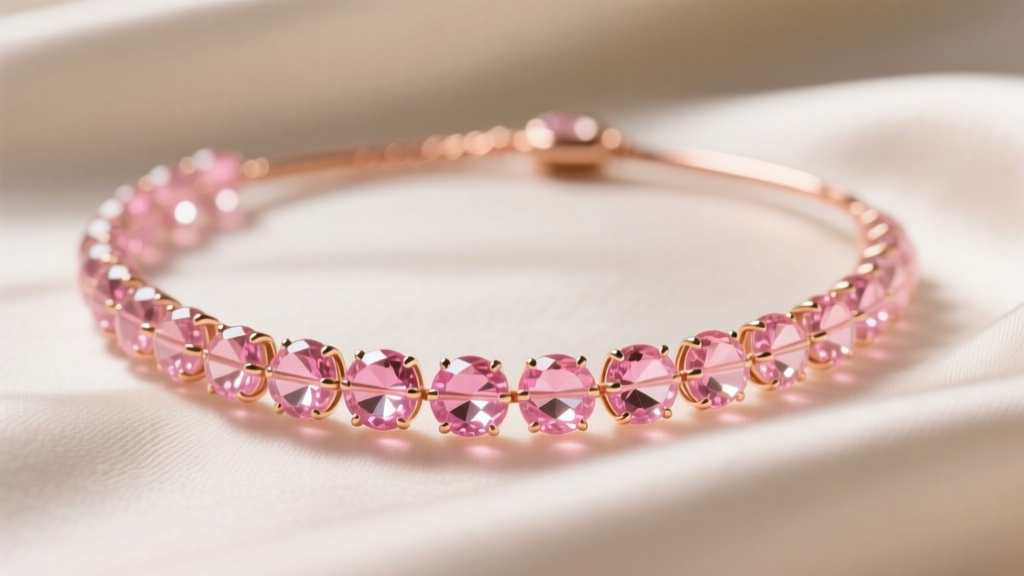
The Resurgence of Morganite in 2026: Beyond the Engagement Ring
For the past decade, morganite has been predominantly relegated to the realm of faceted engagement rings and statement cocktail pieces. However, the 2026 jewelry landscape has witnessed a massive pivot toward organic, tactile, and effortlessly layered designs. At the forefront of this movement is the morganite bead necklace. This shift is driven by a growing consumer desire for everyday luxury—pieces that offer the gemological prestige of the beryl family but with a relaxed, bohemian, or minimalist aesthetic that suits modern wardrobes.
Morganite, the peach-to-pink variety of beryl, ranks at a 7.5 to 8 on the Mohs hardness scale, making it exceptionally durable for daily wear. According to the Gemological Institute of America (GIA), the presence of manganese is what gives this gemstone its signature blush and peach hues. When cut into beads rather than faceted, the stone exhibits a soft, glowing translucency that catches the light beautifully against the skin. In 2026, designers are moving away from perfectly matched, uniform strands, instead embracing slight color variations and organic baroque bead shapes that highlight the stone's natural inclusions and color zoning.
Decoding Morganite Bead Quality: AAA vs. Commercial Grades
Not all morganite bead necklaces are created equal. The market is currently flooded with everything from gem-quality beryl to heavily treated, low-grade material. Understanding the grading matrix is critical for both collectors and everyday buyers. Bead quality is primarily determined by color saturation, translucency, and the presence of visible inclusions (often referred to as 'silk' or 'ice').
| Grade | Color Profile | Clarity & Translucency | Avg. Bead Size | Price per 16" Strand |
|---|---|---|---|---|
| AAA (Gem) | Vivid Peach-Pink | Eye-Clean, Highly Translucent | 6mm - 8mm | $150 - $320 |
| AA (Medium) | Soft Pastel Pink | Slight Silk, Semi-Translucent | 4mm - 6mm | $60 - $120 |
| Commercial | Pale, Chalky Pink | Opaque, Heavy Inclusions | 8mm - 10mm | $20 - $45 |
When shopping for a high-end morganite bead necklace, always look for stones that exhibit a distinct 'glow' when held to natural light. Opaque beads, while sometimes sold in larger carat weights, lack the optical brilliance that makes beryl desirable. Furthermore, commercial-grade beads are frequently dyed to mimic the vivid saturation of AAA stones.
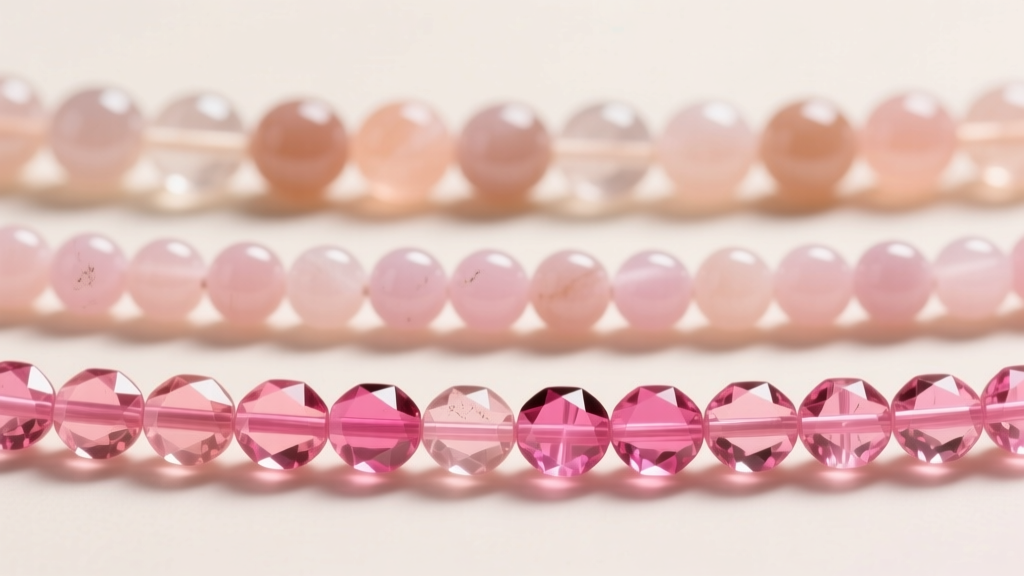
Identifying Dyed Beryl: A Gemologist’s Troubleshooting Guide
Because natural, vivid peach-pink morganite is relatively rare and commands a premium, lower-grade pale beryl is routinely subjected to dye treatments. As a buyer in 2026, you must know how to spot these enhancements. The Mindat.org mineralogical database notes that beryl's crystal structure can be highly porous when heavily included, making it a prime candidate for artificial coloring.
To identify dyed morganite beads, use a 10x jeweler's loupe to inspect the drill holes. If the bead is dyed, you will almost always see a concentration of pink pigment pooling around the edges of the drill hole or trapped in surface-reaching fractures. Additionally, you can perform a gentle solvent test: rub a cotton swab lightly dampened with acetone (nail polish remover) against an inconspicuous area of the bead. If the swab picks up pink residue, the stone has been artificially colored. Always demand a disclosure of treatments from reputable vendors.
Stringing & Hardware: What Holds Your Investment Together
The longevity of your morganite bead necklace relies entirely on its internal architecture. Beryl is a relatively heavy gemstone, and the friction between beads can easily degrade traditional silk thread over time. For strands featuring 6mm or larger beads, silk is no longer the industry standard.
Instead, top-tier jewelers in 2026 utilize 49-strand micro-wire, such as SoftFlex, with a diameter of 0.018 inches. This aerospace-grade stainless steel wire is coated in nylon, providing the drape of silk with the tensile strength of steel. For the hardware, the clasp must match the weight of the beads. A standard spring-ring clasp will fail under the torque of a heavy morganite strand. Opt for a 14k or 18k gold magnetic tube clasp or a secure lobster claw with a reinforced soldered jump ring. When pairing metals, 14k rose gold is the undisputed champion for morganite, as its copper alloys amplify the stone's natural pink undertones. Conversely, 18k yellow gold provides a striking, vintage-inspired contrast that warms up cooler, pastel AA-grade beads.
Mastering the Layering Technique: Necklines & Metal Pairings
The true versatility of the morganite bead necklace emerges when it is integrated into a layered stack. The matte-to-glossy interplay between smooth gold chains and glowing beryl beads creates a rich, textural aesthetic that elevates even the simplest outfits.
The 16-Inch Princess Length with V-Necks
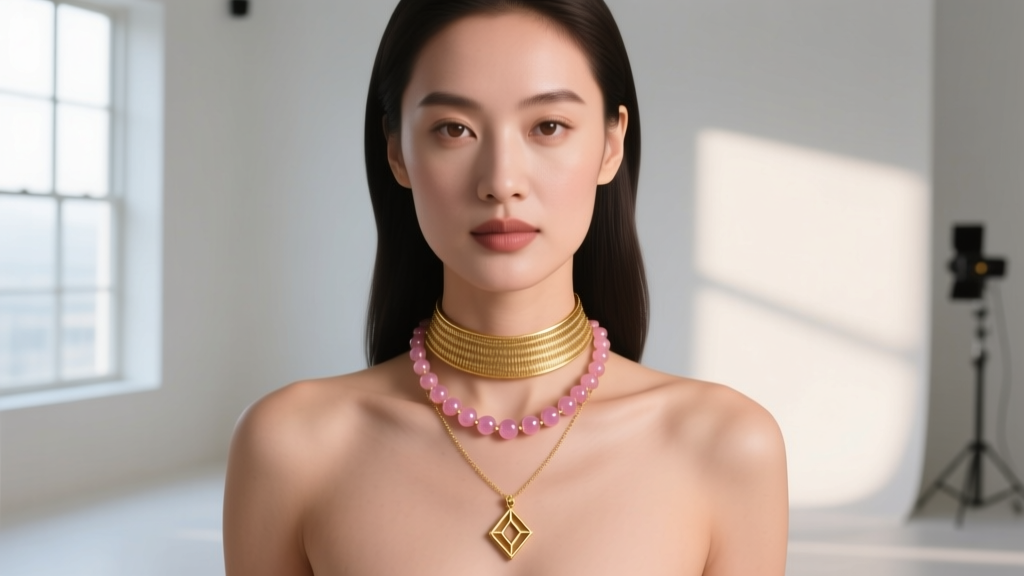
A 16-inch morganite bead necklace sits perfectly at the base of the throat, making it the ideal anchor for a V-neck blouse or wrap dress. To execute this look, pair the bead strand with a 14-inch solid gold choker and a 20-inch delicate gold pendant chain. The morganite beads should occupy the middle tier, drawing the eye downward and mirroring the geometry of the V-neckline. This configuration prevents the beads from tangling with the pendant while maintaining a cohesive, cascading visual flow.
The 24-Inch Opera Length for High Collars
For turtlenecks, crew necks, or structured blazers, a longer 24-inch to 30-inch opera-length morganite bead necklace is essential. The elongated silhouette breaks up the visual weight of high collars. In 2026, the trend is to double-wrap a 36-inch strand or let a single 28-inch strand hang loose over a monochromatic cashmere sweater. When wearing opera lengths, incorporate smaller 4mm beads to ensure the necklace remains lightweight and doesn't pull awkwardly on the nape of the neck.
Care and Maintenance: Protecting the Peach-Pink Luster
While morganite is durable enough for everyday wear, it requires specific care to maintain its polish and optical clarity. Beryl is susceptible to thermal shock and can be damaged by the intense heat and high-frequency vibrations of ultrasonic cleaners. Furthermore, steam cleaning can force dirt and degraded polishing compounds deeper into the microscopic surface fissures of the beads.
The safest and most effective method for cleaning a morganite bead necklace is to use a solution of lukewarm water and a few drops of mild, phosphate-free dish soap. Submerge the necklace for no more than five minutes, then gently agitate the water. Use a soft-bristled baby toothbrush to lightly sweep away any sebum or lotion buildup around the drill holes and clasp mechanisms. Rinse thoroughly under lukewarm running water and lay the strand flat on a microfiber cloth to air dry. Never hang a wet, heavy bead necklace to dry, as the added weight of the water can stretch the nylon coating of the stringing wire over time.
By understanding the gemological nuances, stringing mechanics, and styling frameworks of the morganite bead necklace, you can confidently invest in a piece that transcends fleeting fads. Whether you are drawn to the vivid saturation of AAA gem-quality stones or the relaxed charm of pastel strands, this peach-pink beryl remains a cornerstone of sophisticated, modern jewelry design.


