Butterfly Wing Necklace Guide: Real Morpho vs Resin
Compare real Morpho butterfly wing necklace materials against resin and enamel. Learn preservation, ethical sourcing, and durability.

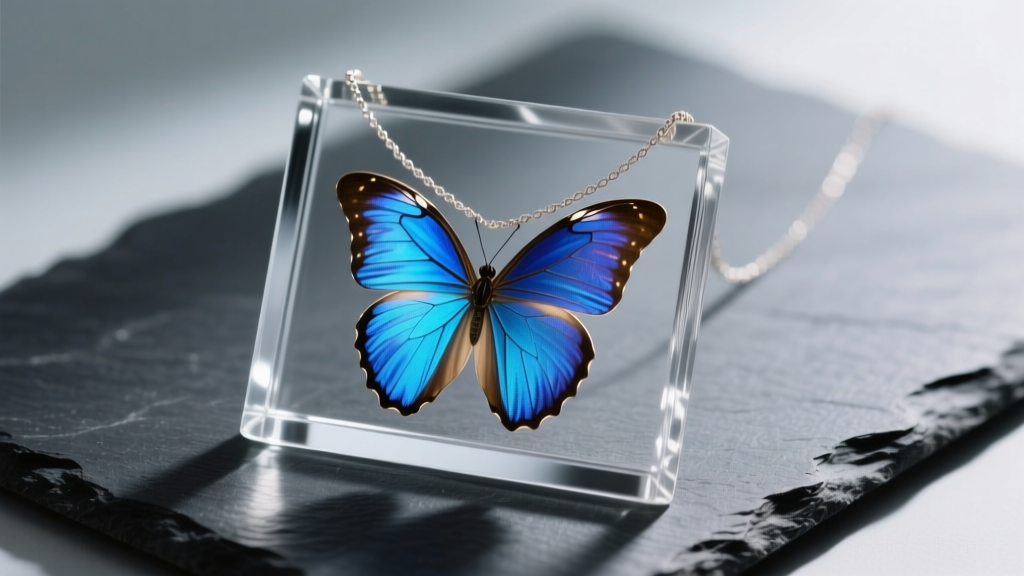
The Allure and Material Science of the Butterfly Wing Necklace
The butterfly wing necklace occupies a unique space in jewelry design, bridging the gap between organic natural history and wearable art. However, from a materials science perspective, these pendants present a fascinating set of engineering challenges. Organic butterfly wings are inherently fragile, hygroscopic (moisture-absorbing), and sensitive to ultraviolet radiation. To transform a delicate insect wing into a durable piece of jewelry, artisans must rely on advanced encasement materials and precise preservation techniques. In this guide, we deconstruct the material properties of real Morpho butterfly wings, compare the encasement mediums used to protect them, and evaluate high-end faux alternatives for everyday wear.
Real Morpho Wings: Structural Color and Chitin Fragility
The most sought-after butterfly wing necklaces feature the iridescent blue wings of the Morpho genus. The brilliant blue hue is not derived from chemical pigments, but from structural coloration. According to research highlighted by the Smithsonian Entomology Department, the wings are covered in microscopic, tree-like scales made of chitin. These scales feature intricate ridges that interfere with light waves, reflecting only the blue spectrum while absorbing other colors.
Because the color relies entirely on physical microstructures rather than chemical dyes, the material properties of the wing are highly specific:
- Moisture Sensitivity: Chitin is a natural polymer that can warp, curl, or develop fungal growth if exposed to humidity. A sealed environment is non-negotiable.
- Thermal Vulnerability: High heat can alter the microscopic spacing of the chitin ridges, permanently shifting the reflected color from blue to dull brown or green.
- Crush Resistance: While flexible in nature, once desiccated and preserved for jewelry, the wings become brittle and will shatter under localized pressure.
Ethical Sourcing and CITES Compliance
When purchasing a real butterfly wing necklace, provenance is critical. The trade of certain butterfly species is regulated to prevent ecological depletion. Reputable jewelers source their wings from sustainable butterfly farms in countries like Costa Rica and Peru, which actively promote rainforest conservation. Buyers should verify that the seller complies with CITES (Convention on International Trade in Endangered Species) regulations, ensuring the specimens were captive-bred rather than wild-caught.
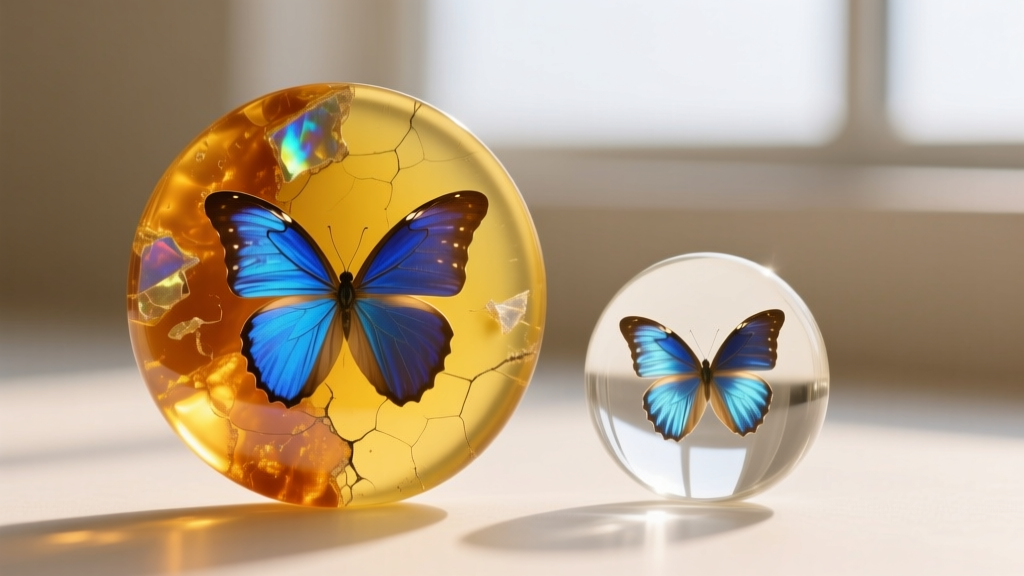
Encasement Materials: Glass vs. Epoxy Resin vs. Acrylic
Because the organic wing cannot survive direct contact with skin oils, sweat, or atmospheric moisture, the encasement material dictates the necklace's lifespan. The three primary materials used in modern jewelry manufacturing each possess distinct physical properties.
| Material | Mohs Hardness | UV Resistance | Weight Profile | Primary Risk to Organic Wing |
|---|---|---|---|---|
| Borosilicate Glass | 5.5 - 6.0 | Excellent (100%) | Heavy | Condensation if seal fails |
| Epoxy Resin | 2.0 - 3.0 | Poor to Fair | Lightweight | Exothermic heat during curing |
| Acrylic (PMMA) | 3.0 - 4.0 | Excellent | Lightweight | Solvent off-gassing during molding |
The Problem with Standard Epoxy Resins
Epoxy resin is popular for its lightweight feel and seamless, bezel-free doming. However, standard bisphenol-A (BPA) epoxies are highly susceptible to photo-oxidation, leading to severe yellowing after 1 to 3 years of UV exposure. This yellowing acts as a visual filter, turning the vibrant blue Morpho wing green or muddy brown. Furthermore, the curing process of epoxy is exothermic (heat-releasing). If a jeweler pours the resin too thickly or uses a fast-cure hardener, the localized heat spike can easily exceed 150°F (65°C), thermally damaging the chitin structure. High-end artisans mitigate this by using slow-cure, low-heat resins formulated with Hindered Amine Light Stabilizers (HALS) and UV absorbers.
Glass and Acrylic Alternatives
For maximum optical clarity and UV protection, borosilicate glass is the superior choice. It is completely inert and will never yellow. The primary failure mode with glass is the adhesive seal; if the metal bezel seal degrades over decades, moisture can infiltrate the cabochon, leading to internal fogging. Acrylic (Polymethyl methacrylate or PMMA) offers a middle ground: it is highly UV-resistant and lightweight, but its lower Mohs hardness means it will accumulate micro-scratches from daily wear, eventually diffusing the light and dulling the wing's iridescence.
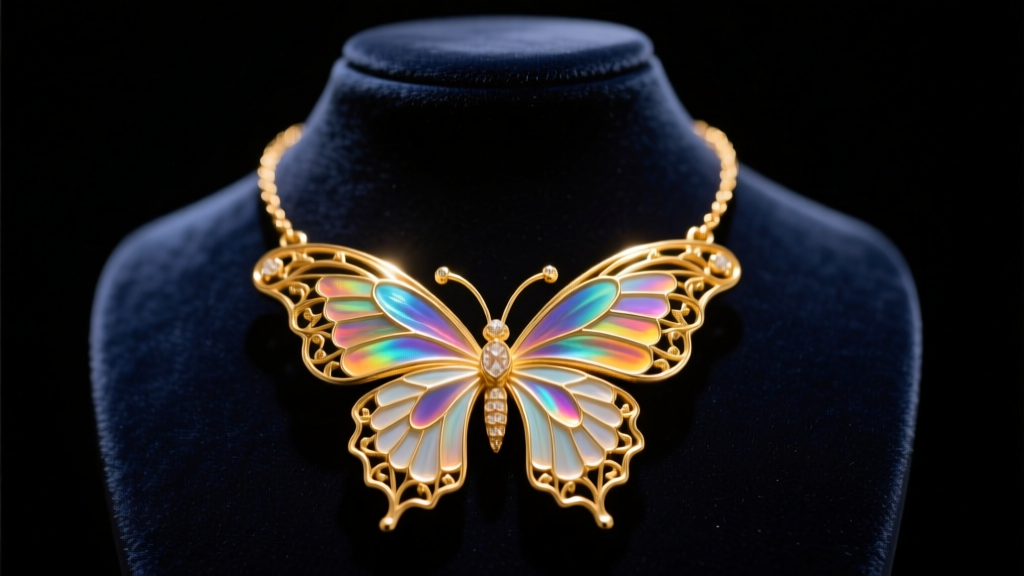
Faux Alternatives: Vitreous Enamel and Guilloché
For collectors who desire the aesthetic of a butterfly wing necklace without the ethical concerns or material fragility of organic specimens, fine jewelry offers exceptional faux alternatives. The most durable and historically significant method is vitreous enamel.
Vitreous enamel involves fusing powdered glass (silica mixed with metal oxides) to a metal substrate at temperatures exceeding 1400°F (760°C). The resulting material is essentially a layer of solid glass, offering complete immunity to UV fading, moisture, and skin acids. To replicate the structural iridescence of a Morpho wing, master jewelers utilize the Guilloché technique. This involves engine-turning a precise, microscopic geometric pattern into the sterling silver or gold base metal, then firing transparent blue enamel over it. The engraved ridges catch and refract light, mimicking the optical interference of real butterfly scales with astonishing accuracy. While a real wing necklace might cost between $80 and $200, a handcrafted Guilloché enamel pendant typically commands $400 to $1,500+ due to the intense labor and specialized kiln work required.
Chain Pairings and Gauge Considerations
The physical weight of the encasement material must dictate the chain selection. Glass-encased butterfly wing pendants are notoriously front-heavy. Pairing a 15-gram glass cabochon with a delicate 0.8mm sterling silver cable chain is a structural failure waiting to happen; the chain will stretch, kink, and eventually snap at the clasp solder joint.
- For Glass Encasements: Opt for a 1.5mm to 2.0mm box chain or wheat chain in solid sterling silver or 14k gold-filled. These weaves distribute weight evenly and resist kinking.
- For Resin/Acrylic Encasements: A 1.0mm to 1.2mm rope chain or flat-curb chain is sufficient, as the lightweight polymer keeps the total pendant mass under 6 grams.
- Clasp Mechanics: Always upgrade the clasp on heavy glass pendants to a locking lobster clasp or a magnetic neodymium safety clasp to prevent accidental drops.
Common Failure Modes and Troubleshooting
"The most common cause of 'fading' in a real butterfly wing necklace is not UV damage to the wing itself, but the micro-scratching of cheap acrylic or yellowing of low-grade epoxy on the surface, which scatters light before it can reach the chitin scales."
If your real butterfly wing necklace appears to be losing its color, inspect the encasement surface. If it is resin or acrylic, the material may be degrading. Unfortunately, you cannot polish epoxy resin without risking heat damage to the wing inside. If the pendant is glass and appears cloudy, the hermetic seal has likely failed, allowing ambient humidity to cause microscopic mold or chitin degradation. In this scenario, the piece must be carefully opened by a professional jeweler, dried in a desiccant chamber, and resealed with a UV-curing optical adhesive.
Final Verdict on Material Selection
Choosing the right butterfly wing necklace requires balancing visual impact, longevity, and budget. If you prioritize absolute optical purity and heirloom longevity, a borosilicate glass-encased real Morpho wing is the optimal choice, provided you store it in a low-humidity environment when not in use. If you require a piece for rugged, daily outdoor wear where UV exposure is guaranteed, bypass organic materials entirely and invest in a Guilloché vitreous enamel pendant. Understanding the microscopic realities of chitin and polymer degradation ensures your necklace remains a vibrant tribute to nature's engineering, rather than a faded relic of poor material science.


