How to Choose the Perfect Mother Birthstone Necklace
Discover what to look for in a mother birthstone necklace. Learn about stone authenticity, durable metal settings, and chain styles for daily wear.

The Sentimental and Practical Value of Custom Family Jewelry
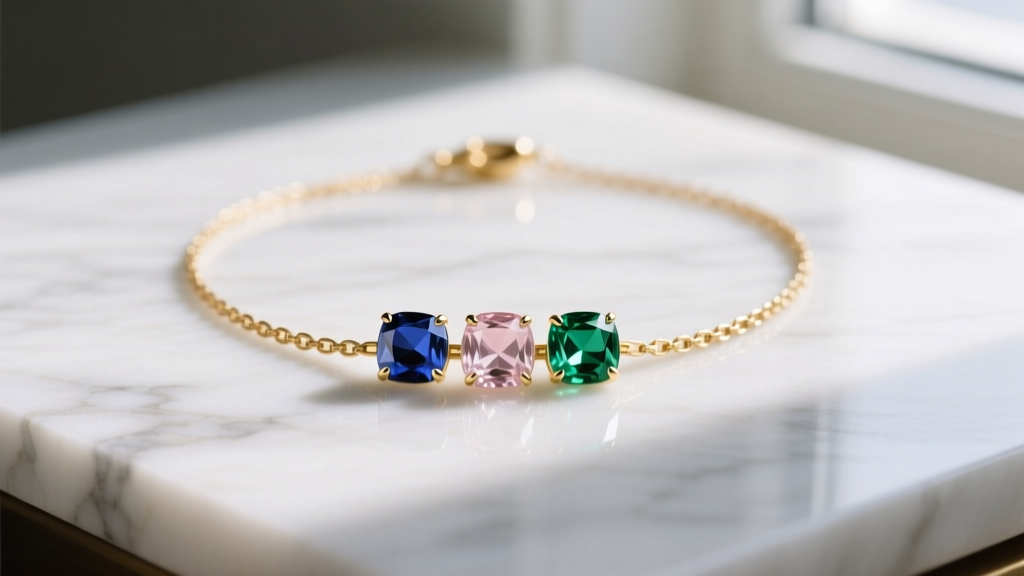
A mother birthstone necklace is more than just an accessory; it is a wearable family tree. Whether you are celebrating a first Mother's Day, honoring a growing family, or commemorating a milestone anniversary, customizing a pendant with the birthstones of children or grandchildren carries profound sentimental weight. However, because these pieces are often worn daily, they must be engineered to withstand the rigors of everyday life. From chasing toddlers to running errands, a mother's necklace faces constant friction, moisture, and accidental impacts. This comprehensive buying guide cuts through the marketing fluff to help you evaluate gemstone durability, metal alloy integrity, and setting mechanics, ensuring your investment lasts for generations.
Decoding Stone Quality: Genuine vs. Lab-Created vs. Simulated
When shopping for a mother birthstone necklace, you will encounter three primary categories of gemstones. Understanding the difference is critical for both budget and long-term wearability.
Natural vs. Lab-Created Gemstones
Natural gemstones are mined from the earth and often contain microscopic inclusions. While these inclusions prove authenticity, they can also create structural weak points. Lab-created gemstones, on the other hand, possess the exact same chemical, physical, and optical properties as their natural counterparts but are grown in controlled environments. According to the Gemological Institute of America (GIA), lab-created stones are virtually free of the internal fractures that cause natural stones to chip upon impact. For a daily-wear piece like a mother's necklace, lab-created stones often offer superior durability and vibrant color consistency at a fraction of the cost.
The Danger of Simulants
Simulants, such as cubic zirconia (CZ) or colored glass, merely mimic the look of a birthstone. They lack the refractive index and hardness of real gems. Over time, CZ will cloud and scratch, while glass will easily shatter. Always verify that the product description explicitly states "genuine" or "lab-created" rather than vague terms like "crystal" or "simulated birthstone."
The Mohs Scale and Daily Wear Durability
Not all birthstones are created equal. The Mohs scale of mineral hardness dictates how well a stone will resist scratching. When designing a multi-stone pendant, you must account for the weakest link.
| Birthstone Month | Gemstone | Mohs Hardness | Daily Wear Suitability |
|---|---|---|---|
| January | Garnet | 6.5 - 7.5 | Good (requires protective setting) |
| April | Diamond | 10 | Excellent |
| June | Pearl / Alexandrite | 2.5 / 8.5 | Poor (Pearl) / Excellent (Alexandrite) |
| September | Sapphire | 9 | Excellent |
| October | Opal / Tourmaline | 5.5 / 7.5 | Poor (Opal) / Good (Tourmaline) |
Expert Tip: If a mother's necklace includes soft stones like Opal (October) or Pearl (June), avoid traditional prong settings. Opt for a bezel setting that wraps the metal entirely around the stone's girdle to protect it from lateral impacts.
Metal Selection: Choosing a Setting That Lasts
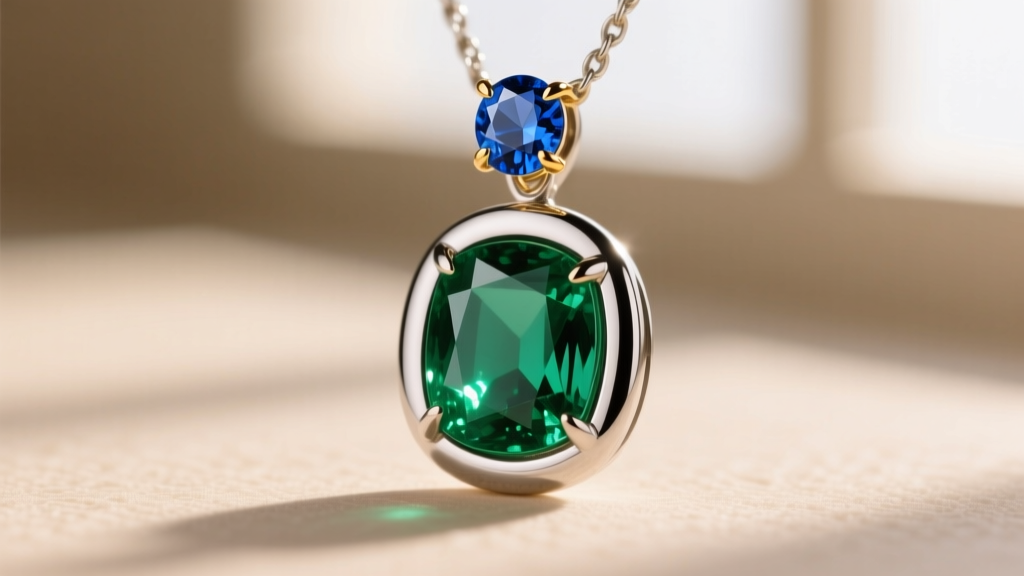
The metal holding the birthstones is just as important as the stones themselves. Pure gold (24k) is far too soft for jewelry; it will bend, warp, and drop stones within months. Therefore, gold must be alloyed with other metals for strength.
14k vs. 18k Gold
For a mother birthstone necklace intended for daily wear, 14k gold is the superior choice. Composed of 58.3% pure gold and 41.7% alloy metals (like copper, zinc, or nickel), 14k gold provides excellent tensile strength, ensuring prongs remain tight. 18k gold (75% pure) offers a richer yellow hue but is noticeably softer, making it more prone to scratching and prong failure over decades of wear. If you have sensitive skin, ensure the 14k alloy is nickel-free, or opt for 14k palladium white gold.
Platinum and Sterling Silver
Platinum is the ultimate metal for heavy, multi-stone pendants. It is incredibly dense, hypoallergenic, and develops a patina rather than losing metal when scratched. However, it commands a premium price. Sterling silver (925) is budget-friendly but prone to tarnishing and oxidation. If choosing silver, look for pieces plated with a thick layer of rhodium to delay tarnishing, though this plating will eventually need to be reapplied by a jeweler.
Setting Styles: Prong, Bezel, and Channel
How the birthstones are secured into the metal drastically affects both the necklace's aesthetics and its survival rate.
- Prong Settings: Use metal claws to hold the stone. This allows maximum light entry, enhancing brilliance. However, prongs can snag on clothing and baby blankets. Ensure the prongs are at least 0.8mm thick and feature a smooth, rounded "bead" tip.
- Bezel Settings: A continuous metal rim surrounds the stone. This is the safest option for active mothers and soft gemstones. While it slightly reduces light entry, it eliminates snagging entirely.
- Channel Settings: Ideal for necklaces featuring three or more stones in a horizontal row. The stones are set into a grooved channel with no metal between them, offering a sleek, modern look and excellent protection for the stone girdles.
Chain Engineering: Weight Distribution and Clasp Security
A common mistake when buying a mother birthstone necklace is pairing a heavy, multi-stone pendant with a weak, delicate chain. The chain must be engineered to support the pendant's specific gram weight.
Chain Styles for Heavy Pendants
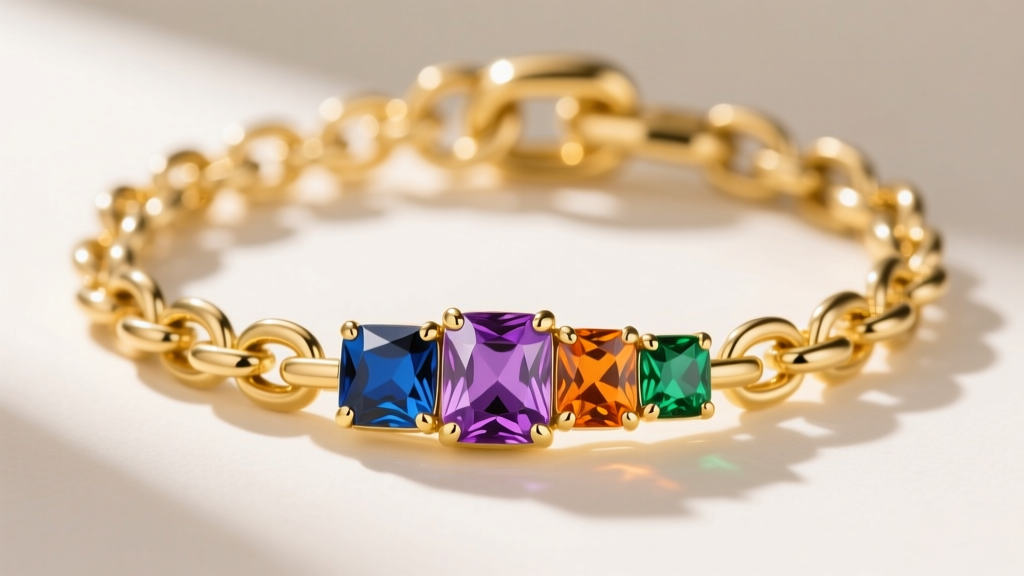
Avoid snake chains and herringbone chains. While they look elegant, they are notorious for kinking and snapping under the stress of a swinging pendant. Instead, opt for a Box Chain or a Rolo Chain. Box chains feature interlocking square links that distribute weight evenly and resist kinking. Rolo chains use thick, round links that offer excellent tensile strength.
Clasp Mechanics
Never rely on a spring-ring clasp for a heavy family birthstone pendant. The internal spring mechanism is fragile and easily fails. Always upgrade to a lobster claw clasp or a magnetic neodymium clasp for secure, one-handed fastening. Additionally, ensure the jump ring (the small loop connecting the pendant to the chain) is soldered shut. An unsoldered jump ring will eventually pull apart, resulting in the loss of the pendant.
The Expert Pre-Purchase Checklist
Before adding a mother birthstone necklace to your cart, run it through this final quality assurance checklist to guarantee you are getting a piece built for longevity:
- Stone Verification: Are the stones genuine or lab-created (avoiding simulants)?
- Metal Stamping: Is the metal clearly stamped (e.g., 14K, 585, PT950) as mandated by the Jewelers of America guidelines?
- Setting Appropriateness: Are soft stones (like opals or pearls) protected by bezel settings?
- Chain Integrity: Is the chain a kink-resistant style (box or rolo) capable of holding the pendant's weight?
- Clasp Security: Does it feature a lobster clasp and a soldered jump ring?
- Warranty: Does the jeweler offer a structural warranty covering prong tightening and stone replacement?
By prioritizing structural integrity and material science over fleeting trends, you ensure that the mother birthstone necklace you choose will remain a pristine, cherished heirloom capable of weathering the beautiful chaos of motherhood.


