Mother of Pearl Flower Necklace: Troubleshooting & Repair Guide
Learn how to troubleshoot, clean, and repair a damaged mother of pearl flower necklace. Expert tips on fixing loose petals, cracks, and dull finishes.

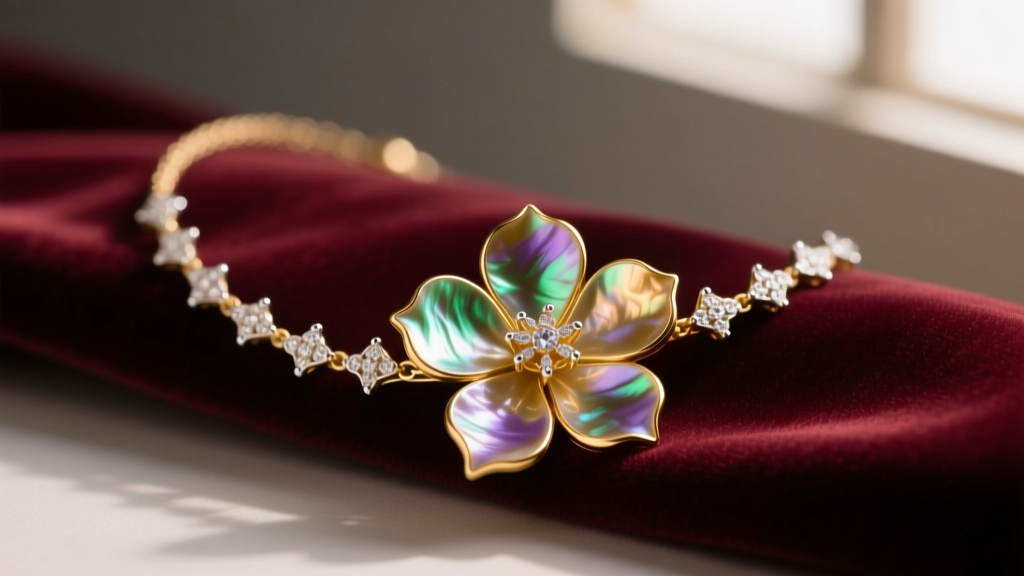
The mother of pearl flower necklace is an iconic jewelry silhouette, popularized by mid-century vintage designers and continually reimagined by modern luxury houses. However, the intricate floral cuts and organic nature of nacre make these pendants uniquely vulnerable to environmental damage, impact, and adhesive failure. Whether you are dealing with a vintage 1970s floral motif or a contemporary botanical design, troubleshooting damage requires an understanding of organic gemology and specialized bench techniques.
This comprehensive guide provides actionable, expert-level solutions for diagnosing, repairing, and preserving your mother of pearl (MOP) floral jewelry, ensuring its iridescent nacre survives for generations.
The Material Science: Why MOP Florals Fail
To effectively troubleshoot a damaged pendant, you must first understand the material's inherent weaknesses. Mother of pearl is an organic-inorganic composite secreted by mollusks. It consists of microscopic aragonite (calcium carbonate) platelets bound together by conchiolin, an organic protein polymer.
- Low Hardness: On the Mohs scale, MOP ranks between 2.5 and 4.5. The delicate, tapered tips of flower petal cuts are highly susceptible to chipping from minor impacts against glass or stone surfaces.
- Acid Sensitivity: Calcium carbonate reacts violently to acids. Everyday substances like perfume, lactic acid in sweat, and citrus-based cosmetics can etch the surface, dissolving the aragonite and leaving the conchiolin matrix exposed, which results in a chalky, dull appearance.
- Desiccation Cracking: If the conchiolin dries out due to low humidity or excessive heat, the nacre loses its structural flexibility, leading to micro-fractures along the grain of the floral inlay.
Diagnostic Troubleshooting Matrix
Use the following matrix to identify the root cause of your necklace's deterioration and determine the appropriate intervention level.
| Symptom | Root Cause | DIY Viability | Professional Fix |
|---|---|---|---|
| Chalky, opaque petals | Acid erosion from cosmetics/sweat | Low (Requires gentle polishing) | Muslin wheel polishing with mild rouge |
| Lifted or rattling inlay | Adhesive degradation / Heat exposure | Medium (Requires specific solvents) | Solvent soak and epoxy re-setting |
| Micro-fractures at petal tips | Desiccation or prong over-tightening | None (Risk of total shattering) | Paraloid B-72 stabilization |
| Bent or lifted gold bezels | Snagging on textiles / Impact | High (With proper tools) | Prong pushing and burnishing |
Step-by-Step Fixes for Common Floral Pendant Issues
1. Re-Adhering a Lifted or Loose Petal Inlay
Vintage MOP flower necklaces often suffer from adhesive failure. In the 1970s and 80s, jewelers frequently used cyanoacrylate (Super Glue) or early rubber cements, which become brittle and yellow over time. If a petal inlay is loose, do not simply squeeze it back into the bezel; this will trap debris and cause uneven tension, cracking the shell.
The Fix: You must remove the old adhesive. Apply a microscopic amount of pure acetone to the seam using a fine-tipped syringe. Allow it to wick into the gap and dissolve the old glue. Once the inlay is removed, clean both the metal bezel floor and the back of the MOP with isopropyl alcohol. As of 2026, the bench standard for organic inlays is Epoxy 330 or HXTAL NYL-1. These two-part epoxies remain slightly flexible, accommodating the natural expansion and contraction of the conchiolin without transferring destructive shear stress to the nacre.
2. Restoring Chalky, Dehydrated Nacre
If your floral pendant has lost its signature iridescent luster and looks chalky, the aragonite surface has likely been etched. According to the Gemological Institute of America (GIA), ultrasonic cleaners and steamers are strictly forbidden for MOP, as the high-frequency vibrations will delaminate the nacre layers.
The Fix: For mild etching, wipe the pendant with a lint-free microfiber cloth dampened with distilled water. For severe dullness, a professional jeweler must use a soft muslin buffing wheel charged with a non-abrasive, non-ammoniated polishing compound. Aggressive polishing will strip the thinnest layers of the floral cut, ruining the stone.
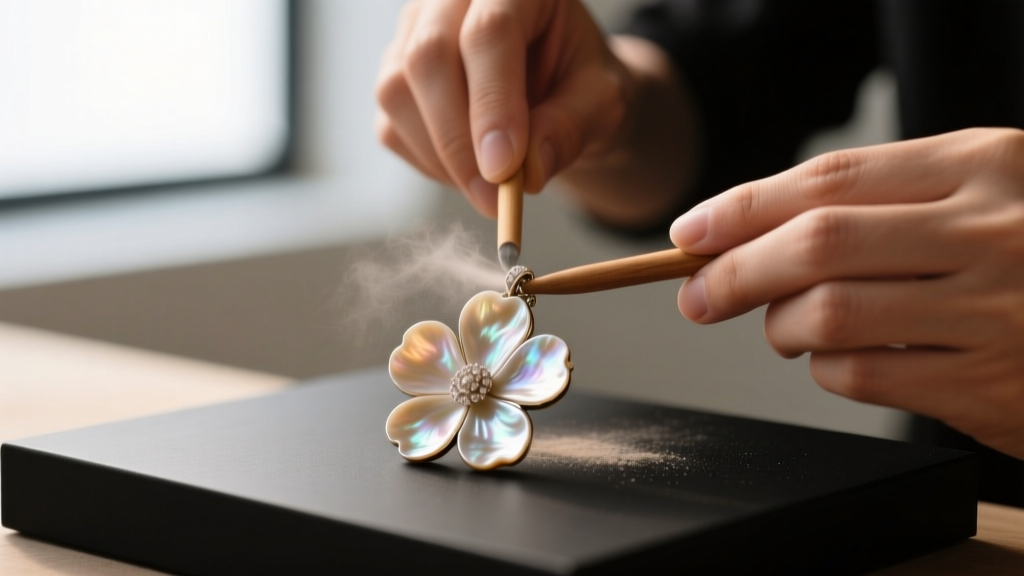
3. Tightening Bent Prongs on Floral Bezels
Flower settings require multi-point tension. If one prong is pushed inward, the opposing prong often lifts, creating a gap where the MOP can shift. Never use standard steel pliers, as they will mar the precious metal and risk crushing the fragile shell edge.
The Fix: Use a Teflon-coated bezel pusher or a polished brass prong pusher. Apply pressure to the prong head, pushing down and inward at a 45-degree angle. Work in a star pattern (e.g., top petal, bottom petal, left petal, right petal) to distribute tension evenly across the floral inlay.
Adhesive Selection Guide for Organic Inlays
Choosing the wrong adhesive is the most common mistake in DIY jewelry repair. Below is a comparison of common adhesives and their suitability for MOP floral pendants.
| Adhesive Type | Archival Quality | Reversibility | Verdict for MOP |
|---|---|---|---|
| Cyanoacrylate (Super Glue) | Poor (Yellows, blooms white residue) | Difficult (Requires harsh solvents) | Avoid. Causes chemical blooming on nacre. |
| Epoxy 330 | Good (Clear, durable) | Moderate (Heat/acetone) | Recommended for commercial bench repairs. |
| Paraloid B-72 | Excellent (Museum-grade) | High (Acetone/Ethanol) | Best for stabilizing micro-cracks and antiques. |
| UV Resin | Poor (Shrinks, pulls away from edges) | Very Difficult | Avoid. Shrinkage causes prong tension failure. |
Authenticating Vintage MOP vs. Synthetic Imitations
When troubleshooting a vintage piece, you must first verify the material. In the 1980s, synthetic resins and celluloid were frequently molded to mimic the floral iridescence of MOP. Repairing a synthetic piece with heat or certain solvents will melt the pendant entirely.
- The Thermal Test: Genuine MOP is thermally conductive and feels cool to the touch, taking several seconds to warm to body temperature. Resin feels warm immediately.
- UV Fluorescence: Under a 365nm UV flashlight, synthetic resins often glow a milky blue or bright white. Genuine MOP typically exhibits inert behavior or a very mild, patchy fluorescence depending on the mollusk species.
- Magnification: Using a 10x jeweler's loupe, examine the edge of a petal. Genuine nacre shows a labyrinthine, layered structure. Molded synthetics will show smooth, swirling flow lines or tiny air bubbles trapped near the bezel wall.
Long-Term Storage and Preventative Care
Proper storage is the ultimate troubleshooting preventative. The Jewelers of America emphasizes that organic gems require specific micro-climates to prevent conchiolin desiccation.
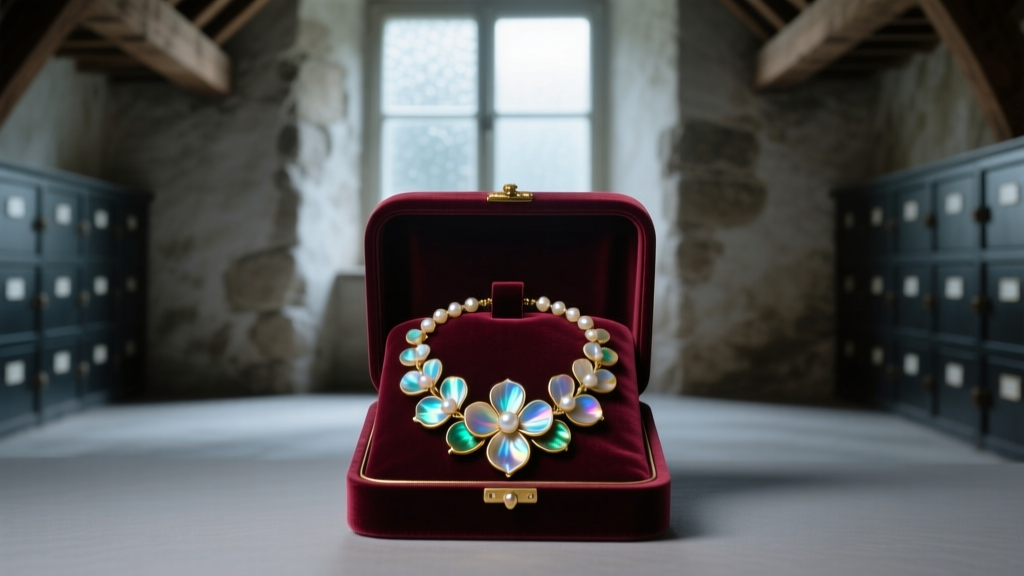
Never store your MOP flower necklace in PVC plastic bags or polyethylene ziplocks. These materials can off-gas chlorides and trap ambient moisture, leading to metal tarnish and nacre degradation. Instead, wrap the necklace in unbleached, acid-free tissue paper or a 100% cotton muslin pouch. Maintain a storage environment with a relative humidity between 45% and 55%. Finally, always adhere to the 'Last On, First Off' rule: put your MOP necklace on only after applying perfumes, hairsprays, and lotions, and wipe it gently with a dry microfiber cloth before returning it to its storage pouch.


