Neck Turned Green From Necklace? Budget & Value Guide
Did your neck turn green from a necklace? Discover the science behind cheap jewelry reactions and learn how to assess budget-friendly, skin-safe alternatives.

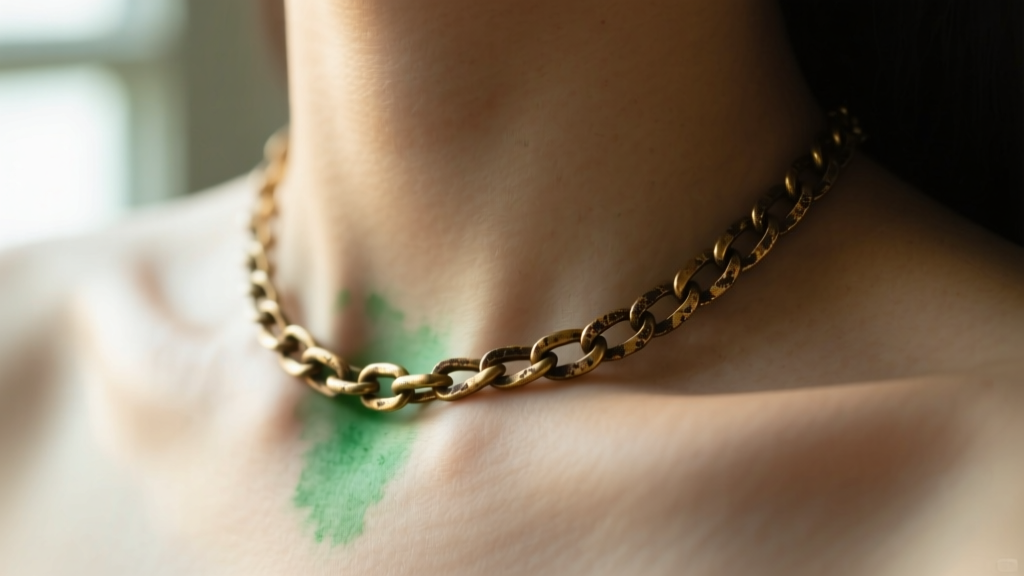
There are few things more frustrating in the world of affordable jewelry than taking off your favorite chain only to realize your neck turned green from the necklace. For budget-conscious shoppers, this ubiquitous issue raises a critical question: is cheap jewelry ever truly a good value, or are you just paying for a temporary accessory that ruins your skin and your outfit? As a jewelry appraiser and style consultant, I see this issue daily. The 'green neck' phenomenon is not just a cosmetic annoyance; it is a direct indicator of material failure, poor manufacturing standards, and a fundamental misunderstanding of metal chemistry. In this comprehensive budget and value assessment, we will break down exactly why this reaction occurs, expose the marketing traps of flash-plated jewelry, and provide a data-driven matrix to help you invest in budget-friendly necklaces that actually hold their value and keep your skin clear.
The Chemistry of the Green Stain: Why It Happens
To assess the value of a necklace, you first need to understand the failure mode of cheap metals. When your neck turns green from a necklace, you are not experiencing an allergic reaction. You are witnessing a localized chemical oxidation process. The green stain is primarily composed of cupric chloride and copper sulfide, which form when the copper in your jewelry reacts with the oxygen, salts, and acids present on your skin.
Human sweat has an average pH ranging from 4.0 to 6.8, making it mildly acidic. When this acidic moisture mixes with environmental pollutants, lotions, and sebum, it creates an electrolyte solution that accelerates the corrosion of base metals. The specific chemical breakdown includes:
- Brass (Copper & Zinc): The most common culprit in budget jewelry. As the zinc leaches out, the exposed copper oxidizes rapidly, leaving a dark green residue.
- Bronze (Copper & Tin): Slightly more durable than brass, but still contains enough copper (usually 88%) to cause severe green staining when exposed to high humidity and sweat.
- Nickel Silver (German Silver): A highly deceptive marketing term. This alloy contains absolutely zero silver. It is a mix of copper, nickel, and zinc. Not only will it turn your neck green due to the copper, but the nickel content makes it a primary trigger for contact dermatitis, as noted by the American Academy of Dermatology.
From a value perspective, any necklace made of solid brass, bronze, or nickel silver without a substantial protective barrier is a depreciating asset with a functional lifespan of only a few wears before it becomes unwearable.
Flash Plating vs. Micron Plating: The Budget Trap
Most budget necklaces that turn skin green are not solid base metals; they are plated. However, not all plating is created equal. The Federal Trade Commission (FTC) Jewelry Guides strictly regulate how jewelers can market plated items, yet fast-fashion brands often exploit loopholes in overseas manufacturing.
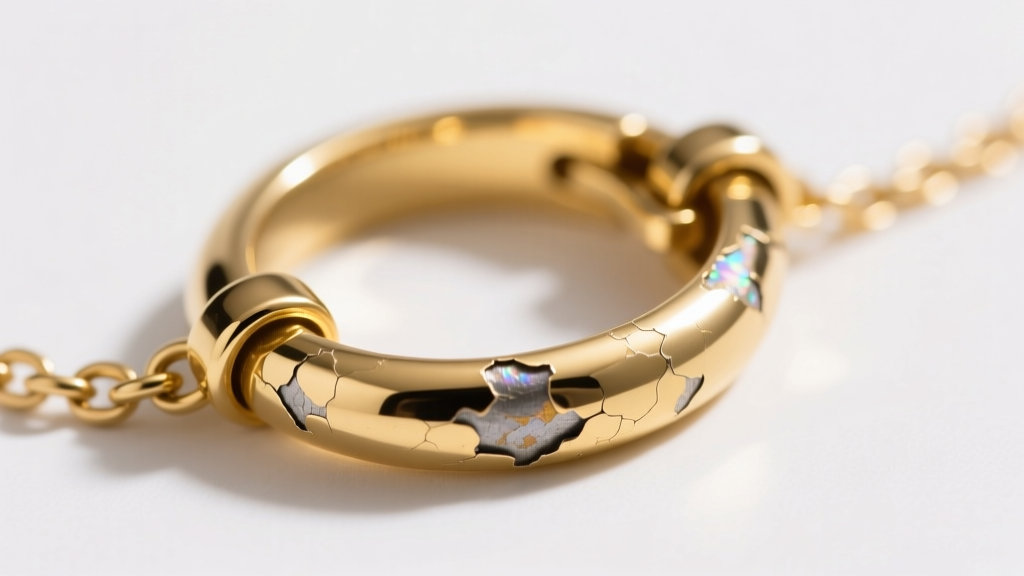
Here is the technical breakdown of plating thickness and how it impacts your budget:
- Flash Plating (0.01 to 0.1 microns): This is the standard for ultra-cheap, mass-market jewelry. The gold or silver layer is microscopically thin. It provides a bright initial shine but wears away through simple friction against the collarbone within 10 to 20 wears. Once the brass base is exposed, the green staining begins immediately.
- Standard Electroplating (0.175 to 0.5 microns): Often marketed as 'gold plated.' It offers a slightly longer lifespan but will still fail within a few months of daily wear, especially in high-friction areas like the back of the neck where hair and clothing rub against the clasp.
- Heavy Gold Electroplate (2.5+ microns): This is the threshold for genuine value in plated jewelry. At this thickness, the gold layer can withstand daily wear for years before the base metal is compromised.
If you are buying a $25 necklace, it is almost certainly flash-plated. The value proposition here is essentially zero, as the cost-per-wear skyrockets when the piece becomes unwearable after three uses.
Material Value Matrix: What to Buy on a Budget
To make informed purchasing decisions, you must look past the aesthetic and evaluate the metallurgical reality of the piece. Below is a comparative matrix assessing common budget necklace materials based on longevity, skin safety, and green-stain risk.
| Material Type | Base Metal | Plating / Thickness | Avg. Price Range | Est. Lifespan | Green Stain Risk |
|---|---|---|---|---|---|
| Flash Plated | Brass / Zinc Alloy | < 0.1 microns | $10 - $25 | 1 - 3 Months | Extreme |
| Gold Vermeil | Sterling Silver (925) | 2.5+ microns (Gold) | $45 - $120 | 1 - 3 Years | Low (Silver tarnishes, no green) |
| Gold-Filled | Jeweler's Brass | 5%+ Gold by weight | $40 - $90 | 5 - 10 Years | Very Low (Unless deeply scratched) |
| Surgical Steel (316L) | Iron/Chromium/Moly | PVD or Unplated | $20 - $50 | Lifetime | Zero |
| Titanium (Grade 23) | Titanium Alloy | Anodized or Unplated | $30 - $70 | Lifetime | Zero |
Tier 1: The 'Guaranteed Green' Zone
Avoid flash-plated brass and 'Tibetan Silver' (which is often a toxic mix of lead, zinc, and copper). The Gemological Institute of America (GIA) frequently warns consumers about the rapid degradation of these materials. They are essentially disposable accessories and hold no long-term value.
Tier 2: The 'Proceed with Caution' Zone
Gold-filled jewelry offers an excellent middle ground. According to industry standards, gold-filled items must contain a layer of gold that is at least 5% of the total weight of the item. Because the gold layer is mechanically bonded rather than electroplated, it is hundreds of times thicker than standard plating. However, if the chain is deeply scratched or cut, the brass core will be exposed, leading to localized green staining.
Tier 3: The 'Skin-Safe Budget' Zone
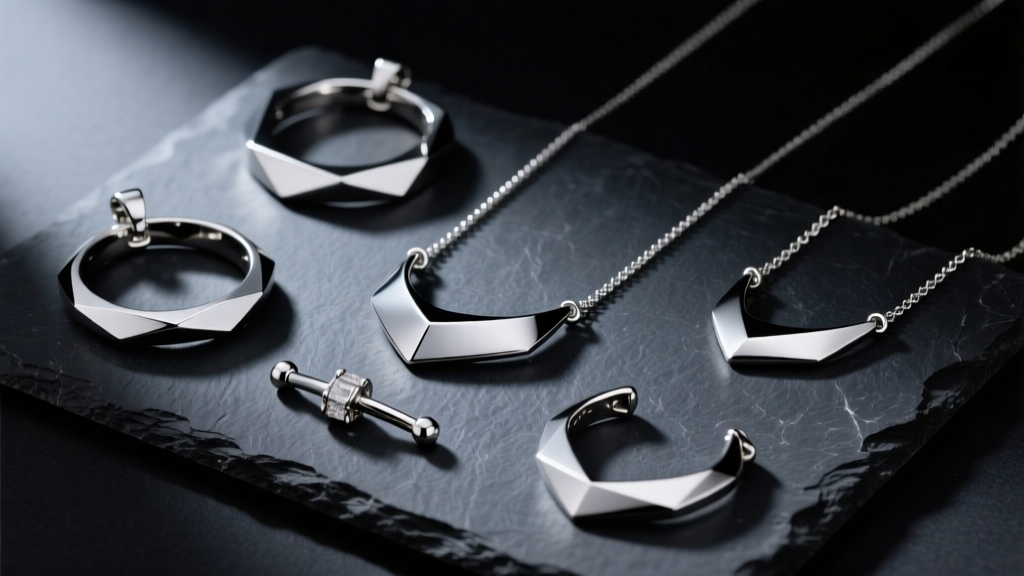
For the ultimate budget value, pivot away from gold aesthetics and invest in high-grade alternative metals. 316L Stainless Steel is superior to standard 304 stainless steel because it contains 2-3% molybdenum, which drastically increases its resistance to pitting corrosion from chlorides (like sweat and saltwater). Grade 23 Titanium (Ti 6Al-4V ELI) is the gold standard for biocompatibility. It is entirely inert, meaning it will never react with your skin's acids, guaranteeing a green-free neck for the lifetime of the piece.
How to Rescue and Restore Tarnished Budget Pieces
If you already own budget necklaces that have started to stain your skin, you might be tempted to use the popular internet 'hack' of painting the chain with clear nail polish. Do not do this. While it seems like a logical barrier, nail polish is brittle and chips easily. When it chips, it creates micro-crevices that trap sweat against the bare metal. This creates an oxygen-depleted zone that accelerates crevice corrosion, making the green staining and metal degradation significantly worse than if you had left it bare.
Instead, use a professional jewelry coating like ProtectaClear or Everbrite. These are clear, tough, skin-safe polyurethane-like coatings designed specifically to seal copper and brass. A single $15 bottle can seal dozens of necklaces, effectively extending their wearable life by years. Alternatively, take your favorite brass pendant to a local jeweler and ask for a rhodium flash or a heavy clear epoxy coat, which typically costs between $35 and $60—a worthwhile investment if the piece holds sentimental value.
Final Verdict: Reassessing Your Jewelry Budget
True value in jewelry is not measured by the initial price tag, but by the cost-per-wear and the material's ability to maintain its structural and aesthetic integrity over time.
If your neck turned green from a necklace, it is a clear signal that your current purchasing strategy is prioritizing short-term aesthetics over metallurgical quality. By shifting just $20 more of your budget away from fast-fashion flash-plated brass and toward 316L stainless steel, Grade 23 titanium, or properly manufactured gold-filled chains, you eliminate the green stain entirely. Assess your jewelry box today: discard the flash-plated culprits, invest in skin-safe alternative metals, and enjoy the confidence of wearing accessories that respect both your budget and your skin.


