Neck Turning Green From Necklace? Budget Metal Guide
Discover why your neck is turning green from necklace metals. Compare budget alloys, solid gold, and PVD coatings to find hypoallergenic value.

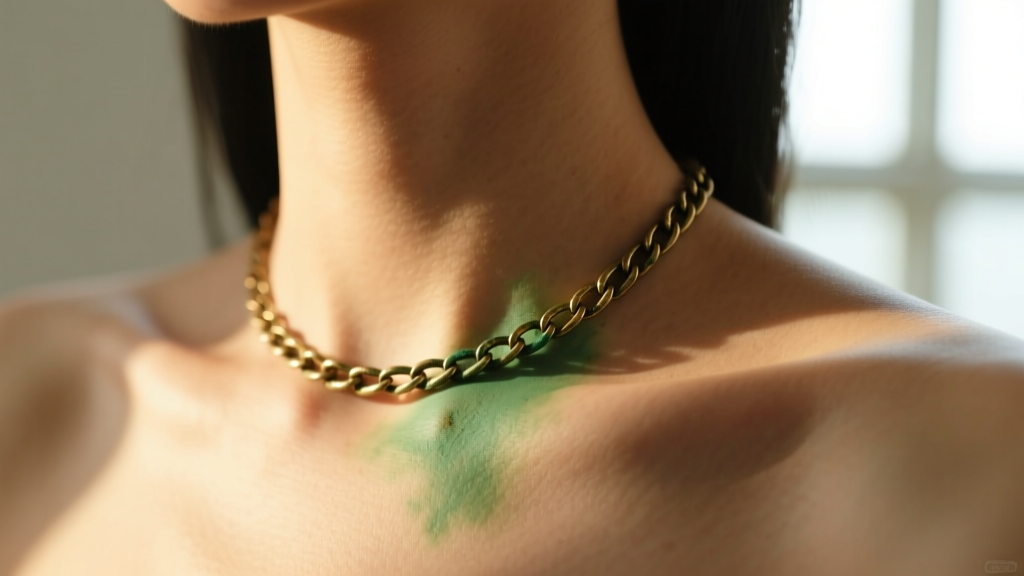
The Chemistry of the Green Stain: Copper, Acid, and Cheap Alloys
If you have ever experienced the frustration of your neck turning green from necklace wear, you are not alone. This ubiquitous issue is not a sign of an infection or a mysterious allergy; it is a straightforward chemical reaction. The green or blackish smudge left on your skin is primarily caused by copper and copper alloys reacting to the acidic environment of your skin.
Human sweat contains water, sodium chloride (salt), lactic acid, and urea. When a necklace made of brass (an alloy of copper and zinc) or bronze (copper and tin) rests against your skin, the acids in your sweat and the lotions you wear break down the microscopic top layer of the metal. This process, known as chelation, forms copper chloride or copper chelates, which are easily absorbed into the skin's surface, leaving a distinct green stain. According to dermatological resources like the Mayo Clinic, while copper causes the green stain, it is often the hidden nickel in cheap alloys that triggers true contact dermatitis and itchy rashes.
Budget Metal Breakdown: Cost vs. Oxidation Risk
When assessing the value of budget jewelry, the upfront cost is only one metric. A $15 necklace that ruins your outfit and requires constant scrubbing offers terrible cost-per-wear value. Below is a comparative assessment of common necklace materials found in the $15 to $150 price range.
| Material Grade | Avg. Price (16' Chain) | Base Composition | Green Stain Risk | Expected Lifespan |
|---|---|---|---|---|
| Raw Brass / Bronze | $15 - $35 | Copper + Zinc/Tin | Extreme (Days) | 1-2 Years (Tarnishes) |
| Nickel Silver (Alpaca) | $20 - $45 | Copper + Nickel + Zinc | High + Allergy Risk | 1-3 Years |
| 316L Surgical Steel | $35 - $75 | Iron + Chromium + Molybdenum | Zero | Lifetime |
| Gold Vermeil | $80 - $140 | Sterling Silver + 2.5μm Gold | Low (If intact) | 2-5 Years |
| 14k Solid Gold | $250 - $500+ | 58.5% Gold + Alloy | Zero | Lifetime / Heirloom |
The Stainless Steel Caveat: 304 vs. 316L
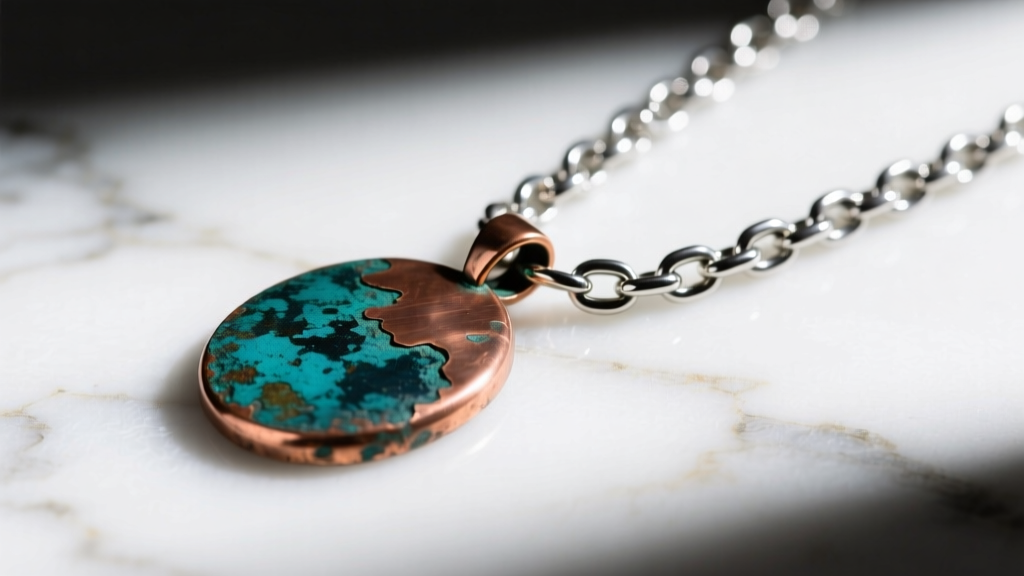
Not all stainless steel is created equal. Many budget brands use 304 stainless steel to cut costs. While 304 is resistant to rust, it lacks molybdenum. 316L surgical stainless steel contains 2-3% molybdenum, which drastically increases its resistance to chlorides (like the salt in your sweat). If you are buying budget steel jewelry to avoid the green stain, always verify the product description specifies 316L or 316Ti.
The 'Waterproof' Jewelry Myth: PVD Coating vs. Electroplating
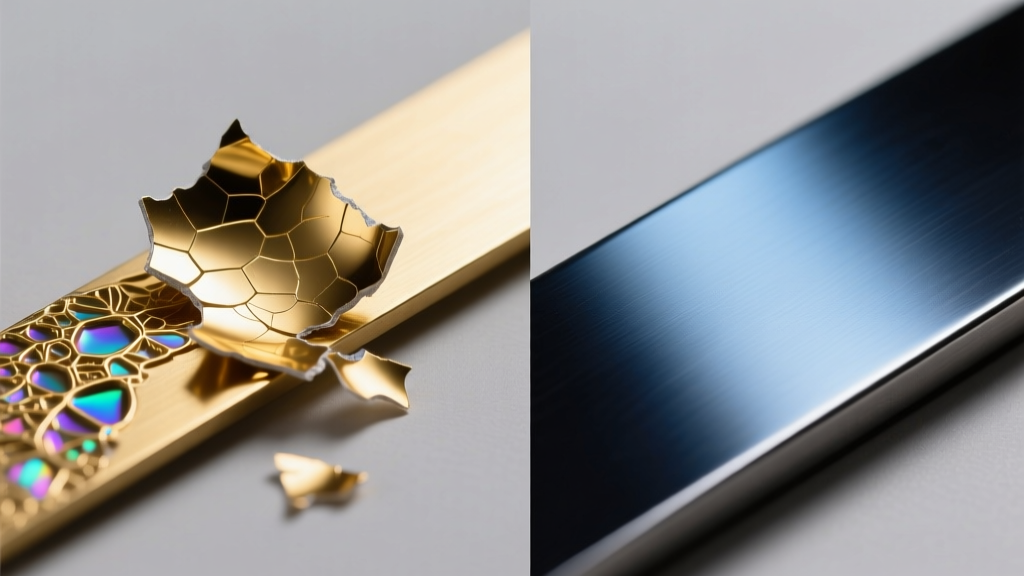
In recent years, the market has been flooded with 'waterproof' and 'tarnish-free' budget jewelry. Understanding the manufacturing process is critical for budget assessment. Traditional electroplating involves using an electrical current to deposit a microscopically thin layer of gold or silver (often just 0.1 to 0.5 microns) over a brass base. Once this thin layer wears off from friction and sweat, the brass is exposed, and your neck turns green.
Conversely, PVD (Physical Vapor Deposition) is a vacuum coating process that molecularly bonds a layer of titanium nitride (TiN) to the base metal, followed by the gold color layer. PVD coatings are up to 10 times thicker and significantly more durable than standard electroplating. While a PVD-coated 316L steel necklace might cost $45 compared to a $20 electroplated brass piece, the PVD piece will easily survive years of daily wear and showering without exposing the base metal.
Expert Insight: The Gemological Institute of America (GIA) notes that traditional gold plating wears away predictably with friction. When shopping budget collections, look for brands that explicitly state their micron thickness (e.g., '2.5 microns PVD') rather than vague marketing terms like 'gold dipped'.
Emergency Fixes: Clear Nail Polish and Polymer Barriers
If you already own a brass or copper necklace that you love, but cannot stop your neck turning green from necklace contact, you can create a physical barrier between the metal and your skin.
- Clear Nail Polish: The classic hack. Brushing a layer of clear polyurethane-based nail polish on the back of the pendant and the inner links of the chain creates a temporary seal. Drawback: It chips after 3 to 5 wears, requires toxic acetone to remove, and can leave a cloudy residue on the jewelry.
- Jewelry Shield Sprays: Products like JewelersSkin use specialized acrylic copolymers designed specifically for metal adhesion. They dry completely matte and last roughly 2 to 3 weeks of daily wear before needing reapplication.
- Renaissance Wax: A micro-crystalline wax used by museum conservators. Buffing a thin layer onto your copper or bronze jewelry neutralizes the oxidation process and provides a barrier against skin acids. This is the preferred method for preserving the patina of vintage bronze pendants.
Value Assessment: Calculating True Cost-Per-Wear (CPW)
To truly evaluate jewelry from a budget perspective, we must abandon the 'sticker price' mindset and adopt the Cost-Per-Wear (CPW) framework. The formula is simple: Total Cost / Number of Times Worn = CPW.
Imagine you buy a trendy $18 brass chain necklace. You wear it 6 times before the plating wears off, the brass oxidizes, and your neck turns green, forcing you to retire the piece. Your CPW is $3.00 per wear. Now, consider investing $130 in a 14k solid gold or high-grade PVD 316L steel chain. You wear it 300 times over two years without a single reaction or tarnish issue. Your CPW drops to $0.43 per wear.
When to Upgrade from Fashion to Fine
Budget fashion jewelry has its place for seasonal trends, statement pieces worn over clothing (where skin contact is minimal), or festival wear. However, for foundational pieces—like a daily 16-inch choker, a pendant that rests in the hollow of your throat, or a chain worn in the shower—upgrading to hypoallergenic metals is a financial and dermatological necessity.
For the ultimate budget-conscious buyer seeking zero oxidation, Argentium Silver is a brilliant alternative to standard 925 sterling silver. By replacing some of the copper in the alloy with germanium, Argentium is highly tarnish-resistant and significantly reduces the risk of skin discoloration, often retailing for only 10-15% more than traditional sterling.
Final Verdict: Maximizing Your Jewelry Budget
Dealing with a neck turning green from necklace metals is a solvable problem that requires a shift in how you assess material value. Stop paying for the brand name on a brass base, and start paying for the metallurgical integrity of the piece. By prioritizing 316L stainless steel, PVD coatings, Argentium silver, or saving for 14k solid gold, you protect your skin, preserve your wardrobe, and ultimately spend less money over time by investing in jewelry that actually lasts.


