The Necklace 16 Inch Chain: 2026 Trend & Style Guide
Discover why the necklace 16 inch chain dominates 2026 trends. Expert analysis on gauges, layering math, materials, and neckline pairings.

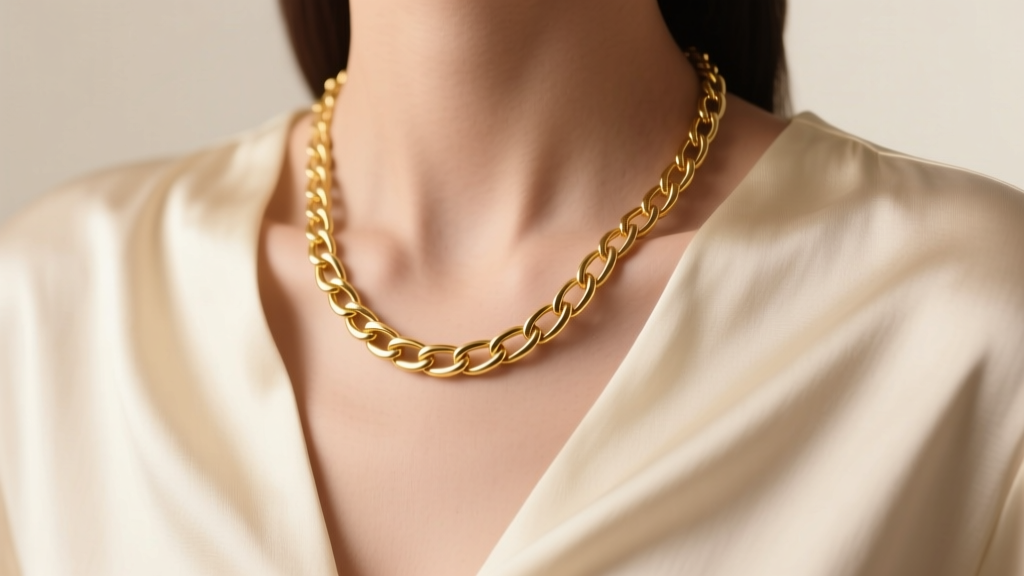
The Resurgence of the Collarbone Standard
In the shifting landscape of fine jewelry, macro-trends often swing between extremes. While 2023 and 2024 were defined by heavy, oversized rope chains and maximalist layering, 2026 has ushered in a definitive return to refined, anatomical precision. At the center of this movement is the necklace 16 inch chain. Sitting perfectly at the base of the throat and grazing the upper collarbone, this specific length bridges the gap between a traditional choker and a standard princess-length pendant. It is no longer just a basic staple; it has become the foundational anchor for modern neckline styling.
As a style radar metric, search data and boutique sell-through rates indicate that the 16-inch length has overtaken the 18-inch standard for everyday wear. This shift is driven by the rise of structured, open-collar tailoring and the desire for jewelry that frames the face without disappearing beneath fabrics. But not all 16-inch chains are engineered equally. Understanding the metallurgy, gauge tolerances, and clasp mechanics is essential for both collectors and stylists.
Anatomy and Gauge Metrics: Beyond the Length
When evaluating a necklace 16 inch chain, length is only half the equation. The gauge (thickness) and link profile dictate the chain's drape, tensile strength, and light refraction. In 2026, the market has bifurcated into two distinct camps: ultra-fine 'thread' chains for micro-pendants, and structural 'architectural' links meant to be worn solo.
2026 Link Profile Dominance
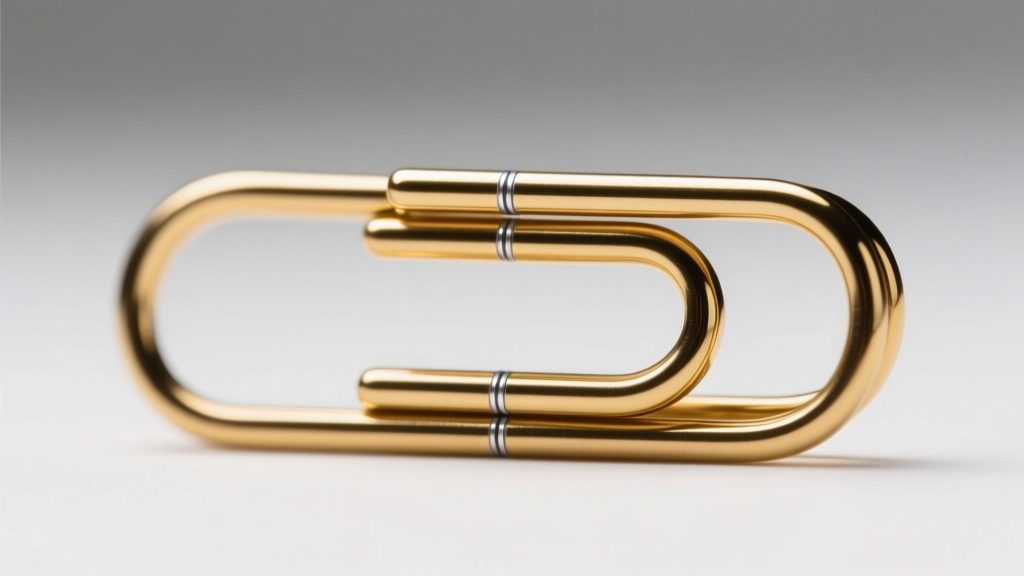
- The Elongated Paperclip: Still holding strong from its 2024 peak, but now refined. Modern iterations feature flattened, diamond-cut edges that maximize surface area for light reflection without adding bulk.
- The Micro-Box: A 2026 favorite for its geometric, liquid-like drape. However, box chains under 1.2mm are notorious for catching on fine body hair, requiring specific grooming considerations.
- The Rounded Curb: A softer, more organic alternative to the harsh lines of the paperclip, offering a vintage-inspired aesthetic that pairs seamlessly with mixed-metal styling.
| Gauge (mm) | Link Style | Tensile Strength | Best Application | 2026 Price Range (14k Solid) |
|---|---|---|---|---|
| 0.8 - 1.0 | Cable / Thread | Low (3-5 lbs) | Micro-Pendants (<2g) | $180 - $250 |
| 1.2 - 1.5 | Paperclip / Box | Medium (8-12 lbs) | Everyday Solo / Light Layering | $280 - $450 |
| 2.5 - 3.5 | Rope / Curb | High (20+ lbs) | Statement Solo Wear | $600 - $1,200 |
Material Science: What is Actually Selling?
The material composition of the modern necklace 16 inch chain reflects a broader consumer demand for longevity over fast-fashion plating. According to the Federal Trade Commission Jewelry Guides, strict enforcement on metal stamping has cleaned up the market, pushing buyers toward verifiable materials.
14k vs. 18k Gold Alloys
For a 16-inch chain that rests against the pulse points—an area prone to sweat and friction—14k gold (58.5% purity) remains the superior choice for structural integrity. The higher copper and zinc content in 14k alloys provides necessary rigidity, preventing the micro-stretching that often plagues softer 18k or 24k chains. As noted by the Gemological Institute of America (GIA), alloy composition directly impacts both color and durability, making 14k the pragmatic standard for daily-wear chains.
The Rise of PVD-Coated 316L Steel
For the fashion-forward buyer unwilling to commit to solid gold prices, Physical Vapor Deposition (PVD) over 316L surgical stainless steel has become the 2026 benchmark. Unlike traditional electroplating, which can wear off in months, PVD bonding creates a molecular layer that resists tarnish, sweat, and UV degradation. A high-quality PVD 16-inch paperclip chain typically retails between $45 and $85, offering a luxury aesthetic with industrial-grade resilience.
The Mathematics of Layering
The 16-inch chain is the undisputed anchor of the modern layering stack. However, haphazard layering leads to severe tangling and visual clutter. Professional stylists utilize the 'Two-Inch Rule' to ensure each chain occupies its own distinct visual plane.
The 2026 Layering Formula:
Base: 16-inch chain (1.5mm gauge) sitting on the upper collarbone.
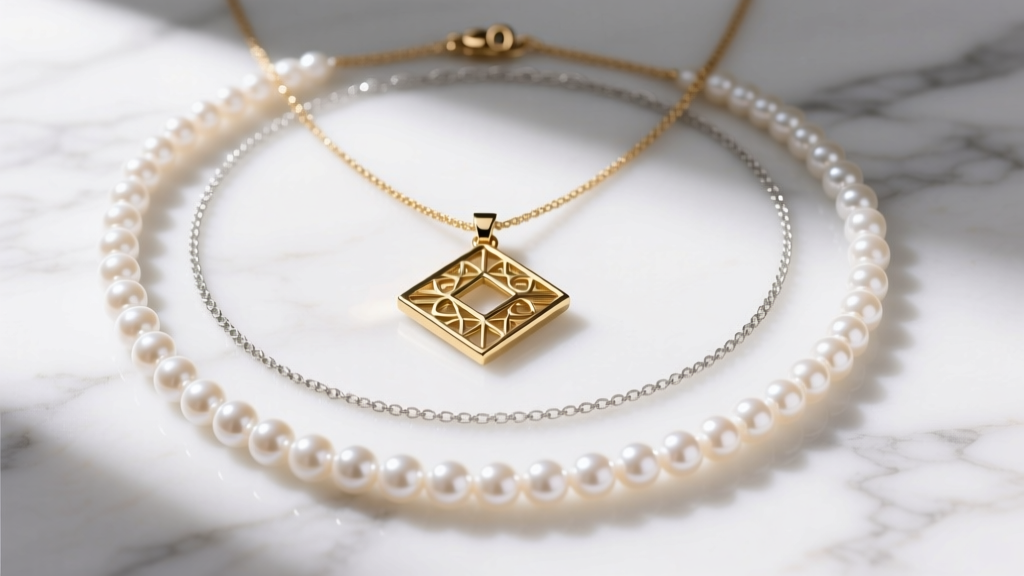
Secondary: 18-inch chain (2.0mm gauge or pearl strand) resting on the sternum.
Tertiary: 20-inch or 22-inch chain featuring a singular, weighted pendant (3g+) to act as a plumb line, preventing the stack from twisting.
By maintaining a strict two-inch differential, the chains interact dynamically with body movement without interlocking. Furthermore, alternating the metal textures—such as pairing a high-polish 16-inch gold chain with a matte-finish 18-inch oxidized silver chain—creates depth that prevents the stack from looking like a single, tangled mass.
Neckline Pairings: A Visual Framework
The versatility of the necklace 16 inch chain lies in its geometric relationship with garment necklines. Here is how to style it based on 2026 tailoring trends:
- The Deep V-Neck: A 16-inch chain acts as a horizontal 'stop' line, breaking up the vertical expanse of a deep V. It draws the eye back up to the face rather than letting it travel down the torso.
- The Structured Crew Neck: Worn over a tight cotton or cashmere crew neck, a 2.5mm 16-inch curb chain adds an edge of hardware to an otherwise conservative silhouette.
- The Square Neckline: The 16-inch length perfectly mirrors the horizontal line of a square neck, sitting roughly one inch below the fabric line, creating a parallel framing effect that highlights the clavicle.
- The Oversized Button-Down: Unbuttoned to the mid-sternum, the 16-inch chain catches the light in the negative space, providing a focal point without interfering with the drape of the collar.
Expert Troubleshooting: Failure Modes and Maintenance
Even the most beautifully crafted necklace 16 inch chain is subject to mechanical failure if the hardware is mismatched to the gauge. The most common point of failure in the 16-inch category is the clasp.
The Spring Ring Problem
Manufacturers frequently equip 1.0mm to 1.5mm chains with 4mm spring ring clasps to save weight and cost. However, the internal coil spring in these clasps is highly susceptible to fatigue from the repetitive tension of taking the necklace on and off. By 2026, industry leaders are phasing out spring rings on chains over 1.2mm, replacing them with micro-lobster clasps. If your 16-inch chain features a spring ring, have a jeweler swap it for a 5mm lobster clasp to increase the tensile failure point by over 40%.
The Hair-Snagging Dilemma
For those with fine or mid-length hair, wearing a 16-inch chain means the clasp and links constantly interact with the hair at the nape of the neck. Box chains and omega chains are notorious for trapping hair in their microscopic seams. If snagging is a persistent issue, transition to a rounded rope chain or a smooth, seamless tubular snake chain, both of which offer a closed-surface profile that allows hair to glide over the metal without catching.
Final Verdict
The necklace 16 inch chain has evolved from a passive jewelry box staple into an active, essential tool for personal styling. Whether you are investing in a high-tensile 14k solid gold rope chain or experimenting with architectural PVD steel, understanding the gauge, link geometry, and clasp mechanics ensures your piece will perform flawlessly. In 2026, precision is the ultimate luxury, and the 16-inch length remains the undisputed master of anatomical framing.


