Trend Analysis: The 2026 Necklace and Earings Pairing Masterclass
Discover 2026 styling rules for matching a necklace and earings. Learn metal mixing, length proportions, and neckline pairings from experts.

The 2026 Shift: From Matchy-Matchy to Curated Asymmetry
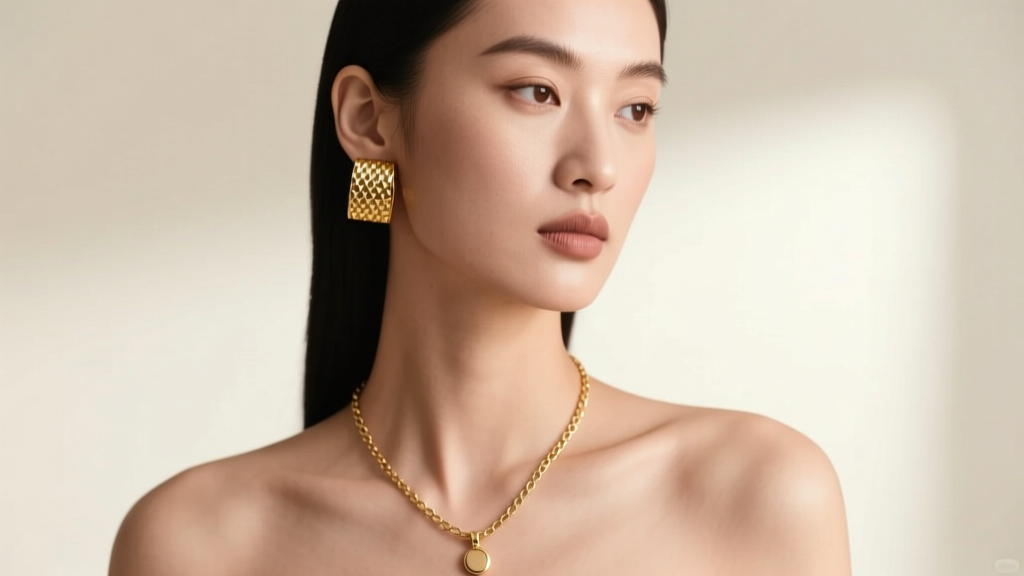
The jewelry landscape has undergone a radical transformation as we navigate the 2026 style cycle. Gone are the days of the rigid, identical bridal set. Today, mastering the art of pairing a necklace and earings requires a nuanced understanding of visual weight, metallurgical harmony, and intentional asymmetry. Modern styling dictates that the neck and the earlobe should engage in a dialogue, not an echo. According to recent trend forecasts by Vogue, the 'curated ear' movement has officially migrated to the décolletage, encouraging collectors to mix chain textures, gemstone cuts, and even metal colors across their primary focal points.
This evolution is rooted in a desire for personalized expression over mass-produced uniformity. When styling a necklace and earings for the modern era, the objective is to create a cohesive aesthetic through shared design motifs—such as a hammered finish or a specific bezel setting—rather than relying on identical matching pieces. This approach demands a deeper understanding of jewelry architecture, specifically how light interacts with different facets and how varying chain gauges drape against the collarbone.
Proportional Dynamics: Balancing Drop Lengths and Ear Real Estate
The most common failure in jewelry pairing is a miscalculation of visual weight. If a pendant is too heavy and the earrings too dramatic, the overall look becomes visually exhausting. Conversely, pairing a substantial 24-inch matinee chain with microscopic studs leaves the earlobes looking neglected. To achieve the 'Golden Ratio' of jewelry styling, one must balance the drop length of the necklace with the vertical real estate occupied by the earring.
| Necklace Style | Chain Length | Ideal Earring Pairing | Visual Weight Ratio |
|---|---|---|---|
| Collar / Choker | 14 - 16 inches | Studs, Huggies, or Micro-Cuffs (Under 0.5 inch) | 80% Neck / 20% Ear |
| Princess | 18 inches | 1 to 2-inch Drops or Medium Hoops | 60% Neck / 40% Ear |
| Matinee | 20 - 24 inches | Chandeliers or Statement Dangles (2.5+ inches) | 50% Neck / 50% Ear |
| Opera | 28 - 36 inches | Geometric Studs or Ear Climbers | 75% Neck / 25% Ear |
As a general rule, the longer the necklace drops toward the sternum, the more vertical length you can introduce to the ear. However, when wearing a choker that sits flush against the clavicle, the ear should remain relatively unencumbered to prevent the upper torso from appearing cluttered. This proportional framework is essential for maintaining elegance in both editorial and everyday styling.
Material & Grade Specifications for Cohesive Pairings
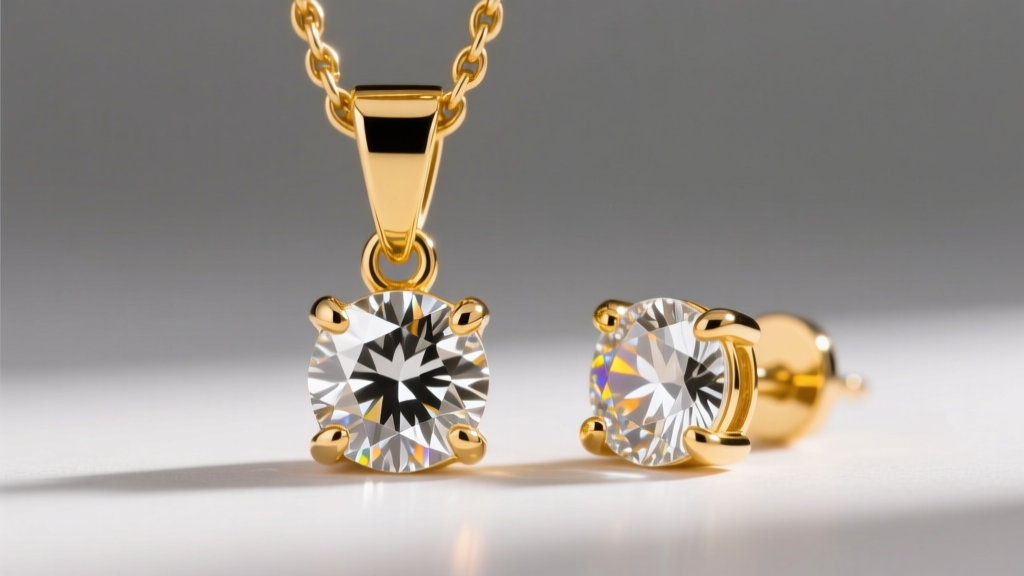
Mixing metals is no longer a fashion faux pas; it is a hallmark of advanced styling. However, successful mixed-metal pairing requires an understanding of metal grades and skin chemistry. Pairing a 14k yellow gold pendant with sterling silver huggie earrings can look incredibly chic, provided the finishes complement one another. A high-polish 14k gold chain paired with a brushed or matte-finished Argentium silver earring creates a sophisticated textural contrast that prevents the metals from clashing.
The Metallurgy of Tarnish and Wear
When selecting pieces that will be worn simultaneously near the neck and ears—areas prone to high sebum production and perfume exposure—material integrity is paramount. Standard 925 sterling silver contains 7.5% copper, which reacts with sulfur and moisture to create black tarnish. For cohesive sets worn daily, upgrading to Argentium silver (935 or 960 grade) is highly recommended. Argentium replaces some copper with germanium, forming a transparent, self-healing oxide layer that drastically reduces tarnishing.
Similarly, when choosing gold, consider the Vickers hardness scale. 18k gold (75% pure gold) has a Vickers hardness of roughly 110-125, making it buttery and rich in color but prone to scratching. 14k gold (58.3% pure gold) sits higher on the hardness scale (130-150), making it structurally superior for earring hooks and chain links that endure daily friction. If you are pairing a heavy 18k gold pendant with 14k gold earrings, the slight color variance will be imperceptible to the naked eye, but the structural longevity of the ear wires will be vastly improved.
The Gemstone Refractive Index Factor
When incorporating gemstones into your necklace and earring pairing, you must account for the Refractive Index (RI). According to the Gemological Institute of America (GIA), a diamond has an RI of 2.42, while moissanite boasts an RI of 2.65. If you pair a moissanite pendant with diamond stud earrings, the moissanite will exhibit significantly more 'fire' (dispersion of colored light), inadvertently making the genuine diamonds look dull or cloudy by comparison. Always match stones with identical or highly similar optical properties to maintain a harmonious light return across the face and chest.
Neckline Architecture: Framing the Canvas
The architecture of your garment's neckline dictates the exact parameters of your jewelry pairing. The fabric acts as the canvas, and the jewelry serves as the framing mechanism. Here is a precise breakdown of how to approach specific necklines in 2026:
- The Sweetheart Neckline: This romantic, curved cut requires a pendant that mimics its geometry. Opt for an 18-inch princess chain with a rounded or teardrop pendant (10mm-15mm). Pair this with 1.5-inch drop earrings that feature a similar rounded terminus. Avoid sharp, geometric chokers, which will fight the soft curve of the bodice.
- The Halter Neck: Because a halter already draws complex lines around the neck and shoulders, traditional necklaces are rendered obsolete. Instead, shift the entire visual weight to the ears. Pair a delicate, barely-there 14-inch collar chain (1.0mm gauge) with dramatic, shoulder-grazing chandelier earrings. The collar simply anchors the look without competing with the halter's fabric ties.
- The Asymmetric / One-Shoulder Cut: This avant-garde neckline demands an equally bold, asymmetrical jewelry response. Wear a single, heavy statement ear cuff or a long drop earring on the exposed shoulder side, and balance it with a 22-inch matinee chain that rests diagonally across the collarbone, mirroring the garment's slant.
Troubleshooting Common Pairing Failures
Even with a perfect aesthetic plan, mechanical and physical failures can ruin a jewelry pairing. Addressing these structural vulnerabilities is a hallmark of true jewelry expertise.
Wire Gauge and Earlobe Fatigue
A frequent issue when pairing heavy statement earrings with substantial pendants is 'earlobe fatigue.' Standard earring hooks are typically crafted from 20-gauge (0.81mm) or 22-gauge (0.64mm) wire. If your drop earrings exceed 4 grams, a 22-gauge hook will slowly bend outward under the weight, altering the angle of the earring and causing it to catch on hair or clothing. For heavy pairings, always seek out or request custom 18-gauge (1.02mm) ear wires, or opt for lever-back closures which distribute the weight more evenly across the piercing tract.
Chain Link Integrity and Pendant Snagging
When layering a delicate chain with a prominent pendant, the chain's link structure must be evaluated. Box chains and snake chains, while sleek, possess microscopic gaps between their links that easily catch on the prongs of stud earrings when the wearer moves. To prevent this frustrating tangling, utilize a 1.2mm to 1.5mm rope chain or a welded cable chain. The continuous, spiraled surface of a rope chain glides smoothly past earring prongs, ensuring that your carefully curated pairing remains untangled and pristine throughout the day.
True style in 2026 is not about buying a pre-packaged set; it is about understanding the physics of light, the chemistry of metals, and the geometry of the human form to curate a pairing that is entirely your own.


