The Ultimate Necklace Ball Chain Buying Guide: Styles & Sizing
Discover how to choose the perfect necklace ball chain. Our expert buying guide covers material grades, bead diameters, connectors, and clasps.

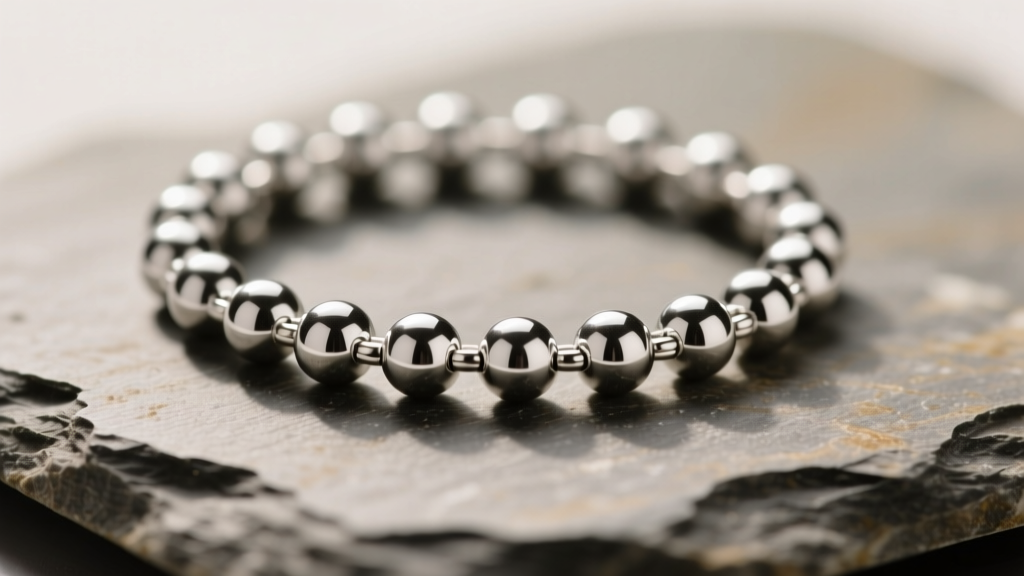
The Ball Chain Renaissance: Beyond the Dog Tag
Once relegated to military dog tags and cheap promotional keychains, the necklace ball chain (also known as a bead chain) has undergone a massive renaissance in contemporary jewelry design. In 2026, we are seeing high-end jewelers and streetwear brands alike utilizing spherical link chains for their unique light-reflecting properties, fluid drape, and industrial-chic aesthetic. However, not all ball chains are created equal. The difference between a chain that snaps in a week and an heirloom-quality piece lies in the metallurgy, bead diameter, and connector mechanics. This comprehensive buying guide will teach you exactly what to look for when investing in a premium necklace ball chain.
Decoding Ball Chain Diameters and Gauges
Unlike cable or curb chains that are measured in wire gauges, ball chains are categorized by the outer diameter of the spherical beads, measured in millimeters (mm). Selecting the correct diameter is crucial for both the structural integrity of the necklace and its visual weight.
| Diameter | Category | Best Use Case | Avg. Tensile Strength |
|---|---|---|---|
| 1.2mm - 1.5mm | Micro / Delicate | Chokers, layering, lightweight charms | 2 - 4 lbs |
| 2.0mm - 2.4mm | Standard | Everyday pendants, solitaire diamonds | 5 - 8 lbs |
| 3.0mm - 3.5mm | Statement | Stand-alone chains, heavy pendants | 10 - 15 lbs |
| 4.5mm - 5.5mm+ | Heavy / Streetwear | Chunky collars, dog tags, men's jewelry | 18 - 25+ lbs |
Pro Tip: If you plan to hang a pendant on your necklace ball chain, the bail (the loop on the pendant) must be at least 0.5mm wider than the chain's bead diameter to allow the chain to slide freely without catching on the crimp connectors.
Material Grades: What to Look For
The material of your chain dictates its longevity, skin compatibility, and maintenance requirements. According to the Gemological Institute of America (GIA), understanding precious metal alloys is essential for avoiding premature wear and allergic reactions.
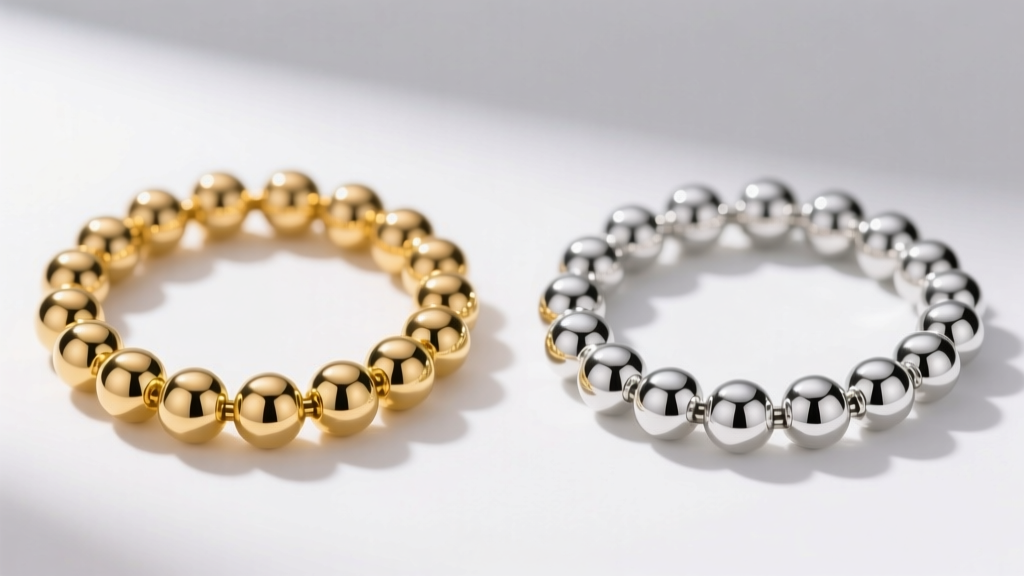
316L Surgical Stainless Steel vs. 304 Steel
For fashion and streetwear jewelry, stainless steel is the undisputed king of durability. However, you must look specifically for 316L marine-grade stainless steel. Unlike the cheaper 304 grade, 316L contains molybdenum, which drastically increases resistance to corrosion from sweat, chlorine, and saltwater. It is also virtually nickel-free, making it hypoallergenic for sensitive skin.
925 Sterling Silver and the Crevice Corrosion Issue
A 925 sterling silver necklace ball chain offers a brilliant, precious-metal luster, but it comes with a hidden vulnerability: crevice corrosion. Because ball chains consist of hundreds of individual beads pressed together, microscopic gaps trap moisture, dead skin, and sulfur. This causes the chain to tarnish rapidly and become brittle. Always buy rhodium-plated sterling silver ball chains. The rhodium flash creates an inert barrier that prevents oxidation in these hard-to-clean crevices.
Gold Tones: PVD Coating vs. Electroplating
If you want a gold necklace ball chain without the solid 14k gold price tag, look for PVD (Physical Vapor Deposition) coating rather than traditional electroplating. PVD bonds titanium nitride to the base metal at a molecular level in a vacuum chamber. A high-quality PVD gold chain will resist flaking and sweat damage for 5 to 10 years, whereas standard electroplated chains often rub off within months of daily wear.
The Weakest Link: Connectors and Clasps
The most common failure point of any necklace ball chain is not the bead itself, but the tiny metal links that hold the beads together. Understanding connector mechanics will save you from losing your favorite pendants.
"The structural integrity of a bead chain relies entirely on the friction-fit of the connector. When subjected to lateral torque, standard stamped connectors easily unspool." - Manufacturing Jewelers and Suppliers of America (MJSA)
Stamped Crimp Connectors (The "Dumbbell")
Standard chains use a tiny, stamped brass or steel "dumbbell" connector that friction-fits into the hollow top and bottom of each bead. While cost-effective, these are prone to metal fatigue. If your chain catches on a sweater, the connector will stretch and slip out of the bead, causing the chain to snap. These are acceptable for lightweight 1.5mm chains but should be avoided for heavy pendants.
Threaded Screw Connectors
Premium ball chains (usually 3.0mm and above) utilize threaded screw connectors. Instead of relying on friction, the connector physically screws into the threaded interior of the bead. This increases the tensile break point by over 300% and makes the chain virtually un-snap-able under normal wearing conditions.
Clasp Selection
Avoid standard spring-ring clasps on ball chains, as they are difficult to align with the small end-jumpers. Instead, look for a friction-fit barrel clasp or a locking lobster clasp with an integrated swivel to prevent the chain from twisting and kinking during wear.
Styling and Layering Frameworks
The spherical geometry of the ball chain makes it an exceptional textural contrast when layered with other chain types. Because it lacks the flat, interlocking surfaces of a Cuban link or a Figaro chain, it catches light from multiple omnidirectional angles.
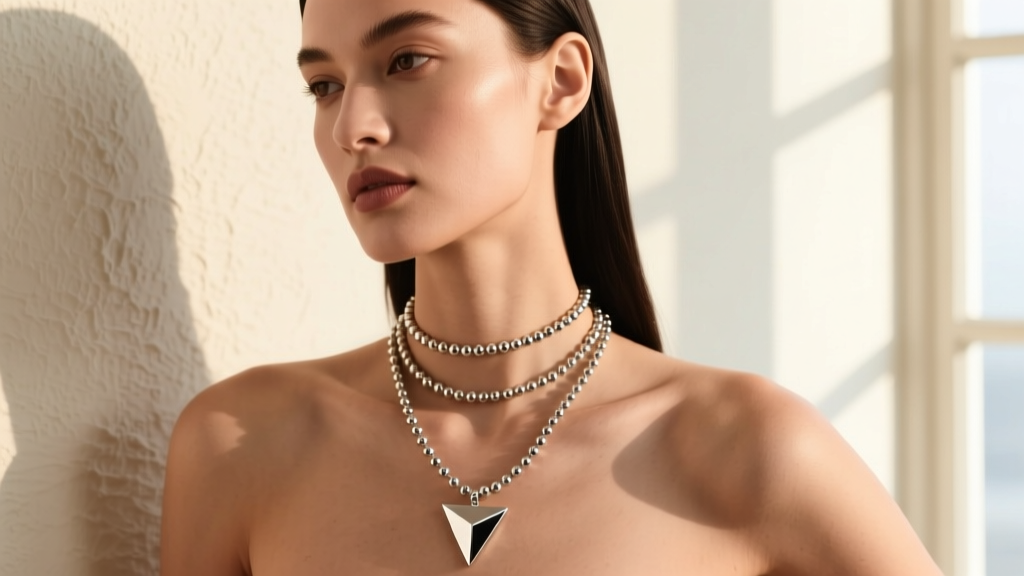
- The Mixed-Metal Stack: Pair a 1.5mm rhodium-plated silver ball chain choker (14-16 inches) with a 2.4mm PVD gold ball chain (20 inches). The contrasting bead sizes and metal tones create a sophisticated, curated look.
- The Textural Contrast: Layer a 3.0mm stainless steel ball chain over a flat, matte-black cord or a smooth box chain. The high-polish spheres will pop against the muted background textures.
- Pendant Pairing: Ball chains pair best with geometric, angular, or raw-stone pendants. The perfect roundness of the beads provides a striking visual anchor to sharp, asymmetric pendant designs.
Final Buying Checklist
Before adding a necklace ball chain to your cart, run it through this quick E-E-A-T quality checklist:
- Verify the Metal Grade: Is it 316L steel, rhodium-plated 925 silver, or solid gold? Avoid unmarked "alloy" or "Tibetan silver".
- Check the Connector Type: For chains over 2.4mm, ensure the product description mentions threaded or reinforced connectors.
- Measure the Bail: Confirm your pendant's bail opening is at least 0.5mm wider than the chain's bead diameter.
- Inspect the Clasp: Opt for barrel clasps or swivel-lobsters to prevent torsional kinking.
By prioritizing material science and mechanical construction over fast-fashion aesthetics, you can secure a necklace ball chain that offers both industrial edge and lifelong durability.


