Necklace Chain Length Guide: Troubleshoot Fit, Flips, and Tangles
Solve common fit issues with our necklace chain length guide. Learn to troubleshoot flipping pendants, tangling chains, and neckline mismatches.

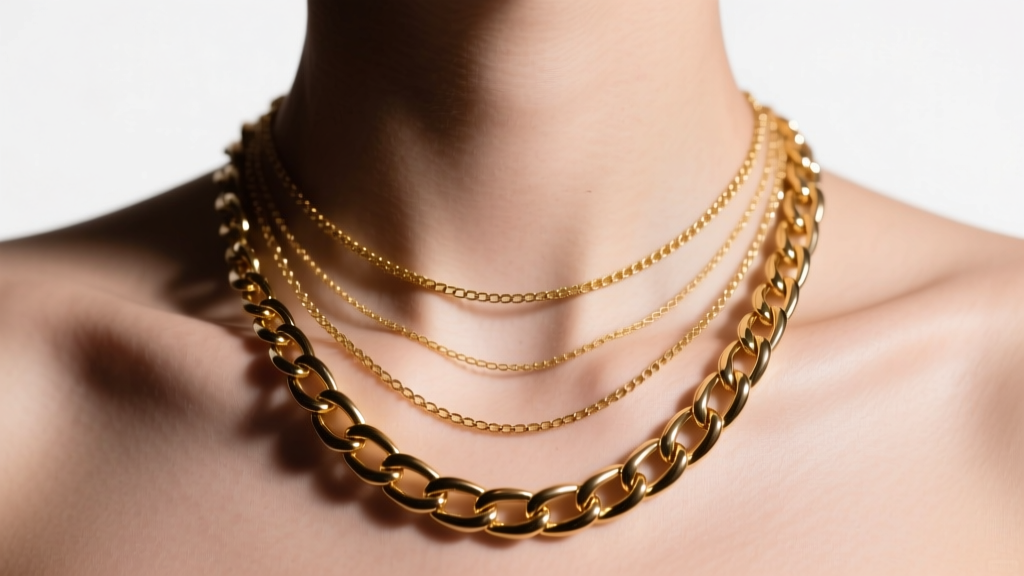
Buying a necklace should be a straightforward experience, yet countless jewelry lovers find themselves frustrated the moment they clasp a new piece. The chain bunches awkwardly, the pendant refuses to lay flat, or the clasp constantly migrates to the front of the neck. These aren't just minor annoyances; they are symptoms of a fundamental mismatch between chain length, link geometry, and your unique anatomy. This comprehensive necklace chain length guide moves beyond basic sizing charts to troubleshoot the mechanical and physical failures that ruin a necklace's drape.
The Core Problem: Why Your Necklace Doesn't Sit Right
Most retailers sell chains in standard 16-inch, 18-inch, or 20-inch lengths. However, human neck circumferences vary wildly, typically ranging from 13 to 16 inches for women and 16 to 19 inches for men. When a chain is too close to your actual neck circumference, it creates a rigid "collar" effect rather than a fluid drape. Conversely, a chain that is too long for its pendant's weight will swing like a pendulum, failing to center itself. According to GIA Jewelry Care guidelines, the structural integrity and visual balance of a piece rely heavily on the harmony between the chain's tensile flexibility and the pendant's center of gravity.
The Definitive Necklace Chain Length Guide by Neckline
To solve fit issues, we must map chain lengths not just to the body, but to specific wardrobe necklines. Below is a troubleshooting matrix designed to help you diagnose and correct common length-to-neckline mismatches.
| Length | Style Name | Ideal Neckline | Common Fit Problem | Troubleshooting Fix |
|---|---|---|---|---|
| 14" - 15" | Collar / Choker | Off-shoulder, V-neck | Feels suffocating; clasp rubs the throat. | Use a 2-inch extender chain to drop it to the clavicle hollow. |
| 16" | Choker Length | Crew neck, Scoop neck | Sits awkwardly on the collarbone; flips outward. | Switch to a heavier gauge (1.5mm+) to weigh the front down. |
| 18" | Princess | Any (Universal) | Pendant hides under high collars or turtlenecks. | Upgrade to a 20" or 22" chain for winter wardrobes. |
| 20" - 22" | Matinee | V-neck, Business attire | Swings too much; catches on buttons. | Add a silicone necklace spacer or a secondary slide clasp. |
| 24" - 30" | Opera / Rope | High neck, Evening wear | Tangles easily; pendant rests too low on the torso. | Double-wrap the chain or use a specialized lariat converter. |
Troubleshooting the "Flipping Pendant" Phenomenon
Nothing is more aggravating than a pendant that constantly flips sideways or rests against the back of your neck. This is rarely a defect in the pendant itself; it is a physics problem involving bail dimensions and chain thickness.
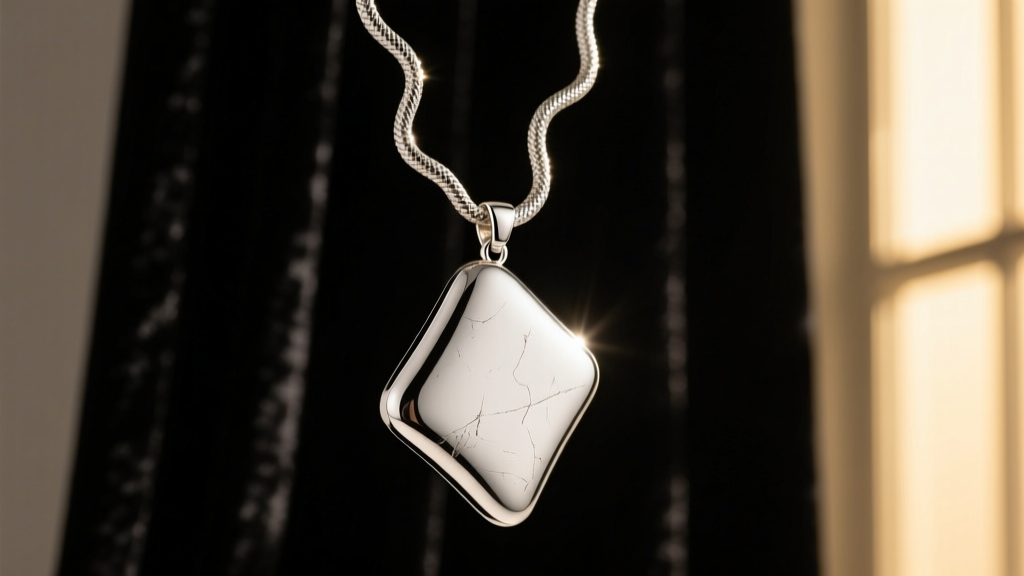
The Bail-to-Chain Ratio Rule
The bail is the loop that connects the pendant to the chain. If your chain is too thick for the bail, the pendant cannot rotate freely. As you move, the chain twists, forcing the pendant sideways because it lacks the clearance to self-correct. The Golden Rule: The chain's width must be at least 1.0mm to 1.5mm narrower than the bail's inner diameter. If you have a pendant with a 4mm bail, do not use a chain thicker than 2.5mm.
Center of Gravity Failures
If the pendant is top-heavy (e.g., a large gemstone set in a wide bezel) and the chain is too lightweight (like a 0.8mm cable chain), the chain will slide through the bail until the heaviest part of the pendant rests against your collarbone, causing the piece to sit off-center. To fix this, you must increase the chain's weight. A 1.5mm to 2.0mm box chain or wheat chain provides enough structural friction and weight to keep a heavy pendant anchored at the sternum.
Solving Chain Tangling and Knotting Issues
If you spend more time untangling your jewelry than wearing it, the culprit is the chain's link geometry. Not all chains are created equal when it comes to friction and movement.
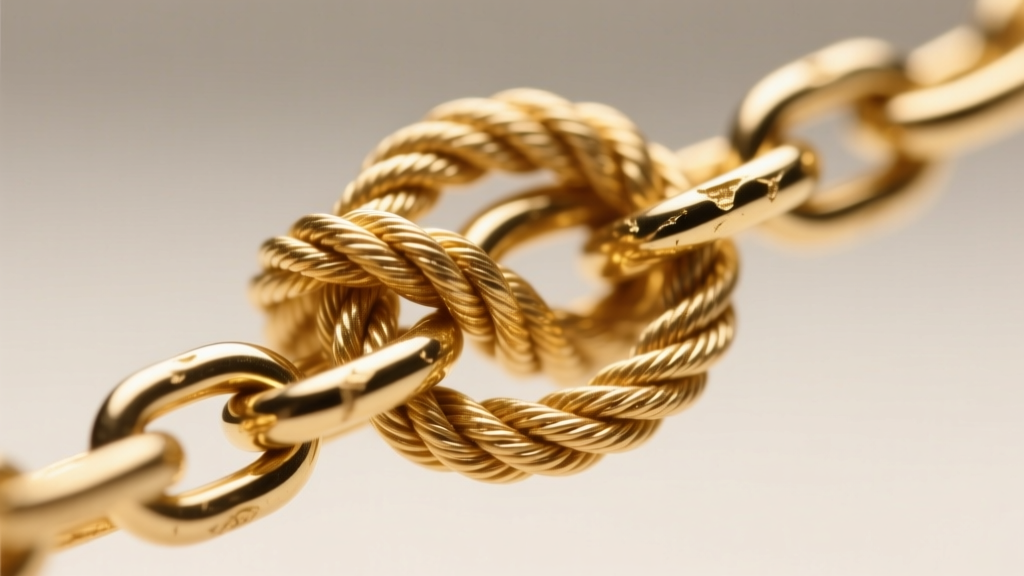
Chains That Resist Tangling
According to Halstead Bead's chain jewelry guide, structural chains with interlocking, multi-directional links are your best defense against knots.
- Box Chains: The square, geometric links lay flat but maintain rigid structural independence. They rarely knot, even at ultra-fine 0.8mm gauges.
- Wheat (Spiga) Chains: The woven, braided pattern creates a smooth exterior with no protruding edges to catch on body hair or clothing fibers.
- Curb Chains: The flat, interlocking oval links are heavy and uniform, making them virtually tangle-proof in gauges above 1.2mm.
Chains Prone to Kinking and Tangling
Snake Chains and Herringbone Chains are manufactured to be perfectly fluid, mimicking a solid ribbon of metal. However, this fluidity means they easily fold in on themselves. Once a snake chain kinks, the metal work-hardens at the bend point, making it permanently weak and prone to severe tangling. If you own these styles, store them strictly flat or hanging—never coiled in a jewelry box.
Hardware and Clasp Failures: When Length Causes Stress
A chain that is even half an inch too short for your neck creates constant lateral tension. This tension doesn't just feel uncomfortable; it actively destroys your jewelry's findings. The most common failure point is the jump ring connecting the clasp to the chain.
Expert Insight: Standard 4mm split jump rings will slowly pull open under the constant tension of a tight 16-inch chain on a 15.5-inch neck. Over time, the clasp will detach, resulting in a lost necklace. Always inspect the gap in your jump rings.
The Fix: If you prefer a shorter, choker-style fit, take the piece to a jeweler and ask them to replace the standard split jump ring with a 5mm soldered jump ring. A soldered ring has no gap, meaning lateral tension will not pull it apart, securing your clasp and your investment.
Quick-Fix Adjustments Without Resizing
You don't always need to buy a new chain or pay a jeweler to cut links if the length is slightly off. Here are three professional-grade workarounds:
- Silicone Necklace Stoppers: These tiny, invisible silicone beads slide onto the chain and grip the metal via friction. Place one on each side of the pendant (about two inches away) to prevent it from sliding toward the back of your neck.
- Chain Extenders: A 3-inch extender chain (typically a 1.5mm cable chain with a lobster clasp on one end and a jump ring on the other) allows you to convert a restrictive 16-inch chain into a comfortable 19-inch matinee length on demand.
- The Paperclip Hack: In a pinch, threading a small, gold-plated paperclip through the existing links and attaching the clasp to the paperclip can add exactly 0.5 inches of breathing room, relieving tension on the primary jump ring.
By understanding the mechanical relationship between chain length, link structure, and pendant weight, you can transform a frustrating piece of jewelry into a flawless, everyday staple. Stop blaming your anatomy for a poor fit, and start engineering your necklace drape with intention.


