Mastering the Necklace Cross Tattoo: A Style Guide
Learn how to pair necklaces with cross tattoos or mimic ink with fine-line pendants. Expert tips on healing, chain weights, and styling.

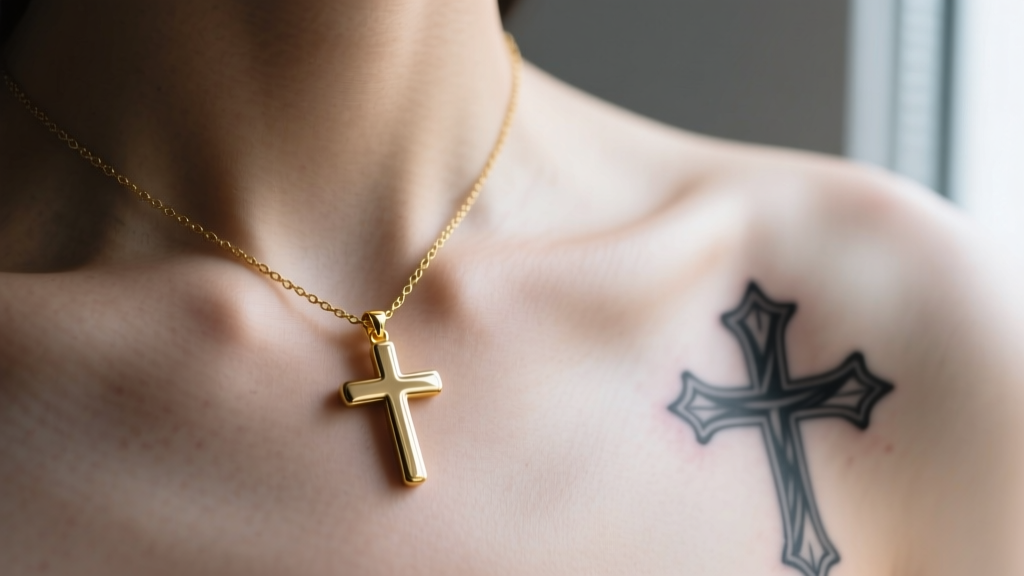
The Intersection of Ink and Adornment
The fusion of body art and fine jewelry has created a highly specific aesthetic niche, and the necklace cross tattoo trend sits right at the center of it. Whether you are looking to complement a freshly inked sternum cross, layer chains over an existing collarbone piece, or achieve the 'faux ink' look using ultra-fine jewelry, understanding the geometry of chains and the biology of healing skin is critical. This beginner-friendly guide breaks down the exact specifications—from chain gauges to metallurgy—required to harmonize your pendants with your body art without compromising either.
Healing First: When Can You Wear Jewelry Over a New Tattoo?
The most common mistake beginners make is layering a necklace over a fresh chest or neck tattoo too soon. A tattoo is essentially a controlled dermal wound. Introducing metal friction before the skin has fully reconstructed can cause ink blowout, scarring, and severe contact dermatitis. According to the American Academy of Dermatology, the surface of a tattoo may appear healed within two to three weeks, but the deeper dermal layers require significantly more time to stabilize.
The Tattoo Healing Timeline for Jewelry Wearers
- Days 1–7 (Weeping & Scabbing): Zero jewelry contact. The skin is an open wound. Chains will trap bacteria and absorb plasma, ruining both the ink and the metal.
- Days 8–14 (Peeling & Itching): The epidermis is shedding. A necklace chain will catch on peeling skin flakes, prematurely pulling off scabs and extracting ink from the dermis.
- Days 15–30 (Surface Healing): The skin looks intact but is highly sensitive to friction and nickel leaching. Only wear smooth, hypoallergenic materials like solid 14k gold or implant-grade titanium for short periods.
- Months 2–3 (Deep Dermal Settling): The ink has fully settled into the macrophages. You can safely resume wearing heavier chains and standard clasps over the tattooed area.
For a comprehensive look at wound management, the Mayo Clinic emphasizes keeping fresh tattoos free from restrictive or abrasive clothing and accessories to prevent localized infections.
Matching Chain Weights to Tattoo Styles
Not all cross tattoos are created equal, and your necklace should reflect the visual weight of the ink. A massive traditional cross tattoo will swallow a delicate chain, while a fine-line single-needle piece will be overpowered by a thick Cuban link. Here is a structural framework for pairing chain widths with specific tattoo styles.
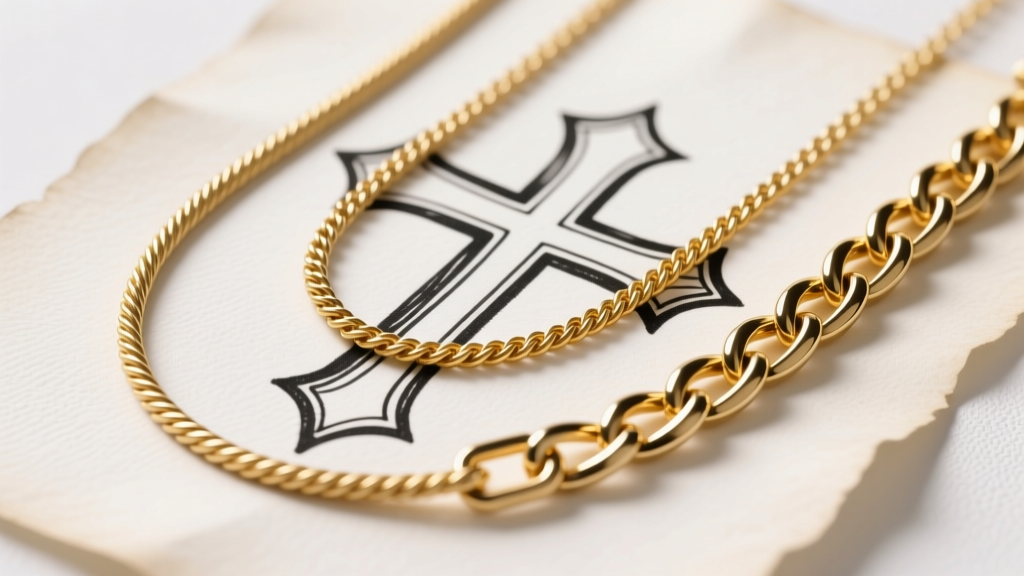
| Tattoo Style | Needle Grouping | Ideal Chain Width | Recommended Chain Type | Pendant Proportions |
|---|---|---|---|---|
| Fine-Line / Micro | 3RL to 5RL (Single Needle) | 0.7mm – 1.2mm | Cable, Box, or Snake | 10mm – 15mm drop |
| Geometric / Dotwork | 7RL to 9RL | 1.5mm – 2.5mm | Rope or Figaro | 15mm – 25mm drop |
| Bold Traditional | 9RL to 14RL (Liners & Mags) | 3.0mm – 5.0mm+ | Cuban, Curb, or Mariner | 30mm+ heavy cast pendant |
The Role of the Pendant Bail
When styling a necklace cross tattoo, the bail (the loop connecting the pendant to the chain) dictates how the piece lays against your skin. For sternum tattoos, a tapered bail allows the cross to lay perfectly flat against the contours of the chest. For collarbone tattoos, a standard hidden bail keeps the chain seamlessly integrated behind the cross, creating the illusion that the pendant is floating directly over the ink.
The 'Faux Ink' Look: Jewelry That Mimics Tattoos
If you love the aesthetic of a necklace cross tattoo but aren't ready for the permanence of a needle, the jewelry industry has developed specific designs to mimic body art. This is particularly popular for sternum and ribcage placements.
Fine-Line Pendants and Collarbone Drapes
To replicate the look of a single-needle tattoo, opt for 14k or 18k yellow gold pendants with an ultra-thin profile (under 1mm thick). When paired with a 0.8mm cable chain cut to a 16-inch choker length, the gold sits flush against the clavicle, mimicking the crisp, dark lines of fresh blackwork ink. For a 'rosary tattoo' effect on the chest, look for asymmetric chains featuring tiny bezel-set diamonds or onyx beads spaced exactly two inches apart, draping down toward the sternum.
Matte Finishes for Blackwork Illusions
Polished gold reflects light, instantly revealing itself as jewelry. To better mimic the matte, absorbed look of tattoo ink, seek out cross pendants with a brushed or sandblasted finish. Oxidized sterling silver or black rhodium-plated 14k gold absorbs light similarly to carbon-based tattoo ink, creating a stunning optical illusion when draped over the skin.
Clasp Mechanics and Skin Irritation
When wearing chains over sensitive or tattooed areas, the clasp is often the culprit for skin irritation. Standard spring-ring clasps feature a tiny metal lever that frequently pinches the skin and catches on fine body hair or peeling tattoo scabs.
- Lobster Clasps: The superior choice for everyday wear. They are robust, easy to operate, and have a smooth exterior that glides over the skin without snagging.
- Magnetic Clasps: Ideal for sternum or long rosary-style chains that are difficult to reach behind the neck. Neodymium magnets encased in smooth steel shells eliminate the need for fumbling with tiny levers, protecting the skin around your tattoo from accidental scratches.
- Toggle Clasps: Best reserved for heavier chains (3mm+). While secure, the T-bar can flip and press awkwardly against the nape of the neck or collarbone if not properly weighted.
Material Safety for Compromised Skin
If you are wearing a necklace over a tattoo that is still in the 'settling' phase (months 1 through 3), your skin's barrier function is still compromised. This makes you highly susceptible to nickel contact dermatitis.
Expert Rule of Thumb: Never wear brass, copper, or gold-plated base metals over a healing or recently healed tattoo. The acidic nature of healing skin can accelerate metal oxidation, causing green discoloration and severe allergic reactions that can distort the appearance of the ink beneath.
Stick strictly to 316L surgical stainless steel, implant-grade titanium (ASTM F136), or solid 14k/18k gold. These materials have negligible nickel release rates and will not react with the lymphatic fluid or sweat present on the chest and neck. By respecting the biology of your skin and the geometry of your jewelry, you can master the necklace cross tattoo aesthetic with confidence and precision.


