The Best Necklace for Neckline Pairings: A Beginner Guide
Discover how to choose the perfect necklace for neckline pairings. Learn expert rules on lengths, chain gauges, and geometry for every outfit.

The Core Rule of Proportion and Spacing
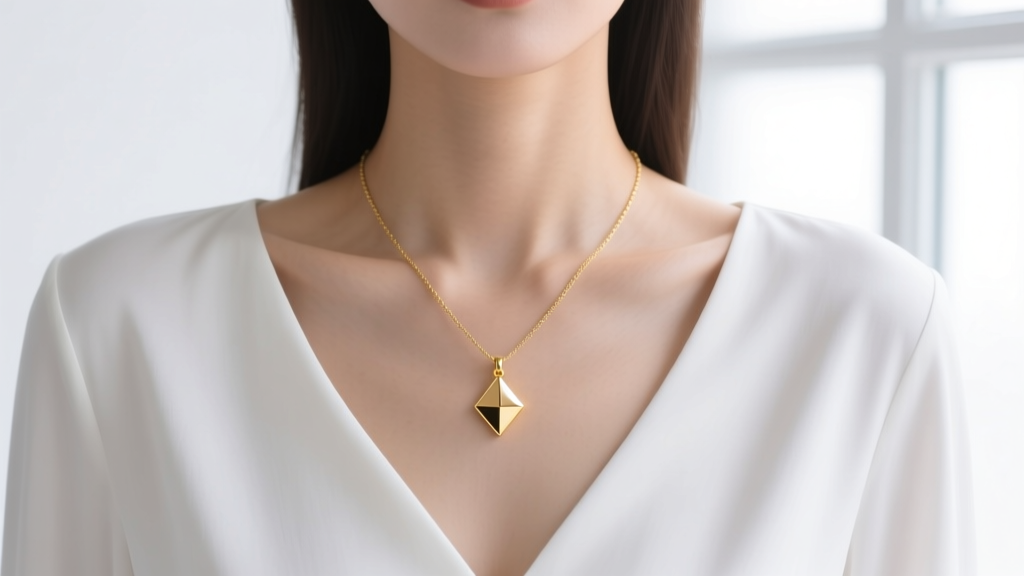
Finding the right necklace for neckline combinations is one of the most common stumbling blocks for jewelry beginners. The secret to effortless styling is not about matching metals to buttons; it is entirely about geometry, negative space, and proportion. When you pair a necklace with a garment, you are essentially framing the face and the upper chest. If the jewelry competes with the hem of the fabric, the entire look becomes visually cluttered.
The fundamental principle that professional stylists use is the Two-Inch Gap Rule. Your necklace should either sit at least two inches above the neckline of your shirt or dress, or fall at least two inches below it. Never let the bottom of your pendant or chain rest directly on the fabric's seam. According to Blue Nile's comprehensive necklace length guide, standard chain lengths are categorized into distinct tiers: collar (14 inches), choker (16 inches), princess (18 inches), matinee (20-24 inches), and opera (28-36 inches). Understanding these tiers is your first step toward mastering visual spacing.
Pro Stylist Tip: If you are wearing a high-neck ribbed sweater with a collar that ends 4 inches below your collarbone, avoid an 18-inch princess chain. It will tangle with the ribbing. Instead, opt for a 14-inch rigid collar or a 24-inch matinee chain to create deliberate contrast.
Crew Necklines: Layering and Statement Pieces
The crew neck is a staple of casual and business-casual wardrobes. Because it features a high, round, and often ribbed hem, it creates a closed canvas. To break up this visual block, you have two distinct strategies: go high and tight, or go long and layered.
The High-and-Tight Approach
A 14-inch collar or a 15-inch choker sits cleanly above the crew neck seam. For this look, choose a chain with a slightly heavier gauge, such as a 2.5mm to 3.0mm rope or curb chain. The thicker gauge ensures the metal stands out against the heavy cotton or wool of the sweater. Alternatively, a multi-strand pearl collar (typically 14 inches with 6mm to 8mm freshwater pearls) adds a sophisticated, textured contrast to a simple cotton tee.
The Long Layering Approach
If you prefer a longer silhouette, skip the 18-inch length entirely and jump straight to a 22-inch or 24-inch matinee chain. A 24-inch chain with a 15mm to 20mm pendant draws the eye downward, elongating the torso. As highlighted in Vogue's layering masterclass, combining a 22-inch delicate cable chain (1.0mm gauge) with a 26-inch lariat necklace creates a cascading effect that completely bypasses the crew neck's restrictive hemline.
V-Necklines: Mirroring the Geometry
V-necklines are inherently flattering because they mimic the natural shape of the décolletage and draw the eye vertically. When selecting a necklace for neckline pairings involving a V-shape, your goal is to mirror or complement that geometry without overcrowding the apex of the V.
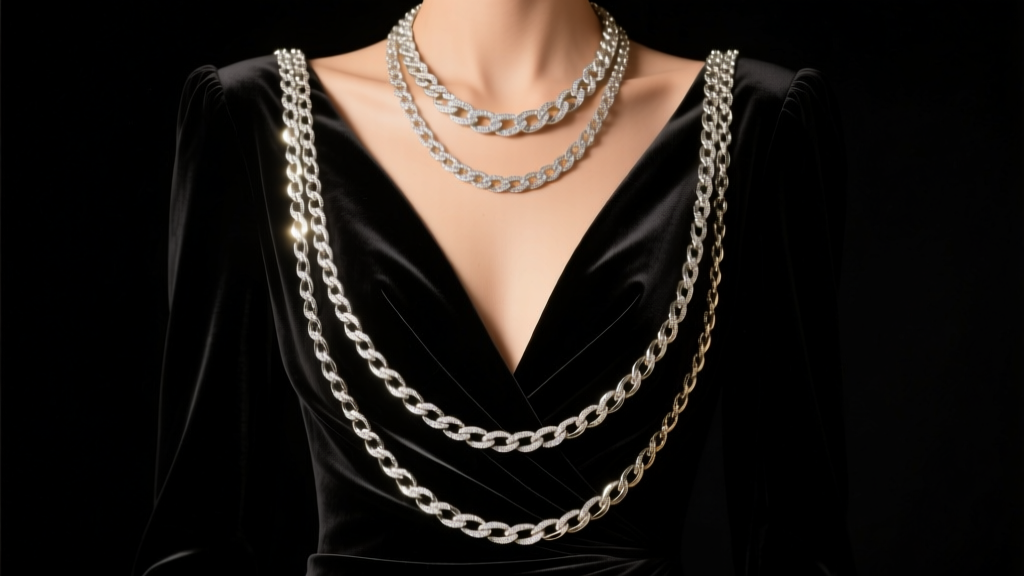
The most foolproof choice for a standard V-neck is an 18-inch princess chain featuring a teardrop, pear-shaped, or marquise pendant. The pendant should sit roughly one inch above the point where the fabric intersects. If the V-neck is particularly deep (plunging), an 18-inch chain will sit too high, acting like a choker against the bare skin. In this case, transition to a 20-inch or 22-inch Y-necklace. Y-necklaces feature a central drop that physically mimics the V-shape of the garment, creating a cohesive, elongated silhouette.
What to Avoid
Avoid wide, horizontal bib necklaces or chokers with thick, circular pendants when wearing a sharp V-neck. The conflicting geometry—horizontal circles against sharp diagonal lines—creates visual dissonance. Stick to vertical drops, lariats, and solitaire pendants.
Strapless and Sweetheart: Bare Skin Canvases
Strapless, off-the-shoulder, and sweetheart necklines offer a vast expanse of bare skin. This is the ideal environment for bold, structured jewelry. Because there is no fabric hem to compete with on the upper chest, you can utilize shorter, more dramatic lengths.
- 14-Inch Rigid Collars: Made from 18-gauge sterling silver or brass, these sit flush against the collarbone and frame the face beautifully without dipping into the sweetheart dip.
- 16-Inch Statement Chokers: A 16-inch chain featuring a wide, geometric centerpiece (such as a 30mm enamel disc or a cluster of pave diamonds) anchors the look. Ensure the clasp is a secure lobster claw, as heavier statement pieces can easily pop open with standard spring-ring clasps.
- The 16+2 Extender Rule: When buying chokers for strapless dresses, always look for chains with a 2-inch extender. Bare skin lacks the friction of fabric, and a slightly looser 16.5-inch fit prevents the chain from riding up and choking the wearer when they move their arms.
Boatneck and Bateau: Disrupting the Horizontal
The boatneck (or bateau) neckline runs horizontally across the collarbones, often extending toward the shoulders. It is elegant but can visually widen the upper body. To counteract this widening effect, your jewelry must introduce strong vertical lines.
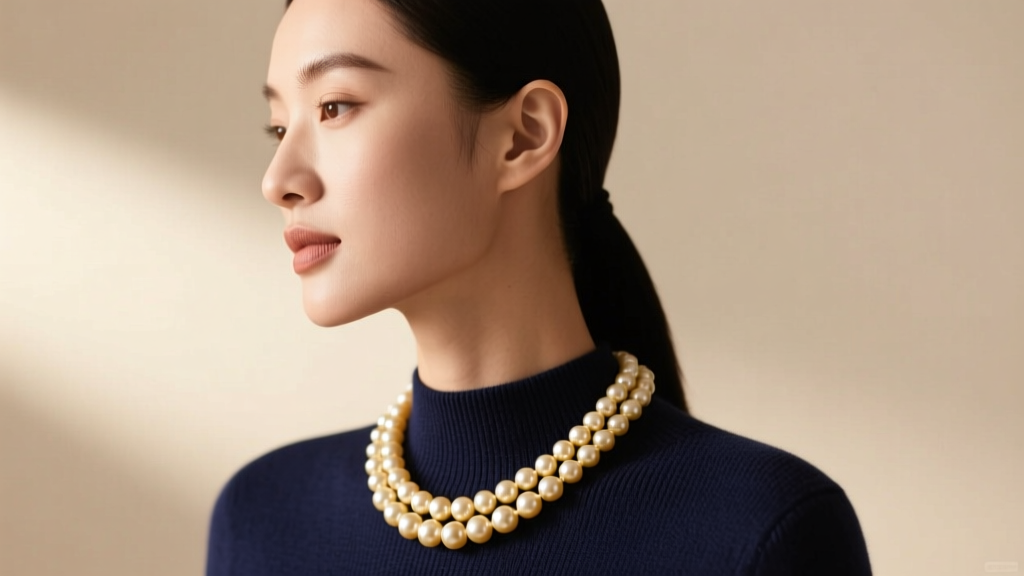
The absolute best necklace for neckline pairings involving a boatneck is a 24-inch to 28-inch opera-length chain. A 28-inch strand of 7mm Akoya pearls or a 24-inch gold paperclip chain (2.0mm gauge) cuts directly through the horizontal line of the boatneck, creating a slimming, vertical column of light. If you prefer shorter jewelry, a 16-inch lariat necklace with a long, dangling 3-inch tail provides the necessary vertical disruption without extending all the way down the torso.
Comprehensive Necklace for Neckline Chart
Use this quick-reference matrix to instantly identify the optimal chain length and pendant style for your outfit. This framework removes the guesswork from your daily styling routine.
| Neckline Type | Ideal Length(s) | Best Pendant / Chain Style | Styles to Strictly Avoid |
|---|---|---|---|
| Crew Neck | 14" or 22"-24" | Thick collar or long matinee drop | 18" princess chains (tangles with ribbing) |
| V-Neck | 18" or 20" | Teardrop, Y-necklace, Marquise | Wide horizontal bibs, circular chokers |
| Strapless | 14" or 16" | Rigid metal collar, statement choker | 24"+ chains (get lost on bare skin) |
| Boatneck | 24"-28" | Opera length, long lariat tail | Short 16" chokers (widen the shoulders) |
| Scoop Neck | 16" or 18" | Curved pendants, halo settings | Sharp geometric Y-drops |
| Collared Shirt | 18" or 20" | Delicate 1.2mm chain, small solitaire | Thick chains (bulk up under the collar) |
Chain Gauges, Clasps, and Material Grades
Beyond length, the physical construction of your necklace dictates how it behaves against different fabrics. Beginners often overlook chain gauge (thickness) and metal hardness, leading to broken chains or ruined garments.
Understanding Gauge Sizes
Chain gauge is measured in millimeters. A 0.8mm to 1.2mm chain is considered delicate. It is perfect for wearing under unbuttoned collared shirts or layering, but it will easily snap if snagged on heavy knits. A 1.5mm to 2.5mm chain is the versatile middle ground, strong enough to hold a 5mm to 8mm gemstone pendant while remaining elegant. Chains 3.0mm and above are statement pieces meant to be worn solo over heavy fabrics like wool or thick cotton.
Clasp Mechanics
The clasp is the most common point of failure. Spring ring clasps are standard on lightweight, budget-friendly chains (under 1.0mm), but they are notoriously difficult to operate with one hand and prone to spring failure over time. Always upgrade to a lobster claw clasp for any chain over 1.2mm or any piece holding a pendant heavier than 3 grams. For high-end 14k or 18k gold pieces, a box clasp with a safety figure-eight latch is the industry standard for security.
Material Grades and Fabric Friction
When wearing jewelry over delicate silks or satins, avoid chains with sharp edges, such as square box chains or herringbone chains with micro-snags. Opt for smooth, rounded profiles like snake chains or rounded cable chains. Sterling silver (925) is excellent for everyday wear but will tarnish when exposed to the sulfur in wool; remove it before putting on heavy winter knits. For ultimate durability and zero tarnish, 14k gold-filled chains (which contain 5% solid gold by weight, bonded to a brass core) offer a superior alternative to standard gold plating, surviving years of friction against rough neckline seams without peeling.
Final Thoughts on Styling Harmony
Mastering the art of pairing jewelry with your wardrobe does not require an endless budget; it requires an understanding of spatial relationships. By respecting the Two-Inch Gap Rule, matching geometric shapes, and selecting the appropriate chain gauge for your fabric weight, you elevate your jewelry from a mere accessory to an integral, harmonious component of your personal style. Keep this guide handy, and your daily styling decisions will become intuitive, polished, and effortlessly chic.


