How to Say Necklace in Spanish: Repair & Buying Troubleshooting
Learn how to say necklace in Spanish and troubleshoot jewelry repairs, verify silver purity, and navigate custom orders in Latin America.

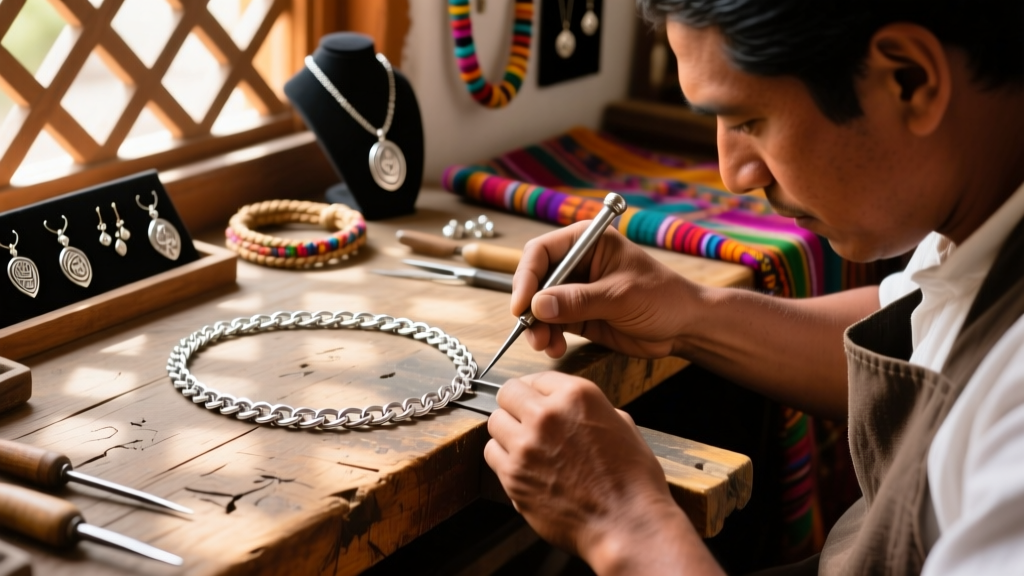
Whether you are exploring the historic silver-mining town of Taxco in Mexico, shopping for artisan gold in Madrid, or simply living in a vibrant Spanish-speaking community, a broken chain or a custom jewelry order can quickly become a source of frustration. Knowing how to say 'necklace in Spanish' is merely the first step. True troubleshooting requires a deep understanding of regional jewelry terminology, metallurgical standards, and bench repair techniques.
As a jewelry style guide and trend radar, we frequently hear from travelers and expats who have experienced miscommunications at the jeweler's bench—resulting in melted links, incorrect chain lengths, or the accidental purchase of counterfeit alloys. This comprehensive guide will equip you with the exact Spanish vocabulary, technical specifications, and troubleshooting frameworks needed to navigate buying and repairing necklaces in any Spanish-speaking region.
The Language Barrier: Why 'Necklace' Isn't Just 'Collar'
While a basic translation app will tell you that the word for necklace is collar, using this blanket term at a specialized silversmith's bench can lead to confusion. According to the Real Academia Española (RAE), collar is a broad term that can refer to anything from a necklace to a pet's collar or a detachable shirt collar. To communicate effectively with a jeweler, you must use specific structural terminology.
Core Necklace Vocabulary
- Cadena: Chain. Use this when referring specifically to the metal links rather than the entire piece.
- Gargantilla: Choker. This specifically denotes a necklace that sits tightly against the neck, typically between 14 and 16 inches (35-40 cm).
- Cuentas: Beads. Essential when discussing beaded necklaces or pearl strands.
- Dije / Colgante: Pendant. Dije is widely used in Latin America, while colgante is more common in Spain.
- Broche / Cierre: Clasp. The mechanical fastening at the end of the chain.
When initiating a repair, never simply say, 'Se rompió mi collar' (My necklace broke). Instead, specify the exact point of failure: 'Se rompió la cadena cerca del cierre' (The chain broke near the clasp).
Troubleshooting Common Repair Scenarios in Spanish
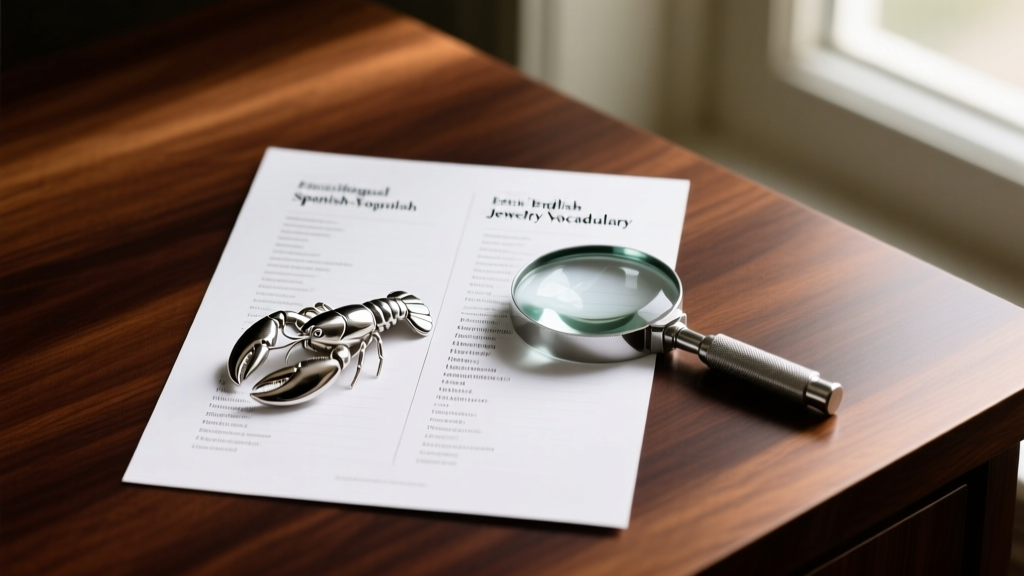
Jewelry repair techniques vary significantly depending on the equipment available at local benches. In many traditional Latin American markets, jewelers rely on old-world torch soldering methods. While beautiful for heavy cast pieces, these methods can be disastrous for delicate modern chains.
Torch vs. Laser Soldering
If your delicate cable or box chain (under 1.2mm in thickness) has snapped, torch soldering (soldadura a fuego or soldadura con soplete) poses a high risk of melting the surrounding links due to widespread heat distribution. You must explicitly ask if the jeweler has laser capabilities.
Crucial Phrase: '¿Tienen soldadura láser? La cadena es muy delgada y no quiero que se quemen los eslabones.'
(Do you have laser soldering? The chain is very thin and I don't want the links to burn.)
If laser soldering (soldadura láser) is unavailable, and the chain is a standard sterling silver cable chain, a skilled bench jeweler can use a low-temperature silver solder ( soldadura de plata de baja temperatura) with a micro-torch and a heat-absorbing chalk block to protect adjacent links. If the jeweler seems unfamiliar with these precautions, it is safer to ship the piece back home for repair.
Replacing the Clasp
Spring ring clasps (broche de resorte) frequently fail due to internal spring degradation. When requesting an upgrade to a more secure lobster clasp, use the term cierre de langosta. Ensure you specify the exact millimeter size of the jump ring (anillo de salto) required to attach it without pinching the end link of your chain.
Material Verification: Avoiding the 'Alpaca' Silver Trap
One of the most common troubleshooting issues for tourists buying necklaces in Mexico and South America is the confusion between genuine sterling silver and 'Alpaca'. Alpaca (also known as German Silver or Nickel Silver) is a copper-based alloy containing nickel and zinc. It contains absolutely 0% silver, despite its silvery appearance and the frequent claims of market vendors.
The Silver Institute notes that legitimate silver markets rely on strict hallmarking to protect consumers. In Mexico, genuine silver will often bear the historic Eagle Mark or a clear '.925' stamp. However, stamps can be faked. Here is how you troubleshoot material disputes on the spot:
| Test Method | Sterling Silver (.925) | Alpaca / Nickel Silver |
|---|---|---|
| Magnet Test | Non-magnetic (diamagnetic) | Slightly magnetic (due to nickel) |
| Ice Cube Test | Melts ice almost instantly (highest thermal conductivity) | Melts ice at a normal, slower rate |
| Odor Test | Odorless when rubbed vigorously | Emits a distinct metallic/copper smell |
| Skin Reaction | Hypoallergenic, rarely causes reactions | Often turns skin green or causes nickel rashes |
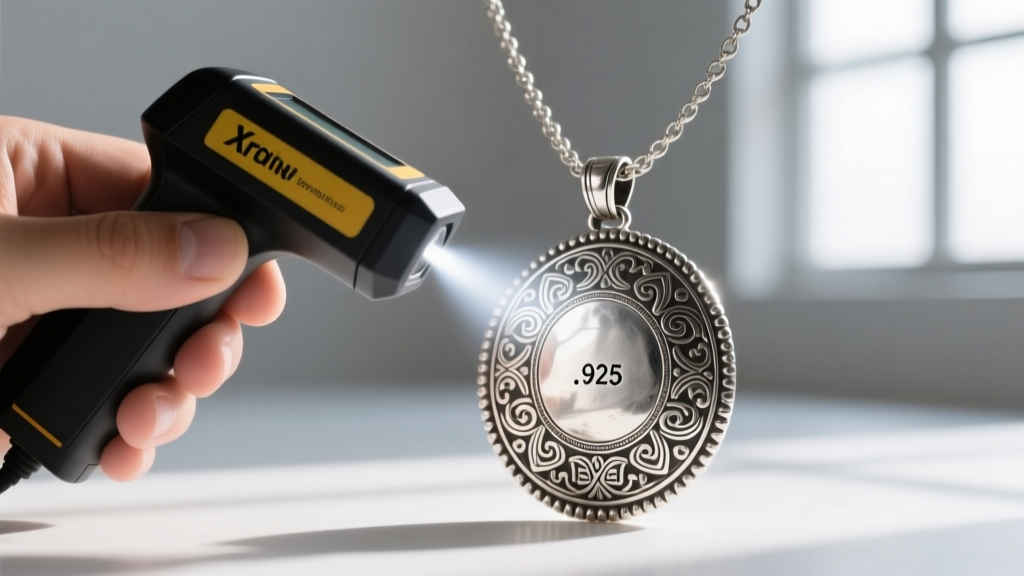
If a vendor insists a piece is silver but it fails the odor or magnet test, politely decline the purchase. You can state: 'Este metal huele a cobre, no es plata ley' (This metal smells like copper, it is not sterling silver). For high-value purchases, reputable dealers will allow you to test the piece with a precious metal acid test kit (ácido de prueba para plata) or an XRF analyzer.
Custom Orders: Specifying Lengths and Gauges
When commissioning a custom chain necklace from a Spanish-speaking silversmith, you must abandon the American Wire Gauge (AWG) system. Latin America and Spain operate strictly on the metric system. Asking for a '20-gauge chain' will result in blank stares or incorrect dimensions.
According to metallurgical standards referenced by the Gemological Institute of America (GIA), precise millimeter measurements are critical for determining the structural integrity and drape of a chain. Use this conversion framework when placing your order:
- Delicate / Layering Chains: 0.8 mm to 1.0 mm (Equivalent to ~20-18 AWG). Perfect for small pendants.
- Standard / Everyday Chains: 1.2 mm to 1.5 mm (Equivalent to ~16-15 AWG). Offers a balance of durability and visibility.
- Heavy / Statement Chains: 2.0 mm to 3.0 mm+ (Equivalent to ~12-8 AWG). Ideal for wearing solo or supporting heavy gemstone dijes.
Furthermore, chain lengths are ordered in centimeters. A standard women's necklace is 45 cm (cuarenta y cinco centímetros), while a standard men's chain is typically 50 cm to 60 cm. Always specify if the measurement should include the clasp or just the chain links.
Final Checklist for the Spanish-Speaking Jeweler's Bench
Before handing over your valuable jewelry for repair or finalizing a custom purchase, run through this rapid troubleshooting checklist to ensure total alignment with your jeweler:
- Confirm the Metal: '¿Es plata novecientos veinticinco?' (Is it .925 silver?)
- Agree on the Repair Method: Confirm laser vs. torch soldering for delicate links.
- Establish the Timeline: '¿Para cuándo estará listo?' (When will it be ready?)
- Get a Written Receipt: Ensure the receipt explicitly states the metal purity (e.g., Plata .925) and the exact weight in grams (peso en gramos) before the repair begins, protecting you from accidental metal swapping or loss.
Mastering the nuances of how to say necklace in Spanish—and understanding the technical realities of the jeweler's bench—transforms a potentially stressful travel mishap into an opportunity to appreciate the rich, centuries-old tradition of Hispanic silversmithing and goldsmithing. Approach the bench with respect, precise terminology, and a keen eye for metallurgical detail, and your jewelry will be in the best possible hands.


