The Ultimate Necklace Length Diagram & Material Drape Guide
Master the necklace length diagram by understanding how metal weight, chain gauge, and material drape alter the fit. Expert sizing guide.

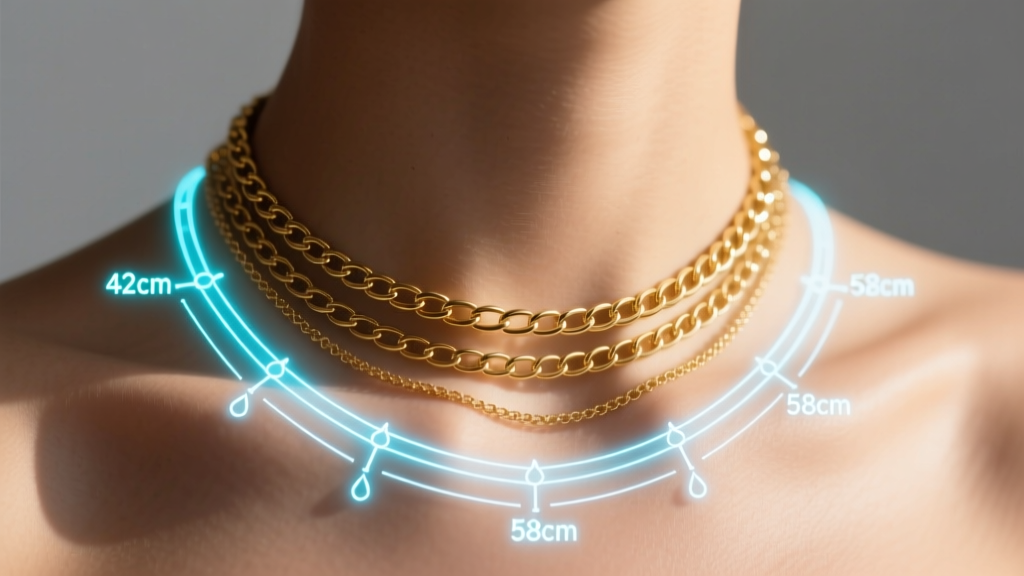
The Flaw in Standard Necklace Length Diagrams
If you have ever ordered a necklace based on a standard 2D sizing chart, only to find it sitting entirely wrong on your collarbone, you have encountered the fundamental flaw in traditional jewelry sizing. Most online guides treat a necklace like a weightless, perfectly flexible piece of string. In reality, jewelry is governed by physics. Mass, tensile rigidity, and specific gravity all dictate how a chain interacts with the human form.
A standard necklace length diagram assumes that a 16-inch choker will rest at the exact same anatomical point regardless of its composition. However, a 16-inch chain crafted from lightweight grade-5 titanium behaves radically differently than a 16-inch chain cast in solid 18k yellow gold. To truly master necklace sizing, we must overlay material properties onto traditional length charts. This guide bridges the gap between metallurgical data and visual drape, providing a definitive framework for selecting the perfect chain.
The Physics of Drape: How Material Density Alters Fit
The way a necklace rests on the chest is primarily dictated by the specific gravity (SG) of the metal and the total mass of the chain. According to metallurgical data from the Gemological Institute of America (GIA), precious metals vary wildly in density. Platinum boasts an SG of 21.45, while 18k gold sits around 15.6, sterling silver at 10.36, and aerospace-grade titanium at a mere 4.5.
When you select a longer length—such as a 24-inch opera chain—the cumulative weight of the metal pulls the chain downward against the sternum. A 24-inch, 3mm solid gold rope chain can weigh upwards of 65 grams. This gravitational pull stretches the skin slightly and forces the chain into a deep, narrow V-shape. Conversely, a 24-inch titanium or aluminum chain of the exact same gauge may weigh under 15 grams, allowing it to drape in a wide, relaxed U-shape across the collarbones.
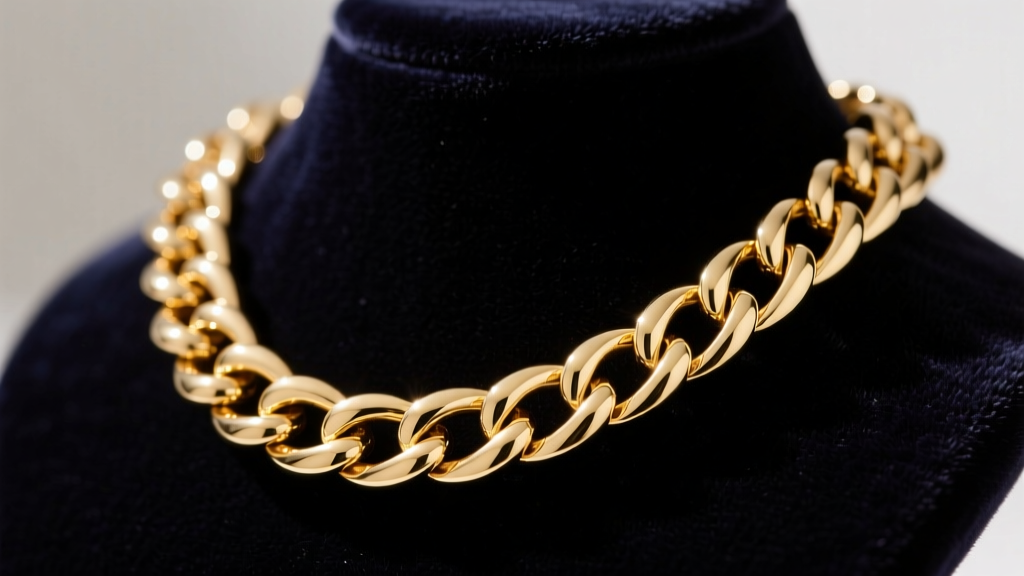
The Visual Shift Phenomenon
Because heavy metals pull downward, the "effective visual length" of a dense chain is always longer than its measured tape length. When consulting a necklace length diagram, you must apply a material multiplier:
- High-Density Metals (Platinum, 18k/22k Gold): Add 0.5 to 1.5 inches to the visual drop for lengths over 18 inches.
- Medium-Density Metals (14k Gold, Sterling Silver, Brass): True to the standard diagram measurements.
- Low-Density Metals (Titanium, Niobium, Aluminum): Subtract 0.5 inches from the visual drop, as the chain will resist gravity and sit higher on the chest.
Interactive Necklace Length Diagram by Material Type
The table below adjusts standard necklace lengths based on the material's drape coefficient. This data assumes a standard 2.5mm cable chain profile.
| Standard Measured Length | Heavy Metal Drape (Platinum/18k Gold) | Medium Metal Drape (14k Gold/Silver) | Lightweight Drape (Titanium/Steel) | Ideal Neckline Application |
|---|---|---|---|---|
| 14 Inches | 14.5" (Tight Collar) | 14" (True Choker) | 13.5" (High Choker) | Open V-necks, Strapless |
| 16 Inches | 17" (Collarbone Drop) | 16" (True Collarbone) | 15.5" (High Collarbone) | Crew necks, Boat necks |
| 18 Inches | 19.5" (Deep V-Drop) | 18" (True Neckline) | 17.5" (High Neckline) | Standard Tees, Button-downs |
| 20-22 Inches | 23" (Sternum Rest) | 21" (True Princess) | 20" (High Princess) | Sweaters, Turtlenecks |
| 24-30 Inches | 27"+ (Deep Opera) | 25" (True Opera) | 24" (High Opera) | Evening wear, Layering base |
Chain Link Architecture and Bending Radius
Beyond weight, the structural geometry of the chain links determines how it conforms to the body. Jewelry manufacturing experts at Rio Grande categorize chains by their bending radius and flexibility, which directly impacts how they map to a necklace length diagram.
High-Flexibility Chains (Cable, Rope, Curb)
These links possess multiple axes of rotation. A 20-inch 14k gold cable chain will easily wrap around the neck and drape fluidly. Because they conform perfectly to the body's contours, they adhere most closely to standard 2D length diagrams. However, their high flexibility makes them susceptible to tangling, especially in lengths exceeding 24 inches.
Zero-Flexibility Chains (Herringbone, Snake, Omega)
These chains behave more like rigid ribbons than flexible strings. An Omega or Herringbone chain lacks lateral articulation. If you select a 14-inch or 16-inch choker length in a Herringbone style, the natural movement of your neck will force the metal to bend past its structural yield point. This results in permanent kinking—a catastrophic failure mode unique to flat-link chains. For rigid architectures, you must size up by at least 2 inches from your standard necklace length diagram to ensure the chain rests below the pivot point of the neck.
Pendant Weight and the Pendulum Effect
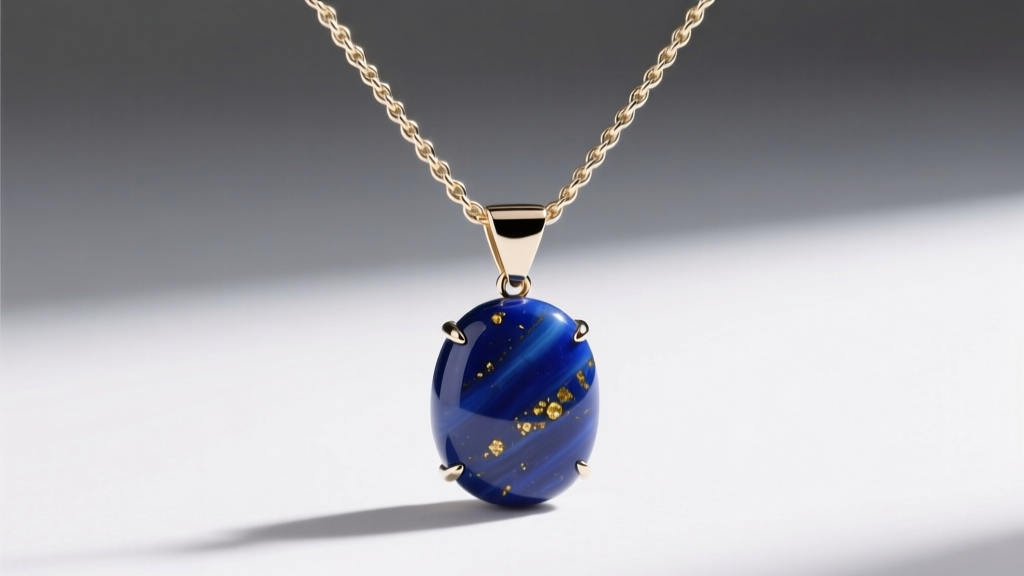
A necklace length diagram becomes instantly obsolete the moment you attach a pendant. The addition of a focal piece introduces the "pendulum effect," where the weight of the pendant pulls the chain downward, creating a sharp V-angle at the bail. The severity of this drop depends on the chain's gauge and the pendant's mass.
Consider a 20-inch, 1.2mm sterling silver cable chain. If you attach a lightweight 3-gram gemstone pendant, the chain will drop roughly 0.5 inches lower than the bare chain. However, if you attach a heavy 25-gram solid gold or large cabochon pendant, the chain will drop 2.5 to 3 inches lower. Furthermore, the acute angle created at the bail causes severe friction wear on the delicate 1.2mm links, eventually leading to tensile failure.
The Sizing Framework for Pendants
- Under 5 grams: Use standard diagram lengths. 1.0mm to 1.5mm gauges are ideal.
- 5 to 15 grams: Subtract 1 inch from your desired visual length to account for the pendulum drop. Upgrade to a 2.0mm gauge for structural support.
- Over 15 grams: Subtract 2.5 inches from your target length. Use a 3.0mm+ gauge or a reinforced rope chain to prevent bail friction from snapping the links.
Tensile Strength and Clasp Engineering
The longer the necklace, the higher the risk of the chain catching on clothing, door handles, or environmental hazards. When a 24-inch or 30-inch chain snags, the sudden kinetic shock is transferred entirely to the clasp and the two terminal jump rings. Material tensile strength—measured in Megapascals (MPa)—dictates how much shock the chain can absorb before catastrophic failure.
Annealed sterling silver has a tensile strength of roughly 275 MPa, while 316L stainless steel boasts upwards of 500 MPa. A long, heavy silver chain caught on a doorknob will almost certainly snap at the clasp. To mitigate this, long chains (22+ inches) in softer metals must be engineered with work-hardened jump rings and heavy-duty lobster clasps, which can withstand up to 8kg of sudden force compared to the 2.5kg limit of standard spring-ring clasps.
Conclusion: Sizing with Material Intelligence
A traditional necklace length diagram is merely a starting point. True expertise in jewelry styling requires synthesizing tape measurements with the physical realities of metallurgy. By accounting for the specific gravity of your chosen metal, the bending radius of the link architecture, and the pendulum effect of your pendant, you can predict exactly how a necklace will drape. Whether you are selecting a rigid 18k gold collar or a sweeping titanium opera chain, adjusting your sizing strategy to accommodate material properties guarantees a flawless, comfortable fit every time.


