How a Necklace Length Image Helps Assess True Jewelry Value
Learn how to use a necklace length image to assess jewelry value, avoid resizing fees, and allocate your budget across solid gold and vermeil chains.

The Hidden Economics of Visual Sizing
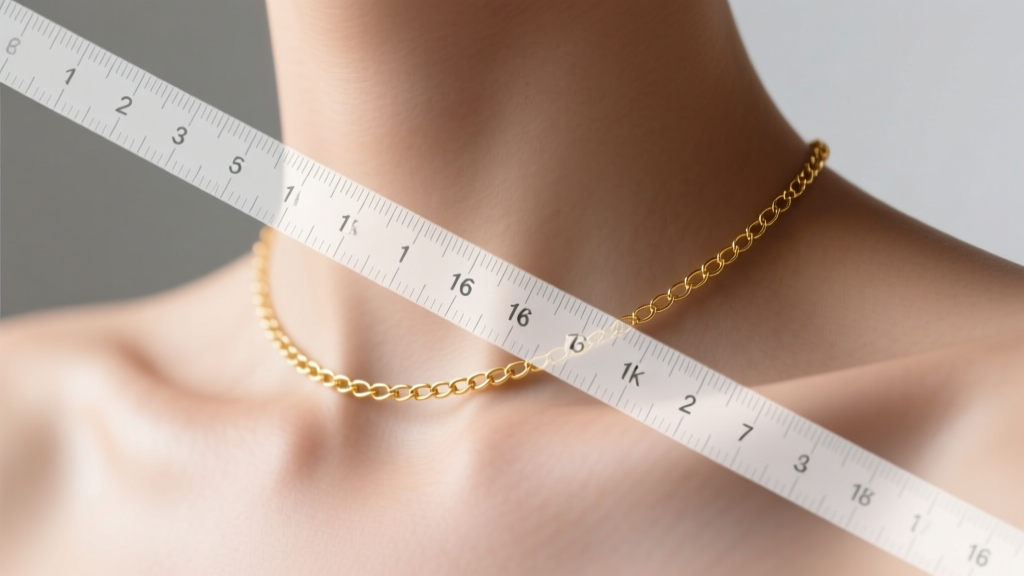
When shopping for fine jewelry online, the difference between a 16-inch collar and an 18-inch princess chain is not just a matter of aesthetics; it is a critical budget variable. Many buyers rely on vague product descriptions, leading to costly returns, restocking fees (often 15% to 25% of the retail price), or expensive jeweler alterations. Consulting a precise necklace length image before purchasing allows you to accurately assess the material weight, calculate the true cost-per-inch, and determine if a specific piece aligns with your financial and stylistic goals.
In 2026, with the rising costs of precious metals, understanding how length dictates value is more important than ever. A standard 14k solid gold rope chain weighs approximately 1.2 grams per inch at a 1.5mm width. Therefore, jumping from a 16-inch to a 20-inch length doesn't just change the drape; it adds nearly 5 grams of solid gold, which can increase the retail price by $150 to $250 depending on the manufacturer's markup. By visually mapping the length to your own neckline, you can make data-driven decisions about where to allocate your jewelry budget.
Decoding the Standard Visual Guide
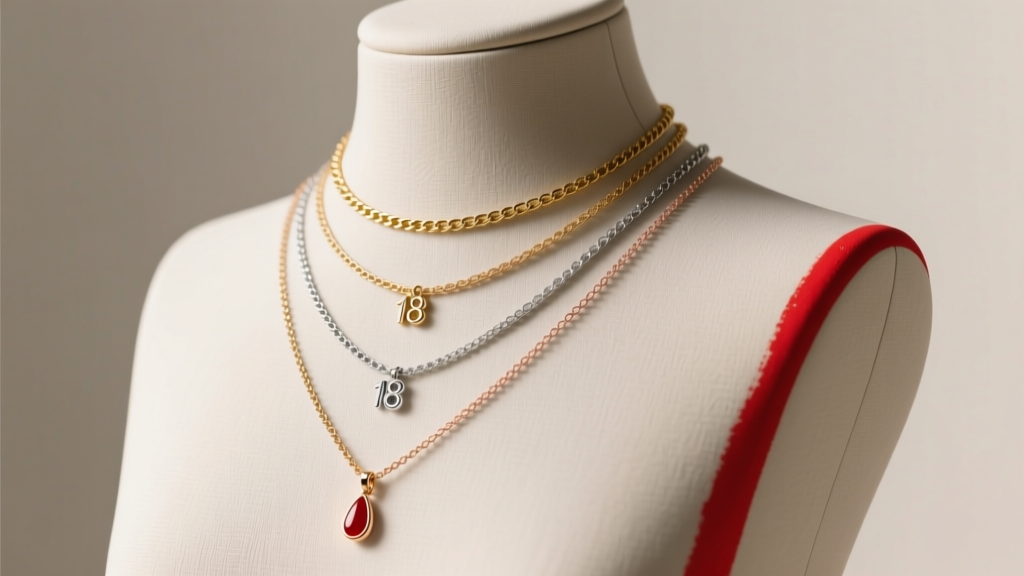
Most jewelry retailers provide a generic necklace length image featuring a mannequin or model. However, these guides often fail to account for different body types and neck circumferences. To truly assess value, you must understand the industry-standard lengths and their associated material costs.
- 14-Inch (Choker): Sits tightly against the base of the neck. Because it requires the least amount of raw material, this is the optimal length for investing in high-karat solid gold (18k or 22k) on a strict budget.
- 16-Inch (Collar): Rests on the collarbone. The most popular length for everyday pendants. Budget tip: This is the sweet spot for 14k solid gold chains, offering maximum durability and resale value.
- 18-Inch (Princess): Falls just below the collarbone. Ideal for business casual wear. The added two inches over a collar increases the gold weight by roughly 15%, noticeably impacting the price of solid chains.
- 20 to 24-Inch (Matinee): Rests on the chest. At these lengths, solid gold becomes a significant investment. This is where buyers should pivot to high-quality alternatives to preserve their budget.
- 28 to 36-Inch (Opera): Falls below the bust. Often worn doubled. Solid gold opera chains are luxury-tier investments; budget-conscious buyers should explore gold-filled or heavy vermeil options here.
Material Weight vs. Length: A Value Assessment
When evaluating a necklace length image, you must cross-reference the visual drop with the chain's material composition. The Gemological Institute of America (GIA) outlines strict quality factors for gold, but the market is flooded with alternatives that mimic the look of solid gold at a fraction of the cost per inch. Below is a comparative breakdown of what you can expect to pay for a standard 1.5mm cable chain across different lengths and materials in the current market.
| Length | 14k Solid Gold (Est. Price) | 18k Gold Vermeil (Est. Price) | 14k Gold-Filled (Est. Price) | Best Budget Strategy |
|---|---|---|---|---|
| 16 Inches | $280 - $350 | $65 - $85 | $45 - $60 | Splurge on Solid |
| 18 Inches | $320 - $410 | $75 - $95 | $55 - $70 | Splurge on Solid |
| 22 Inches | $450 - $580 | $90 - $120 | $70 - $90 | Gold-Filled |
| 24 Inches | $520 - $650 | $110 - $140 | $85 - $105 | Gold-Filled |
| 30 Inches | $700 - $900 | $140 - $180 | $110 - $140 | Vermeil or Filled |
As the table illustrates, the financial penalty for sizing up in solid gold is exponential compared to alternatives. According to Jewelers of America, proper care can extend the life of vermeil and gold-filled chains for years, making them highly rational choices for lengths exceeding 20 inches where the chain acts more as a layering piece than a primary focal point.
Creating Your Own Personalized Reference
Rather than relying solely on a brand's standardized necklace length image, create your own visual reference to eliminate guesswork. This DIY method ensures that the drape you see is the drape you will actually get, preventing the disappointment of a chain that hangs too low or chokes too tightly.
- The String Method: Cut a piece of non-stretch cotton string or use a flexible tailor's measuring tape.
- Mark the Increments: Use a marker to denote 14, 16, 18, 20, and 24 inches.
- The Mirror Test: Stand in front of a mirror wearing the neckline you most frequently wear (e.g., a V-neck or crew neck). Drape the string and observe where each mark falls on your chest.
- Document the Data: Take a photograph of your reflection at each increment. This creates your own personalized necklace length image database on your phone, which you can pull up while shopping online to compare against product photos.
Pro Tip: Always account for the clasp and jump ring when measuring. A 16-inch chain with a bulky lobster clasp and a 5mm pendant bail will effectively wear like a 15.5-inch chain, altering the visual drop significantly.
Budget Hacks: Maximizing Value Across Different Drops
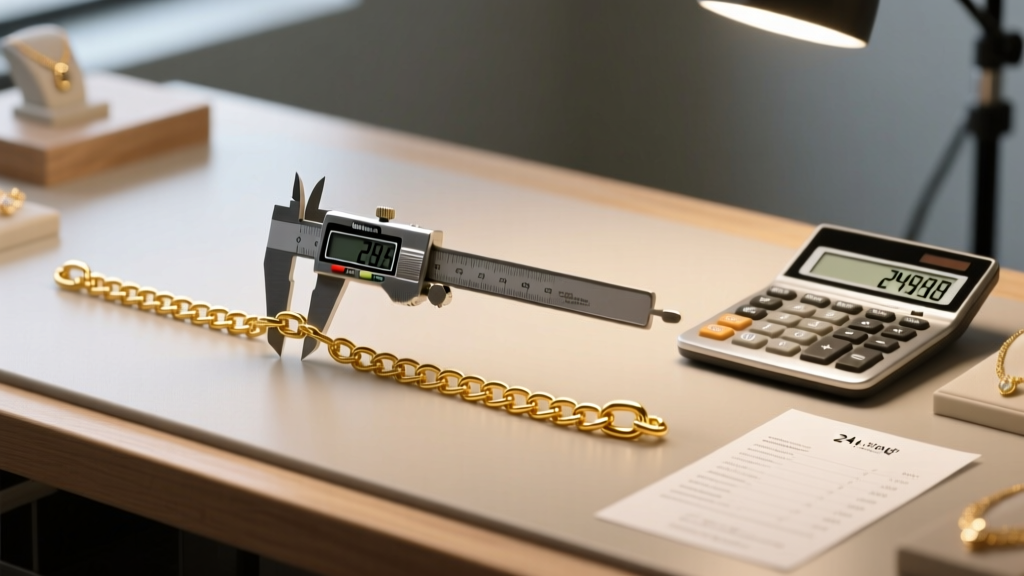
Strategic jewelry buying requires balancing the desire for precious metals with the reality of market pricing. Here is how to manipulate your budget based on visual length assessments:
1. The Choker Splurge
Because 14-inch and 16-inch chains require significantly less raw metal, use the money you save on length to upgrade the material quality. If your budget is $300, do not buy a thin, fragile 22-inch 10k gold chain. Instead, purchase a robust, 2.5mm wide 14k or 18k solid gold 16-inch chain. The visual impact of a thicker, higher-karat collar far outweighs the subtlety of a longer, thinner chain.
2. The Layering Illusion
If you desire the look of a 24-inch matinee chain but lack the budget for solid gold, utilize the layering technique. Pair a 16-inch solid gold chain (your investment piece) with a 22-inch gold-filled chain. The visual gap between the two creates the illusion of a curated, high-end parure, while keeping your total expenditure under $400.
3. Pendant Proportions
When evaluating a necklace length image that includes a pendant, remember that heavier pendants require thicker chains to prevent snapping. A 15-gram solid gold pendant will easily snap a delicate 0.8mm 18-inch solid gold chain. You must budget for a heavier gauge chain (minimum 1.5mm to 2.0mm), which will increase the per-inch cost. Factor the pendant's weight into your chain-length budget to avoid catastrophic breakage.
Resizing and Alteration Costs to Factor In
What happens if you ignore the visual guide and buy the wrong length? You must factor potential alteration costs into your initial budget assessment. Resizing a chain is not always a simple fix, especially for complex weaves like Singapore, Box, or Rope chains.
- Adding Length: If a chain is too short, a jeweler must source or fabricate matching links. For standard cable or curb chains, this costs between $40 and $80 per inch, depending on the metal. For intricate weaves, custom fabrication can exceed $150.
- Removing Length: Shortening a chain is generally cheaper, ranging from $25 to $45 for the jeweler to cut the chain, remove links, and solder the jump ring closed. However, you are essentially paying to remove gold you already paid for, resulting in a net loss of value.
- Clasp Upgrades: Sometimes, a chain is the correct length but sits poorly due to a flimsy clasp. Budget an extra $30 to $50 to have a jeweler solder on a secure, oversized spring-ring or lobster clasp, which improves both the security and the visual drape of the piece.
Ultimately, a necklace length image is not just a styling tool; it is a financial blueprint. By understanding the intersection of physical dimensions, material weight, and market pricing, you can curate a collection that offers maximum visual impact and enduring intrinsic value without overextending your budget.


