Anatomy of a Necklace Nugget: Gold Assays and Gemstone Grades
Explore the technical anatomy of a necklace nugget. Learn about gold assay purity, gemstone bead drilling, and wire-wrapping raw pendants.

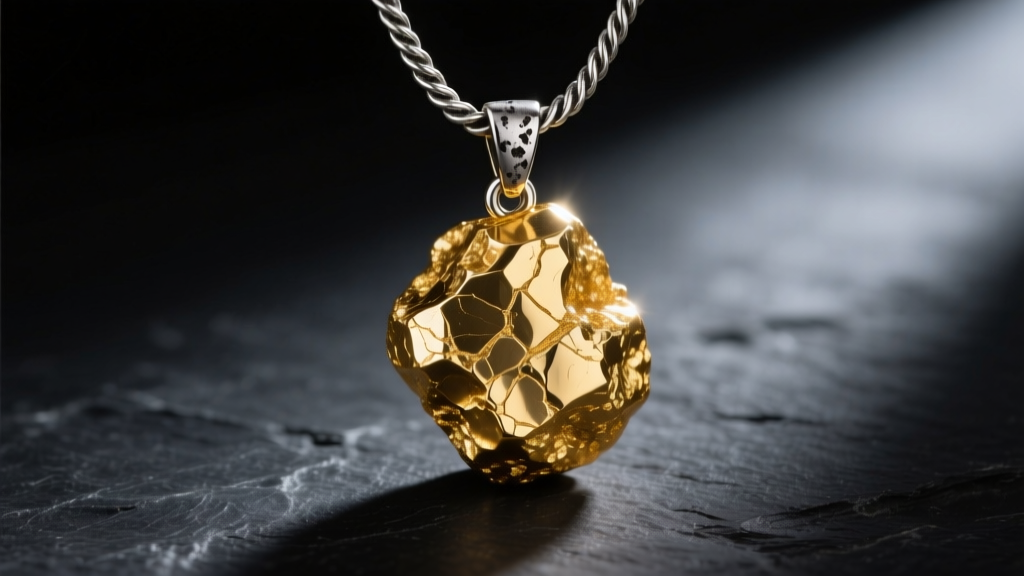
What Defines a True Necklace Nugget?
In the fine jewelry and lapidary sectors, the term necklace nugget refers to a raw, minimally processed piece of metal or gemstone utilized as a pendant or bead. Unlike cast or machined components, a true nugget retains its natural, irregular morphology. From a metallurgical and structural perspective, working with these organic shapes requires specialized knowledge of material hardness, porosity, and tensile stress. Whether you are evaluating a natural placer gold pendant or stringing stabilized turquoise nugget beads, understanding the underlying chemical and physical properties is critical for ensuring long-term durability and accurate valuation.
Metallurgical Breakdown: Placer Gold vs. Electrum
When discussing a gold necklace nugget, it is vital to understand that natural gold is rarely 24-karat (99.9% pure). According to mineralogical data from Mindat.org, natural placer gold typically ranges from 18k to 22k (75% to 91.6% purity). The remaining alloy is predominantly silver, forming a natural alloy known as electrum, alongside trace amounts of copper, bismuth, or mercury.
Jewelers must assay raw nuggets before setting them. While specific gravity testing provides a baseline estimation of purity, modern bench jewelers rely on X-ray Fluorescence (XRF) spectrometry to determine the exact elemental breakdown without damaging the specimen. A nugget with a high silver content (electrum) will exhibit a lower Vickers hardness but a distinct pale-yellow hue, which influences the choice of accompanying chain metals and solder temperatures if a bail must be laser-welded to the piece.
Gemstone Nugget Beads: Grading and Structural Integrity
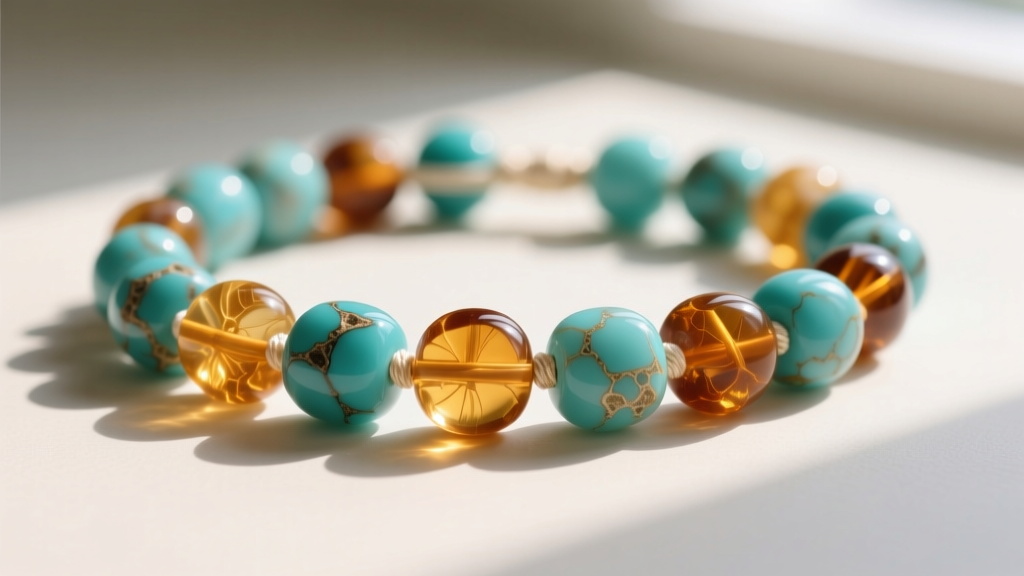
Gemstone nugget beads—most commonly turquoise, amber, and quartz—present unique structural challenges. Unlike faceted stones, nuggets retain their natural matrix and internal fractures. Turquoise, in particular, is a highly porous hydrous phosphate of copper and aluminum. In its natural, untreated state, a turquoise nugget can easily absorb skin oils, cosmetics, and environmental pollutants, leading to structural degradation and color shifting over time.
Stabilization and Drilling Techniques
To prevent crumbling during the drilling process and subsequent wear, the vast majority of commercial turquoise necklace nuggets undergo stabilization. The industry standard involves vacuum impregnation with an epoxy or acrylic resin. The Gemological Institute of America (GIA) notes that advanced treatments, such as the Zachery process, enhance the stone's luster and durability without introducing artificial dyes, maintaining the gem's intrinsic value.
Drilling irregular matrices requires precision. Lapidaries utilize diamond-tipped core bits or ultrasonic drilling rigs operating at low RPMs with continuous water cooling. Thermal shock is a primary failure mode; excessive friction heat can cause the water trapped within natural quartz or opal nuggets to expand rapidly, resulting in catastrophic internal fracturing.
Material Comparison and Failure Modes
| Nugget Material | Mohs Hardness | Typical Treatment / Purity | Recommended Wire Gauge | Primary Failure Mode |
|---|---|---|---|---|
| Placer Gold | 2.5 - 3.0 | 18k - 22k Natural Alloy | 18g or 16g (Heavy) | Bail fatigue and metal creep |
| Turquoise | 5.0 - 6.0 | Epoxy Vacuum Stabilized | 20g or 18g | Matrix fracturing at the drill hole |
| Amber | 2.0 - 2.5 | Heat-Treated or Reconstituted | 22g or 20g (Light) | Surface scratching and UV degradation |
| Raw Quartz | 7.0 | None (Natural Inclusions) | 20g or 18g | Thermal shock during drilling |
Engineering the Bail: Wire-Wrapping Raw Pendants
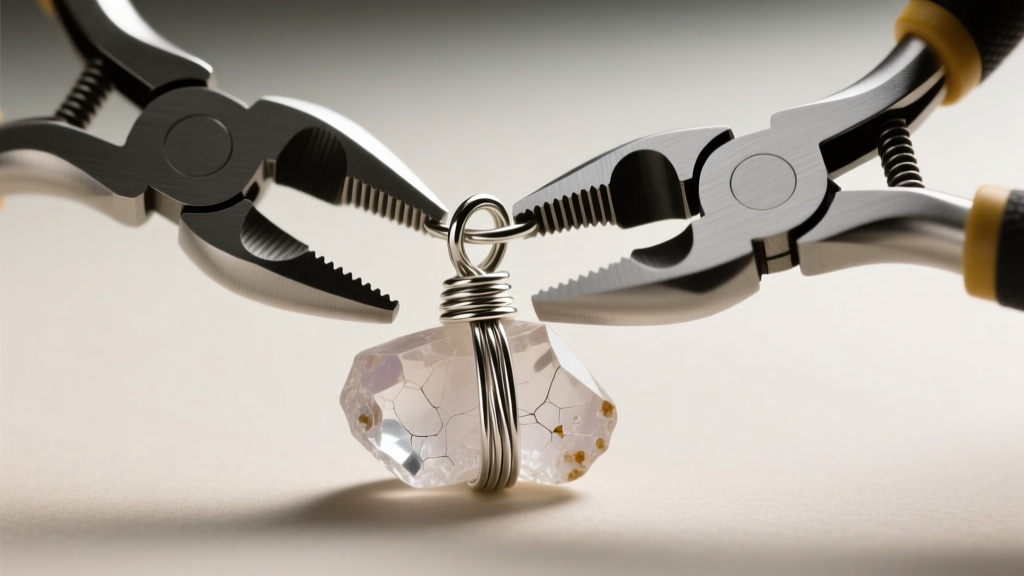
Because a natural necklace nugget lacks the uniform dimensions required for standard cast bails or bezel settings, wire-wrapping remains the premier technique for securing these pendants. The engineering of the wire bail must account for the nugget's center of gravity, weight, and surface irregularities.
Wire Gauge and Tensile Strength Requirements
Selecting the correct wire temper is non-negotiable. Dead-soft wire is highly malleable but lacks the tensile strength to support a heavy gold nugget, leading to bail deformation and eventual drop-loss. Conversely, hard wire is brittle and prone to snapping when bent around sharp, irregular matrices. The optimal choice is half-hard sterling silver or 14k gold-filled wire. For nuggets weighing under 15 grams, 20-gauge wire provides sufficient structural integrity. For heavy placer gold nuggets exceeding 30 grams, an 18-gauge or 16-gauge wire is mandatory to resist the shear forces exerted by the pendant's swinging motion.
Master jewelers employ work-hardening techniques, using nylon-jaw pliers to compress the wire's crystalline lattice after wrapping. This increases the Vickers hardness of the sterling silver, locking the bail securely against the nugget's surface without the need for adhesives, which can degrade over time.
Maintenance and Oxidation Prevention
The irregular topography of a necklace nugget creates microscopic crevices that trap moisture, dead skin cells, and environmental sulfur. For silver-wrapped nuggets, this accelerates the formation of silver sulfide (tarnish). Routine maintenance requires more than a simple polishing cloth. Ultrasonic cleaners can be used for raw quartz and gold, but they are strictly prohibited for stabilized turquoise and amber, as the high-frequency cavitation can shatter the stones or strip their resin coatings.
Instead, experts recommend using a soft-bristled brush with a mild, phosphate-free detergent, followed by a thorough drying process using compressed air to displace moisture trapped within the natural matrix inclusions. By understanding the precise metallurgical and lapidary science behind these raw materials, collectors and jewelers can ensure that a necklace nugget remains both structurally sound and visually striking for generations.
For further reading on advanced gemological testing and lapidary standards, refer to the latest research publications at the GIA News & Research portal, which frequently covers the evolving stabilization techniques and ethical sourcing metrics for raw gemstone materials.


