The Necklace Q&A: Assessing Gold Purity & Budget Value
Explore our essential necklace Q&A guide for 2026. Learn how to assess gold purity, calculate fair chain pricing, and choose between 14k, 18k, and vermeil.

The Necklace Q&A: Decoding Quality and Cost in 2026
When navigating the fine jewelry market, buyers are frequently confronted with a barrage of terminology that obscures true value. In our ongoing 'Necklace Q&A' series, we address the most pressing questions regarding gold purity, chain construction, and budget assessment. Whether you are purchasing a delicate cable chain for a pendant or a heavy Cuban link for everyday wear, understanding the metallurgical and economic realities of your jewelry is paramount. The modern consumer must look beyond the karat stamp and evaluate the fabrication quality, alloy composition, and retail markup to make a truly informed investment.
In this comprehensive assessment, we break down the exact metrics that determine a necklace's longevity and fair market value. We will dissect the differences between solid gold, gold-filled, and vermeil options, providing you with a practical decision framework for your next purchase.
Decoding Gold Purity: 10k vs. 14k vs. 18k
The foundation of any gold necklace's value lies in its purity, measured in karats. Pure gold (24k) is too soft for jewelry, necessitating the addition of alloy metals like copper, silver, nickel, or zinc. However, the specific karat you choose dramatically impacts both the chain's durability and its intrinsic melt value.
The Metallurgical Reality of Chain Tension
A common misconception is that higher karat gold is always superior. While 18k gold (75% pure) offers a richer, warmer hue and higher intrinsic value, it is significantly softer than 14k gold (58.3% pure). On the Vickers hardness scale (HV), standard 18k yellow gold registers around 125 HV, whereas 14k yellow gold can reach 140-160 HV depending on the specific alloy mix. For necklaces that endure constant tension—such as rope chains, box chains, or any chain supporting a heavy pendant—14k is metallurgically superior. It resists stretching and clasp deformation far better than its 18k counterpart.
Conversely, 10k gold (41.7% pure) is the most durable and affordable, but it contains more alloy metals than actual gold. This can lead to skin discoloration or allergic reactions in sensitive individuals due to higher copper or nickel content. For heirloom-quality pieces, 10k is generally not recommended by gemological experts.
The 2026 Pricing Benchmark: What You Should Actually Pay
One of the most frequent questions in our necklace Q&A sessions is: 'Am I being overcharged?' To answer this, you must understand how jewelers price solid gold chains. The retail price is composed of two main factors: the intrinsic melt value of the gold and the fabrication/labor markup.

Calculating Intrinsic Melt Value
With gold spot prices hovering around the $2,150 per troy ounce mark in early 2026, the baseline cost of raw material is easily calculable. One troy ounce equals 31.1 grams. Therefore, raw 24k gold costs approximately $69.13 per gram. To find the intrinsic value of a 14k chain, multiply the spot price by 0.583 (the purity percentage). This means the raw gold in a 14k necklace is worth roughly $40.30 per gram.
- Machine-Made Chains (Cable, Curb, Figaro): Expect a retail markup of 1.5x to 2.5x the melt value. A 5-gram 14k cable chain (melt value ~$201) should retail between $300 and $500.
- Semi-Handmade Chains (Rope, Wheat): Markups range from 2.5x to 4x due to the complex soldering and twisting required.
- Artisan/Branded Chains (Heavy Cuban, Hand-Forged): Markups can easily exceed 5x to 10x the melt value, paying for the artisan's time, brand prestige, and specialized finishing techniques like diamond-cutting.
According to the World Gold Council, understanding these premiums helps buyers separate the cost of the material from the cost of the craftsmanship.
Gold Filled vs. Vermeil: Where Budget Buyers Win
If solid gold exceeds your budget, the market offers two primary alternatives: Gold Filled (GF) and Gold Vermeil. However, the terminology is frequently abused by fast-fashion brands. The Federal Trade Commission (FTC) maintains strict guidelines on how these terms can be legally used, as outlined in their Jewelry Guides.
The FTC Standards for Alternative Gold
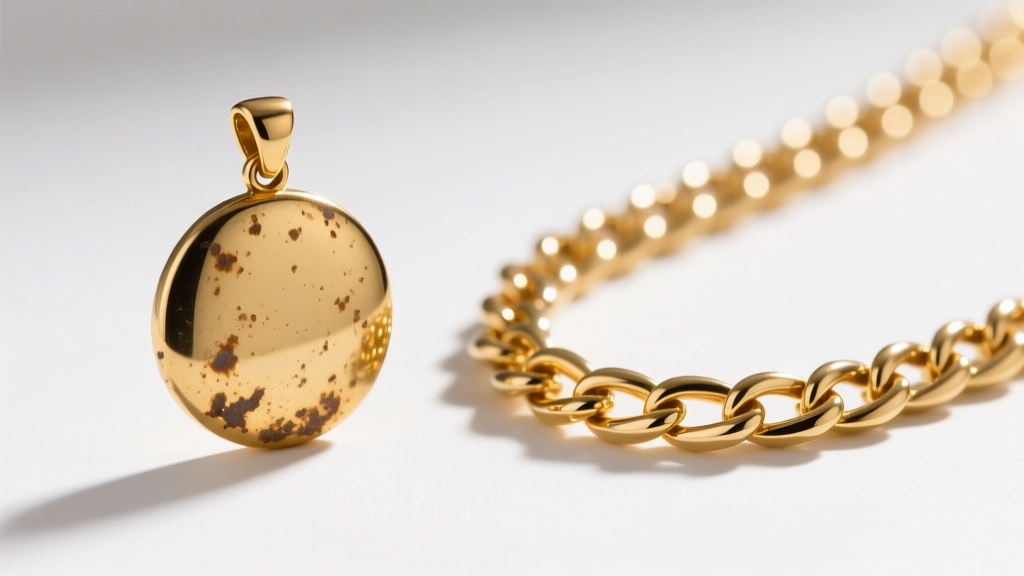
Gold Vermeil (pronounced ver-may) requires a base of genuine sterling silver (925) plated with gold that is at least 10k purity. Crucially, the gold plating must be a minimum of 2.5 microns thick. Anything less is simply 'gold plated' and will wear off within months of daily wear, exposing the silver beneath to rapid tarnishing.
Gold Filled jewelry is vastly superior for longevity. It consists of a brass or copper core that is mechanically bonded with a thick layer of gold using heat and pressure. By law, the gold layer must constitute at least 1/20th (5%) of the total weight of the item. A 14k gold-filled chain can easily last 10 to 30 years with proper care, making it the undisputed champion of budget-friendly, everyday necklaces.
Material Comparison Matrix
| Material Type | Base Metal | Gold Content / Thickness | Expected Lifespan (Daily Wear) | Budget Tier |
|---|---|---|---|---|
| 18k Solid Gold | None (Alloyed) | 75% Pure Gold | Lifetime (Prone to scratching) | Premium |
| 14k Solid Gold | None (Alloyed) | 58.3% Pure Gold | Lifetime (Highly Durable) | High |
| 14k Gold Filled | Jeweler's Brass | 5% of total weight (Mechanically bonded) | 10 - 30 Years | Medium |
| Gold Vermeil | 925 Sterling Silver | Minimum 2.5 microns (Electroplated) | 1 - 3 Years | Medium-Low |
| Gold Plated | Brass or Copper | Less than 0.5 microns | 3 - 6 Months | Low |
Hallmarks & Red Flags: Avoiding Counterfeits
When purchasing second-hand or from independent online sellers, verifying authenticity is critical. The Gemological Institute of America (GIA) emphasizes that hallmarks are the first line of defense, though they can be forged.
Recognizing Legitimate Stamps
In the United States, you will typically see karat stamps like 10k, 14k, or 18k. In Europe and many international markets, the millesimal fineness system is used. You should look for:
- 417 (10k Gold)
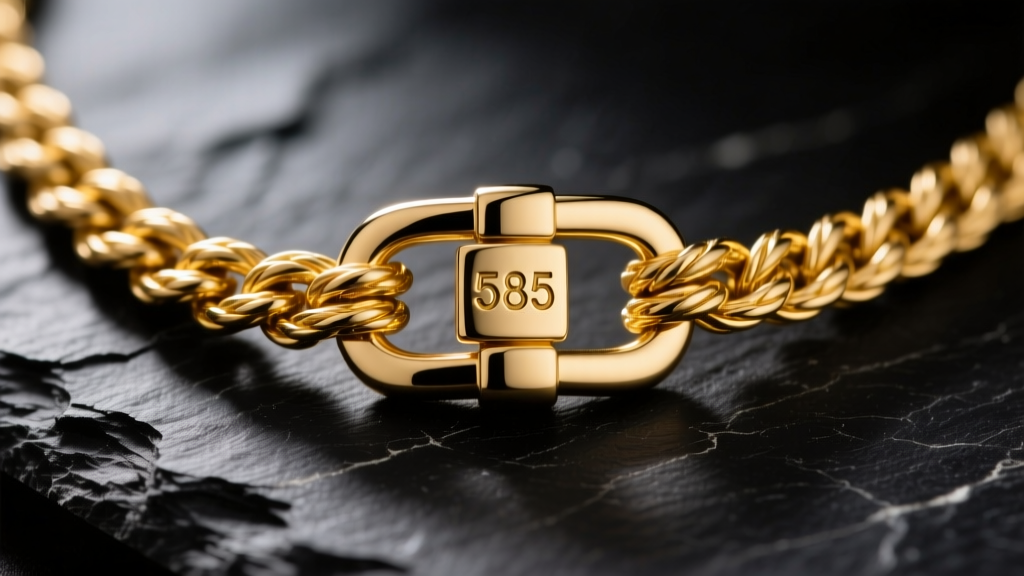
- 585 (14k Gold)
- 750 (18k Gold)
If a necklace is stamped '925' but has a yellow gold appearance, it is vermeil or plated sterling silver, not solid gold. A major red flag is a chain that is magnetic. While gold is non-magnetic, so are silver and copper. Therefore, a magnet test is only useful for ruling out steel or iron cores; it cannot confirm gold. For absolute certainty on high-value purchases, insist on an XRF (X-ray fluorescence) scan from a certified local jeweler, which accurately reads the elemental composition of the alloy without damaging the piece.
Final Verdict: Maximizing Your Necklace Investment
Ultimately, the 'best' necklace depends entirely on your budget and wearing habits. If you desire a lifelong heirloom piece that can withstand daily friction and hold intrinsic financial value, a 14k solid gold chain remains the optimal balance of durability and cost. If your budget restricts you to under $150, bypass gold vermeil and plated options entirely; invest in a high-quality 14k gold-filled chain that will maintain its luster and structural integrity for decades. By applying these assessment frameworks, you can navigate the jewelry market with confidence, ensuring every dollar spent translates directly into lasting quality.


