Expert Care Guide: How to Clean and Maintain Rya's Necklace
Learn how to properly clean, store, and maintain Rya's necklace. Expert tips for preserving oxidized silver, gold vermeil, and delicate pearls.

Understanding the Anatomy of Rya's Necklace
To properly care for Rya's necklace, you must first understand its complex material composition. This signature piece is celebrated for its mixed-media construction, typically featuring a heavy 925 sterling silver chain with intentional oxidation in the crevices, accented by 14k gold vermeil clasps and a central freshwater pearl or moonstone cabochon. As of the updated 2026 FTC jewelry guidelines, true gold vermeil must possess a minimum gold plating thickness of 2.5 microns over a sterling silver base. This thickness provides durability but still requires specialized care to prevent premature wear.
The intentional oxidation (silver sulfide) in the chain's recesses provides depth and contrast, while the porous nature of the freshwater pearl (calcium carbonate) makes it highly susceptible to acidic compounds and harsh chemicals. Treating this necklace as a standard silver chain will result in irreversible damage to both the vermeil and the gemstone. Furthermore, understanding the Mohs hardness scale is critical here: pearls rank at a mere 2.5, making them exceptionally soft and prone to micro-scratches if they come into contact with harder metals or gemstones during storage.
Common Failure Modes and What to Avoid
Before reaching for a cleaning solution, it is critical to understand the most common ways owners accidentally destroy mixed-metal and pearl jewelry.
- Commercial Silver Dips: Most liquid silver dips contain thiourea, a toxic chemical that strips tarnish instantly. However, thiourea will completely erase the intentional oxidation on Rya's necklace, leaving it flat and unnaturally bright. Furthermore, if the dip touches the pearl, it will etch the nacre, causing permanent cloudiness and destroying the gemstone's natural orient and luster.
- Ultrasonic Cleaners: High-frequency cavitation bubbles created by ultrasonic machines can easily shatter delicate pearl cabochons or loosen the specialized jeweler's epoxy securing the gemstone to the vermeil bezel.
- Perfume and Hairspray: The alcohol and essential oils in cosmetics will degrade the 2.5-micron gold layer on the clasp and dull the pearl's luster by clogging its microscopic surface pores.
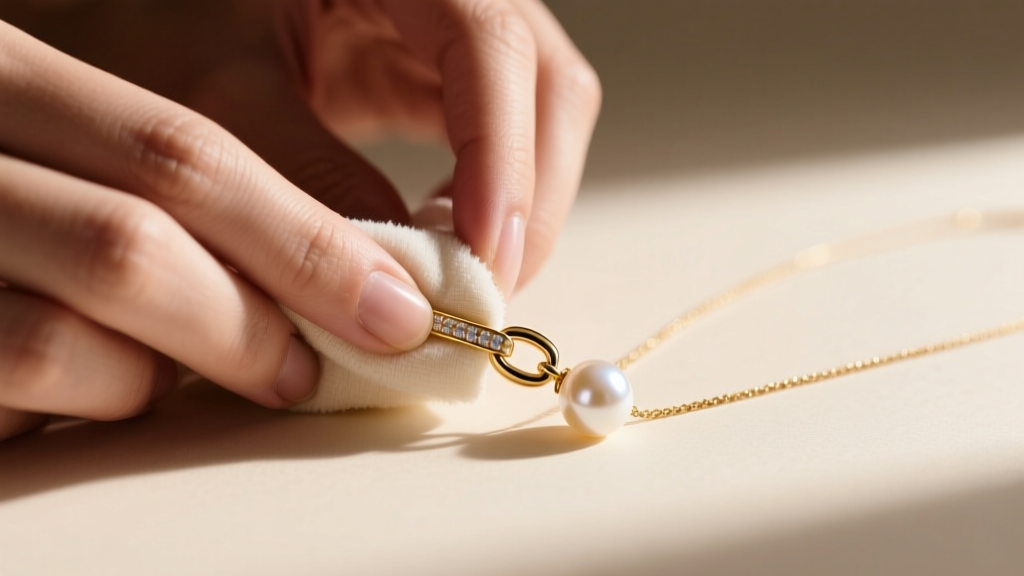
The Step-by-Step Cleaning Protocol
When Rya's necklace loses its luster from daily wear, skin oils, and environmental pollutants, follow this safe, non-abrasive cleaning method.
Materials Required
- Two clean, lint-free microfiber cloths (one for washing, one for drying)
- pH-neutral liquid dish soap (e.g., original blue Dawn)
- Distilled water (tap water contains chlorine and minerals that can spot the silver)
- A soft-bristled baby toothbrush or specialized jewelry brush
The Cleaning Process
- Isolate the Pearl: Never submerge the entire necklace. Hold the pearl cabochon in your palm, keeping it completely dry and away from any moisture.
- Lather the Silver and Vermeil: Mix a single drop of pH-neutral soap into a small bowl of lukewarm distilled water. Dip the microfiber cloth into the solution, wring it out until it is barely damp, and gently wipe the sterling silver chain and gold vermeil clasp.
- Detail the Crevices: For stubborn grime near the clasp mechanism, lightly dip the soft-bristled brush into the soapy water, flick off the excess, and gently agitate the dirt. Do not scrub the intentionally oxidized areas aggressively, as you want to preserve the dark contrast in the chain links.
- Rinse and Dry Immediately: Wipe the chain with a cloth dampened only with plain distilled water to remove soap residue. Immediately follow with the dry microfiber cloth to prevent water spots.
- Pearl Polish: Use a completely dry, separate microfiber cloth to gently buff the pearl. The natural oils from your clean hands can also help maintain the nacre's hydration and luster over time.
Material-Specific Maintenance Matrix
Different components of Rya's necklace react differently to environmental factors. Use this matrix to guide your ongoing maintenance routine.
| Material Component | Primary Threat | Preventative Action | Safe Cleaning Agent |
|---|---|---|---|
| 925 Sterling Silver (Oxidized) | Moisture, Sulfur in the air | Store with anti-tarnish strips | Damp microfiber, mild soap |
| 14k Gold Vermeil (2.5 microns) | Friction, Cosmetics, Sweat | Apply perfume before wearing | Damp microfiber only |
| Freshwater Pearl Cabochon | Acids, Alcohol, Dehydration | Wipe after every wear | Dry, soft cloth only |
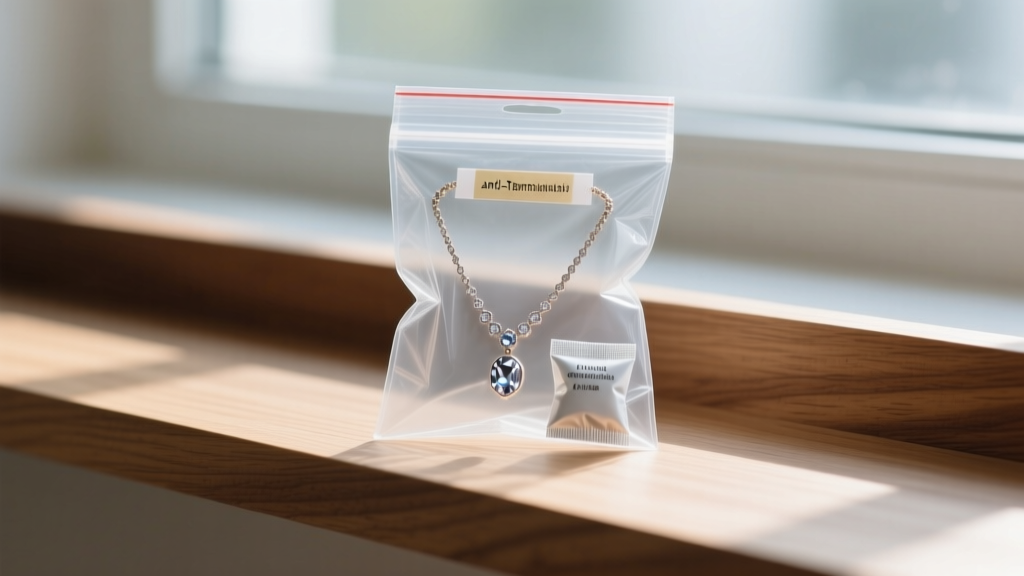
Proper Storage to Prevent Micro-Scratches and Tarnish
How you store Rya's necklace when it is not being worn is just as important as how you clean it. Silver tarnishes when exposed to hydrogen sulfide in the air, while pearls can crack if subjected to extreme dehydration or temperature fluctuations.
Expert Insight: Never store fine jewelry in PVC (polyvinyl chloride) plastic bags. PVC emits chemicals that can trap moisture and accelerate the tarnishing of silver and the degradation of gold vermeil. Always opt for inert polyethylene bags.
The Ideal Storage Setup:
- Wipe the necklace down with a dry microfiber cloth to remove the day's skin oils and sweat.
- Place the necklace inside a small, sealable polyethylene bag (like a standard Ziploc).
- Insert a 3M Anti-Tarnish Strip into the bag. These strips absorb airborne sulfur compounds before they can react with the silver.
- Add a small silica gel packet to control ambient humidity, which is especially crucial if you live in a coastal or high-humidity environment.
- Seal the bag, press out the excess air, and store it flat in a jewelry box away from direct sunlight to prevent the pearl from drying out and cracking.
When to Seek Professional Jeweler Restoration
Despite meticulous home care, Rya's necklace may eventually require professional intervention. Recognizing the difference between routine maintenance and necessary restoration will save you from causing further damage.
- Vermeil Re-plating: If the gold clasp or bezel begins to show the silver underneath due to friction wear, a professional jeweler can re-plate the piece. Expect to pay between $45 and $85 for high-quality 2.5-micron 14k gold re-plating. Ensure the jeweler removes the pearl before placing the piece in the electroplating bath, as the chemicals and electrical currents will destroy the nacre.
- Pearl Re-setting: If the cabochon feels loose or rattles slightly in its bezel, the adhesive has likely failed due to age or heat exposure. A jeweler can safely remove the stone, clean the bezel cup, and re-set it using a specialized, non-acidic jeweler's epoxy.
- Deep Tarnish Removal: If the silver chain has developed heavy, blackened tarnish that a microfiber cloth cannot remove, a professional can use a mild electrolytic cleaning process that strips the silver sulfide without removing the intentional oxidation in the crevices.
For more comprehensive guidelines on preserving organic gemstones, refer to the Gemological Institute of America's (GIA) Pearl Care Guide. Additionally, the Jewelers of America provides excellent baseline protocols for mixed-metal jewelry maintenance.
By treating Rya's necklace not just as an accessory, but as a complex assembly of distinct metallurgical and organic materials, you ensure that its intricate details and luminous accents remain pristine for decades.


