Necklace Rope Guide: How to Choose Cords for Pendants
Learn how to choose the perfect necklace rope for your pendants. Explore silk, leather, and nylon cords, thickness guides, and knotting techniques.

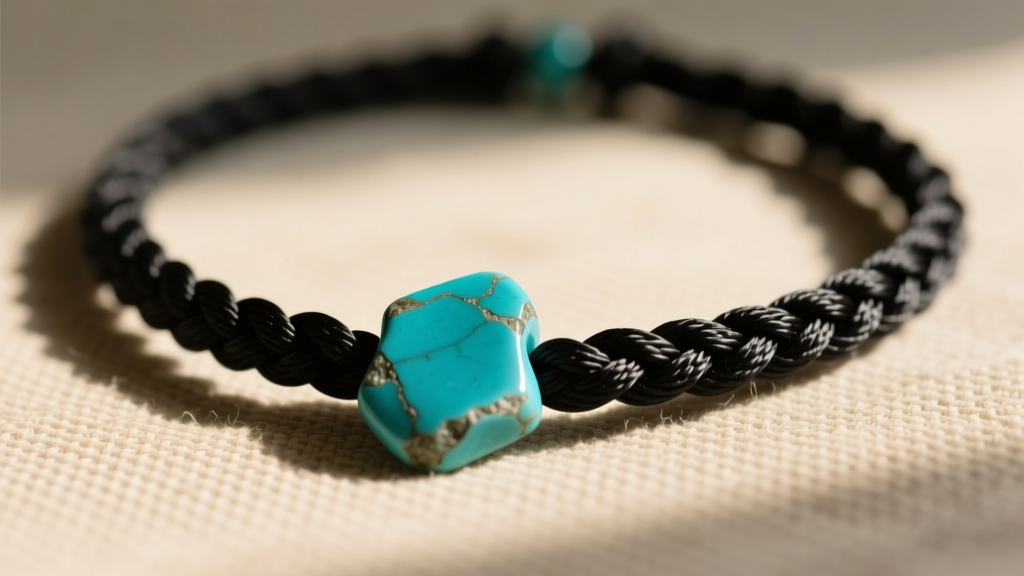
As jewelry trends in 2026 continue to favor tactile, organic, and sustainable materials over mass-produced metal chains, the humble necklace rope has reclaimed its spot as a wardrobe essential. Whether you are stringing a heavy raw quartz crystal, a delicate glass bead, or a vintage silver locket, the cord you choose dictates not only the aesthetic of the piece but its structural integrity. A mismatched cord can lead to snapped necklaces, damaged gemstones, and ruined pendants.
This beginner-friendly explainer will strip away the guesswork. We will dive deep into material grades, exact millimeter thicknesses, mechanical failure points, and the specific knotting techniques required to build a necklace rope that lasts.
What Exactly Is a Necklace Rope?
In jewelry making, a 'necklace rope' refers to any flexible, non-metallic cord used to suspend a pendant or string beads. It is crucial to distinguish a textile necklace rope from a 'rope chain' (a metal chain with a twisted, rope-like appearance). Textile ropes are favored for their lightweight nature, skin-friendly properties, and ability to protect soft, porous gemstones like turquoise, opal, and pearls from the abrasive friction of metal chains.
Unlike metal chains that rely on soldered jump rings, necklace ropes rely on tensile strength, knot security, and clasp adhesion. Understanding the physical properties of your chosen cord is the first step in preventing catastrophic jewelry failures.
The Big Three: Silk, Leather, and Nylon
Not all cords are created equal. The environment you wear your jewelry in, and the weight of your pendant, will dictate which material you should select.
1. Silk: The Delicate Classic
Silk is a natural protein fiber and the undisputed gold standard for pearl necklaces and high-end, lightweight pendants. According to the Gemological Institute of America (GIA), silk is preferred for pearls because it is soft enough to prevent scratching the nacre. However, silk has a major vulnerability: human sweat. The natural acidity of skin (typically a pH of 4.5 to 5.5) degrades protein fibers over time. A silk necklace rope worn daily against the skin should be replaced every 12 to 18 months to prevent snapping.
2. Leather: Rugged and Rustic
Leather offers a masculine, earthy aesthetic perfect for silver talismans, wood carvings, and heavy metal pendants. When buying leather cords, look for top-grain cowhide or kangaroo leather. Kangaroo leather possesses a significantly higher tensile strength than cowhide, allowing for thinner cords that can support heavier weights. Warning: Leather is highly susceptible to water damage and will rot or stretch if worn in the shower. Furthermore, leather cords fail most often at the crimp end; always secure leather crimps with a flexible jewelry adhesive like E6000, not just mechanical pressure.
3. Nylon and Waxed Cotton: The Synthetic Workhorses
For everyday durability, waterproofing, and heavy stones, synthetic nylons (like C-Lon or S-Lon Chinese knotting cord) and waxed cotton are unbeatable. Nylon is UV-resistant, waterproof, and can be sealed with a simple flame. Waxed cotton provides a beautiful matte, organic texture that grips knots tightly, preventing them from slipping over time.
Material Comparison Chart
| Material | Best For | Water Resistance | Est. Lifespan (Daily Wear) | Price Range |
|---|---|---|---|---|
| Silk | Pearls, lightweight glass | Poor (Degrades) | 12 - 18 Months | $15 - $40 |
| Leather | Heavy metal, rustic pendants | Poor (Stretches/Rots) | 2 - 4 Years | $10 - $35 |
| Nylon (C-Lon) | Gemstones, macrame knots | Excellent | 5+ Years | $5 - $15 |
| Waxed Cotton | Raw crystals, bohemian styles | Good | 3 - 5 Years | $5 - $20 |
Matching Cord Thickness to Pendant Weight
The most common mistake beginners make is selecting a cord based solely on color, ignoring the diameter. Cord thickness is measured in millimeters (mm). Pairing a heavy pendant with a thin cord will cause the cord to slice through the bail or snap under dynamic load (the extra force generated when you walk or bend over).
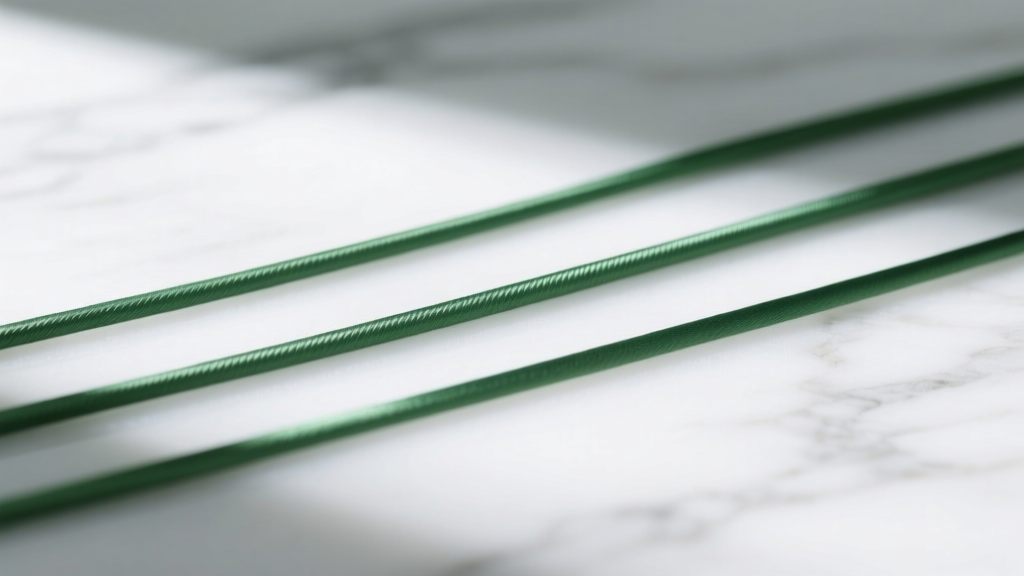
- 0.5mm - 1.0mm (Micro/Delicate): Use for micro-beads, lightweight resin art, and small crystals weighing under 15 grams. Requires pendants with very small, fine bails.
- 1.5mm - 2.0mm (Standard): The most versatile size. Perfect for medium-sized gemstones, sterling silver pendants, and glass beads weighing between 15 and 40 grams.
- 2.5mm - 4.0mm+ (Heavy Duty): Reserved for large raw quartz, heavy jasper, and oversized metal statement pieces exceeding 40 grams. Crucial Check: Always measure the Inner Diameter (ID) of your pendant's bail. A 3mm rope will not fit through a standard 2mm sterling silver bail.
The Rule of Thirds for Visual Balance: For a visually pleasing necklace, the bail should be roughly 1/3 the size of the pendant, and the necklace rope should be roughly 1/3 the width of the bail's opening.
Essential Knots and Clasp Mechanisms
How you terminate your necklace rope is just as important as the material itself. According to Rio Grande Jewelry Supply, improper crimping is the leading cause of cord failure in handmade jewelry.
The Sliding Square Knot (Macrame)
Best for nylon and waxed cotton cords, the sliding square knot allows the wearer to adjust the necklace length without needing a metal clasp. By using a contrasting color of cord to tie the knot, you add a custom, artisanal touch. To finish the tails, cut them close to the knot and carefully melt the synthetic fibers with a lighter to fuse them into a smooth, rounded bead.
The Lark's Head Knot
If your pendant has a large, open bail or is a top-drilled bead, the Lark's Head knot is the cleanest attachment method. Fold your cord in half, pass the loop through the bail, and pull the two loose ends through the loop. Pull tight. This creates a secure, symmetrical connection that distributes weight evenly across both strands of the rope.
Metal Crimps and Lobster Clasps
For leather and silk, you cannot melt the ends; you must use metal crimp ends or fold-over cord ends. Pro Tip: Never rely on the metal crimp's teeth alone. Apply a tiny drop of flexible cyanoacrylate (super glue) or E6000 inside the crimp before clamping it down with flat-nose pliers. Cover the crimp with a metal 'crimp cover' to hide the mechanical joint and give the necklace a seamless, professional finish.
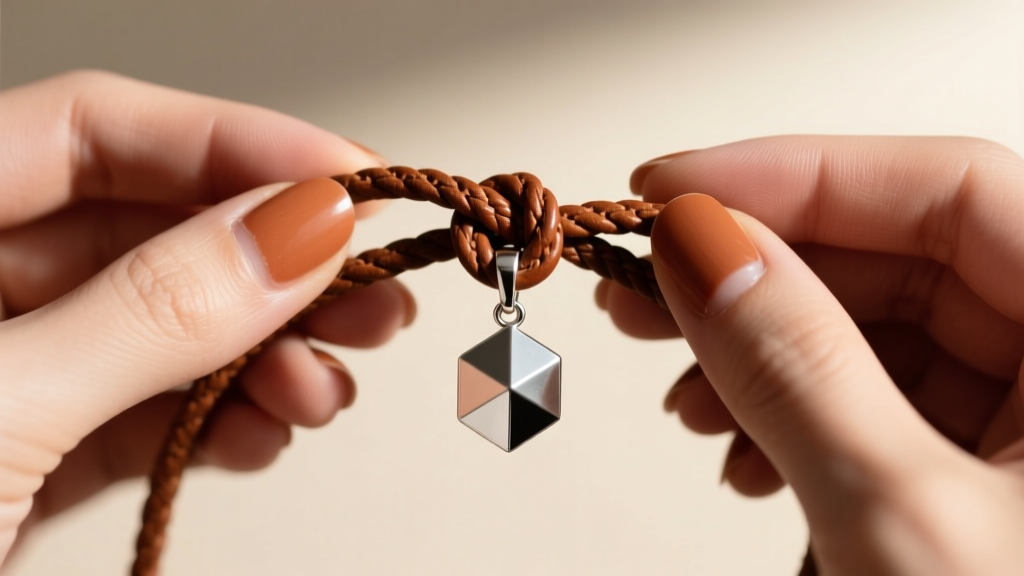
Pro Tips for Threading Stubborn Pendants
Thick necklace ropes can be incredibly frustrating to thread through tight pendant bails. If you are working with a 2mm or 3mm cord, the tip will often fray and refuse to pass through the metal loop.
To solve this, dip the last half-inch of your cord into clear nail polish or rub it vigorously with a block of beeswax. Allow it to dry for two minutes. This temporarily stiffens the fibers, turning the end into a makeshift needle. Alternatively, use a thin piece of beading wire, fold it in half to create a loop, thread the wire through the bail, and use it to pull your thick necklace rope through.
Care and Maintenance for Longevity
To maximize the lifespan of your necklace ropes, implement a simple care routine based on the material:
- Silk: Never submerge in water. Spot clean with a damp cloth and mild baby shampoo. Store flat to prevent permanent creasing.
- Leather: Keep away from perfumes and lotions. Condition the leather every six months with a tiny amount of mink oil or specialized leather conditioner to prevent drying and cracking.
- Nylon/Waxed Cotton: Highly low-maintenance. Can be washed in the sink with dish soap and air-dried. If the wax coating on cotton wears off, you can re-wax it using a block of jeweler's microcrystalline wax.
Choosing the right necklace rope is an exercise in balancing aesthetics with physics. By respecting the tensile limits of your materials, matching the millimeter thickness to your pendant's weight, and securing your terminations with the proper adhesives and knots, you will create jewelry that is not only beautiful but built to survive the rigors of daily wear.


