Jewelry Troubleshooting: Lessons From The Necklace Story Characters
Discover how to avoid catastrophic jewelry fails by analyzing the authenticity, borrowing, and valuation mistakes of The Necklace story characters.

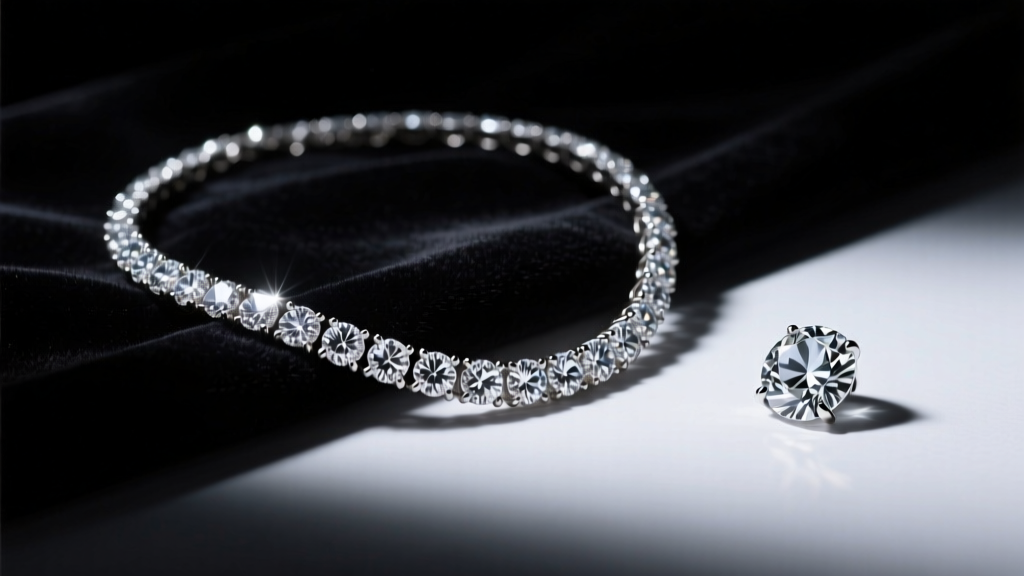
Guy de Maupassant’s 1884 literary masterpiece, The Necklace (La Parure), remains the most famous cautionary tale in the history of jewelry. The tragic trajectory of Mathilde Loisel, who ruins her life to replace a borrowed diamond necklace only to discover the original was mere costume jewelry, is a masterclass in catastrophic jewelry failures. While the story is a work of 19th-century fiction, the practical mistakes made by the necklace story characters are remarkably relevant to modern collectors, stylists, and everyday wearers. In 2026, with the market flooded by advanced lab-grown diamonds, high-grade moissanite, and sophisticated simulants, the line between 'paste' and precious has never been blurrier. By analyzing the specific blunders of the necklace story characters, we can build a robust troubleshooting framework for authentication, borrowing etiquette, and valuation.
The Paste vs. Diamond Dilemma: Authentication Troubleshooting
The central twist of Maupassant’s tale hinges on Madame Forestier’s casual revelation: 'Oh, my poor Mathilde! Mine was paste. It was worth five hundred francs at most.' Mathilde and her husband failed to perform even the most rudimentary authentication before assuming a massive debt. Today, relying on visual inspection alone is a guaranteed path to financial disaster.
Modern Simulant Detection
In the 1880s, glass paste and early strass (rhinestones) were the primary diamond simulants. Glass has a refractive index (RI) of roughly 1.5, compared to a diamond’s 2.42, making it easy for a trained eye to spot the lack of brilliance and 'fire.' However, modern troubleshooting requires advanced tools. Cubic Zirconia (CZ) has an RI of 2.15 and a dispersion of 0.058 (higher than diamond’s 0.044), giving it an overly colorful, 'disco-ball' fire that experts use to identify it as a simulant.
The real challenge in 2026 is moissanite (silicon carbide). Moissanite is doubly refractive and passes standard thermal conductivity tests—the very tests used by basic 'diamond pens.' To properly troubleshoot a suspected diamond rivière necklace, you must use a multi-tester that checks both thermal and electrical conductivity, as moissanite conducts electricity while diamonds generally do not (with the rare exception of Type IIb boron-doped blue diamonds).
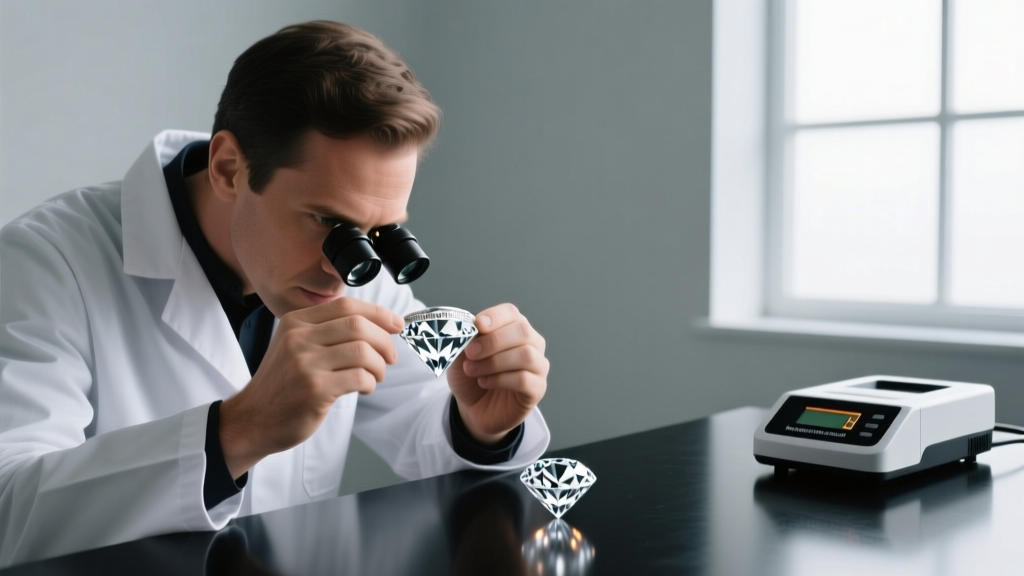
The 10x Loupe Inspection Protocol
Before purchasing or borrowing high-value necklaces, always perform a 10x triplet loupe inspection. Look for the following failure modes that indicate simulants:
- Facet Junction Wear: CZ and glass are softer than diamond (Mohs 8-8.5 vs. 10). Over time, the edges where facets meet will become rounded and abraded. Diamonds retain razor-sharp facet junctions.
- Girdle Inscriptions: Modern natural and lab-grown diamonds are almost universally inscribed on the girdle with a GIA or IGI report number. A completely blank girdle on a 'premium' stone warrants immediate suspicion.
- Doubling: Moissanite exhibits strong double refraction. When looking through the crown down at the pavilion facets, you will see a 'ghosting' or doubling of the facet lines, a dead giveaway that the stone is not a diamond.
The Borrowing Trap: Etiquette and Insurance Troubleshooting
Perhaps the most glaring administrative failure of the necklace story characters is the complete lack of documentation and insurance transparency between Mathilde and Madame Forestier. Mathilde borrows the necklace without asking its value, and Madame Forestier lends it without providing a condition report or proof of appraisal. This mutual negligence leads directly to the Loisels' decade of poverty.
'A borrowed piece of jewelry is a liability in transit. Without a scheduled floater and a documented condition report, both the lender and the borrower are exposed to catastrophic financial risk.' — Jewelers of America Insurance Guidelines
Structuring a Secure Jewelry Loan
If you are borrowing a high-value pendant or diamond tennis necklace for a gala, or lending one to a friend, you must implement a modern jewelry loan protocol. Relying on a standard homeowner’s or renter’s insurance policy is a critical error; these policies typically have low sub-limits (often $1,500 to $5,000) for jewelry and exclude 'mysterious disappearance' (e.g., losing a clasp at a party).
| Protocol Step | Lender Responsibility | Borrower Responsibility |
|---|---|---|
| Appraisal | Provide a current (within 2 years) insurance appraisal detailing the 4Cs, metal weight, and replacement value. | Review the appraisal to understand the exact financial liability in case of loss. |
| Insurance Rider | Ensure the piece is covered under a Scheduled Personal Property Endorsement (Floater) with a 'worldwide' and 'all-risk' clause. | Verify if the lender's policy extends to temporary bailees, or secure a short-term event insurance policy. |
| Condition Report | Photograph the piece under macro light, noting any pre-existing prong wear, clasp stiffness, or stone chips. | Sign the condition report upon receipt and immediately report any hidden defects before wearing. |
The Replacement Disaster: Sourcing and Valuation Mistakes
When the Loisels realize the necklace is lost, they do not confess to Madame Forestier. Instead, they attempt to source an identical replacement. Monsieur Loisel finds a seemingly identical diamond necklace in a Palais-Royal shop priced at 36,000 francs (worth roughly $150,000 today). He purchases it at full retail markup, draining his inheritance and taking on predatory loans. His failure was a lack of market literacy and wholesale sourcing knowledge.
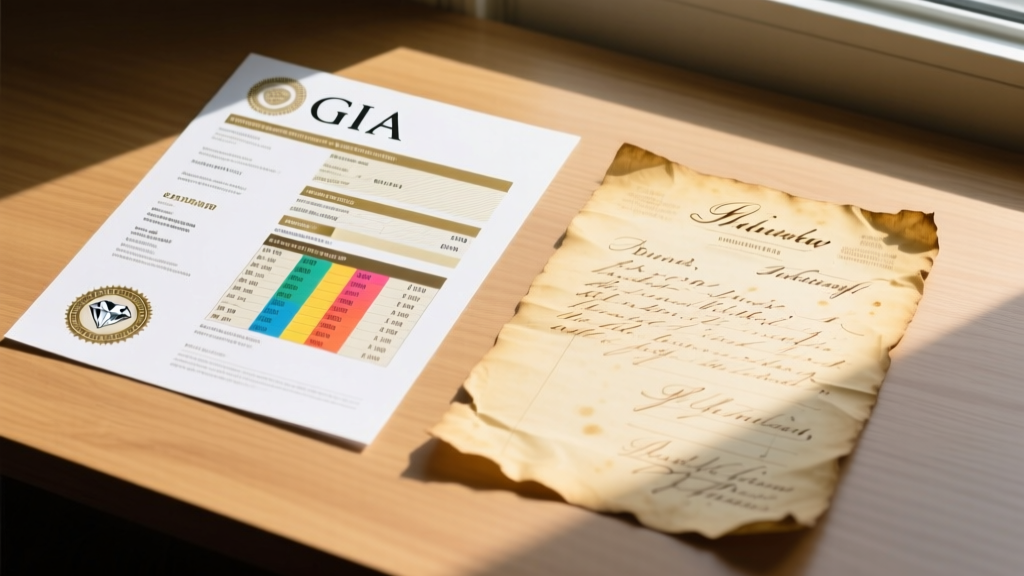
Troubleshooting Replacement Sourcing
If you lose or damage an insured piece, or need to replace a vintage heirloom, never walk into a high-street retail jeweler and pay the first asking price. The retail markup on diamond necklaces can range from 100% to 300% over wholesale. To avoid the Loisels' trap, follow these sourcing rules:
- Demand Independent Certification: Never buy a high-value replacement diamond pendant without a grading report from the Gemological Institute of America (GIA) or AGS. Store certificates are often inflated in color and clarity grades.
- Understand the 4Cs Hierarchy: For a diamond necklace that sits near the face, prioritize Cut and Color over Clarity. A VS2 clarity stone with an 'Excellent' cut will outshine a flawless stone with a 'Poor' cut, saving you thousands in the replacement process.
- Consider the Lab-Grown Alternative: In 2026, lab-grown diamonds (CVD and HPHT) are chemically, physically, and optically identical to mined diamonds but cost 70-90% less. If the goal is purely aesthetic replacement of a lost rivière necklace, a high-grade lab-grown equivalent prevents the financial ruin that destroyed the fictional Loisels.
Modern Styling Alternatives to the 'Status' Riviére
Mathilde’s original sin was not just her lack of jewelry knowledge, but her desperation to project a false image of wealth. She believed she needed a massive, flawless diamond necklace to be accepted in high society. Today, the most sophisticated stylists reject the heavy, ostentatious 'status' necklace in favor of intentional, layered, and historically rich pieces.
Instead of risking financial ruin on a single massive diamond collar, modern troubleshooting for 'event dressing' involves layering demi-fine and antique pieces. A 14k solid gold vintage locket layered with a 2mm lab-grown diamond solitaire pendant on a 16-inch chain provides a bespoke, personalized aesthetic that screams 'quiet luxury' rather than desperate imitation. By understanding the materials—opting for solid 14k or 18k gold over brass plated in microscopic gold vermeil—you ensure the piece ages beautifully without the anxiety of losing a fortune.
Final Thoughts on Literary Jewelry Lessons
The tragedy of the necklace story characters is entirely preventable with modern gemological tools and basic insurance literacy. Whether you are evaluating a vintage estate find, borrowing a piece for a wedding, or replacing a lost family heirloom, the rules remain the same: test the stones, document the condition, and understand the market value. Do not let pride or assumptions dictate your jewelry decisions. In the world of fine necklaces and pendants, skepticism is your most valuable accessory.


