Necklace Strap Guide: Material Grades and Tensile Load Limits
Discover the technical specs of necklace straps. We break down tensile strength, material grades, and load limits for leather, silk, and PTFE cords.

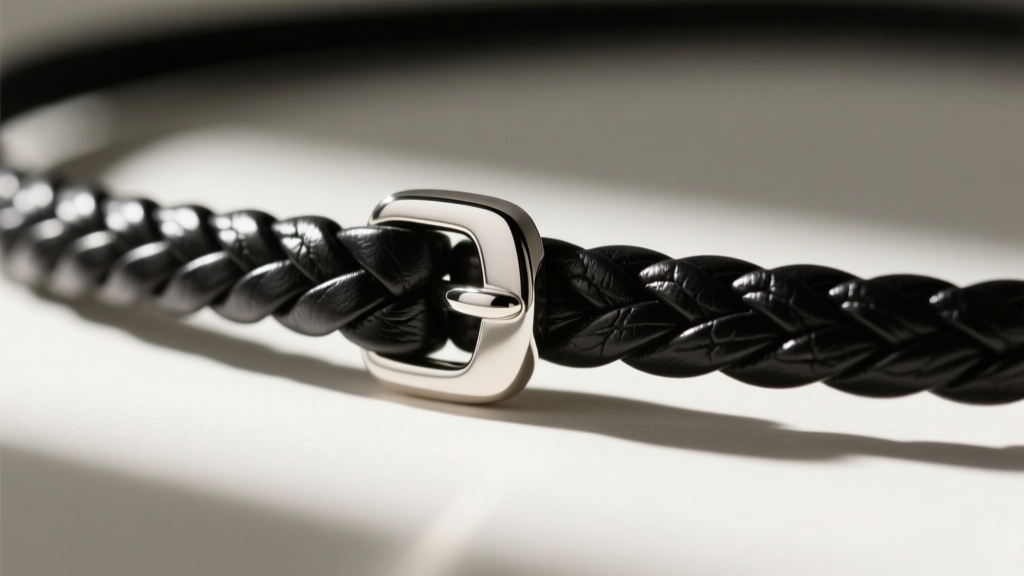
The Biomechanics of Pendant Suspension
Most consumers view a necklace strap as a mere decorative afterthought—a simple cord to hold a focal gemstone or metalwork piece. However, from an engineering perspective, the necklace strap is a critical load-bearing suspension system. When designing or selecting a strap for heavy pendants, lockets, or oversized gemstones, understanding the difference between static and dynamic loads is paramount.
A pendant weighing 50 grams exerts a static force of roughly 0.49 Newtons on the strap. However, jewelry is worn on a dynamic human body. A sudden snag on clothing, a dropped pendant, or the simple act of bending over can multiply the dynamic tensile load by a factor of 5 to 10. A momentary spike of 5 to 10 Newtons is enough to snap poorly cured silk or cause structural delamination in low-grade bonded leathers. Therefore, evaluating a necklace strap requires a rigorous analysis of material grades, tensile strength (measured in Megapascals, or MPa), and environmental degradation vectors.
Material Grades and Tensile Specifications
The market is saturated with generic 'leather cords' and 'silk threads,' but professional jewelers and materials engineers specify exact grades to prevent catastrophic failure. Below is a technical comparison of the most common high-performance necklace strap materials used in fine and artisan jewelry.
| Material Grade | Tensile Strength | UV Resistance | Sebum / pH Resistance | Optimal Load Profile |
|---|---|---|---|---|
| Kangaroo Leather (Full Grain) | ~38 MPa | Medium | Low (Requires sealing) | Heavy Pendants (50g - 150g) |
| Braided PTFE (Polytetrafluoroethylene) | ~21 MPa | Excellent | Excellent (Inert) | Aquatic/Beach Wear (20g - 80g) |
| Sericin-Coated Silk (Grade AAA) | ~5-7 MPa | Low | Very Low (Degrades rapidly) | Lightweight Pearls/Gems (Under 20g) |
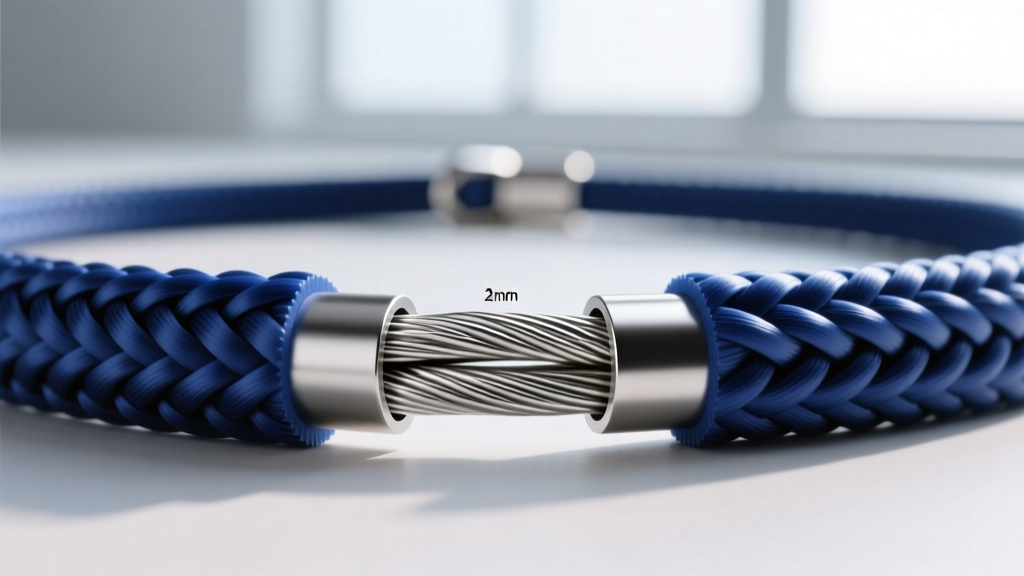
| Wire-Cored Nylon (Micro-Cable) | Extreme (>100 MPa) | High | High | Industrial/Heavy Gemstones (150g+) |
Kangaroo leather is the gold standard for organic straps. Due to its unique collagen fiber structure, it boasts a tensile strength nearly double that of premium bovine calfskin, allowing for incredibly thin (1.5mm - 2.0mm) necklace straps that can safely support massive bronze or silver pendants without stretching. Conversely, braided PTFE (commonly known by the brand name Teflon) is entirely inert. It will not degrade when exposed to human sweat, saltwater, or UV radiation, making it the ultimate technical strap for active lifestyles.
Degradation Vectors: What Destroys a Necklace Strap?
Even the strongest necklace strap will fail if subjected to specific chemical and mechanical degradation vectors. Understanding these failure modes is essential for long-term jewelry maintenance and material selection.
Sebum and pH Breakdown
Human sebum has a naturally acidic pH ranging from 4.5 to 5.5. While this mild acidity is harmless to metals like platinum or high-karat gold, it is highly destructive to protein-based organic straps. Silk fibroin, the core structural protein of silk necklace straps, undergoes hydrolysis when exposed to prolonged acidic environments. According to the Gemological Institute of America (GIA), silk cords used for pearls and pendants should be replaced annually if worn frequently, as the acidic oils from the skin weaken the fibroin bonds, leading to sudden, catastrophic snapping.
The Silver Sulfide Abrasion Effect
One of the most insidious failure modes occurs at the bail—the metal loop connecting the pendant to the necklace strap. Sterling silver naturally tarnishes when exposed to sulfur in the atmosphere, forming a layer of silver sulfide. While silver sulfide appears as a soft black tarnish to the naked eye, under magnification, it forms micro-crystalline structures with a Mohs hardness of 1.5 to 2.5. When a leather or cotton necklace strap slides back and forth through a tarnished silver bail, the silver sulfide acts as a micro-abrasive file. Over months of wear, this friction literally saws through the strap from the inside out. Regular polishing of the bail's interior diameter with a jeweler's cloth is a mandatory maintenance step to prevent this mechanical failure.

Engineering the Perfect Bail-to-Strap Interface
The intersection of the necklace strap and the pendant bail is the primary stress concentration point. A common engineering error in custom jewelry design is sizing the bail too tightly around the strap. This violates what bench jewelers call the 'Rule of 60%.'
The Rule of 60% dictates that the necklace strap should occupy no more than 60% of the bail's inner cross-sectional volume. If a bail has an inner diameter of 4mm, the maximum strap thickness should be 2.4mm. This 40% void space is not wasted; it is mechanically necessary for articulation. When the wearer moves, the pendant must pivot freely. If the strap fills the bail entirely, the pivot point shifts from the metal-on-metal interface to the strap itself, creating severe localized shear stress and accelerating micro-abrasion. Furthermore, a tight bail traps moisture and sebum against the strap, accelerating the chemical degradation mentioned above.
End-Finding Mechanics and Clasp Integration
A necklace strap is only as strong as its end-findings—the hardware that transitions the flexible cord into a rigid clasp mechanism. The failure rate of necklace straps rarely occurs in the middle of the cord; it almost always occurs at the clasp junction.
- Mechanical Crimps: Used primarily for wire-cored nylon and PTFE straps. A proper crimp requires a specialized micro-jaw plier that folds the metal sleeve into a figure-eight, locking the wire core without shearing it. Flat crushing a crimp bead creates sharp internal edges that cut the strap under dynamic load.
- Cyanoacrylate Adhesives: Often used for leather end-caps. While cyanoacrylate (super glue) cures hard and fast, it becomes brittle. The constant flexing of a necklace strap eventually shatters the adhesive bond inside the cap.
- Two-Part Epoxy Resins: The professional standard for securing leather and braided cotton straps into metal end-caps. Epoxy retains a slight degree of flexibility after curing, allowing it to absorb the kinetic energy of dynamic loads without fracturing the bond.
For comprehensive care and handling of various jewelry materials and their suspension systems, the Jewelers of America recommends avoiding ultrasonic cleaners when a piece includes organic necklace straps, as the high-frequency cavitation can delaminated leather coatings and shatter epoxy end-cap bonds.
Sourcing and Maintenance Frameworks
When sourcing necklace straps for heavy or valuable pendants, bypass generic craft suppliers and seek out specialized leather workers or industrial cord manufacturers. For leather, specify 'full-grain, vegetable-tanned kangaroo' to ensure the collagen matrix hasn't been weakened by harsh chemical chrome-tanning processes. For synthetic options, request 'extruded PTFE monofilament' rather than hollow-braided nylon, which can collapse under the point-load of a heavy bail.
Maintenance should follow a strict schedule: condition leather straps every six months with a micro-crystalline wax to displace moisture, and inspect the interior of all metal bails for silver sulfide buildup. By treating the necklace strap not as a mere string, but as a highly engineered suspension component, you ensure the safety, longevity, and structural integrity of your most prized pendants.


