The Necklace Sword Trend: 2026 Style & Layering Guide
Discover how the necklace sword trend is dominating 2026 fashion. Learn expert layering techniques, material grades, and styling tips for dagger pendants.

The Evolution of the Necklace Sword in Modern Jewelry
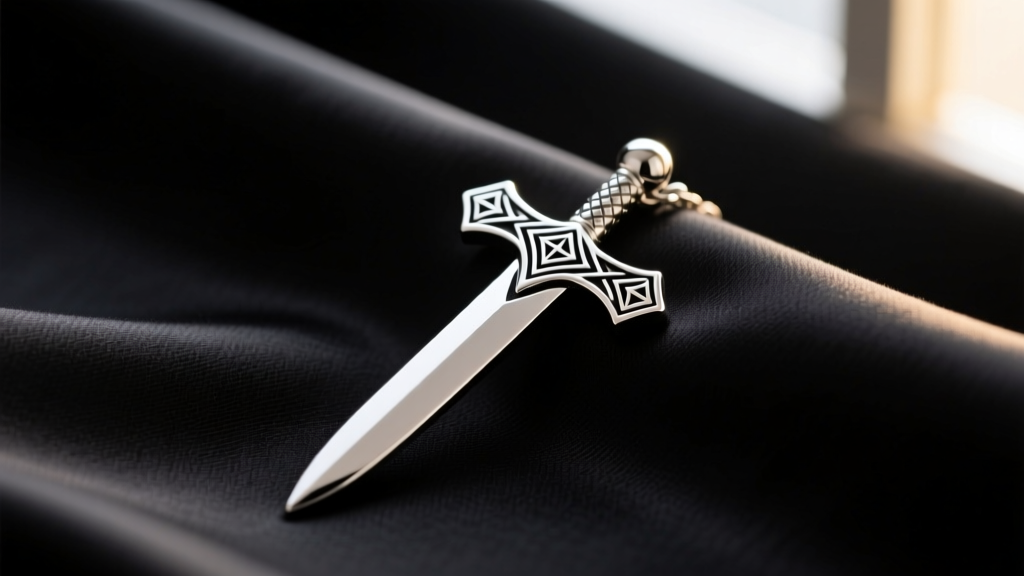
The trajectory of the necklace sword from a niche subculture staple to a high-fashion mainstay is one of the most fascinating jewelry evolutions of the decade. Once relegated primarily to gothic revivalists, historical reenactors, and fantasy cosplay, the dagger and longsword pendant has been entirely recontextualized for 2026. Today, the necklace sword is a masterclass in stylistic juxtaposition. It appears on avant-garde runways layered over delicate silks, and in streetwear circles paired with heavy techwear and utilitarian fabrics.
What has driven this shift? The answer lies in manufacturing precision and the broader cultural embrace of "dark academia" and neo-romanticism. Early 2000s sword pendants were often cheaply stamped from base metals, resulting in thick, poorly defined edges. In 2026, independent jewelers and major fashion houses alike are utilizing advanced lost-wax casting and 3D resin printing to create micro-sculptures. These modern pieces feature intricate fullers (the grooves in the blade), detailed wire-wrapped hilts, and historically accurate pommels, elevating the necklace sword from a novelty item to a serious horological-grade accessory.
Material Breakdown: Choosing the Right Blade
When investing in a high-quality sword pendant, the metal dictates not only the price point but the longevity, weight, and maintenance requirements of the piece. According to the Britannica jewelry archives, the shift toward alternative metals in fashion jewelry has heavily influenced pendant manufacturing. Below is a comparative analysis of the three most common materials used for premium necklace swords today.
| Metal Type | Grade / Standard | Price Range (USD) | Pros | Cons |
|---|---|---|---|---|
| Stainless Steel | 316L Surgical | $35 - $85 | Tarnish-free, hypoallergenic, highly durable, retains sharp cast details. | Heavier than silver, cannot be easily resized or soldered if the bail breaks. |
| Sterling Silver | 925 Stamp | $90 - $280 | Premium intrinsic value, exceptional detail in lost-wax casting, develops a prized patina. | Prone to sulfide tarnishing, requires regular polishing, softer metal can bend if dropped. |
| Brass / Bronze | Jewelers Brass | $45 - $130 | Warm, vintage aesthetic, ages beautifully with a natural oxidized patina. | Can cause skin discoloration if unsealed, heavier than silver, requires lacquer coating. |
For daily wear, 316L stainless steel is the undisputed champion. The addition of molybdenum in the 316L alloy provides exceptional resistance to chlorides and sweat, meaning your pendant will not rust or turn your skin green, even during intense physical activity. However, for heirloom-quality pieces, 925 sterling silver remains the gold standard. Many high-end silversmiths now apply a micro-layer of rhodium plating to the high-polish edges of the blade while leaving the recessed hilt details oxidized (blackened) to create striking visual depth.
Sizing and Proportions: Matching the Sword to the Neckline
A common mistake when styling a necklace sword is ignoring the proportional relationship between the pendant's length, the chain's gauge, and the wearer's neckline. Sword pendants generally fall into three distinct size categories, each requiring specific hardware to function correctly.
Micro Daggers (0.75" to 1.5")
These delicate pieces are designed for subtlety and layering. Because they weigh less than 10 grams, they can be suspended on ultra-fine chains (1.0mm to 1.5mm). A delicate box chain or bead chain works best here. Micro daggers sit perfectly in the hollow of the collarbone and pair beautifully with V-neck blouses or unbuttoned silk shirts.
Standard Longswords (2.0" to 3.5")
The sweet spot for a standalone statement piece. A pendant of this size typically weighs between 15 and 30 grams. To support this weight without the chain kinking or snapping, you must use a chain with a minimum thickness of 2.0mm to 3.0mm. A Franco chain or a rope chain provides the necessary tensile strength while complementing the martial aesthetic of the sword. Ensure the pendant features a reinforced tube bail rather than a simple soldered loop, which can shear off under the pendulum-like stress of a heavy blade.
Statement Greatswords (4.0" and above)
These are bold, avant-garde pieces meant to rest over heavy fabrics like turtlenecks, hoodies, or leather jackets. Because they can exceed 50 grams, standard lobster clasps will inevitably fail. You must upgrade your chain hardware to a locking carabiner clasp or a heavy-duty T-bar toggle. Pair these with 4.0mm+ Cuban link or thick Figaro chains to maintain visual balance.
Advanced Layering: Styling the Necklace Sword in 2026
The true power of the necklace sword in contemporary fashion lies in its ability to disrupt traditional styling norms through contrast. The Gemological Institute of America (GIA) notes that modern jewelry trends heavily favor the mixing of disparate materials and historical motifs. Here are three expert-approved layering frameworks for your sword pendant:
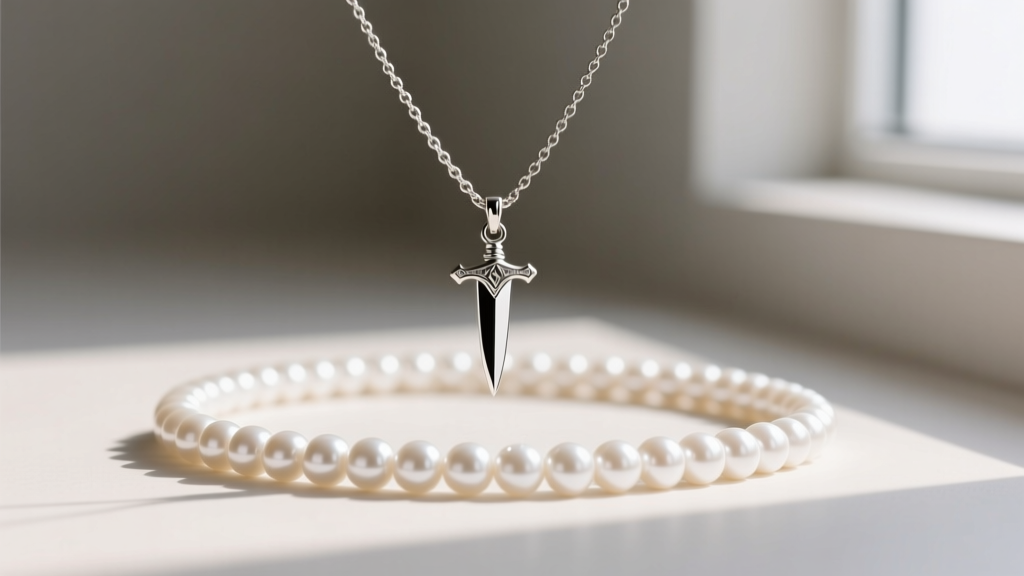
- The "Beauty and the Beast" Contrast: Pair a sharp, blackened steel or oxidized silver dagger pendant on a 20-inch chain with a tight 14-inch freshwater pearl choker. The organic, luminous softness of the pearls violently clashes with the aggressive, martial geometry of the sword, creating a highly photogenic and editorial look.
- The Techwear Stack: Lean into the utilitarian aesthetic by pairing a matte-finish titanium or steel longsword with a black PVD-coated rope chain. Layer this with a shorter, 16-inch geometric dog tag or a paracord-wrapped titanium ring. Keep all metals dark, muted, and gunmetal-toned.
- The Neo-Romantic Maximalist: Combine a standard silver longsword with a delicate 18-inch chain featuring tiny station-set garnets or rubies. The blood-red accents of the gemstones play into the historical, battle-worn lore of the sword motif without looking like a costume piece.
Care and Maintenance for Intricate Pendants
Sword pendants present a unique maintenance challenge: their intricate geometry. The crossguard, the grip wrapping, and the fuller (the groove running down the blade) are essentially microscopic traps for dead skin cells, lotions, and environmental dust. Wiping the surface with a standard jewelry cloth is insufficient.
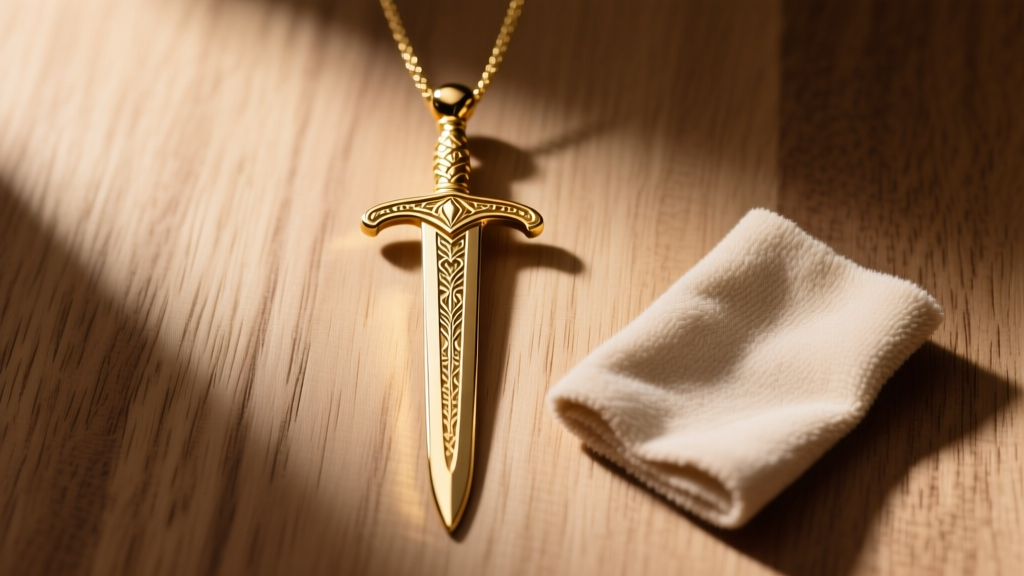
Expert Cleaning Protocol: For raw 316L stainless steel or unsealed brass swords, soak the pendant in a bowl of warm water and a few drops of mild dish soap for 10 minutes. Use a soft-bristled baby toothbrush to gently agitate the crevices of the hilt. Rinse thoroughly and dry with a microfiber cloth.
A Warning on Ultrasonic Cleaners: While ultrasonic cleaners are excellent for removing grime from the crevices of a plain steel blade, you must never use them on oxidized (blackened) sterling silver swords. The high-frequency vibrations and chemical baths will strip the intentional oxidation from the recessed details, ruining the contrast and leaving the pendant looking flat and overly bright. Furthermore, if your sword hilt features inlaid gemstones (like onyx or turquoise) secured with epoxy rather than prongs, ultrasonic heat can melt the adhesive, causing the stones to fall out.
Conclusion
The necklace sword is no longer a fringe accessory; it is a versatile, historically rich motif that anchors modern jewelry wardrobes. By understanding the metallurgical differences between 316L steel and 925 silver, matching your chain gauge to the pendant's weight, and utilizing high-contrast layering techniques, you can transform this martial symbol into a sophisticated pillar of your personal style. Whether you opt for a micro-dagger layered with pearls or a heavy greatsword draped over a winter coat, the key lies in intentional proportion and meticulous material care.


