Necklace of Swords Oblivion: 2026 Alloy Analysis
Discover the best metals for the necklace of swords oblivion. We compare sterling silver, 316L steel, and titanium for detail, durability, and wear.

The Metallurgy of Miniature Weaponry
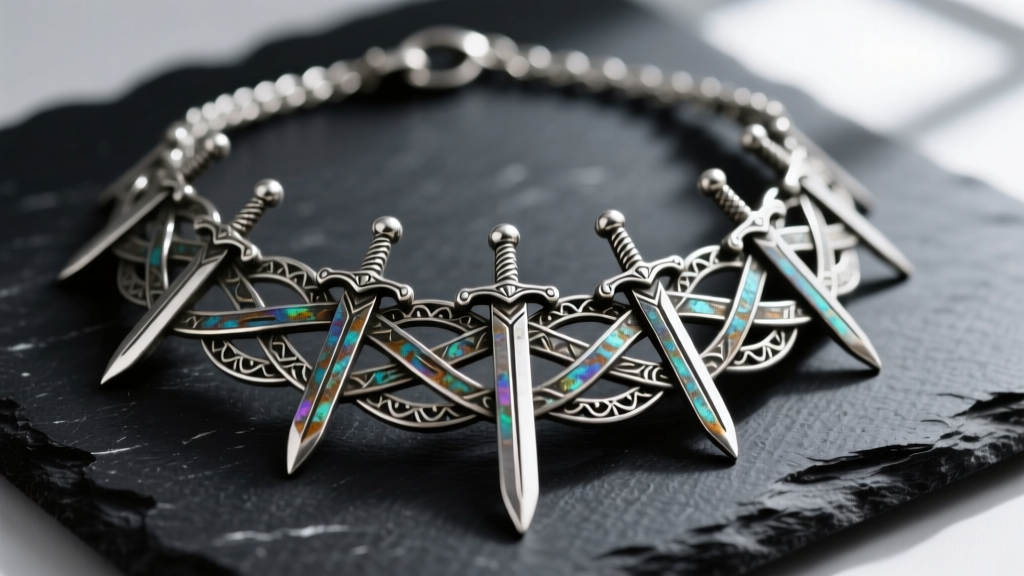
The necklace of swords oblivion is not merely a piece of fantasy or gothic jewelry; it is a masterclass in miniature metallurgical engineering. Characterized by a dense, overlapping cluster of miniature blades, intricate hilts, and a darkened, void-like aesthetic, this specific pendant design pushes the boundaries of what jewelry alloys can achieve. The 'oblivion' motif typically relies on deep crevices, intentional oxidation, and sharp visual contrasts to create a sense of ancient, battle-worn weaponry. However, the structural integrity of intersecting 1-inch sword blades and the crispness of their crossguards depend entirely on the base metal chosen by the artisan.
As of 2026, jewelry manufacturers and independent smiths primarily rely on three distinct alloys to execute this complex design: 925 Sterling Silver, 316L Surgical Steel, and Grade 5 Titanium. Each material presents unique challenges regarding casting resolution, Vickers hardness (edge retention), and long-term patina management. Below, we break down the exact material properties that dictate the quality and longevity of a multi-sword pendant.
Core Alloy Breakdown: Silver vs. Steel vs. Titanium
925 Sterling Silver: The Caster's Choice
Sterling silver (92.5% silver, 7.5% copper) remains the industry standard for highly detailed, organic jewelry designs. According to the Gemological Institute of America, the addition of copper provides the necessary tensile strength for wearable items while maintaining the metal's exceptional fluidity in a molten state. For a necklace of swords oblivion, silver's low melting point (approx. 893°C) and high fluidity allow it to capture microscopic details, such as the leather-wire wrap texture on a miniature sword grip or the filigree on a pommel.
The Drawback: Sterling silver has a Vickers Hardness (HV) of roughly 65-70. This means the protruding tips of the miniature swords are highly susceptible to bending if they catch on heavy clothing. Furthermore, the copper content makes the alloy prone to sulfide tarnishing, which, while useful for the 'oblivion' antiqued look, can lead to localized galvanic corrosion if trapped moisture sits in the overlapping blade crevices.
316L Surgical Steel: The Indestructible Standard
316L stainless steel is an austenitic chromium-nickel alloy containing 2-3% molybdenum. This molybdenum addition is critical, as it drastically increases resistance to chlorides (like human sweat) and industrial solvents. With a Vickers Hardness of 160-190 HV, a steel sword pendant will maintain rigid, perfectly straight blade edges that will never bend under normal wear.
The Drawback: Steel's high melting point (approx. 1400°C) and lower molten fluidity make traditional lost-wax casting difficult. To achieve the intricate details required for the oblivion motif, modern manufacturers often use 3D-printed high-resolution resin molds or CNC machining. If cast poorly, the tiny crossguards and pommels will suffer from 'incomplete fill' or porosity, resulting in blunt, undefined edges.
Grade 5 Titanium (Ti-6Al-4V): The Lightweight Premium
Grade 5 titanium is an aerospace-grade alloy containing 6% aluminum and 4% vanadium. It boasts an exceptional strength-to-weight ratio and a Vickers Hardness of roughly 340 HV. A titanium necklace of swords oblivion is virtually indestructible, hypoallergenic, and featherlight, making it ideal for large, heavy multi-sword clusters that would otherwise cause neck fatigue.
The Drawback: Titanium is notoriously difficult to work with. It reacts violently with oxygen and nitrogen at high temperatures, meaning it cannot be cast in standard jewelry investments. It must be machined from a solid billet or cast in a vacuum/argon environment. Consequently, titanium sword pendants often feature sharper, more geometric, and modernized blade silhouettes rather than the flowing, ornate historical curves seen in silver.
Material Properties Matrix
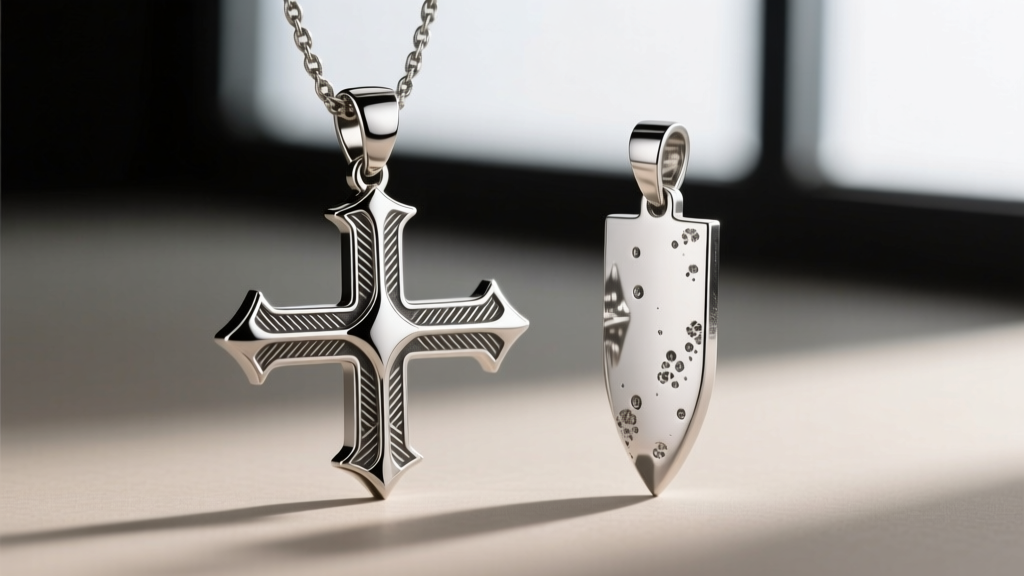
When selecting or commissioning a custom necklace of swords oblivion, refer to this metallurgical matrix to balance detail, durability, and cost.
| Alloy | Vickers Hardness (HV) | Casting Shrinkage | Detail Resolution | Tarnish / Corrosion Risk |
|---|---|---|---|---|
| 925 Sterling Silver | 65 - 75 | ~1.25% | Exceptional (Captures <0.1mm details) | High (Requires intentional oxidation sealing) |
| 316L Surgical Steel | 160 - 190 | ~2.0% (Requires specialized molds) | Moderate (Best via CNC or 3D resin cast) | Very Low (Passivation layer protects) |
| Grade 5 Titanium | 330 - 350 | N/A (Usually CNC Milled) | High (Sharp edges, but limited organic curves) | Zero (Biocompatible and inert) |
Casting Resolution, Sprues, and Edge Retention
The true test of a jeweler's expertise when crafting a multi-sword pendant lies in sprue placement and porosity management. In lost-wax casting, the 'sprue' is the channel through which molten metal enters the mold. For a dense cluster of swords, the sprue must be attached to the thickest part of the design—usually the central pommel or the bundled hilts.
If a jeweler incorrectly gates the metal through the thin tips of the blades, the metal will cool prematurely before filling the hilt details, resulting in microscopic air pockets (porosity). According to manufacturing guidelines from Rio Grande, proper spruing ensures a consistent grain structure, which is vital for the structural integrity of the overlapping blades. Furthermore, edge retention on the miniature swords is purely a function of the alloy's hardness. While a silver sword edge will dull and round off after a year of friction against the sternum, a 316L steel or Grade 5 titanium edge will remain dangerously crisp and visually sharp for decades.
The Oblivion Aesthetic: Black Rhodium vs. Oxidation
The 'oblivion' designation in this necklace style relies heavily on dark, light-absorbing finishes that highlight the three-dimensional depth of the crossed blades. The method used to achieve this darkness depends entirely on the base metal.
- Liver of Sulfur (Silver): Artisans use potassium sulfide solutions to force a black patina into the crevices of silver swords, then polish the high points. This creates a stunning, high-contrast antiqued look. However, this patina is superficial and will wear off over time, requiring periodic re-oxidation.
- PVD Coating (Steel & Titanium): As of 2026, Physical Vapor Deposition (PVD) is the gold standard for darkening steel and titanium. A microscopically thin layer of titanium nitride or black zirconium is vapor-bonded to the surface in a vacuum chamber. Unlike chemical oxidation, PVD is virtually scratch-proof and will never rub off against the skin, ensuring the dark, void-like aesthetic of the oblivion motif remains permanent.
Maintenance Framework for Multi-Sword Pendants
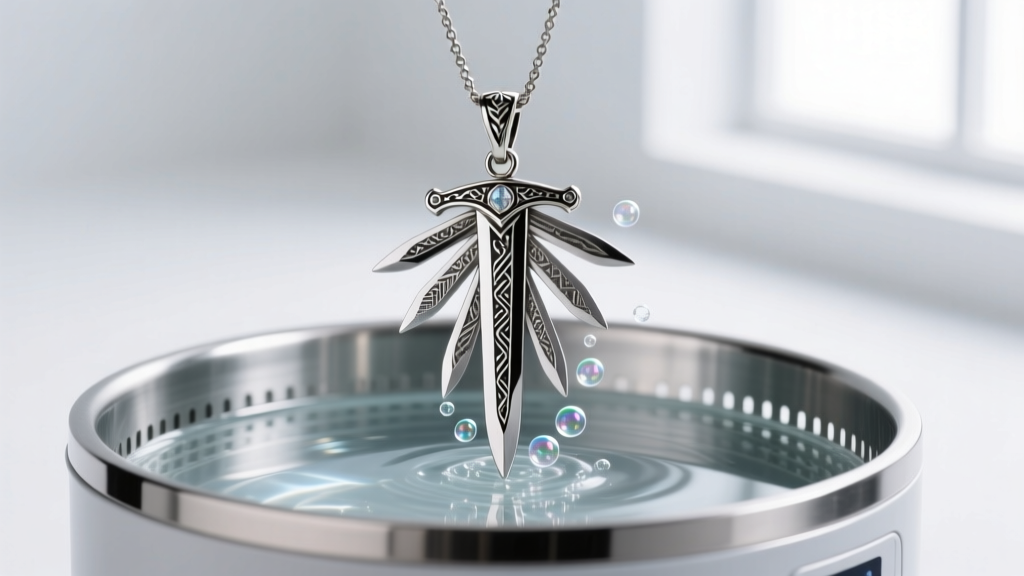
Cleaning a necklace of swords oblivion requires strict adherence to material-specific protocols. The overlapping nature of the blades creates micro-crevices that trap dead skin cells, sebum, and environmental dust.
What to Avoid
Never use liquid silver dips (thiourea-based chemical cleaners) on an antiqued silver sword pendant. These aggressive acids will instantly strip the intentional black oxidation from the deep crevices, leaving you with a flat, blindingly bright silver pendant that completely loses its 3D 'oblivion' depth. Similarly, avoid ultrasonic cleaners on PVD-coated steel if the coating has been micro-fractured, as the cavitation can peel the coating from the inside out.
The Proper Cleaning Protocol
- Prepare a solution of warm distilled water and a few drops of pH-neutral dish surfactant.
- Submerge the pendant for 10 minutes to soften organic debris trapped between the hilts.
- Use a soft horsehair detailing brush (never nylon or wire) to gently agitate the crevices between the crossed blades.
- Rinse with distilled water and dry immediately with a microfiber cloth or compressed air to prevent water spots in the deep recesses.
Final Verdict: Choosing Your Edition
If your priority is historical accuracy, ornate hilt details, and traditional jewelry craftsmanship, 925 Sterling Silver is the undisputed champion, provided you are willing to maintain the antiqued finish. If you demand a rugged, maintenance-free piece with rigid blade edges that will survive daily abuse, 316L Surgical Steel offers the best balance of durability and price. Finally, for collectors seeking a lightweight, hypoallergenic, and technologically advanced artifact, Grade 5 Titanium represents the pinnacle of modern metallurgical jewelry.


