Necklaces in Spanish: Technical Guide to Latin Gold Jewelry
Explore the metallurgy, terminology, and artisanal techniques of traditional necklaces in Spanish markets, from 18k Iberian gold to Mompox filigree.

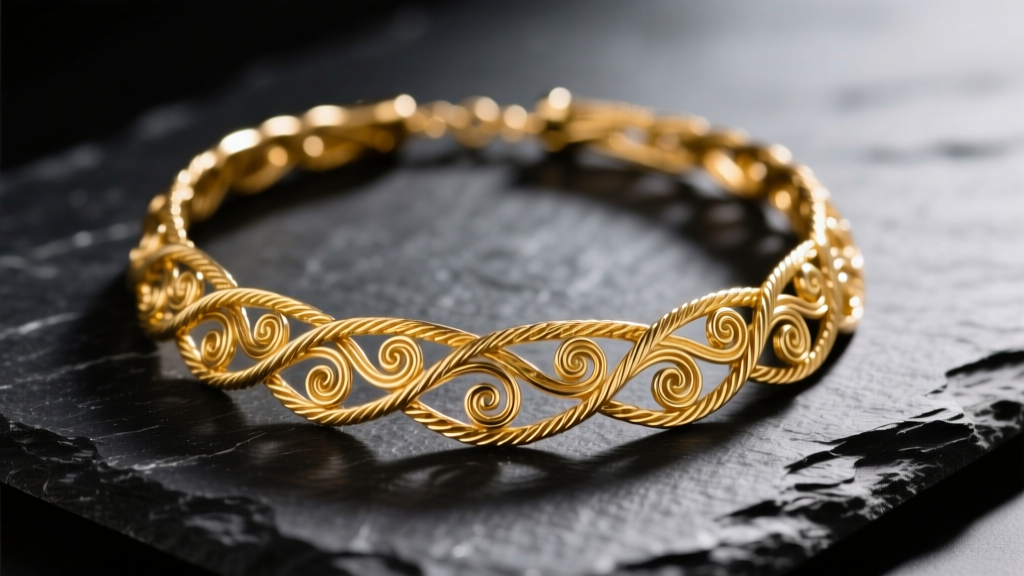
When international collectors, bilingual buyers, and jewelry historians search for necklaces in spanish, they are rarely looking for a simple vocabulary list. Instead, they are navigating a complex matrix of regional dialects, distinct metallurgical standards, and centuries-old artisanal techniques that define Iberian and Latin American jewelry making. As of 2026, the global demand for heritage jewelry has surged, making it critical for buyers to understand the technical specifications behind traditional Spanish and Latin American neckwear. This expert deep dive explores the precise alloys, wire gauges, and structural mechanics that separate authentic artisanal masterpieces from mass-produced tourist souvenirs.
Decoding the Lexicon: Essential Technical Terminology
To source authentic pieces from artisans in Taxco, Mompox, or Madrid, one must move beyond basic translations and understand the functional terminology used in Spanish workshops. The structural nomenclature dictates the weight, drape, and intended use of the piece.
| Spanish Term | English Equivalent | Technical Specifications & Context |
|---|---|---|
| Gargantilla | Choker | Typically 14-16 inches. In traditional Spanish goldwork, these are often rigid or semi-rigid collars rather than flexible chains. |
| Cadena de Serpiente | Snake Chain | Features tightly joined wavy rings. Prone to kinking if bent past a 45-degree angle; requires careful storage. |
| Dije / Colgante | Pendant / Charm | Dije usually refers to smaller, movable charms, while colgante denotes a fixed, central focal piece. |
| Broche de Langosta | Lobster Clasp | The modern standard for security. High-end Iberian pieces use solid 18k gold internal springs, unlike base-metal springs found in commercial imports. |
| Eslabón | Chain Link | The individual unit of a chain. Artisanal chains feature hand-soldered eslabones to prevent pulling apart under tension. |
Metallurgical Standards: Iberian vs. Latin American Alloys
The purity of gold used in necklaces varies drastically between Spain and Latin America, driven by historical trade routes, local economic factors, and modern regulatory frameworks. Understanding these alloy compositions is vital for assessing both value and durability.
The Spanish 18k Standard and Hallmarking
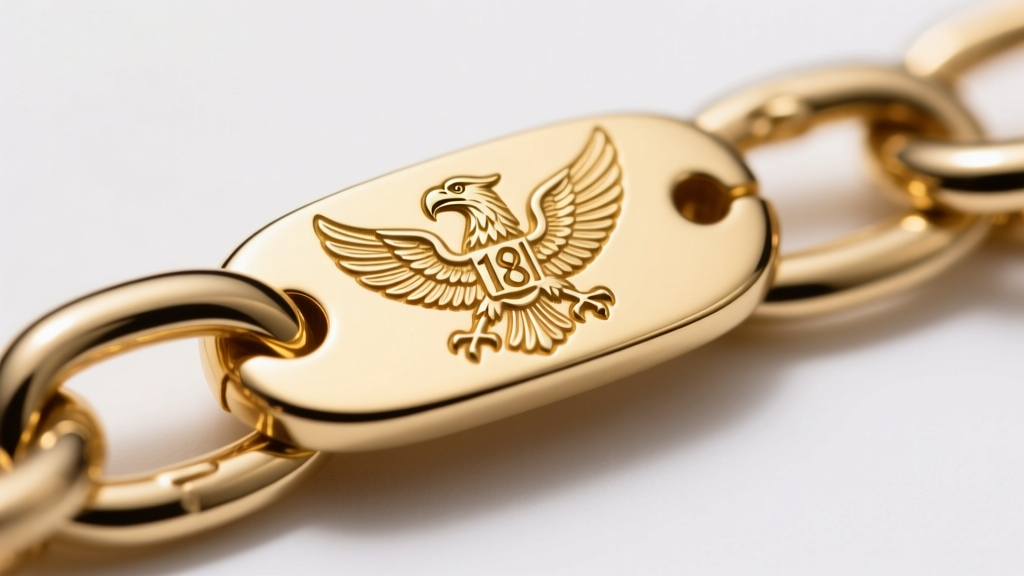
In Spain, the undisputed standard for fine jewelry is 18-karat gold (75.0% pure gold, stamped as 750). The World Gold Council notes that Southern European markets have historically favored higher karatage due to cultural preferences for deep, rich yellow hues. Spanish assay offices (laboratorios de contraste) enforce strict hallmarking laws. An authentic Spanish 18k gold necklace will bear the eagle head (cabeza de águila) punzón, alongside the manufacturer's stamp. The alloying metals—typically a precise ratio of copper and silver—are carefully calibrated to achieve the desired color without compromising the tensile strength required for fine chain links.
Latin American Karatage and EU REACH Compliance
In contrast, commercial jewelry in Mexico and Central America frequently utilizes 10k (41.6% gold) and 14k (58.5% gold) alloys to maintain accessible price points. However, high-end artisanal pieces, particularly those exported to Europe, must now comply with stringent 2026 environmental and health regulations. According to the European Chemicals Agency, the EU REACH regulation strictly limits nickel release in jewelry to 0.5 µg/cm²/week. Modern Latin American exporters targeting the Spanish market have had to reformulate their white gold alloys, replacing nickel with palladium or manganese to ensure hypoallergenic compliance while maintaining the structural rigidity needed for complex chain weaves.
The Mechanics of Filigrana: Wire Gauges and Tension
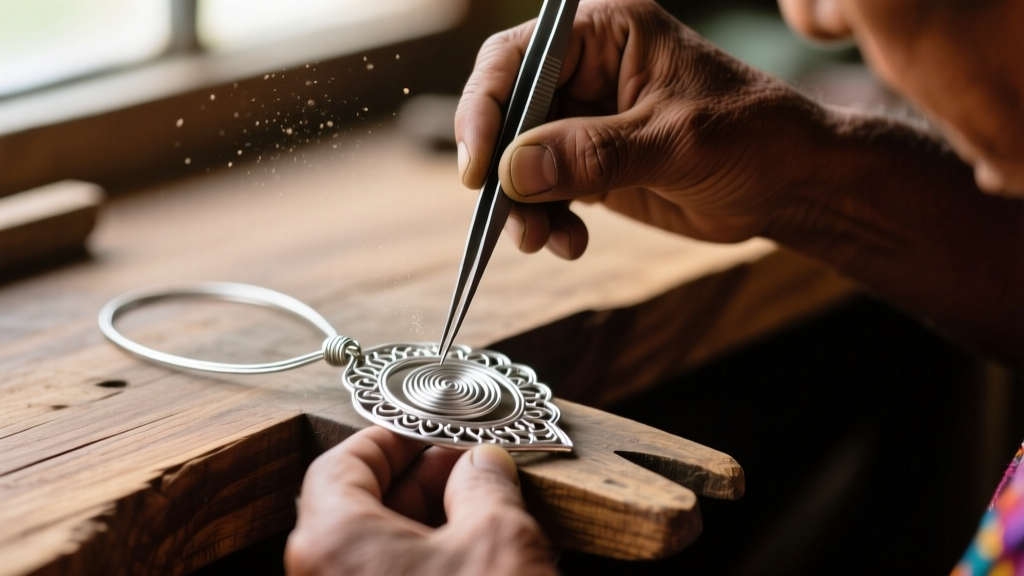
No discussion of traditional collares is complete without examining filigrana (filigree), a technique that represents the pinnacle of Latin American and Iberian metalwork. Recognized by UNESCO Intangible Cultural Heritage, the filigree traditions of Mompox, Colombia, and Oaxaca, Mexico, rely on extreme precision in wire drawing and soldering.
Wire Drawing and Gauge Specifications
Authentic artisanal filigree does not use machine-extruded wire. Artisans begin with a thick metal rod, repeatedly pulling it through progressively smaller tungsten carbide draw plates. The structural framework of a filigree necklace is typically constructed from 18 to 20-gauge wire, providing the necessary rigidity to hold the piece's shape. The intricate internal curls (virutas or zarcillos) are formed from ultra-fine 24 to 28-gauge wire.
The technical challenge lies in the soldering process. Because the 26-gauge curls will melt instantly under a standard jeweler's torch, artisans use a specialized, low-temperature solder dust mixed with a flux paste. The heat is applied indirectly, allowing capillary action to draw the solder into the microscopic joints without collapsing the delicate spirals. When evaluating a filigree necklace, use a 10x loupe to inspect the joints; machine-stamped imitations will show uniform, flat connection points, whereas hand-soldered artisanal pieces will exhibit microscopic, organic solder flows.
Structural Integrity: Toledo Damascene Techniques
Originating in Spain, damasquinado (Damascene) is a highly specialized technique used to create striking, high-contrast necklaces and pendants, particularly in Toledo. Unlike traditional gold chains, Damascene jewelry relies on the mechanical inlay of precious metals into a ferrous base.
- The Base Metal: High-carbon steel is oxidized to create a deep, matte black background. The surface is meticulously cross-hatched with sharp gravers to create microscopic undercuts.
- The Inlay: Fine 18k or 24k gold wire (and occasionally silver) is hammered into the cross-hatched grooves. The mechanical lock created by the undercuts ensures the gold cannot be dislodged, even without the use of adhesives or solder.
- Finishing: The piece is polished flat, leaving the black oxidized steel flush with the bright gold wire. Buyers should check the reverse side of a Damascene pendant; authentic Toledo pieces will often feature a signature blue-black oxidation, whereas cheap Asian knockoffs use black enamel painted over brass.
'The soul of a Spanish gold chain is not just in its weight, but in the tension of the eslabón. A master chain-maker calculates the exact annealing time so that the link yields under extreme stress rather than snapping, protecting the clasp and the wearer.' — Master Jeweler, Cordoba Workshop Guild
Authentication Framework: Verifying Artisanal Origins
When sourcing necklaces in spanish markets, whether in person in Madrid's Salamanca district or via online Latin American artisan cooperatives, apply this three-point technical verification framework:
- Magnetic and Acid Testing: Always carry a neodymium magnet. While gold and silver are non-magnetic, base-metal cores in counterfeit heavy chains will react immediately. For 14k and 18k pieces, a localized scratch test with nitric acid (applied discreetly to the clasp ring) will confirm the karatage based on the color reaction (green for base metals, milky for silver, no reaction for high-karat gold).
- Clasp Spring Tension: Depress the lever of a broche de langosta (lobster clasp). In high-quality Iberian manufacturing, the return snap should be instantaneous and emit a crisp, metallic click. Sluggish returns indicate degraded internal springs or the use of inferior pot-metal alloys.
- Weight-to-Volume Ratio: Hollow electroformed chains (cadenas huecas) are prevalent in commercial Latin American markets. They offer the look of a heavy 18k gold chain at a fraction of the price but are highly susceptible to crushing. Calculate the specific gravity if purchasing high-value solid pieces; 18k yellow gold should have a density of approximately 15.6 g/cm³, feeling significantly heavier than a similarly sized brass or copper-alloy counterfeit.
By mastering the technical lexicon, understanding regional metallurgical standards, and inspecting the micro-mechanics of traditional craftsmanship, collectors can confidently navigate the rich, complex world of Spanish and Latin American necklaces, ensuring their acquisitions are both culturally significant and structurally enduring.


