Expert Care and Cleaning Tips for a Negligee Necklace
Learn expert cleaning and maintenance tips for your negligee necklace. Discover how to untangle, polish, and protect delicate asymmetric drops.

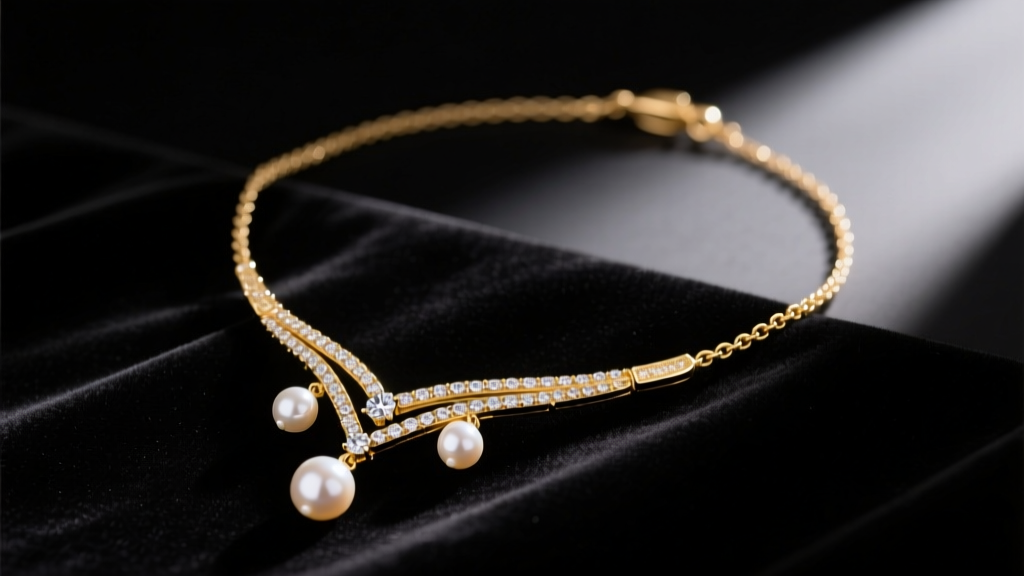
The negligee necklace is a masterpiece of asymmetrical design, characterized by two distinct drops or pendants of unequal length suspended from a single chain or focal point. Originally popularized in the 19th century and experiencing a massive resurgence in the 2026 bespoke vintage market, this style offers an elegant, fluid movement that rigid symmetrical necklaces simply cannot match. However, the very physics that make the negligee necklace so captivating also render it highly susceptible to tangling, kinetic stress, and uneven wear. Caring for this specific silhouette requires a departure from standard jewelry maintenance routines. In this comprehensive guide, we break down the exact protocols for cleaning, untangling, and preserving the structural integrity of your negligee necklace.
The Structural Vulnerability of Asymmetric Drops
To properly care for a negligee necklace, you must first understand its mechanical weak points. Unlike a standard pendant necklace where weight is distributed evenly, the negligee design features a longer primary drop and a shorter secondary drop. This asymmetry creates an uneven center of gravity. When you move, the longer drop swings with a wider pendulum arc, generating localized kinetic stress on the jump ring or V-bail that connects the two drops to the main chain.
Most authentic vintage and high-end modern negligee necklaces utilize delicate chains ranging from 0.8mm to 1.2mm in gauge. A 1.0mm 18k gold cable chain, while beautiful, possesses a tensile strength limit that can be compromised if the heavier asymmetric drop catches on a garment. The primary failure point is rarely the chain itself, but rather the soldered seam on the jump ring connecting the drops. Over time, the friction of the two drops clicking together can also cause micro-abrasions on the metal and the gemstone girdles.
Daily Wear and Friction Mitigation
Preventative care begins with how and when you wear the piece. The uneven drops of a negligee necklace act like a snare, easily catching on loose threads, lace, or high-friction fabrics like raw silk and wool.
- Avoid High-Collar Garments: The longer drop often rests precisely at the hollow of the throat or the upper sternum. High collars or stiff turtlenecks will repeatedly push the shorter drop upward, forcing it to collide with the main chain's clasp or focal slide.
- The Layering Hazard: While layering is a dominant trend in 2026, layering a negligee necklace with other chains is highly discouraged. The independent movement of the two drops will inevitably weave through adjacent chains, resulting in severe, multi-strand tangles that require professional jeweler intervention.
- Perfume and Cosmetics: Always apply perfumes, hairsprays, and lotions before donning the necklace. The crevices where the drops connect to the chain are notorious traps for cosmetic buildup, which can degrade the luster of porous gemstones over time.
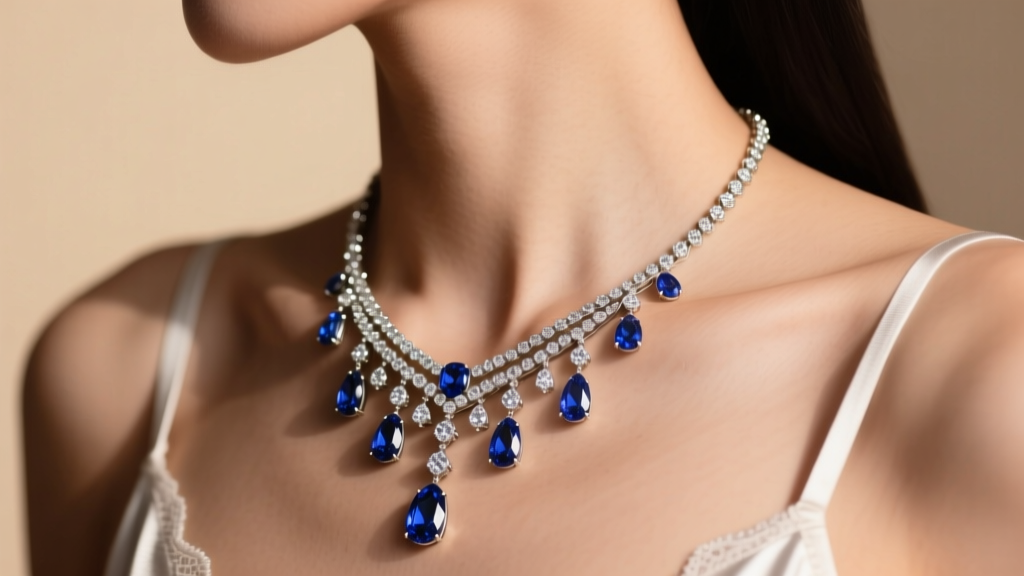
The Definitive Cleaning Protocol
Cleaning a negligee necklace requires extreme caution, particularly regarding the use of mechanical cleaners. The golden rule for this specific style is to avoid ultrasonic cleaners unless the piece is entirely solid metal without gemstones. In an ultrasonic tank, the high-frequency sound waves cause the liquid to cavitate. Because the two drops of a negligee necklace are independent, the vibrations will cause them to swing wildly and strike each other or the walls of the tank, potentially shattering fragile stones or chipping diamond girdles.
Safe Manual Washing Technique
For routine cleaning of gold or platinum chains with durable stones (like diamonds or sapphires), use a manual bath. Mix three drops of mild, phosphate-free dish soap into a bowl of distilled lukewarm water. Submerge the necklace for no more than five minutes. Using an extra-soft baby toothbrush, gently brush the jump rings and the settings of the drops. Do not scrub the chains aggressively, as this can stretch delicate 0.9mm links. Rinse thoroughly under a gentle stream of distilled water and pat dry with a lint-free microfiber cloth.
"Porous organic gems frequently used in vintage negligee drops, such as pearls or coral, require entirely different care. They should never be submerged in water or exposed to harsh detergents, which can strip their natural nacre and destroy the silk threads often used in their internal drilling." — Gemological Institute of America (GIA)
Material-Specific Cleaning Matrix
| Drop Material | Recommended Cleaning Agent | Ultrasonic Safe? | Steam Safe? |
|---|---|---|---|
| 18k Gold / Platinum | Mild Dish Soap & Distilled Water | Yes (if no stones) | Yes |
| Diamond / Sapphire | Ammonia-based Jewelry Cleaner | Yes | Yes |
| Pearl / Coral | Damp Microfiber Cloth Only | No | No |
| Emerald / Opal | Lukewarm Water & Soft Brush | No | No |
For heavily included stones like emeralds, which are often treated with cedar oil to mask fractures, ultrasonic waves and steam will boil out the oil, leaving the stone looking cloudy and fractured. Always refer to the GIA Emerald Care Guide before attempting to clean oil-treated stones commonly found in antique negligee pendants.
Mastering the Untangling Process
The most common maintenance issue with a negligee necklace is tangling. The two independent drops act as a fulcrum; if the necklace is stored loosely, the longer drop will naturally wrap around the shorter one, creating a tight, complex knot at the focal jump ring.
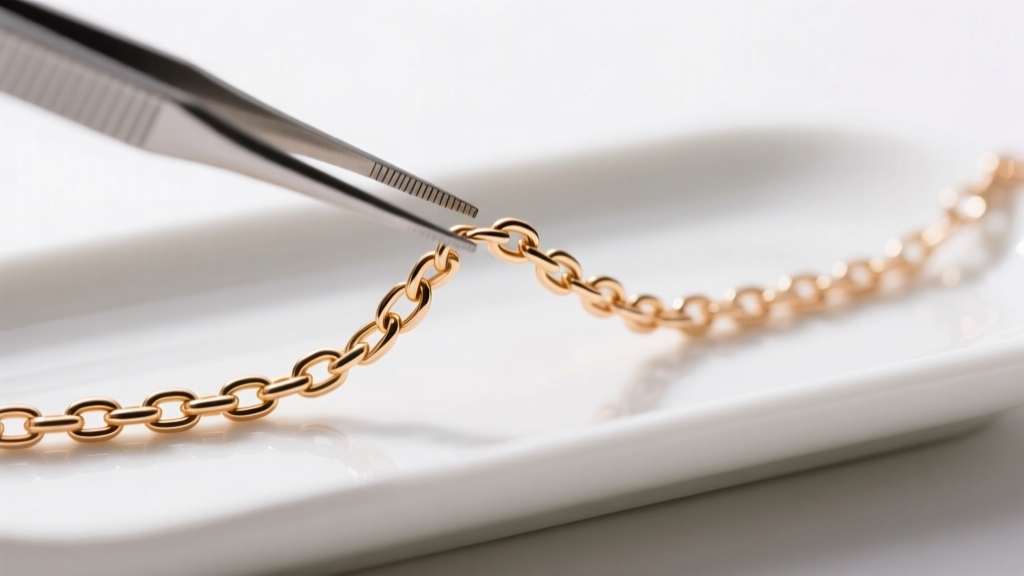
Never pull aggressively on a knot, especially on delicate box or rope chains, as this will permanently kink the metal. Instead, utilize the lubrication and pin method:
- Lay the tangled necklace flat on a non-porous surface like a glass or ceramic tray.
- Sprinkle a generous amount of cornstarch or talcum baby powder directly onto the knot. The powder acts as a dry lubricant, reducing the friction between the microscopic metal links.
- Take two straight sewing pins or specialized jeweler's tweezers. Gently insert the tips into the center of the knot and wiggle them outward to loosen the tension.
- Once the knot has slack, use the pins to pull the longer drop through the loop of the shorter drop.
- After untangling, wash the necklace using the manual soapy bath described above to remove all powder residue, which can otherwise attract moisture and cause localized tarnishing.
Polishing and Restoring Luster
Because the two drops of a negligee necklace frequently click together during wear, the metal on the pendants and the lower chain links will develop micro-scratches and a dull patina over time. If your necklace is crafted from 14k or 18k white gold, it is likely rhodium-plated. Polishing white gold with abrasive cloths will strip the rhodium flashing, revealing the pale yellow alloy underneath.
For yellow gold and platinum pieces, use a treated jeweler's polishing cloth (such as a Sunshine cloth) to gently buff the drops. Avoid polishing the chain itself, as the friction can weaken the individual links. For platinum, a slight patina is often considered desirable and a hallmark of the metal's authenticity, so aggressive polishing is rarely necessary unless the piece is being prepped for a formal event.
Professional Inspection and Storage
Due to the kinetic stress placed on the connecting hardware, a negligee necklace requires professional inspection every 12 to 18 months. A bench jeweler will use a loupe to examine the soldered seams on the jump rings connecting the asymmetric drops. If the metal shows signs of thinning or if the ring has pulled slightly oval, it must be replaced or re-soldered immediately to prevent the loss of the valuable drops.
Proper storage is your first line of defense against structural damage. Never toss a negligee necklace into a communal jewelry box. It should be stored in one of two ways:
- Suspended Storage: Hang the necklace on a velvet-lined jewelry hook, allowing the two drops to hang freely without touching each other or any other pieces.
- Flat Archival Storage: Lay the necklace flat in an anti-tarnish ziplock bag. Use a small piece of archival tissue paper to separate the longer drop from the shorter drop, preventing them from crossing over one another during transport.
By respecting the unique physics of the negligee necklace and adhering to these specialized care protocols, you ensure that its elegant, asymmetrical dance will remain flawless for generations to come.


