How to Choose an Off the Shoulder Dress Necklace: Step-by-Step
Master the off the shoulder dress necklace with our step-by-step styling guide. Learn ideal lengths, layering techniques, and metal choices.


The Architecture of Bare Shoulders: Why This Neckline is Unique
Styling an exposed décolletage requires a strategic approach to jewelry. When you are searching for the perfect off the shoulder dress necklace, you are dealing with a horizontal fabric line that cuts across the upper arm and bust, completely exposing the collarbones, neck, and upper chest. This creates a vast canvas, but it also introduces a common styling trap: the 'tangle zone.' If a necklace drop ends exactly where the dress's ruffle or hem begins, the jewelry will compete with the fabric, catch on the threads, and disrupt the visual flow of your silhouette.
As a senior stylist at Jewel Style Radar, I have dressed hundreds of clients for galas, weddings, and editorial shoots. The secret to mastering this neckline is not just about picking a pretty pendant; it is about understanding spatial geometry, metal-to-skin interactions, and chain gauge mechanics. In this comprehensive, step-by-step guide, we will break down exactly how to select, size, and layer necklaces for off-the-shoulder garments, ensuring your jewelry elevates rather than overwhelms your look.
Step 1: Map Your Specific Neckline Variation
Not all off-the-shoulder dresses are created equal. The specific cut of your dress dictates the negative space available for your jewelry. Before selecting a chain, identify which of the three primary variations you are wearing:
The Classic Bardot
This features a straight, horizontal cut across the chest and arms, often with a ruffled overlay. Because the neckline is busy and horizontal, you need a necklace that introduces verticality. A delicate lariat or a Y-chain that draws the eye downward is ideal here, breaking up the horizontal block of fabric.
The Sweetheart Off-the-Shoulder
This cut dips in the center of the bust, creating a heart shape. This is the most forgiving variation for jewelry. The central dip provides a natural 'frame' for a pendant. A 16-inch choker or an 18-inch princess chain with a solitaire gemstone will sit perfectly in the upper negative space without touching the fabric edge.
The Asymmetrical One-Shoulder Hybrid
Featuring one bare shoulder and one covered, this dramatic cut requires an unbalanced jewelry approach. Avoid symmetrical, heavy center-drop necklaces. Instead, opt for an asymmetrical lariat, a single ear cuff paired with a delicate collarbone chain, or a graduated tennis necklace that is heavier on the exposed side.
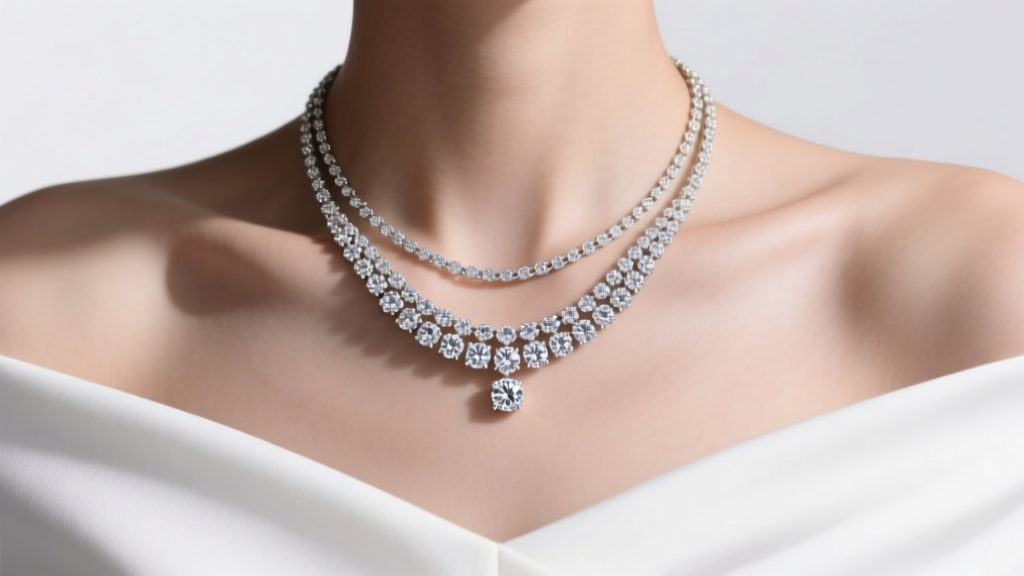
Step 2: Select the Ideal Length and Drop (The Data Framework)
The most critical error stylists see is a necklace drop that rests directly on the dress hem. To avoid this, you must adhere to the 'Two-Inch Rule': your necklace must either end at least two inches above the fabric line, or fall at least two inches below it. Below is our proprietary sizing chart mapping necklace lengths to off-the-shoulder dress types.
| Necklace Style | Length (Inches / cm) | Drop Placement | Best Dress Pairing |
|---|---|---|---|
| Collar | 12' - 13' (30-33 cm) | Base of the neck | Thick-banded off-shoulder, structured corsets |
| Choker | 14' - 16' (35-40 cm) | Upper collarbone | Sweetheart, ruffled Bardot (sits above the ruffle) |
| Princess | 18' (45 cm) | Lower collarbone | AVOID - Usually hits the exact fabric hemline |
| Matinee | 20' - 24' (50-60 cm) | Upper chest / Bust | Deep-V off-shoulder, sleek minimalist cuts |
| Opera | 28' - 36' (70-90 cm) | Below the bust | Formal gowns, high-waisted off-shoulder maxi dresses |
According to jewelry design principles outlined by Rio Grande, the visual weight of a chain also changes with length. A 1.5mm cable chain at 14 inches looks substantial, but at 24 inches, it appears delicate. Always adjust your chain gauge (thickness) upward if you are opting for a longer matinee or opera length to ensure the metal remains visible against the expanse of bare skin.
Step 3: Choose Metals That React Properly to Bare Skin
When wearing an off the shoulder dress necklace, the metal is in direct, continuous contact with the skin of your chest and neck. This area is prone to perspiration, body oils, and temperature fluctuations, especially at crowded events or during summer weddings. You must select metals that resist tarnish and minimize allergic contact dermatitis.
The Best Metal Grades for Bare-Chest Wear
- 18K and 14K Solid Gold: The gold standard for skin contact. 14K gold (58.5% pure gold) offers excellent durability and resistance to sweat-induced tarnishing. According to the Gemological Institute of America (GIA), the alloy metals used in 14K gold (like copper and silver) are generally stable, though those with severe copper allergies should opt for 18K white gold or platinum.
- Platinum (950 Grade):strong> Hypoallergenic, incredibly dense, and immune to tarnish. Platinum will not react with acidic sweat, making it the safest choice for sensitive skin resting against the décolletage.
- ASTM F136 Titanium: If you are on a budget or have a known nickel allergy, implant-grade titanium is the ultimate solution. It is completely inert and often used in high-end, lightweight statement pieces designed for bare skin.
Metals to Avoid
Steer clear of unplated sterling silver for long events. Sterling silver (92.5% silver, 7.5% copper) will oxidize and leave a green or black smudge on your chest when exposed to the sulfur in human sweat. Similarly, avoid cheap brass or copper alloys plated with microscopic layers of gold; the friction of the dress hem will wear the plating down, exposing the reactive base metals to your skin.
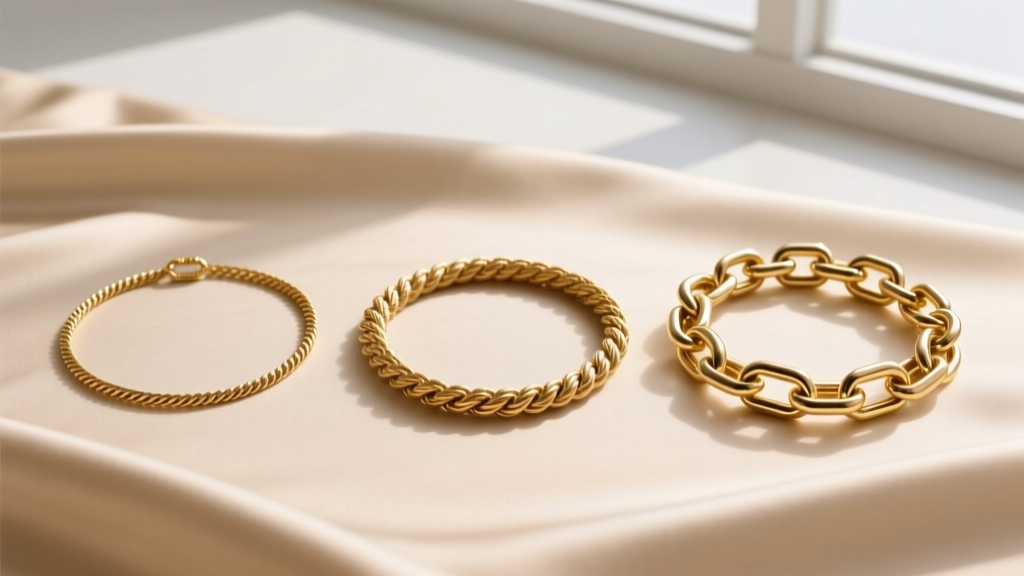
Step 4: The 3-Chain Layering Framework for Bare Shoulders
Layering is the most effective way to fill the negative space of an off-the-shoulder dress without relying on a single, overwhelmingly heavy pendant. However, bare skin provides no friction to keep chains separated, meaning they will tangle instantly if not sized correctly. Use this exact step-by-step framework to build a tangle-free layered look:
- The Anchor (14-15 inches): Start with a delicate 1.0mm to 1.2mm cable or box chain. This sits high on the collarbone. Add a tiny 3mm bezel-set gemstone or a minimalist initial pendant. This draws the eye up toward the face.
- The Bridge (17-18 inches): Select a textured chain, such as a 2.0mm to 2.5mm rope or wheat chain. The texture catches the light differently than the anchor chain. Leave this one bare (no pendant) to create visual breathing room.
- The Statement (21-24 inches): Finish with a heavier, structural chain like a 4.0mm to 5.0mm paperclip or curb chain. This should fall below the dress hemline. Attach a substantial pendant, such as a vintage coin, a large baroque pearl, or a geometric drop.
Pro-Tip for Layering: To physically prevent the chains from twisting together on bare skin, use a 'necklace spacer clasp.' This is a single clasp with multiple loops that locks the chains together at the nape of the neck, ensuring they remain perfectly spaced across your chest all night.
Step 5: Common Styling Mistakes and How to Fix Them
Even with the right length and metal, subtle styling errors can ruin the aesthetic. Review this troubleshooting checklist before you leave the house:
- The Ruffle Snag: If your dress has a tulle or lace ruffle at the top, avoid necklaces with prong-set stones or intricate filigree. The sharp prongs will catch and pull the delicate fabric. Opt for bezel-set stones or smooth, high-polish dome pendants instead.
- The Back-Clasp Irritation: Off-the-shoulder dresses often feature low, scooping backlines. A standard lobster clasp resting on the bare nape of your neck can cause irritation or get caught in up-dos. Swap your clasp for a flat, seamless 'slide tube' clasp or a magnetic neodymium clasp that lies completely flush against the skin.
- Overpowering the Collarbone: The collarbone (clavicle) is a delicate, bony landmark. Wearing a thick, heavy choker (over 8mm wide) directly on the bone looks harsh and uncomfortable. Keep chokers under 4mm in width, and save the heavy, wide chains for the lower matinee drops where they rest on the softer tissue of the upper chest.
Final Thoughts on Proportion and Elegance
Mastering the off the shoulder dress necklace is ultimately an exercise in proportion. By respecting the boundaries of the fabric, choosing skin-safe metallurgy, and utilizing structured layering techniques, you transform a simple dress into a cohesive, red-carpet-ready ensemble. Remember that the bare skin is the canvas; your jewelry should frame it, not fence it in. Use the measurements and frameworks provided above to curate a look that is both technically flawless and breathtakingly elegant.


